Growing older in California often means stretching a fixed income further than it was ever meant to go. Rent, property taxes, utility bills, prescriptions, and home repairs keep climbing, while Social Security and pension checks rise much more slowly. If you’re searching for Free senior grants in California, you’re not alone. Thousands of older adults and their families look for this kind of help every month, and the good news is that real assistance exists.
This guide walks through the state, federal, county, and nonprofit programs that help California seniors pay for housing, healthcare, food, utilities, and emergencies. Some of these are technically grants, others are benefits or tax relief programs, but all of them can put money back in your pocket. We’ll explain who qualifies, how to apply, and how to avoid the scams that target older adults. Lets deep dive into ‘Free Senior Grants in California 2026: Guide to Financial Assistance”
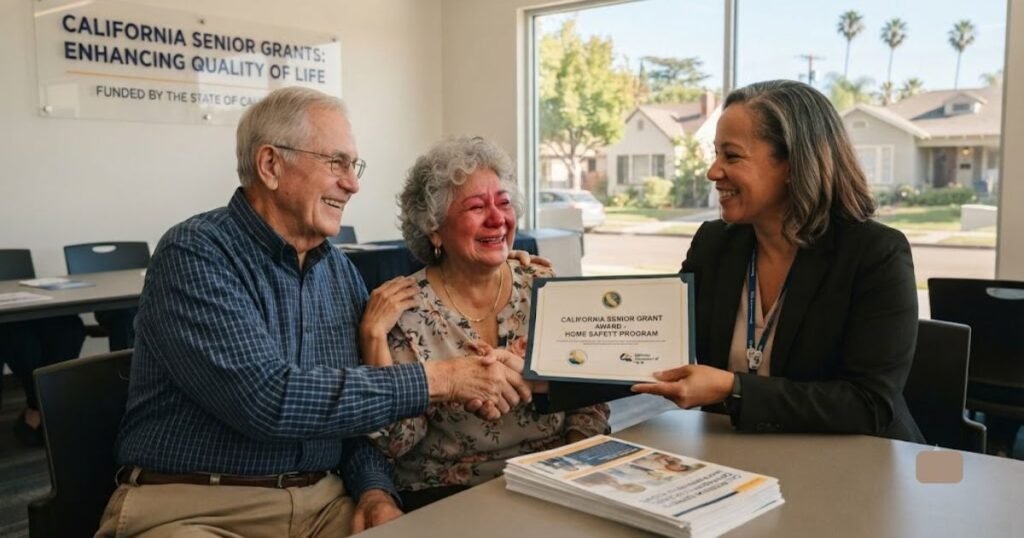
What Are Senior Grants?
The word “grant” gets used loosely, so it helps to know what you’re actually looking at before you apply anywhere.
Grants vs. loans:
A true grant is money you don’t pay back, as long as you follow the program’s rules. A loan, even a low-interest one like the USDA’s home repair loan, has to be repaid over time. Some housing programs, including California’s property tax postponement program, work more like a deferred loan than a grant it delays what you owe rather than erasing it.
Grants vs. government benefits:
Programs like CalFresh (food) or SSI (cash income) aren’t technically “grants” in the traditional sense; they’re ongoing benefits based on your income and circumstances. For the purposes of this guide, we treat both grants and benefit programs as forms of senior financial assistance, since that’s how most people search for and use them.
Who funds senior grants. Funding comes from several layers:
- Federal government — through agencies like the U.S. Department of Health and Human Services, HUD, USDA, and the Social Security Administration
- State of California — through departments such as the California Department of Aging (CDA), the California Department of Social Services (CDSS), and the State Controller’s Office
- County governments — which often administer state and federal programs locally
- Nonprofits and foundations — which fill gaps that government programs don’t cover
Why California offers senior assistance. California’s Department of Aging projects the state will be home to nearly 10 million residents age 60 and older by 2030. Combined with the state’s high cost of housing and living, that growth is a major reason lawmakers keep funding and periodically expanding assistance programs for older residents.
READ MORE: California LifeLine Phone Number: Official Contacts
Who Qualifies for Senior Grants in California?
Eligibility rules vary by program, but most senior assistance in California considers some combination of the following factors.
- Age. Many programs use 60 as the threshold for “senior” services (like Older Americans Act meal programs), while others, like the Property Tax Postponement Program, use 62.
- Income limits. Most programs are need-based and use a percentage of the federal poverty level or your county’s area median income.
- Residency. You typically need to live in California, and some programs require you to live in a specific county or even a specific unincorporated area.
- Disability status. Many programs that serve seniors also serve younger adults with qualifying disabilities.
- Veteran status. Veterans may have access to additional VA-specific housing and disability grants layered on top of standard senior programs.
- Caregiver status. Family caregivers can access respite care and training support through Area Agencies on Aging, even though the benefit is really for the older adult.
- Homeowner vs. renter. Some programs, like property tax relief and home repair grants, are only for homeowners. Others, like utility assistance and CalFresh, are open to both.
- Social Security or SSI recipients. Receiving SSI or Social Security can sometimes make you automatically or “categorically” eligible for other programs, like LIHEAP.
Simple Eligibility Checklist
Use this quick checklist to see which categories of help you might explore first:
- [ ] I am age 60 or older (or 62+ for property tax programs)
- [ ] I live in California
- [ ] My household income is limited or fixed (Social Security, SSI, pension)
- [ ] I own my home, or I rent and struggle with housing costs
- [ ] I have trouble affording utility bills
- [ ] I have out-of-pocket medical, dental, vision, or hearing costs
- [ ] I have a disability or care for someone who does
- [ ] I am a veteran or a surviving spouse of a veteran
- [ ] I’ve experienced a recent financial emergency (fire, flood, medical crisis)
If you checked even two or three of these boxes, it’s worth applying to more than one program most seniors qualify for several forms of help at once, not just one.
READ MORE: Senior Farmers Market Vouchers: Eligibility, Benefits, and How to Apply
Types of Senior Grants Available in California
1. Housing Assistance Grants
Housing is usually the biggest expense in a senior’s budget, and it’s also where California has invested the most in prevention. Programs in this category include:
- Home repair and accessibility assistance
- Weatherization and energy-efficiency upgrades
- Emergency housing assistance for seniors at risk of eviction or homelessness
One standout example is Home Safe, a statewide program created by the California Department of Social Services in 2018 and now operating in all 58 counties. Home Safe works through local Adult Protective Services (APS) agencies to help seniors who are involved in an APS case and at risk of losing their housing for example, due to financial exploitation, neglect, or a sudden loss of income.
Services can include short-term rental assistance, help settling overdue utility bills, deep cleaning to bring a home up to safety standards, and landlord mediation. A recent state evaluation found that nearly 94% of participants who were housed when they entered the program remained housed when they exited a strong track record for a homelessness-prevention program.
2. Home Repair Grants
Deferred maintenance is a common and serious problem for older homeowners who can no longer safely climb a ladder or manage a major repair bill. Common needs include:
- Roof repairs and leak fixes
- Plumbing and electrical repairs
- Heating and air conditioning (HVAC) repairs
- Wheelchair ramps and doorway widening
- Bathroom safety improvements, like grab bars and walk-in showers
The largest source of no-cost help here is the USDA Section 504 Home Repair Program, available to very-low-income homeowners in eligible rural areas of California. Homeowners age 62 and older who can’t repay a loan may qualify for a grant of up to $10,000 (a lifetime cap) to remove health and safety hazards, and it can be combined with a low-interest loan for up to $50,000 in total assistance.
Several California counties, including Los Angeles County, also run their own local senior home repair programs for low-income homeowners the Los Angeles County Development Authority’s Senior Grant Program is one example, aimed at mobility and habitability repairs for eligible homeowners in unincorporated areas.
3. Utility Assistance
Keeping the lights and heat on is a year-round concern, especially during California’s hot summers and cold nights in higher-elevation and desert areas.
- LIHEAP (Low Income Home Energy Assistance Program) helps pay heating and cooling bills, and covers weatherization upgrades that lower future energy costs. In California, LIHEAP is administered by the Department of Community Services and Development (CSD), and eligibility is based on 60% of the state median income. As of 2026, a one-person household can generally qualify with gross monthly income up to roughly $3,300, rising to about $4,350 for a two-person household these figures adjust each year, so always confirm the current numbers with CSD or your local energy assistance provider.
- Crisis LIHEAP offers faster help if you’re facing a shutoff notice or ran out of fuel.
- Many utility companies, including PG&E, SCE, and SDG&E, also run their own discount and payment-assistance programs for low-income and senior customers, separate from LIHEAP.
4. Healthcare Grants
Medical costs are one of the top reasons seniors report financial stress. Assistance is available for:
- Medical bills through Medi-Cal and county indigent care programs
- Prescription costs through Medicare’s Extra Help / Low-Income Subsidy program
- Vision and hearing aids through some Medi-Cal plans and nonprofit vision/hearing programs
- Dental care through Medi-Cal Dental (Denti-Cal) and community dental clinics
- Mobility equipment (walkers, wheelchairs, shower chairs) through Medi-Cal, Medicare, or local loan-closet programs run by nonprofits
Medicare Savings Programs (MSPs), administered through Medi-Cal, are especially valuable if you have Medicare but a limited income. In 2026, California’s Qualified Medicare Beneficiary (QMB) program generally serves individuals with monthly income up to roughly $1,330 (about $1,804 for couples), and can cover your Medicare Part B premium, deductibles, and copays. The Specified Low-Income Medicare Beneficiary (SLMB) and Qualifying Individual (QI) programs cover the Part B premium at slightly higher income levels. Because these limits are updated annually and California sometimes uses more generous figures than the federal minimum, confirm the current numbers with the Department of Health Care Services (DHCS) or your local HICAP counselor before assuming you don’t qualify.
READ MORE: Affordable In Home Elderly Care in California — The Complete Guide
5. Food Assistance
No senior should have to choose between medication and groceries, and California has several overlapping programs to help:
- CalFresh (California’s SNAP program) helps pay for groceries. Seniors and people with disabilities often qualify more easily than younger households because of the Elderly Simplified Application Project (ESAP), which uses simpler paperwork, longer certification periods, and unlimited deductions for high housing costs.
- Senior nutrition programs funded through the Older Americans Act provide congregate meals at senior centers and home-delivered meals for homebound seniors.
- Food banks, including regional food banks and mobile pantries, offer no-application emergency food.
- Meal delivery programs, such as Meals on Wheels affiliates, serve seniors who have difficulty cooking or leaving home.
6. Transportation Assistance
Getting to medical appointments, the pharmacy, or the grocery store becomes harder without a car. Options include:
- County and city senior transportation or “dial-a-ride” programs
- Non-emergency medical transportation, sometimes covered through Medi-Cal
- Reduced-fare transit passes for seniors on public buses and trains
7. Property Tax Relief Programs
California offers two main forms of property tax relief for older homeowners:
- The Homeowners’ Exemption, which modestly reduces the taxable value of your primary residence available to any qualifying homeowner, not only seniors.
- The Property Tax Postponement (PTP) Program, run by the California State Controller’s Office. This program lets eligible homeowners who are 62 or older, blind, or have a disability defer their current-year property taxes rather than pay them right away. To qualify, you generally need at least 40% equity in your home and household income under a set limit $55,181 for the 2025–26 filing cycle. Postponed taxes accrue interest (7% per year) and become a lien on the home, repayable when you sell, transfer, or pass away. The filing window typically opens October 1 and closes February 10 each year, so timing matters.
8. Emergency Financial Assistance
Seniors facing a sudden crisis a wildfire, flood, major medical bill, or other financial emergency can look to:
- FEMA disaster assistance after a presidentially declared disaster
- County emergency assistance funds
- Nonprofit emergency grant programs (see Section 6)
- USDA disaster-area home repair grants, which raise the standard grant cap to $15,000 for eligible rural homeowners
READ MORE: Weatherization Assistance Program Income Limits for Seniors
Best California Grant Programs for Seniors
| Program | Who Qualifies | Benefits | How to Apply |
| Home Safe | Seniors involved in an Adult Protective Services case, at risk of homelessness | Rental help, utility arrears, landlord mediation, deep cleaning | Through county Adult Protective Services |
| LIHEAP | Low-income households (about 60% of state median income) | Help with heating/cooling bills, weatherization | California Department of Community Services and Development or local energy provider |
| CalFresh | Low-income seniors and households; simplified rules for 60+ | Monthly food assistance (EBT card) | BenefitsCal.com or county social services office |
| Property Tax Postponement | Homeowners 62+, blind, or disabled; income under set limit | Defers current-year property taxes | State Controller’s Office, Oct 1–Feb 10 filing window |
| Medicare Savings Programs | Low-income Medicare beneficiaries | Covers Medicare premiums, deductibles, copays | Medi-Cal / county Medi-Cal office |
| USDA Section 504 | Very-low-income rural homeowners 62+ | Up to $10,000 grant for home repairs | USDA Rural Development office |
| Area Agencies on Aging services | Adults 60+ and caregivers | Meals, transportation, caregiver support, legal aid | Call 1-800-510-2020 to find your local AAA |
Federal Grants Seniors in California Can Also Receive
Beyond state programs, several federal resources apply to California seniors:
- USDA — Section 504 home repair grants and loans (see above), plus other rural housing programs.
- HUD — Public housing, Section 8 Housing Choice Vouchers, and HUD-approved housing counseling for seniors facing foreclosure, eviction, or reverse mortgage decisions.
- Medicare Savings Programs — Federal programs administered through Medi-Cal that reduce Medicare costs (detailed above).
- Supplemental Security Income (SSI) — A federal cash benefit for low-income seniors and people with disabilities. In 2026, the maximum federal SSI payment is $994 per month for an individual and $1,491 for a couple, though most recipients receive less once other income is counted.
- Veterans benefits — VA pensions, Aid & Attendance benefits, and specially adapted housing grants for eligible veterans with service-connected disabilities.
- Older Americans Act services — The federal law that funds much of what your local Area Agency on Aging offers, including meals, caregiver support, and legal assistance.
READ MORE: Salvation Army Free Car Program (Eligibility & How to Apply)
Nonprofit Organizations That Help California Seniors
Nonprofit foundations and charities provide vital community support, offering local funding options alongside public grants.
- Rebuilding Together California: Regional chapters across the state coordinate volunteer labor and grant dollars to perform free home repairs, accessibility upgrades, and safety modifications for low-income senior homeowners.
- St. Vincent de Paul & Salvation Army: Local chapters offer micro-grants for emergency rental support, past-due utility bills, temporary shelter, and prescription access.
- Local Community Action Agencies (CAAs): Private and public nonprofits operating across California counties that distribute weatherization, emergency assistance, and local employment grants.
- Meals on Wheels California: Local branches deliver nutritious food to homebound older adults while conducting regular wellness check-ins.
County-Level Assistance Programs
California administers many of its senior programs at the county level, so the exact process, waitlists, and even the mix of services can differ depending on where you live. A few examples of how this plays out:
- Los Angeles County — Has its own Senior Grant Program for home repairs in unincorporated areas, plus one of the state’s largest Adult Protective Services and Area Agency on Aging networks.
- San Diego County — Combines county aging services with nonprofit-led initiatives like Seniors Safe at Home, which provides rental subsidies and case management for older adults at risk of homelessness.
- Orange County — Offers senior transportation, meal programs, and case management through its Office on Aging.
- Sacramento County — Administers CalFresh, Medi-Cal, and cash aid through its Department of Human Assistance, alongside senior nutrition and caregiver programs.
- Alameda County — Provides in-home supportive services and senior legal aid alongside standard state and federal benefits.
- Riverside County — Runs its own Office on Aging with meal delivery, transportation, and caregiver respite services.
In every county, the Area Agency on Aging (AAA) is typically the hub that coordinates or refers seniors to local services. California has 33 AAAs covering all 58 counties, and you can reach the statewide referral line at 1-800-510-2020 to be connected to the one serving your area.
How to Apply for Senior Grants in California
Applying for multiple programs can feel overwhelming, so it helps to break the process into clear steps.
- Determine eligibility. Use the checklist in Section 2 and read each program’s specific rules before applying — some, like LIHEAP, use income limits, while others, like Home Safe, require an existing APS case.
- Gather your documents (see the list below) before you start, so you’re not scrambling mid-application.
- Complete the application. Many California programs, including CalFresh and Medi-Cal, use the BenefitsCal portal. Others, like the Property Tax Postponement Program, have their own dedicated application through the State Controller’s Office.
- Submit supporting paperwork. Upload or mail proof of income, residency, and identity as required. Missing documents are the single biggest cause of processing delays.
- Follow up. Call the agency two to three weeks after submitting if you haven’t heard back. Keep a record of who you spoke with and when.
- Appeal if denied. Nearly every program has an appeal process. Ask the agency for the specific deadline and reason for denial in writing, and don’t assume a first denial is final — many appeals succeed once missing documentation is provided.
Documents You’ll Need
- Government-issued photo ID
- Social Security number or card
- Proof of California residency (utility bill, lease, or mortgage statement)
- Income documents (Social Security award letter, pension statement, pay stubs)
- Recent utility bills
- Prior year’s tax return, if requested
- Medical records or bills, for healthcare-related assistance
- Proof of home ownership (deed or property tax statement), for housing and property tax programs
READ MORE: Can Seniors Get Free Window Replacement Grants
Common Mistakes to Avoid
- Missing deadlines. Programs like Property Tax Postponement have a hard annual filing window (October 1–February 10) — miss it, and you wait until next year.
- Submitting incomplete applications. An application missing one document can sit in limbo for weeks.
- Reporting income incorrectly. Leaving out or double-counting income sources is one of the most common reasons for delays or denials.
- Applying to only one program. Most seniors qualify for several forms of help at once — applying narrowly leaves money on the table.
- Ignoring local and county-level help. State and federal programs get most of the attention, but county and nonprofit programs often fill important gaps.
Tips to Improve Your Chances
- Apply early, especially for programs with limited annual funding, like LIHEAP and the Property Tax Postponement Program.
- Contact your local Area Agency on Aging first — a single call can often point you toward several programs you didn’t know existed.
- Ask nonprofits for referrals to lesser-known local grants that aren’t widely advertised online.
- Keep copies of everything you submit, including the date and method of submission.
- Apply to multiple eligible programs at once rather than waiting to hear back from one before starting another.
Common Senior Grant Scams
Unfortunately, older adults are frequently targeted by scammers posing as grant administrators. Protect yourself by remembering these rules:
- Legitimate grants never require an upfront fee. If someone asks you to pay a “processing fee” or buy gift cards to “release” grant money, it’s a scam.
- Be wary of unsolicited calls, texts, or emails promising “free government money” — real agencies don’t cold-call you out of the blue to offer money.
- Verify every opportunity through an official source before providing personal information. Reliable places to check include the California Grants Portal and the California Department of Aging.
- Never give out your Social Security number, Medicare number, or bank information to someone who contacted you first.
- If something feels off, hang up and call the agency directly using a phone number you look up yourself not one provided by the caller.
Frequently Asked Questions
What grants are available for seniors in California?
California seniors can access a mix of housing help (like Home Safe), utility assistance (LIHEAP), food assistance (CalFresh), healthcare cost relief (Medicare Savings Programs), home repair grants (USDA Section 504), and property tax relief (the Property Tax Postponement Program), along with county and nonprofit programs that vary by location.
Can seniors get free money from the government in California?
Some programs, like USDA Section 504 home repair grants, provide money that doesn’t have to be repaid if program rules are followed. Others, like SSI or CalFresh, are ongoing benefits rather than one-time cash grants. Be cautious of anyone claiming they can get you “free money” for a fee — that’s a major scam warning sign.
How do low-income seniors apply for grants in California?
Most applications go through either BenefitsCal.com (for CalFresh, Medi-Cal, and related benefits), a program’s own dedicated website (like the State Controller’s Office for property tax postponement), or your local county social services or Area Agency on Aging office. Calling 1-800-510-2020 is a good starting point if you’re not sure where to begin.
Are there home repair grants for seniors in California?
Yes. The USDA Section 504 program offers grants up to $10,000 for eligible rural homeowners 62 and older, and several counties, including Los Angeles County, run their own local senior home repair programs. Availability and rural-area eligibility rules vary, so check with USDA Rural Development or your county housing authority.
What financial assistance programs are available for elderly people in California?
Beyond grants, California seniors can access CalFresh for food, Medi-Cal and Medicare Savings Programs for healthcare costs, LIHEAP for utilities, SSI for cash income, and property tax postponement for homeowners. Local Area Agencies on Aging can help match you to the right combination of programs for your situation.
Final Thoughts
California offers a genuinely wide range of grant and assistance opportunities for seniors spanning housing, healthcare, food, utilities, and property taxes but no single program covers everything, and no single agency will automatically enroll you in all the help you qualify for. The best approach is to explore federal, state, county, and nonprofit resources side by side, apply to every program you may be eligible for, and revisit your options periodically, since funding levels, income limits, and application windows change from year to year.
The California Grants Portal (grants.ca.gov) is a useful place to monitor new state-funded opportunities over time, while your local Area Agency on Aging remains the most reliable starting point for personalized guidance. A little persistence in applying and a healthy skepticism toward anyone who asks for money upfront can make a real difference in your financial security as you age in place in California.
This article is for general informational purposes and reflects program rules that were current as of mid-2026. Income limits, funding availability, and application windows change; always verify current eligibility and deadlines directly with the official program administrator before applying.