As the age of the seniors, it becomes rapidly important to maintain a safe, comfortable and energy-efficient home. The most ignored is one of the significant reforms yet window replacement. Older, drafty windows can run utility bills, cause safety issues, and can make the living conditions uncomfortable. However, the cost of replacing windows can be staggering, often ranging between $300 to $1,000 per window. For seniors living on fixed incomes, these expenses can feel impossible to manage.
This is where window replacement grants come into play. These grants are designed to help seniors upgrade their homes without bearing the full financial burden. By tapping into federal, state, and non-profit resources, older adults can access assistance programs that make energy-efficient windows a reality often at little or no personal cost. Lets deep dive into “Can Seniors Get Free Window Replacement Grants”
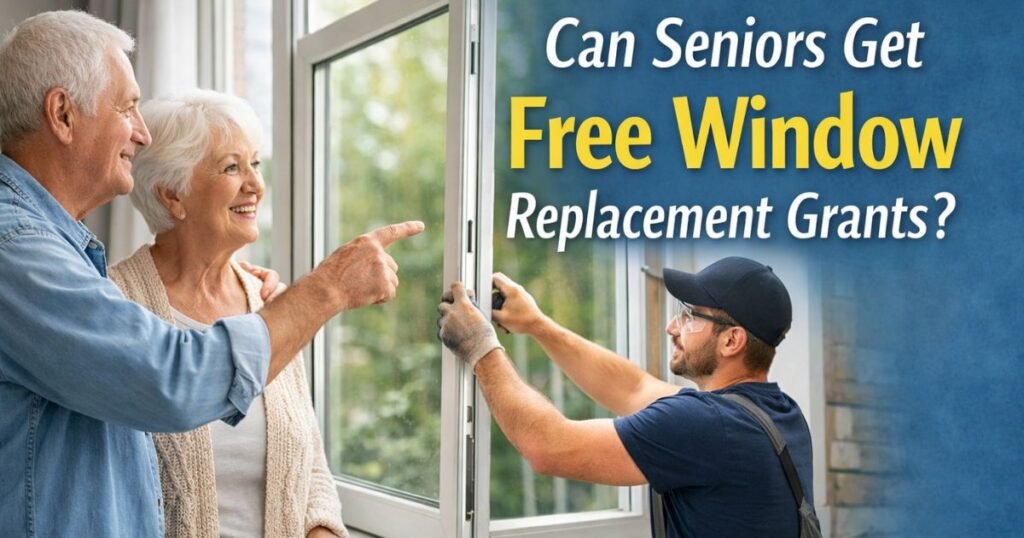
Can Seniors Get Free Window Replacement Grants?
If you have spent any time searching the internet for help, you have probably seen flashy advertisements promising completely free windows from the government. It is important to know the reality behind those headlines right away so you can focus on the real, legitimate ways to get assistance.
There is no single federal grant specifically named the “Senior Free Window Grant.”
Instead, the government funds broader home weatherization grants and low-income senior home repair grants. These programs look at your home as a complete system. If your windows are broken, rotting, or severely leaking air, these programs may replace them for free as part of a larger plan to make your home safe and energy-efficient.
Depending on your specific situation, the assistance you get will generally fall into one of three categories:
1. Low-Interest Repair Loans: If your income is a bit too high for a free grant, programs like the USDA Section 504 program offer loans with interest rates as low as 1% to make fixing your home incredibly affordable.
2. Full Grants (100% Free): If your income is below a certain level and you apply through a program like the Weatherization Assistance Program, you may receive free replacement windows for seniors without paying a single penny.
3. Partial Grants or Rebates: Some programs or local utility companies will pay for a portion of the windows, or give you cash back after you install energy-efficient models.
READ MORE: Free Home Repair for Seniors | Grants, Programs & Help Near You
Why Seniors Need Window Replacement Assistance
Seniors face unique challenges that create more window replacement than a cosmetic upgrade; This is a requirement.
- Energy Efficiency – Old windows often let in drafts, causing heating and cooling systems to work overtime. For seniors living on tight budgets, higher energy bills can be devastating. New, energy-efficient windows significantly lower utility costs, saving money in the long run.
- Safety Concerns – Fragile, outdated windows can be a security risk. Seniors are particularly vulnerable to break-ins or accidents caused by windows that don’t lock properly. Replacing them adds an extra layer of safety.
- Comfort and Health – Drafty windows create uneven indoor temperatures, which can negatively affect health, especially for seniors with respiratory issues or weakened immune systems. Proper insulation from new windows ensures year-round comfort.
Types of Window Replacement Grants Available
There are several different sources of financial help available for seniors in need of new windows.
- Federal Assistance Programs – These programs are backed by the government and often focus on low-income households and seniors. Examples include the Weatherization Assistance Program and HUD-funded initiatives.
- State-Funded Initiatives – Many states have their own energy efficiency and housing programs that provide funding for window replacement.
- Non-Profit Organizations – Charities such as Habitat for Humanity and Rebuilding Together provide home repair services, including window replacement, for seniors in need.
- Utility Company Rebates – Some energy providers offer rebates to customers who install energy-efficient windows, helping offset costs.
Who Qualifies for Free Window Replacement Assistance?
Because these programs use public taxpayer money or charity funds, they have strict rules about who gets help first. They want to make sure the assistance goes to the people who need it most.
While every specific program has its own rulebook, most look at the same basic criteria:
- Income Limits: This is the biggest factor. Almost all free home weatherization grants require your household income to be at or below a certain percentage of the Federal Poverty Level or your county’s Area Median Income (usually 50% to 80% or less).
- Age Requirements: While some low-income programs are open to all ages, being 60 or 62 years of age or older often gives you priority status or unlocks special grant funds that younger homeowners cannot get.
- Homeownership: You must legally own the home and be able to prove it with a deed. Some programs allow renters to benefit, but the landlord must sign off and agree to certain terms.
- Primary Residence: The home must be your main living space. Programs will not pay to fix up a vacation home, a seasonal cabin, or a property you rent out to someone else.
- Priority Status: If you or someone in your home is living with a disability, or if you are a veteran, your application will often be pushed to the front of the line.
Senior Eligibility Checklist for Window Replacement Grants
Before applying to any program, ask yourself these basic questions to see if you are on the right track:
- [ ] Are you at least 60 or 62 years old? (Required for specific senior grants).
- [ ] Is your name on the legal deed to the home?
- [ ] Have you lived in this home as your primary residence for at least one year?
- [ ] Is your total household income considered “low” or “very low” for your county?
- [ ] Are your current windows noticeably drafty, damaged, foggy, or broken?
READ MORE: LiDAR ECOVACS Goat Lawn Mowers for Seniors: Review, Comparison & Top Picks
Documents You’ll Need for Window Replacement Grants
When you apply for government assistance, you have to prove that you meet their guidelines. The agency will ask for a pile of documentation. To make sure your application moves through the system as quickly as possible, gather copies of these items into a single folder before you start:
- Government-Issued Photo ID: A valid driver’s license, state identification card, or passport to prove your identity and age.
- Proof of Homeownership: A copy of your property deed, recent mortgage statement, or official property tax records showing that your name is on the title.
- Proof of Primary Residence: A recent utility bill (electric, gas, or water) that matches both your name and the home address.
- Proof of Income: Your most recent benefit verification letter from Social Security (SSA), pension statements, or copies of your last federal tax return. If other adults live in the house, you must provide their pay stubs or income documentation as well.
- Home Insurance Verification: A copy of your current homeowner’s insurance policy declaration page.
Best Government Programs That May Pay for Window Replacement
Let’s look at the actual government window replacement programs that have real funding to help you fix up your home. These are legitimate, official programs that you can apply for through local or federal offices.
1. Weatherization Assistance Program (WAP)
Administered by the U.S. Department of Energy (DOE), the Weatherization Assistance Program is the largest and most successful program of its kind. It is designed to help low-income families reduce their energy costs by making their homes highly energy-efficient.
WAP does not just show up and install windows because you asked for them. Instead, an energy auditor will come to your house to perform a free energy checkup. They use specialized tools to find exactly where your home is losing air. If the audit proves that replacing your windows is a cost-effective way to save energy, the program will cover 100% of the cost of brand-new, energy-efficient windows.
| Weatherization Assistance Program Pros | Weatherization Assistance Program Cons |
| Completely 100% free with no repayment | Waitlists can be very long (sometimes months or over a year) |
| Includes a professional, full-home energy audit | Windows are only replaced if the audit proves they save enough energy |
| Upgrades your entire home (insulation, air sealing, etc.) | Strict income limits apply to the entire household |
Income Limits: Your household income generally must be at or below 200% of the Federal Poverty Guidelines. For a single person living alone in 2026, this limit is approximately $31,920 per year (higher in Alaska and Hawaii). If you receive Supplemental Security Income (SSI) or Temporary Assistance for Needy Families (TANF), you are automatically eligible.
How to Apply: You do not apply directly to Washington D.C. Instead, search for your state’s weatherization office or contact your local Community Action Agency to request an application form.
Quick Take: WAP is your best option for completely free windows, but remember that they prioritize households with elderly residents, people with disabilities, and families with children first.
2. USDA Section 504 Home Repair Program
If you live in a rural area or a small country town, the United States Department of Agriculture (USDA) has an incredible program called the Section 504 Home Repair Program. It provides both home improvement grants for seniors and low-interest repair loans to help very-low-income homeowners fix up their properties.
- The Grant Side: If you are 62 years old or older and you cannot afford to pay back a loan, you can qualify for a lifetime grant of up to $10,000. This grant money must be used to remove health and safety hazards from your home. Broken, un-openable, or severely rotting windows absolutely count as a safety hazard. As long as you live in that home for at least three more years after the work is done, you never have to pay a single dollar of this grant back.
- The Loan Side: Homeowners of any age can borrow up to $40,000 at a fixed, locked-in interest rate of just 1% for up to 20 years. If your window project costs more than $10,000, you can actually combine a loan and a grant together for up to $50,000 in total assistance.
- Eligibility Rules: You must own and occupy the home, live in an officially designated rural area (usually a town with a population under 35,000), and have a household income that falls below 50% of your county’s median income.
- How to Apply: You can use the USDA’s online property eligibility tool to confirm your address qualifies, then contact your local USDA Rural Development field office to fill out Form RD 410-4.
Quick Take: If you are 62+ and live in a small town or rural area, the USDA Section 504 grant is one of the most reliable ways to get up to $10,000 for emergency window repairs.
3. HUD Community Development Block Grant (CDBG)
The U.S. Department of Housing and Urban Development (HUD) hands out large chunks of money to local city and county governments every year through the Community Development Block Grant (CDBG) program. Local governments then use this money to fund their own neighborhood improvement projects, which often include low-income senior home repair grants.
Because these programs are managed entirely at the local level, they go by many different names depending on where you live. Your town might call it the “Emergency Home Repair Program,” the “Senior Housing Rehabilitation Program,” or the “Home Modification Grant.” Many of these programs offer deferred loans or direct grants specifically to help seniors replace old windows, repair roofing, or update dangerous electrical wiring.
- How to Apply: Call your local city hall or county courthouse and ask for the Department of Housing, Community Development, or Senior Services. Ask if they have any active CDBG home repair grants or programs for senior homeowners.
Quick Take: CDBG funds are highly localized. Some towns have plenty of money available, while others run out early in the fiscal year, so it pays to call your local housing office early.
READ MORE: Salvation Army Free Car Program (Eligibility & How to Apply)
4. LIHEAP (Low Income Home Energy Assistance Program)
You probably know LIHEAP as the federal program that helps low-income households pay their heating and cooling bills during freezing winters and boiling summers. However, many people do not realize that a portion of LIHEAP funding is legally allowed to be redirected into home weatherization grants.
In many states, when you apply for utility bill assistance through LIHEAP, the agency will automatically check to see if your home needs structural energy improvements. If your windows are letting massive amounts of air escape, the LIHEAP agency can refer you directly to a fast-tracked weatherization program that handles window repairs and insulation updates.
- How to Apply: Contact the same local agency or utility assistance office where you apply for help paying your winter heating bills.
Quick Take: Use LIHEAP as a backdoor entryway. Getting approved for utility bill help often grants you automatic, fast-tracked approval for free home insulation and window sealing.
5. State Energy Efficiency Programs
Beyond federal funding, many individual states run their own clean energy funds. State energy offices frequently manage energy-efficient window grants funded by state environmental initiatives or carbon-reduction programs.
States like New York, California, Massachusetts, and Illinois have highly active state energy authorities that offer specialized grants specifically for seniors and low-income homeowners to upgrade to Energy Star certified windows.
- How to Apply: Visit the website of your state’s official government portal and look for the “Department of Energy” or “State Energy Office” to view local residential grant opportunities.
6. Utility Company Rebates
While not technically a government grant, your local electric or gas utility company is often legally required by state regulators to reduce overall energy demand. To do this, they offer generous rebates to customers who upgrade their homes with energy-efficient windows.
Some utility companies have dedicated income-qualified paths. Instead of making you buy the windows and waiting for a rebate check, their “low-income energy saver” programs will send a certified contractor to your home to install weather-stripping, window film, or even brand-new windows entirely free of charge.
- How to Apply: Look at your most recent utility bill for an information number, or visit your power company’s website and click on the “Rebates,” “Energy Efficiency,” or “Community Assistance” tabs.
READ MORE: Best Smart TV for Seniors: Easy to Use & Large Screen Picks
Nonprofit Organizations That Help Seniors Replace Windows
If you find that you don’t quite qualify for government grants, or if the government waitlists in your area are simply too long, do not give up hope. Several incredible national and local nonprofit organizations specialize in senior home repair assistance.
1. Rebuilding Together
Rebuilding Together is a massive national nonprofit network that focuses entirely on preserving affordable homeownership and helping seniors age in place safely. They have local affiliates all over the United States. Through their “Safe at Home” and “Home Repair” programs, teams of skilled volunteers, tradespeople, and contractors come out to seniors’ homes to complete critical repairs completely free of charge. They frequently handle window repairs, draft sealing, and complete window replacements for older adults who cannot safely complete the work themselves or afford a commercial contractor.
2. Habitat for Humanity
Most people know Habitat for Humanity for building brand-new houses, but they also run a highly active Home Preservation Program. This program helps existing low-income homeowners especially seniors, veterans, and people with disabilities maintain and repair their current homes. They offer heavily subsidized repair work, which can include window replacement. Depending on your income, the cost might be completely covered by charity funds, or you may be asked to pay a tiny, interest-free amount back over time.
3. Area Agencies on Aging (AAA)
The Area Agency on Aging is a nationwide network of state and local non-profit organizations dedicated to helping older adults grow old safely in their own homes. Every county or region has an AAA office. While they don’t usually hire window installers themselves, they act as the ultimate local resource directory. They know about small, private local charity funds, church groups, and community grants that never show up on a standard Google search.
4. Community Action Agencies (CAA)
Community Action Agencies are local non-profit and public organizations established by the government to fight poverty at the neighborhood level. They are almost always the exact local agencies that manage the federal Weatherization Assistance Program (WAP) and LIHEAP funds. Walking into your local CAA office is like a one-stop-shop for low-income assistance.
5. Faith-Based Charities and Local Senior Groups
Never underestimate the power of your local community. Organizations like Catholic Charities, The St. Vincent de Paul Society, Volunteers of America, and local chapters of the Rotary or Lions Club frequently run emergency home repair funds. Many of these groups keep a running list of retired local carpenters or handymen who are willing to donate their time and skills to fix drafty or broken windows for elderly neighbors.
Veterans Programs for Window Replacement
If you served in the United States Armed Forces, or if you are the surviving spouse of a veteran, you have access to specialized paths for senior home repair assistance that civilian homeowners do not.
- VA Housing Grants: The Department of Veterans Affairs offers grants like the Specially Adapted Housing (SAH) grant and the Home Improvements and Structural Alterations (HISA) grant. While these grants are primarily designed to make a home wheelchair accessible or medically safe, if your old windows are a safety risk or interfere with proper home ventilation required for a medical condition, these funds can be used to pay for modifications.
- State Veteran Homes & Assistance: Many states run their own independent Departments of Veterans Affairs. These state-level offices often have dedicated grant programs or emergency financial funds to help aging veterans keep their primary residences safe and warm.
- Veterans Nonprofits: Organizations like The American Legion, VFW (Veterans of Foreign Wars), and national charities like Purple Heart Homes or The Home Depot Foundation specialize in stepping in to complete home renovations, roof repairs, and window replacements for aging veterans.
READ MORE: Home Loans for Seniors on Social Security
How Much Does Window Replacement Cost?
To understand why grants are so valuable, it helps to look at the real-world costs of buying and installing windows today. Window prices vary wildly depending on the style of the window, the material of the frame (vinyl, wood, or fiberglass), and the cost of local labor.
The table below shows realistic, average 2026 cost estimates across the United States, including standard professional installation fees:
| Window Type | Estimated Cost Per Window (With Installation) | Key Characteristics & Best Use |
| Single Window (Basic Fixed) | $350 – $600 | Does not open; best for letting in pure light in hallways. |
| Double-Hung Window | $450 – $950 | Most common home style; both top and bottom sashes slide open. |
| Casement Window | $650 – $1,200 | Cranks outward like a door; excellent for tight, hard-to-reach spots. |
| Sliding Window | $400 – $800 | Slides open horizontally; very easy for seniors to operate. |
| Picture Window (Large) | $700 – $1,500 | Large, fixed sheet of glass designed for a beautiful view; high insulation. |
| Bay or Bow Windows | $2,000 – $6,000 | Large multi-window structures that curve outward from the home walls. |
| Full-Home Replacement | $6,500 – $22,000 | Based on an average 3-bedroom suburban home replacing 10 to 15 windows. |
READ MORE: Free government money for seniors over 60
How to Apply for Window Replacement Grants
Applying for window replacement grant may seem complex, but a step-by-step approach makes the process manageable:
- Identify Available Programs – Start with federal resources such as WAP, then check the state housing agencies, non-profit and utility providers.
- Confirm Eligibility – Review income limits, age requirements, and homeownership rules. Some programs require applicants to own and live in the home.
- Gather Documentation – Commonly required documents include proof of income (such as Social Security statements), proof of homeownership, identification, and sometimes medical records showing need.
- Fill Out Applications Carefully – Double-check for errors or missing information. An incomplete application is one of the main reasons for rejection.
- Submit Before Deadlines – Many programs operate on annual funding cycles, so applying early increases the chances of approval.
- Follow Up – Contact the program office to confirm that your application is being processed. Persistence often helps.
Pro tip: Seniors can ask local senior centers, housing consultants, or social workers for assistance to ensure that the applications are filled correctly. These professionals are familiar with this process and can prevent expensive mistakes.
Common Reasons Applications Are Denied
It can be incredibly heartbreaking to spend weeks working on an application only to receive a denial letter. By understanding why most applications fail, you can protect yourself from making the same mistakes.
Windows Aren’t “Cost-Effective”: For programs like WAP, if your current windows are already double-pane or in decent shape, the audit will show that replacing them won’t save enough energy to justify the thousands of dollars spent. The program will redirect funds to insulation or furnace repairs instead.
Income is Too High: Many seniors on modest pensions discover they make just a few hundred dollars a year over the strict program cutoff line. If this happens to you, look into local utility rebates or low-interest loan options instead.
Incomplete Paperwork: Forgetting to sign a page, missing a line on a form, or failing to attach your Social Security award letter will cause the agency to instantly pause or reject your file.
The Home Structure Has Major Issues: If your home’s walls are structurally rotting, or if your roof is actively collapsing, the program may deny your window application. They will not install expensive new windows into a structure that is fundamentally unsafe or unstable.
READ MORE: How To Get Grants For Senior Assisted Living Facilities
Additional Financial Assistance Options
Even if seniors do not qualify for full grants, several other financial resources can help reduce window replacement costs.
- Low-Interest Home Repair Loans – Some government and non-profit programs offer loans with very low interest rates and flexible repayment terms. While not free, they are far more manageable than traditional financing.
- Tax Credits for Energy-Efficient Upgrades – The federal government offers energy-efficiency tax credits for homeowners who install Energy Star-certified windows. Seniors who pay taxes may claim these credits to lower overall costs.
- Community Support Networks – Local senior centers, religious groups, and community development organizations often provide emergency home repair assistance, including window replacement.
- Crowdfunding and Local Donations – Platforms like GoFundMe or neighborhood fundraising initiatives can also help seniors raise the money needed for new windows, especially if their situation is urgent and health-related.
By combining these resources with grants, seniors can significantly reduce or even eliminate the financial burden of window replacement.
How to Avoid Window Grant Scams
Because so many senior homeowners are desperately looking for financial help to repair their homes, dishonest scammers target older adults online. They create high-pressure situations designed to steal your personal information or your money.
WARNING: Red Flags for Senior Window Scams
- They Ask for Money Upfront: A legitimate government grant program will NEVER ask you to pay an application fee, a processing fee, or a deposit. If someone tells you that you have to pay money to “lock in” a free grant, hang up the phone immediately.
- “Guaranteed Approval” Claims: No private contractor can guarantee that you will be approved for a federal or state government grant. Only official agency case managers can determine eligibility after reviewing your financial documents.
- High-Pressure Sales Tactics: If a door-to-door salesman or a phone solicitor pressures you to sign a contract right away “before the grant money runs out today,” step back. Take your time, read everything carefully, and talk to a trusted family member first.
- The Ads Look Too Good to Be True: Millions of online ads that read “Seniors Get Free Windows in [Your City]” are actually just aggressive lead-generation websites. They are designed to trick you into entering your phone number so they can sell your data to high-priced private window companies who will call you non-stop.
READ MORE: Senior Utility Assistance Grants: Help With Bills for Older Adults
Benefits of Window Replacement for Seniors
Replacing old, inefficient windows offers more than just aesthetic improvements; it can transform a senior’s living environment in meaningful ways.
- Lower Utility Bills – New windows improve insulation, which reduces the strain on heating and cooling systems. This can save seniors hundreds of dollars each year.
- Improved Safety and Security – Modern windows come with stronger locks and shatter-resistant glass, offering seniors greater peace of mind.
- Better Health and Comfort – Draft-free homes prevent respiratory issues and make indoor living more pleasant. Seniors benefit from stable indoor temperatures throughout the year.
- Increased Home Value – Window replacement is a long-term investment that boosts property value, an important consideration for seniors planning to pass down their homes to family members.
- Easier Accessibility – Many new window designs are easier to open and close, making daily living more manageable for seniors with limited mobility.
These benefits suggest that window replacement is not only a cosmetic project, but also a significant upgradation for senior welfare and financial stability.
Success Stories of Seniors Who Got Free Window Replacement
Hearing real-life stories can inspire hope and encourage seniors to apply for assistance.
Take the case of Helen, a 75-year-old widow living on Social Security. Her heating bills were sky-high due to old, drafty windows. She applied for the Weatherization Assistance Program (WAP) through her state’s energy office and was approved. Within weeks, contractors installed energy-efficient windows, cutting her monthly utility bills by nearly 40%.
Another example is George and Linda, a retired couple in their late 60s. They owned their home but couldn’t afford necessary upgrades. Through Habitat for Humanity’s repair program, volunteers replaced their broken windows at no cost. Not only did this save money, but it also made their home safer and more comfortable.
These stories prove that grants and community support programs work. The departed feelings should remember that many other people have been successfully helped; It just takes perseverance and desire to apply.
Conclusion
Window replacement is often overlooked until it becomes an urgent need, but for seniors, it can make all the difference in safety, comfort, and financial well-being. While the costs can be overwhelming, free window replacement grants and financial assistance programs are available through federal agencies, state programs, non-profits, and utility providers.
By understanding eligibility requirements, avoiding common mistakes, and applying to multiple programs, seniors greatly improve their chances of securing help. Beyond grants, tax credits, rebates, and community support provide additional relief, ensuring that no senior has to live in a drafty, unsafe, or uncomfortable home.
The key message is clear: seniors should never assume window replacement is out of reach. With persistence, research, and the right resources, free or low-cost window upgrades are absolutely possible.
FAQs
Does Medicare cover window replacement costs?
No. Medicare does not cover home repairs or window replacement. Seniors must rely on grants, state programs, or non-profits for this type of assistance.
What is the Weatherization Assistance Program?
WAP is a federal program that helps low-income households, including seniors, improve energy efficiency in their homes. It often covers window replacement, insulation, and other upgrades.
Can renters qualify for window replacement grants?
In most cases, grants are for homeowners. However, some state and local programs may assist renters if the landlord agrees to the improvements.
How long does it take to receive grant approval?
Processing times vary by program. Some grants approve applications within weeks, while others may take several months depending on funding availability.
Are there programs that cover full window replacement costs?
Yes. Programs like WAP, Section 504 Home Repair, and certain non-profits can fully fund window replacement for eligible seniors, depending on need and available funds.