The Supplemental Nutrition Assistance Program Nevada is designed to bridge this exact gap. Often referred to by its traditional name, Nevada food stamps, this essential federal program helps low-income individuals, disabled adults, and older residents purchase the food they need to maintain their health and independence.
If you are a senior citizen, a caregiver, or a family member looking out for an older loved one in Nevada, this comprehensive guide is for you. We will break down exactly how the nutrition assistance program Nevada works, who qualifies under the specific guidelines, how to navigate the application process step-by-step, and where to find extra food assistance in Nevada if you need immediate help. Lets deep dive into “Supplemental Nutrition Assistance Program Nevada | Eligibility & Apply”
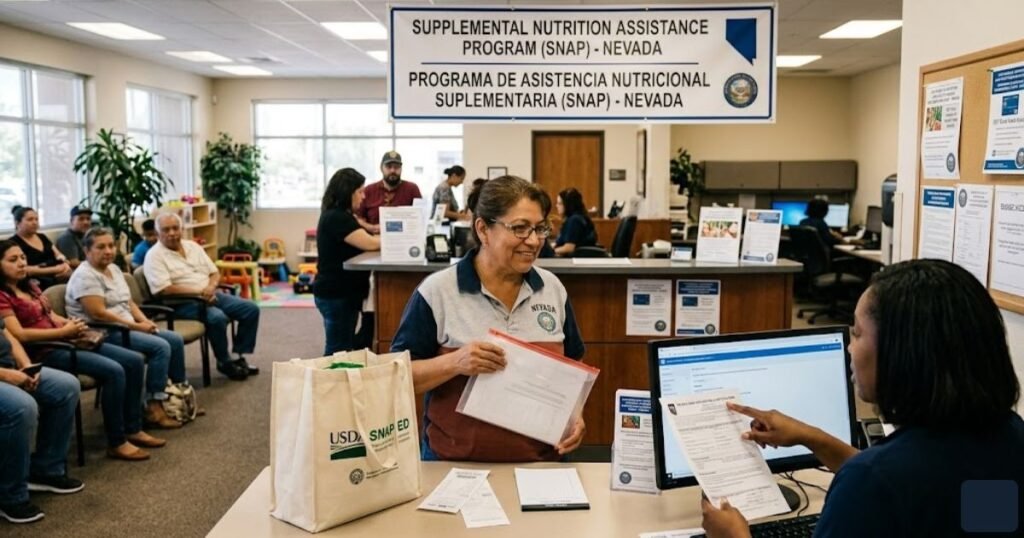
What Is the Supplemental Nutrition Assistance Program in Nevada?
The Supplemental Nutrition Assistance Program Nevada (SNAP) is a federal program designed to supplement the grocery budgets of low-income families and older adults. In Nevada, the program is administered at the state level by the Division of Welfare and Supportive Services (DWSS).
SNAP operates by providing monthly financial assistance dedicated solely to food. Instead of paper coupons, benefits are distributed electronically each month onto a plastic debit-style card known as the Nevada EBT card (Electronic Benefit Transfer). This system allows participants to shop with discretion, dignity, and ease at thousands of approved retailers across the state.
For seniors, SNAP is far more than a financial safety net; it is a vital pillar of health care. Malnutrition among older adults can accelerate chronic conditions, weaken the immune system, and lead to a loss of physical independence. By ensuring access to fresh produce, lean proteins, dairy, and whole grains, SNAP helps seniors maintain their well-being and age comfortably in their own homes.
READ MORE: Supplemental Payments for SSI Recipients: State-by-State List, Amounts, and Eligibility Rules
Who Can Get SNAP Benefits in Nevada?
Understanding SNAP eligibility Nevada guidelines is the first step toward getting help. Many older Nevadans mistakenly assume they do not qualify for assistance because they own a home or receive Social Security. However, the program features special, highly flexible rules specifically designed to protect adults aged 60 and older.
To qualify for SNAP in Nevada, a household must meet specific residential, identity, and financial criteria:
- Nevada Residency: You must legally reside within the state of Nevada.
- Citizenship Status: Applicants must be U.S. citizens or hold a qualified legal immigrant status.
- Social Security Number: Every household member applying for benefits must provide a valid Social Security Number (SSN) or proof that they have applied for one.
- Work Requirements: While able-bodied adults under 64 without dependents face strict work reporting rules, seniors aged 60 and older are entirely exempt from federal SNAP work requirements.
Understanding the Income and Asset Limits
Financially, SNAP evaluations look at both your gross income (total income before taxes and deductions) and net income (income left over after allowable deductions).
The Senior Exception: In Nevada, most standard households must pass a gross monthly income test set at 200% of the Federal Poverty Level (FPL). However, households containing an elderly member (60+) or a person with a disability only need to meet the net income limit to qualify. This means your total monthly income can be higher, as long as your take-home amount after deducting expenses like medical care and housing falls within the guidelines.
The table below outlines the maximum monthly income limits and maximum asset allotments for Nevada households through September 30, 2026:
| Household Size | Maximum Gross Monthly Income (200% FPL) | Maximum Net Monthly Income (100% FPL) | Maximum Allotment (Highest Benefit Amount) |
| 1 Person | $2,610 | $1,305 | $298 |
| 2 People | $3,526 | $1,763 | $546 |
| 3 People | $4,442 | $2,221 | $785 |
| 4 People | $5,360 | $2,680 | $994 |
Asset Limits for Seniors
Assets are “countable resources” like cash on hand, funds in a checking or savings account, or stocks and bonds. Your primary home, your personal vehicle, your clothing, and standard household items never count against you.
- Standard households in Nevada have an asset limit of $3,000.
- Households with at least one member who is 60 or older or disabled enjoy an expanded asset limit of $4,500.
READ MORE: How to Apply for SNAP Benefits as a Low-Income Older Adult
How Seniors in Nevada May Benefit from SNAP
Living on a fixed income presents unique financial challenges. For many older adults, retirement funds, pensions, or Social Security checks do not increase at the same pace as real-world expenses. When utility costs rise in the hot Nevada summers or prescription copays spike, the grocery budget is often the first thing to be slashed.
Participating in the Supplemental Nutrition Assistance Program Nevada helps stabilize an older adult’s budget. By shifting a significant portion of food costs to the Nevada SNAP benefits program, seniors free up critical cash to pay for other essentials:
- Stretching a Limited Budget: Receiving even the minimum monthly SNAP allotment can cover a week or two of groceries, allowing funds to go toward home repairs, heating, or cooling.
- Prioritizing Health Over Cost: Instead of buying cheap, highly processed, shelf-stable foods packed with sodium, seniors can use their benefits to purchase fresh vegetables, fruits, and dietary-specific items that manage conditions like diabetes or high blood pressure.
- Overcoming the “Pride Barrier”: Many older Nevadans feel that applying for assistance takes away from someone else who needs it more. It is vital to remember that SNAP is an entitlement program funded by tax dollars. Utilizing these benefits does not reduce the amount available to others; rather, it pumps federal dollars directly back into local Nevada grocery stores and farmers’ markets.
READ MORE: SSDI vs. Retirement Benefits: What’s the Difference?
How to Apply for SNAP in Nevada
Taking the first step to apply for SNAP in Nevada is straightforward. The state provides several convenient methods to submit an application, allowing you to choose the option that feels most comfortable for your mobility and technology preferences.
Step-by-Step Application Process
1.Gather Your Core Information:
Before starting, collect your personal details, including your Social Security Number, proof of identity, monthly income details (such as your Social Security award letter), and details regarding your monthly housing and medical bills.
2.Submit Your Formal Application:
Choose how you prefer to apply: online via the Access Nevada portal, via mail, or in person at a local welfare office. Once submitted, your application establishes a formal filing date with the DWSS.
3.Complete the Eligibility Interview:
After processing your initial paperwork, a DWSS caseworker will contact you to schedule an interview. For your convenience, this is typically handled over the phone. They will review your answers and tell you exactly which verification documents are still required.
4.Provide Required Verification Documents:
Submit any remaining proof requested by your caseworker (such as bank statements or medical receipts). You generally have 30 days from your application date to supply these documents to prevent your case from being delayed or denied.
Methods to Submit Your Application
If you are ready to file, choose one of the three primary paths below:
- Online (Fastest Option): Visit the Access Nevada website (the online portal for the Division of Welfare and Supportive Services). You can create an account or select “Apply as a Guest” to complete your application digitally in roughly 20 to 30 minutes.
- By Mail or Fax: If you prefer paper, you can download and print the official “Application for Assistance” from the DWSS website. Fill it out by hand and mail or fax it directly to your regional Social Services or DWSS office.
- In Person: Walk into any local DWSS office to pick up a paper application, fill it out on-site, and turn it in directly to an intake clerk.
How Long Does Approval Take?
Under normal circumstances, the state of Nevada must process your application and send an approval or denial notice within 30 days.
However, if your household has little to no income and virtually no cash on hand, you may qualify for Expedited SNAP. If you meet these emergency criteria, the DWSS must issue your Nevada EBT card and benefits within 7 business days of receiving your application.
READ MORE: Low Income Home Energy Assistance Program: LIHEAP Benefits and How to Apply
What Documents Do I Need to Apply for SNAP?
To prevent delays during your review, it is highly recommended to gather your paperwork ahead of time. Use this convenient checklist to prepare the items your caseworker will need to see:
- Proof of Identity: A valid Nevada driver’s license, state ID card, passport, or birth certificate.
- Proof of Residency: A recent utility bill, rental agreement, or mortgage statement showing your current Nevada address.
- Proof of Monthly Income: Social Security award letters, pension statements, veterans benefit statements, or pay stubs if you work part-time.
- Bank Statements: Recent statements for checking accounts, savings accounts, or certificates of deposit (CDs) to verify your resource limits.
- Out-of-Pocket Medical Expenses: Detailed, itemized receipts or bills for recurring medical costs that you pay yourself (only required for those 60+ or disabled).
- Housing and Utility Bills: Your current rent receipt, lease, or mortgage statement, along with recent electric, gas, water, or phone bills to help maximize your housing deduction.
What Can You Buy With SNAP Benefits?
Once your application is approved, your monthly funds will automatically accumulate on your Nevada EBT card. This card operates just like a standard bank debit card at checkout lines. You simply swipe the card, enter your private 4-digit PIN, and the cost of your eligible items is subtracted from your balance.
Knowing what items are approved helps you plan your grocery shopping trips efficiently.
Approved Food Items
You can use your SNAP funds to buy any food intended for home consumption, including:
- Fruits, vegetables (fresh, frozen, or canned), and organic produce
- Meat, poultry, fish, and seafood
- Dairy products, including milk, cheeses, yogurts, and butter
- Breads, tortillas, cereals, oatmeal, and whole grains
- Snack foods, non-alcoholic beverages, juices, and bottled water
- Seeds and food-producing plants to grow your own vegetables or herbs at home
Non-Approved Items
By federal law, SNAP benefits are intended strictly for un-prepared grocery items. You cannot use your EBT card to purchase:
- Hot, prepared foods ready to eat at the time of purchase (such as supermarket rotisserie chickens or hot deli meals)
- Alcoholic beverages, beer, wine, or liquor
- Tobacco products or cigarettes
- Vitamins, medicines, supplements, or items featuring a “Supplement Facts” label
- Pet food, pet supplies, and birdseed
- Non-food household items, including soaps, paper towels, cosmetics, toilet paper, and cleaning supplies
SNAP Benefits and Limitations at a Glance
SNAP has clear strengths, and it also has limits. It helps with food, but it does not pay for everything. Knowing both sides can help seniors use the benefit wisely.
Benefits:
- Helps reduce grocery bills
- Supports healthier food choices
- Works at approved stores and many online retailers
- Can ease pressure on a tight monthly budget
Limitations:
- Cannot be used for nonfood household items
- Cannot be used for alcohol, tobacco, or medicine
- Cannot pay delivery fees or service fees online
- Must be renewed and reported properly to stay active
READ MORE: Best Smart TV for Seniors in 2026: Easy to Use & Large Screen Picks
Tips for Seniors Applying for SNAP
Filing paperwork with a state agency can feel overwhelming. These practical tips can help seniors and caregivers navigate the system smoothly and maximize their monthly benefit amounts:
1. Maximize Your Unreimbursed Medical Deduction
This is the single most important tip for older adults. If you are 60 or older, you can deduct out-of-pocket medical expenses that exceed $35 a month from your income calculation. This includes doctor copays, dental treatments, prescription medications, over-the-counter supplies recommended by a doctor, health insurance premiums, and even transport costs to medical appointments. Showing these expenses reduces your net income on paper, which significantly increases the amount of monthly SNAP dollars you receive.
2. Claim Your Full Housing and Utility Costs
Be sure to report exactly what you spend on rent, mortgage, home insurance, and utilities. Nevada utilizes a “Standard Utility Allowance” deduction. If you show that you pay for heating or cooling costs independently, you can qualify for a higher shelter deduction, which also raises your monthly food benefit.
3. Keep Your Contact Information Current
If you move to a new apartment, change your phone number, or experience a change in your household size, notify the DWSS within 10 days. The state sends critical renewal notices through the mail. If a letter is sent to an old address and goes unanswered, your benefits will instantly pause.
4. Complete Your Renewals on Time
SNAP benefits are approved for a specific timeframe, typically 12 to 24 months for seniors. Before this period ends, you will receive a simplified renewal form. Complete and return this form promptly to ensure your grocery assistance continues without a gap.
READ MORE: 8 Best Light Lawn Mower for Seniors: Review & Comparison
Other Food Assistance Resources in Nevada
While the Supplemental Nutrition Assistance Program Nevada is the largest and most reliable source of ongoing low-income senior food help, it can sometimes take a few weeks to set up. If you need immediate nutrition support or want to supplement your EBT benefits, several excellent programs operate throughout Nevada:
Food Banks and Emergency Pantries
Nevada is anchored by two massive regional food banks that distribute millions of pounds of food annually through local church pantries, community centers, and mobile pop-up markets:
- Three Square Food Bank (Southern Nevada): Serving Clark, Lincoln, Nye, and Esmeralda counties. They offer specialized senior grocery programs and drive-thru pantries.
- Food Bank of Northern Nevada (FBNN): Serving Reno, Sparks, Carson City, and rural northern counties. FBNN operates a “Senior Share” program delivering supplemental grocery boxes directly to low-income older adults.
Senior Meal Programs and Nutrition Services
- Meals on Wheels: For homebound adults aged 60 and older who are unable to cook or shop for themselves, local agencies deliver nutritious, fully prepared hot meals directly to their doorsteps. Organizations like Catholic Charities of Southern Nevada and individual county senior centers manage these programs.
- Congregate Dining Centers: Many local neighborhood senior centers across Nevada offer free or low-cost hot lunches in a communal setting. This provides older adults with a balanced meal alongside valuable social interaction and community connection.
- The Commodity Supplemental Food Program (CSFP): This unique federal program provides a monthly box of nutritious, shelf-stable USDA foods specifically to low-income seniors aged 60 and older. It can be used simultaneously alongside your monthly SNAP benefits.
READ MORE: Best Video Doorbell for Seniors: Wireless, Without Subscription, Easy & Safe
Common Mistakes to Avoid
To guarantee a hassle-free experience with the nutrition assistance program Nevada, steer clear of these frequent pitfalls:
- Assuming You Don’t Qualify: Don’t talk yourself out of applying! Many seniors assume their modest retirement income disqualifies them, forgetting that the state applies special medical and housing deductions that alter the math in their favor.
- Leaving Out Medical Expenses: Failing to report out-of-pocket medical costs is the most common reason seniors receive the bare minimum benefit amount instead of a more substantial monthly allotment.
- Missing the Eligibility Interview: If the DWSS schedules a phone interview, make sure you are near your telephone at that exact time. Missing the call can delay your application or cause it to be closed entirely.
- Forgetting to Sign the Paperwork: If you submit a physical application by mail, double-check that you signed and dated the signature page. Unsigned forms will be mailed right back to you, reset your timeline, and delay your assistance.
Frequently Asked Questions (FAQs)
What is the Supplemental Nutrition Assistance Program in Nevada?
The Supplemental Nutrition Assistance Program in Nevada is a food assistance program that helps eligible low-income households buy groceries. In Nevada, benefits are loaded onto an EBT card and can be used at SNAP-authorized retailers for eligible food items.
Who qualifies for SNAP benefits in Nevada?
SNAP eligibility in Nevada depends on household income, household size, citizenship or qualified non-citizen status, and other household factors. Seniors and disabled applicants may also benefit from certain deductions, including medical expenses that can help lower countable income.
How do seniors apply for SNAP in Nevada?
Seniors can apply through Access Nevada or get help from the state’s food assistance offices. Nevada says SNAP is usually processed within 30 days, and households with very little income may qualify for expedited service within 7 days.
Can I use SNAP benefits to buy groceries online in Nevada?
Yes. USDA says SNAP online shopping is available in all 50 states and the District of Columbia, and Nevada’s guidance specifically mentions Amazon and Walmart. Only eligible food can be purchased, and delivery or service fees cannot be paid with SNAP.
What documents do I need to apply for SNAP in Nevada?
You may need identification, Social Security numbers for applicants, proof of income, housing costs, utility bills, and medical expense records if you are a senior or disabled applicant. Nevada’s application materials also show that the office may ask for additional verification during the interview process.
READ MORE: Salvation Army Free Car Program (Eligibility & How to Apply)
Conclusion
Securing proper nutrition is fundamental to healthy aging. The Supplemental Nutrition Assistance Program Nevada provides an invaluable, dignified, and highly effective way for seniors to protect their health, maintain their independent lifestyle, and ease financial stress. By understanding the flexible senior eligibility rules, organizing your paperwork, and completing the straightforward application steps, you can confidently claim the grocery support you deserve.
If you or an elderly loved one needs help filling out the application, don’t hesitate to reach out to the Nevada Division of Welfare and Supportive Services, call the toll-free Nevada 211 helpline, or contact a local senior center for hands-on guidance. Food security makes an immense difference take the step to safeguard your health and your budget today.