If you’re a senior watching your grocery bill climb while your Social Security check barely stretches to the next payday, you’re not alone. Rent, medications, heating, and even a simple tank of gas cost more every year. Meanwhile, most retirement income stays flat, or grows only a little through the annual Social Security cost-of-living adjustment.
Here’s the part that surprises most people: billions of dollars in financial assistance for seniors go unclaimed every single year. The National Council on Aging estimates that millions of older adults qualify for benefits they’ve never applied for, often because they assume their income is “too high,” their home ownership disqualifies them, or the paperwork is too complicated to bother with.
None of that has to be true for you. This guide walks through every major program available in 2026 federal, state, and local so you can see exactly what you might qualify for and how to apply. Lets deep dive into “What Financial Assistance Is Available for Seniors? USA 2026 Guide”
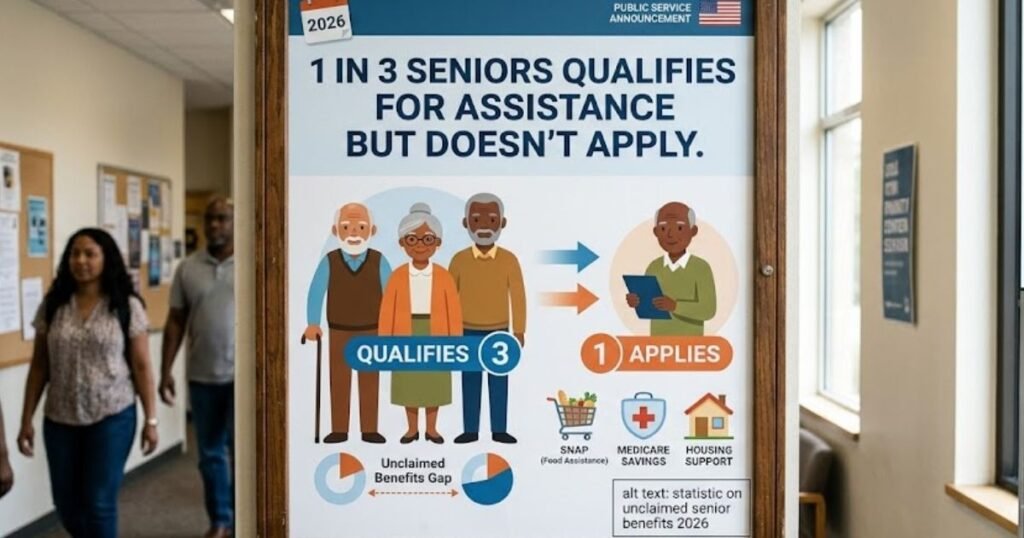
What Financial Assistance Is Available for Seniors?
Financial assistance for older adults falls into several primary categories:
- Direct Cash Assistance: Monthly cash support to supplement retirement income (e.g., Social Security, SSI, VA Pensions).
- Healthcare & Prescription Savings: Coverage for Medicare premiums, deductibles, copays, and prescription drugs (e.g., Medicare Savings Programs, Extra Help, Medicaid).
- Food & Grocery Assistance: Monthly food stipends and meal delivery programs (e.g., SNAP, CSFP, Meals on Wheels).
- Housing & Energy Savings: Rent vouchers, property tax freezes, weatherization grants, and heating/cooling bill discounts (e.g., Section 202, LIHEAP).
- Utility & Communication Discounts: Subsidized phone, internet, and essential utility rates (e.g., Lifeline).
Key Takeaway: You do not have to be living in total poverty to qualify for senior assistance. Many programs use higher income thresholds specifically tailored to help middle-income seniors managing substantial medical or housing expenses.
READ MORE: Monthly Assistance Programs for Seniors: USA Guide
Federal Financial Assistance Programs
1. Social Security Retirement Benefits
Social Security remains the foundation of retirement security for millions of Americans.
- Eligibility: You must have accumulated at least 40 work credits (roughly 10 years of work paying into Social Security).
- Early vs. Full Retirement: You can start receiving benefits as early as age 62, but your monthly check will be permanently reduced. For individuals born in 1960 or later, Full Retirement Age (FRA) is 67.
- Delayed Retirement Credits: Waiting past your FRA up to age 70 increases your monthly benefit by approximately 8% for each year you delay.
- Monthly Benefits & COLA: In 2026, the average monthly benefit for retired workers is around $2,076, with annual Cost-of-Living Adjustments (COLA) applied to keep pace with inflation. The maximum benefit for someone filing at age 70 is $5,181 per month.
- How to Apply: Apply online at SSA.gov, call 1-800-772-1213, or schedule an appointment at your local Social Security office.
2. Supplemental Security Income (SSI)
Supplemental Security Income (SSI) is a federal program that provides monthly cash payments to seniors (aged 65+) and disabled individuals with very limited income and financial resources.
- Income & Asset Limits: To qualify, your individual countable resources generally must not exceed $2,000 ($3,000 for married couples). Your primary home and one vehicle usually do not count as assets.
- Monthly Payments: In 2026, the maximum federal SSI payment is up to $994 per month for individuals and $1,491 per month for eligible couples. Many states offer an additional state supplement.
- How to Apply: Contact the Social Security Administration directly or start your application on SSA.gov.
3. Medicare Savings Programs (MSPs)
Medicare Savings Programs are state-administered programs funded by Medicaid that help lower-income Medicare beneficiaries pay their Medicare costs.
- Qualified Medicare Beneficiary (QMB): Pays Medicare Part A and Part B premiums, deductibles, coinsurance, and copayments. (2026 baseline individual income limit: approx. $1,350/month).
- Specified Low-Income Medicare Beneficiary (SLMB): Pays the monthly Medicare Part B premium. (2026 baseline individual income limit: approx. $1,616/month).
- Qualifying Individual (QI): Also pays the Part B premium on a first-come, first-served basis. (2026 baseline individual income limit: approx. $1,816/month).
- Qualified Disabled and Working Individual (QDWI): Assists working disabled adults in paying Part A premiums.
Pro Tip: Enrolling in any Medicare Savings Program automatically qualifies you for the federal Extra Help program, which drastically reduces your Part D prescription drug costs!
4. Medicaid for Seniors
Medicaid provides comprehensive health coverage for low-income seniors and disabled adults, covering services that Medicare does not usually pay for, such as long-term nursing home care and personal home health care.
- Long-Term & Home Care: Medicaid covers community-based home health aides, adult day care, assisted living (in select states), and nursing facility care.
- Dual Eligibility: If you qualify for both Medicare and Medicaid, you are considered “dually eligible.” Most of your healthcare, hospital visits, and prescription costs will be fully covered with zero or minimal out-of-pocket costs.
- State Differences: Eligibility criteria, income caps, and asset rules vary by state.
5. Low-Income Home Energy Assistance Program (LIHEAP)
LIHEAP is a federal grant program that assists low-income households—particularly older adults—with heating and cooling expenses.
- Heating & Cooling Assistance: Provides direct credit payments to your utility company to pay winter heating or summer cooling bills.
- Crisis Benefits: Emergency funds available if your power is about to be disconnected or if you run out of heating fuel.
- How to Apply: Applications are handled locally through community action agencies, local aging offices, or state energy sites.
6. Lifeline Assistance
Lifeline is a Federal Communications Commission (FCC) program that lowers the monthly cost of phone or broadband internet service.
- Benefit Amount: Up to $9.25 per month toward internet or phone bills (up to $34.25 per month for residents on qualifying Tribal lands).
- Eligibility: You qualify if your household income is at or below 135% of the Federal Poverty Guidelines or if you participate in SNAP, SSI, Medicaid, or Veterans Pension.
7. Veterans Financial Benefits
For senior veterans and surviving spouses, the U.S. Department of Veterans Affairs (VA) provides specialized financial aid:
- VA Pension: A tax-free monthly cash benefit for wartime veterans who meet age or disability criteria and income limits.
- Aid & Attendance (A&A): An additional monthly pension payment added to basic pension for veterans who require assistance with activities of daily living (bathing, dressing, eating).
- Housebound Benefits: Increased pension for veterans who are permanently restricted to their immediate premises.
- VA Healthcare & Caregiver Support: Access to low-cost clinical care, prescription discounts, and support services for family caregivers through the Program of Comprehensive Assistance for Family Caregivers (PCAFC).
READ MORE: Emergency Cash Assistance for Seniors: USA Guide
Housing Assistance for Seniors
Housing expenses represent the single largest expense for most retirees. The following programs help keep housing safe and affordable.
1. Section 202 Supportive Housing for the Elderly
This HUD program finances affordable housing specifically designed for seniors aged 62 and older. Rent is typically capped at 30% of your adjusted monthly income, making living costs manageable regardless of pension size.
2. Housing Choice Vouchers (Section 8)
Section 8 vouchers allow low-income seniors to rent privately owned apartments or houses while paying approximately 30% of their income toward rent. The local public housing agency (PHA) pays the remaining balance directly to the landlord.
3. Public Housing for Seniors
Many local housing authorities operate dedicated public housing buildings designated strictly for elderly and disabled residents, featuring accessible facilities, security systems, and community activities.
4. Home Repair Grants & Weatherization Programs
- USDA Section 504 Single Family Housing Repair Grants: Offers grants up to $10,000 to low-income seniors aged 62+ living in rural areas to remove health and safety hazards or modernize their homes.
- Weatherization Assistance Program (WAP): Funded by the Department of Energy, WAP covers home energy upgrades—such as insulation, window sealing, and HVAC repairs—free of charge to eligible low-income households.
5. Reverse Mortgages (HECMs)
A Home Equity Conversion Mortgage (HECM) allows homeowners aged 62+ to convert part of their home equity into cash without monthly mortgage payments.
- Pros: Supplements monthly cash flow; no monthly repayments required while living in the home.
- Cons: High closing fees, reduces inheritance, and requires homeowners to keep up with property taxes, home insurance, and maintenance.
Healthcare Financial Assistance
Beyond Medicare Savings Programs and Medicaid, seniors have several more ways to cut healthcare costs:
1. Medicare Extra Help (Part D Low-Income Subsidy)
Extra Help assists low-income seniors with Medicare Part D prescription plan costs. In 2026, qualifying individuals pay no more than a few dollars per prescription, and the program eliminates Part D coverage gaps (“donut hole”) and late-enrollment penalties.
2. Community Health Clinics (FQHCs)
Federally Qualified Health Centers provide comprehensive medical, dental, and mental health services on a sliding-fee scale based on your income, regardless of insurance status.
3. Senior Dental, Vision, and Hearing Assistance
Standard Medicare does not cover routine dental, vision care, or hearing aids. Seniors can access support through:
- Dental: Donated Dental Services (DDS), local dental school clinics, and Medicaid (in states with adult dental coverage).
- Vision: EyeCare America (a public service program offering free eye exams to qualified seniors 65+).
- Hearing: Nonprofits such as the Starkey Hearing Foundation and Hearing Aid Assistance programs through state assistive technology centers.
READ MORE: Medical Grants for Seniors: Free Healthcare Financial Assistance
Utility Assistance Programs
On top of LIHEAP, look for:
- Electricity and gas assistance through your state energy office or utility company’s own low-income program.
- Water bill assistance, offered by many municipal utilities.
- Internet discounts, often bundled with Lifeline eligibility.
- Telephone assistance, both landline and mobile.
Many utility companies also offer senior-specific payment plans, so call and ask even if you don’t see a formal program listed.
Food Assistance Programs
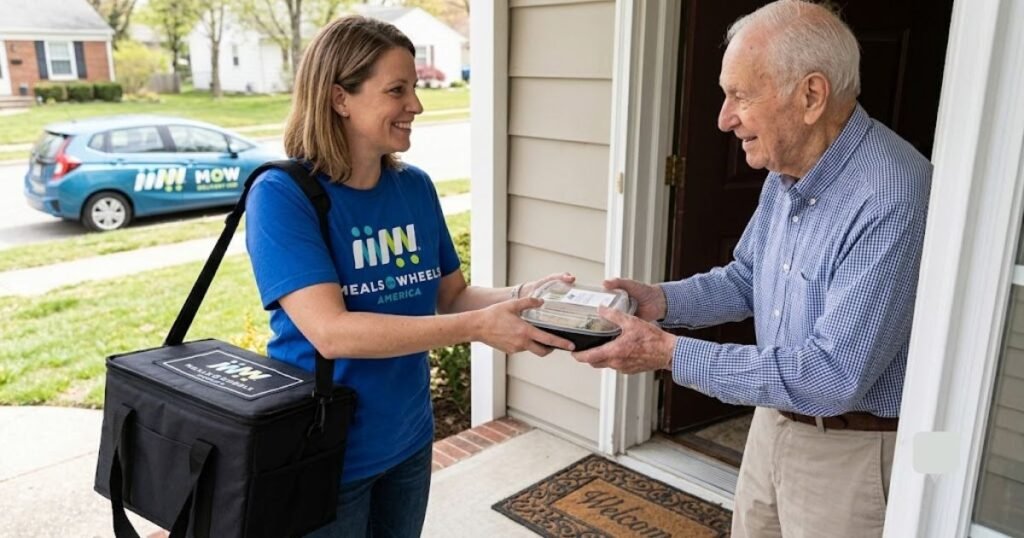
Proper nutrition is essential for healthy aging. Several federal and nonprofit programs ensure seniors have reliable access to healthy food.
1. Supplemental Nutrition Assistance Program (SNAP)
Formerly known as food stamps, SNAP provides monthly funds on an Electronic Benefit Transfer (EBT) card for groceries.
- Senior-Friendly SNAP Rules: Seniors aged 60+ receive simplified application procedures, higher medical expense deduction allowances, and higher asset limits in most states.
- Minimum Benefit: Even qualifying for the minimum benefit frees up money for other household necessities.
2. Commodity Supplemental Food Program (CSFP)
Often called the “Senior Food Box” program, CSFP provides a free monthly package of nutritious foods including canned fruits, vegetables, shelf-stable milk, cereal, oats, cheese, and proteins to low-income adults aged 60 and older.
3. Senior Farmers’ Market Nutrition Program (SFMNP)
Provides low-income seniors with coupons or digital vouchers that can be exchanged at local farmers’ markets and roadside stands for fresh, locally grown fruits, vegetables, honey, and herbs.
4. Meals on Wheels & Congregate Dining
- Meals on Wheels: Delivers hot, nutritionally balanced meals directly to the homes of homebound older adults, providing both nourishment and a daily safety check.
- Congregate Meal Programs: Offered at local senior centers and community halls, providing free or low-cost hot lunches in a social group setting.
READ MORE: Best Cell Phone for Seniors Easy to Use
Transportation Assistance
Getting to appointments and the grocery store shouldn’t be a financial burden:
- Reduced transit fares for riders 60 or 65 and older on most public bus and rail systems.
- Non-emergency medical transportation (NEMT) — often covered by Medicaid for eligible seniors.
- Volunteer driver programs run by local senior centers and faith-based groups.
Property Tax Relief Programs
Many states offer real, meaningful savings on property taxes for older homeowners:
- Homestead exemptions that reduce the taxable value of your home.
- Senior tax freezes, which lock your property tax bill at a set level regardless of rising home values.
- Tax deferral programs, which let you postpone payment until the home is sold.
State Example: States like Texas, Florida, New York (STAR Program), and Illinois offer robust property tax relief options specifically targeted at low- and moderate-income seniors
Emergency Financial Assistance
When an unforeseen crisis arises—such as a sudden medical bill, car breakdown, or home emergency—these temporary resources provide fast relief:
- Community Action Agencies (CAAs): Administer short-term emergency funds for rent, utilities, and emergency medical equipment.
- Charitable & Faith-Based Organizations: The Salvation Army, Catholic Charities, St. Vincent de Paul, and Jewish Family Services frequently provide direct financial micro-grants for utilities, rent arrearages, or emergency prescriptions.
State and Local Assistance Programs
Because benefits vary widely across the country, your local resources are just as vital as federal ones.
Area Agencies on Aging (AAA)
Established under the Older Americans Act, the national network of Area Agencies on Aging (AAA) serves as a local gateway for senior services. Local AAA specialists offer free benefits screening, assistance with complex application forms, and referrals to local adult day care, respite care, and legal aid.
State Pharmaceutical Assistance Programs (SPAPs)
Many states run their own prescription drug assistance programs that coordinate with Medicare Part D to further reduce out-of-pocket medication expenses.
Financial Help from Nonprofit Organizations
Nonprofit organizations fill critical funding gaps for senior assistance:
- National Council on Aging (NCOA): Offers [BenefitsCheckUp.org], a free online tool that scans over 2,500 state and federal benefit programs to match you with available aid based on your ZIP code.
- Feeding America: Coordinates nationwide food pantries and mobile market distribution centers targeting older adults.
- Patient Advocate Foundation: Helps seniors with chronic illnesses navigate insurance disputes and access co-pay relief grants.
READ MORE: Power Lift Recliner Chair for Elderly: Top Picks, Review & Comparison
How to Apply for Senior Financial Assistance
- Gather your documents — Social Security number, proof of income, proof of residency, and identification.
- Verify your income and assets — pull together recent bank statements and benefit award letters.
- Choose your application method — most programs now offer online applications, but phone and in-person options remain available at local offices.
- Submit and follow up — note your confirmation number and expected response time.
- Appeal if denied — every major program has an appeals process. A denial is not always final, and many seniors win on appeal once missing documentation is provided.
Tips to Maximize Your Benefits
- Apply for multiple programs at once; qualifying for one often makes others easier to get.
- Reapply annually, since some programs (like QI) require yearly renewal.
- Check state-specific benefits in addition to federal ones.
- Ask for free Medicare counseling through your State Health Insurance Assistance Program (SHIP).
- Run a free screening through BenefitsCheckUp.
- Call your local Area Agency on Aging for personalized guidance.
- Keep your income and household records updated with every agency.
Common Mistakes Seniors Make
- Assuming their income is too high without actually checking the limits.
- Missing renewal deadlines and losing benefits unnecessarily.
- Overlooking state and local programs that pair with federal ones.
- Giving up after a denial instead of filing an appeal.
- Forgetting to update agencies when income, address, or household size changes.
Comparison Table of Major Programs
| Program | Who Qualifies | What It Helps Pay For | Monthly/Annual Benefit | How to Apply |
| Social Security | Age 62+ with work history | General living expenses | ~$2,064/month average (2026) | ssa.gov |
| SSI | Age 65+, low income/assets | General living expenses | Up to $994/month individual (2026) | ssa.gov or local SSA office |
| SNAP | Low-income households, easier rules for 60+ | Groceries | Varies by household size and income | State SNAP agency |
| Medicare Savings Programs | Medicare beneficiaries, limited income | Part A/B premiums, deductibles, coinsurance | Up to $2,434+/year in premium savings | State Medicaid office |
| Medicaid | Low-income, aged, or disabled | Healthcare, long-term care | Varies by state | State Medicaid office |
| LIHEAP | Low-income households | Heating/cooling bills | Varies by state and need | State/county LIHEAP office |
| Housing Assistance (Section 8/202) | Low-income seniors | Rent | Rent capped near 30% of income | Local Public Housing Authority |
| VA Benefits | Veterans and surviving spouses | Pension, healthcare, caregiving | Varies by program | va.gov |
| Meals on Wheels | Homebound seniors | Prepared meals | Free or donation-based | Local Area Agency on Aging |
| Lifeline | Low-income households | Phone/internet service | Monthly discount | Participating providers |
Eligibility Checklist
Ask yourself:
- [ ] Am I age 60 or older?
- [ ] Is my income low or fixed?
- [ ] Do I have limited savings or assets?
- [ ] Do I have a disability?
- [ ] Am I a veteran or surviving spouse?
- [ ] Am I enrolled in Medicare?
- [ ] Could I qualify for Medicaid?
- [ ] Do I need help with rent or home repairs?
- [ ] Do I need help paying utility bills?
If you checked even one box, it’s worth running a free benefits screening.
Expert Advice from Senior Advisors & Caregivers
“The single biggest barrier we see is hesitation. Seniors often tell us, ‘Someone else needs this money more than I do.’ But these programs are funded specifically to help older adults remain independent, healthy, and housed in their own communities.”
— Elder Law Attorney & Senior Care Strategist
“When applying for food or energy assistance, never assume your income disqualifies you. Always ask your caseworker to run the medical expense deduction—it can significantly drop your countable income and unlock benefits you thought were out of reach.”
— Certified Senior Benefits Counselor
Real-Life Case Study: Combining Benefits for Financial Relief
Meet Mary: Mary is a 71-year-old widow living in Ohio. She receives $1,550 per month from Social Security retirement. After paying $750 in rent, $200 in utilities, $185 for Medicare Part B, and $300 for food and prescriptions, she was left with less than $115 a month for emergency needs.
The Solution: Mary consulted her local Area Agency on Aging, where a benefits counselor helped her apply for three main programs:
- Specified Low-Income Medicare Beneficiary (SLMB): Covered her $185/month Medicare Part B premium, putting that money back in her Social Security check.
- Medicare Extra Help: Reduced her prescription drug copays from $120/month down to under $15/month.
- SNAP (Food Assistance): Qualified her for $120 per month in grocery assistance.
The Result: By combining these benefit programs, Mary saved over $475 every month, giving her financial peace of mind and transforming her retirement quality of life.
Myth vs. Fact
Myth: Only people on welfare qualify for assistance. Fact: Programs like Medicare Savings Programs, SNAP, and LIHEAP are designed specifically for working- and middle-class retirees on fixed incomes, not just those in poverty.
Myth: Homeowners cannot receive help. Fact: Your primary home usually doesn’t count against asset limits, and homeowners can qualify for property tax relief, repair grants, and weatherization assistance.
Myth: Social Security prevents you from getting other benefits. Fact: Social Security income is factored into eligibility calculations, but it rarely disqualifies you outright, and many programs are designed to work alongside it.
Myth: Veterans can’t receive civilian assistance. Fact: Veterans can combine VA benefits with SNAP, Medicaid, housing assistance, and other civilian programs at the same time.
FAQs
What financial assistance is available for seniors over 60?
Seniors 60 and older can access Social Security, SSI, Medicare Savings Programs, SNAP with relaxed income rules, LIHEAP, housing assistance, and local Area Agency on Aging services, among many other programs.
How can low-income seniors get financial help?
Start with a free screening through BenefitsCheckUp or your local Area Agency on Aging, which will match your income and situation to every program you may qualify for at once.
What government benefits can seniors receive besides Social Security?
Seniors can receive SSI, Medicare Savings Programs, Medicaid, SNAP, LIHEAP, housing vouchers, VA benefits, property tax relief, and Extra Help for prescription drugs.
Can seniors get help paying utility bills and rent?
Yes. LIHEAP and local utility assistance programs help with energy bills, while Section 8 vouchers, Section 202 housing, and public housing programs help reduce rent costs.
How do I check if I qualify for senior financial assistance?
Use a free benefits screening tool like NCOA’s BenefitsCheckUp, or call your local Area Agency on Aging, who can walk you through eligibility for every relevant program in your state.
Conclusion
Financial assistance for seniors isn’t a small patchwork of obscure programs, it’s a wide, well-funded safety net built specifically for people in your exact situation. Whether you need help with groceries, medications, rent, or a heating bill, there’s very likely a program waiting for your application. The only real mistake is assuming you don’t qualify without checking first.