For millions of older Americans, monthly Social Security checks serve as the financial foundation of retirement. However, as housing costs, prescription prices, utility bills, and grocery totals continue to rise, relying solely on retirement or disability payments can leave many budgets stretched to the limit.
If you are living on a fixed income, you may ask: Can seniors on Social Security get government grants?
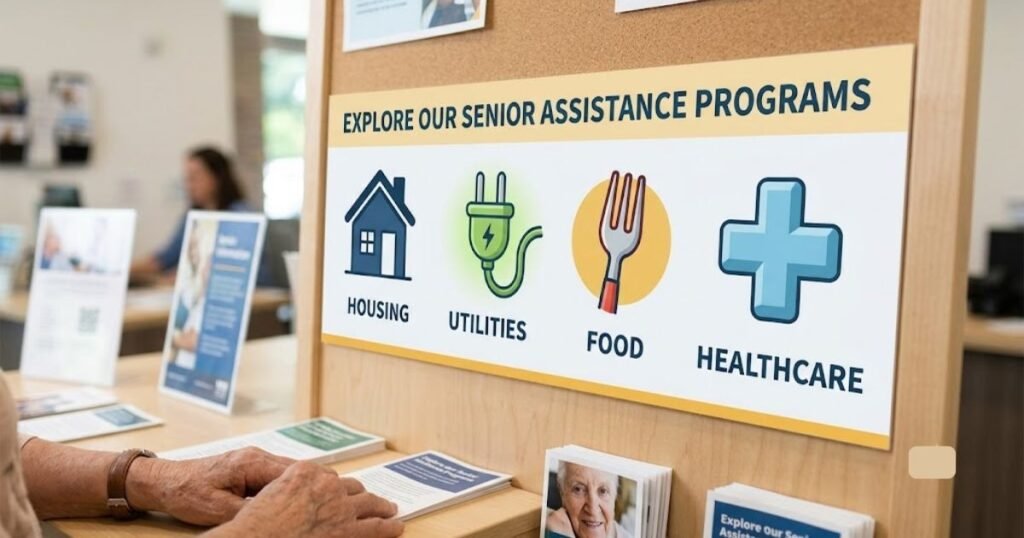
The short answer is yes—with a key distinction. The federal government does not hand out unrestricted cash directly under the phrase “free money for seniors on Social Security.” However, numerous federal, state, local, and charitable programs offer grants for seniors on Social Security. These programs cover home repairs, heating and cooling bills, prescription drugs, housing, and daily necessities.
This guide walks through exactly what’s available, who qualifies, and how to apply without the jargon. Lets deep dive into “Grants for Seniors on Social Security: USA 2026 Guide”
Social Security Retirement vs. SSI vs. SSDI
Before diving into grants for seniors on Social Security, it helps to know which type of Social Security you’re on, because that affects which assistance programs you can layer on top.
| Feature | Social Security Retirement | SSI (Supplemental Security Income) | SSDI (Social Security Disability Insurance) |
| Who qualifies | Workers 62+ who paid into Social Security | Adults 65+, blind, or disabled with very limited income and resources | Workers with enough work credits who can’t do substantial work due to disability |
| Based on | Your earnings history | Financial need, not work history | Work history and medical disability |
| 2026 payment | Varies by earnings record (average retired worker benefit is roughly $2,000+/month) | Federal rate of $994/month for an individual, $1,491/month for a couple | Varies by earnings record |
| Asset limit | None | $2,000 individual / $3,000 couple | None |
| Automatic Medicaid? | No | Yes, in most states | No (Medicare after a 24-month wait) |
| Grant eligibility impact | Doesn’t affect eligibility for most grants | Often opens doors to automatic eligibility for SNAP, LIHEAP, and Medicaid | Treated similarly to retirement benefits for most grant programs |
The key takeaway: SSI recipients frequently qualify automatically for other assistance programs because SSI already has strict income and asset tests baked in. Social Security retirement recipients aren’t automatically excluded from anything but they do need to apply separately and meet each program’s own income rules.
Quick Eligibility Checklist
- [ ] I am 60, 62, or 65+ (age cutoffs vary by program)
- [ ] My household income is modest or fixed
- [ ] I own or rent my home
- [ ] I have limited savings or other resources
- [ ] I have out-of-pocket medical, utility, or repair expenses
If you checked two or more boxes, it’s worth spending 20 minutes checking your eligibility for the programs below.
READ MORE: Monthly Assistance Programs for Seniors: USA
What Types of Grants Can Seniors Receive?
“Grant” gets used loosely, so here’s what actually falls under that umbrella for seniors:
- Federal grants — funded and set by federal agencies like USDA, HUD, and HHS, though often administered locally
- State grants — property tax relief, state energy assistance top-ups, and state-run senior programs
- Local assistance — county and city housing authorities, Area Agencies on Aging
- Nonprofit financial aid — community foundations, faith-based charities, and disease-specific organizations
- Emergency grants for seniors — one-time crisis funds for a shutoff notice, eviction risk, or storm damage
- Home repair grants — funds (not loans) to fix safety hazards like a failing furnace or unsafe steps
- Housing assistance — rental vouchers, subsidized senior apartments
- Medical assistance — help with Medicare premiums, deductibles, and drug costs
- Utility assistance — help paying heating and cooling bills
- Food assistance — SNAP and senior nutrition programs
Best Government Grants and Assistance Programs
1. USDA Home Repair Grants (Section 504)
If you own your home in a rural area and need essential repairs, the USDA’s Section 504 program is one of the few sources of true grant money (not a loan) available to seniors.
- Eligibility: You must own and occupy the home as your primary residence, live in a USDA-eligible rural area, and be unable to get affordable credit elsewhere.
- Income limits: Household income must fall under the “very low income” threshold for your county (roughly 50% of area median income), based on USDA’s published income limit tables.
- Age requirement: You must be 62 or older to qualify for the grant portion (younger low-income homeowners can still qualify for the 1% loan).
- Maximum grant: Up to $10,000 in lifetime grant assistance, or up to $15,000 if your home is in a presidentially declared disaster area. Grants and loans can be combined for up to $50,000 in total assistance.
- Rural eligibility: Check your address on the USDA Rural Development eligibility map before applying.
- What repairs qualify: Grant funds must go toward removing health and safety hazards or making a home accessible — think roof replacement, electrical or plumbing repairs, or a wheelchair ramp. Cosmetic upgrades don’t qualify. Note that if you sell the home within three years of receiving the grant, you may have to repay it.
2. LIHEAP Utility Assistance
The Low Income Home Energy Assistance Program (LIHEAP) is one of the most widely used forms of utility assistance for seniors.
- Heating bills: Most states pay a one-time seasonal benefit directly to your utility or fuel company.
- Cooling bills: Many states also cover summer electric bills or provide a free fan or window air conditioner.
- Emergency utility help: If you’ve received a shutoff notice, LIHEAP crisis funds can often be processed faster than the standard application.
- Weatherization assistance: Some LIHEAP offices coordinate directly with weatherization programs (see below).
- Income limits: Vary by state, generally at or below 150% of the Federal Poverty Level, though some states go as high as 60% of state median income. If you already receive SNAP, SSI, or similar benefits, you may qualify automatically. Households with a member 60 or older often get priority processing.
3. Weatherization Assistance Program
The Weatherization Assistance Program (WAP) doesn’t pay your bills it lowers them permanently by upgrading your home’s energy efficiency at no cost to you.
- Free insulation: Attic, wall, and floor insulation to reduce heat loss.
- HVAC improvements: Furnace or air conditioner repair or replacement when a unit is unsafe or failing.
- Energy-saving upgrades: Weatherstripping, duct sealing, and efficient lighting.
- Eligibility: Similar income guidelines to LIHEAP, and many states prioritize elderly households and people with disabilities for faster scheduling.
4. HUD Housing Assistance
Housing grants for seniors most often come through HUD-administered rental programs rather than cash grants:
- Section 8 Housing Choice Vouchers: Pay the difference between 30% of your adjusted income and the rent on a private-market apartment or house.
- Section 202 Supportive Housing for the Elderly: HUD-funded apartment communities built specifically for residents 62 and older, often with on-site services like meal programs and transportation.
- Rental assistance: Public housing authorities also manage HUD-owned apartment buildings with income-based rent.
- Senior apartments: Section 202 income limits are typically capped at 50% of the area median income (AMI), with priority often given to households at or below 30% AMI. Waitlists can be long, so applying early even before you need it is smart.
5. Medicare Savings Programs
If you’re on Medicare and living on a modest income, Medicare Savings Programs (MSPs) can eliminate some of your biggest recurring costs.
- Premium assistance: The Qualified Medicare Beneficiary (QMB) program pays your Part B premium plus deductibles and coinsurance for beneficiaries with monthly income around $1,350 (individual) or $1,824 (couple) or below, depending on your state.
- Deductibles and copays: Specified Low-Income Medicare Beneficiary (SLMB) and Qualifying Individual (QI) cover just the Part B premium at somewhat higher income levels (roughly up to $1,616–$1,816 individual, $2,184–$2,455 couple).
- Asset limits: Generally around $9,950 for an individual and $14,910 for a couple, though several states have eliminated the asset test entirely — so it’s always worth applying even if you think your savings disqualify you.
6. Medicare Extra Help
Extra Help (also called the Part D Low-Income Subsidy) reduces what you pay for prescription drug coverage sometimes to nearly nothing.
- If you qualify for a Medicare Savings Program, Medicaid, or SSI, you’re typically enrolled in Extra Help automatically.
- If not, you can apply separately through the Social Security Administration. Income and resource limits are adjusted annually and are generally higher than Medicaid’s limits, so many seniors who assume they earn “too much” actually qualify.
- Benefits include a reduced or eliminated Part D premium and deductible, and lower copays on both generic and brand-name prescriptions.
7. SNAP Benefits
The Supplemental Nutrition Assistance Program (SNAP) has special rules that make it far more accessible to people 60 and older than most seniors expect.
- Food assistance: SNAP puts money on an EBT card each month for groceries.
- Senior SNAP deductions: Households with a member 60+ can deduct out-of-pocket medical expenses above $35 a month and don’t face a cap on the shelter deduction — two factors that dramatically lower “countable” income and can turn a denial into an approval.
- Easy application process: Seniors also skip the standard gross-income test and only need to meet the (more generous) net-income test, and many states have a higher resource limit (commonly $4,500) for households with an elderly or disabled member.
8. Property Tax Relief Programs
Nearly every state offers some form of property tax break for older homeowners, though the details vary widely:
- State programs: Circuit-breaker credits that cap property tax based on income.
- Homestead exemptions: Reduce the taxable value of a primary residence.
- Senior tax freezes: Lock your property tax bill at its current level once you reach a certain age, regardless of rising home values.
Check with your county assessor’s office these programs are usually opt-in and require an annual or one-time application.
9. Local Area Agency on Aging Programs
Every region of the country has an Area Agency on Aging (AAA), and these offices are often the best-kept secret in senior assistance. Services commonly include:
- Home-delivered meals (Meals on Wheels)
- Transportation to medical appointments and errands
- Caregiver support and respite care
- Free benefits counseling to help you apply for everything on this list
Call your local AAA or dial the Eldercare Locator to find yours.
10. Charitable and Nonprofit Grants
When government programs fall short or have long waitlists, nonprofit organizations can bridge the gap:
- Local community foundations often run one-time emergency assistance funds for rent, utilities, or repairs.
- Faith-based organizations frequently provide direct aid regardless of religious affiliation.
- Emergency assistance charities like the Salvation Army or St. Vincent de Paul can help with urgent needs like a shutoff notice or eviction.
READ MORE: $3000 Senior Assistance Program Application
Can Seniors Receiving Social Security Qualify?
Eligibility for most of the programs above depends on a combination of factors, not on Social Security status alone:
- Age — thresholds range from 60 (SNAP, LIHEAP priority) to 62 (USDA grants, Section 202) to 65 (SSI, Medicare)
- Income — most programs use gross or net monthly income compared to the Federal Poverty Level or area median income
- Assets — savings, investments, and additional property (your primary home usually doesn’t count)
- Household size — income limits rise with each additional household member
- Disability status — can open additional deductions or higher resource limits
- Veteran status — may unlock separate VA-specific assistance
- Rural residence — required for USDA programs specifically
Here’s the most important myth to bust: Social Security retirement income does not automatically disqualify you from grants. Many people assume that because they receive a monthly check, they’re “too well-off” for help but most programs evaluate your total income against a threshold, and Social Security is just one part of that calculation. SSI recipients, meanwhile, often qualify for other programs with minimal extra paperwork, since SSI’s own income and asset tests are already stricter than most other programs require.
How to Apply
Applying for multiple programs can feel overwhelming, so work through it step by step:
- Gather required documents (see checklist below) before you start.
- Verify your income using your most recent Social Security award letter and any other income sources.
- Check eligibility for each program using the agency’s online screening tool or by calling directly.
- Apply online where available — SSA, Benefits.gov, and most state SNAP/LIHEAP portals accept online applications.
- Apply by phone if you prefer speaking with someone, or if the online system doesn’t fit your situation.
- Visit local offices for programs that require in-person verification, like HUD housing waitlists.
- Follow up on applications every few weeks — many programs are underfunded and process applications in the order received.
- Appeal if denied. Many seniors are turned away on a technicality that can be corrected on appeal — don’t assume a denial is final.
Documents Needed
Most applications ask for some combination of the following:
- Social Security award letter
- Government-issued ID
- Proof of address (lease, utility bill, or mortgage statement)
- Recent utility bills
- Bank statements (last 2–3 months)
- Most recent tax return
- Medicare card
- Proof of income (pension statements, pay stubs, benefit letters)
- Property tax bill, if applying for tax relief or home repair grants
READ MORE: Free government money for seniors over 60
Biggest Mistakes Seniors Make
- Assuming Social Security disqualifies them. As covered above, this simply isn’t true for most programs.
- Not applying because of savings misconceptions. Many programs exclude your home and one vehicle from asset calculations, and some have no asset test at all.
- Ignoring local assistance. State and county programs are often less competitive and faster to process than large federal ones.
- Missing renewal deadlines. Many benefits (SNAP, LIHEAP, Medicaid) require annual or periodic recertification mark your calendar.
- Falling for grant scams. More on this below.
Common Grant Scams
⚠️ Warning: Protect Yourself From Grant Scams
- Legitimate government grants never require an upfront fee, processing charge, or gift card payment to “release” funds.
- Be wary of unsolicited phone calls, emails, texts, or social media messages promising “free grant money” or claiming you’ve been “selected” for a special government award
- Always verify a program through its official government website (a .gov domain) or a trusted local agency never through a link in an unsolicited message.
- If someone asks for your Social Security number, bank account information, or a wire transfer to claim a “grant,” hang up and report it.
If you suspect a scam, you can report it to the Federal Trade Commission at ReportFraud.ftc.gov or contact your state Attorney General’s consumer protection office.
Frequently Asked Questions
Can seniors on Social Security get government grants?
Yes, seniors receiving Social Security can qualify for government assistance programs and grants. While Social Security itself is an earned benefit, programs like USDA Section 504, LIHEAP, SNAP, and Medicare Savings Programs offer financial aid for housing, home repairs, utilities, food, and healthcare expenses.
What grants are available for seniors over 65?
Seniors over 65 can access several federal, state, and local assistance programs. These include USDA Home Repair Grants, Weatherization Assistance, LIHEAP for heating/cooling bills, HUD Section 202 rental assistance, SNAP food benefits, and Medicare Extra Help for prescription costs. State property tax relief and local Area Agency on Aging support are also widely available.
Can I receive Social Security and financial assistance at the same time?
Yes, you can receive Social Security and additional financial assistance concurrently. Social Security retirement income is factored into program income limits, but it does not disqualify you from receiving benefits like LIHEAP, SNAP, or Medicare Savings Programs.
How do I apply for grants if I receive Social Security?
To apply, gather your Social Security Benefit Verification Letter, government ID, recent bank statements, and utility bills.
What government programs help seniors with housing and utility bills?
Primary housing programs include HUD Section 8 vouchers, Section 202 Senior Housing, and USDA Section 504 Repair Grants. For utility expenses, the Low-Income Home Energy Assistance Program (LIHEAP) provides direct billing aid and emergency crisis relief, while the Weatherization Assistance Program (WAP) lowers ongoing energy costs by funding insulation and heating upgrades.
Conclusion
Social Security provides an essential foundation, but it was never designed to cover every expense on a fixed income and that’s exactly why these grant and assistance programs exist. Whether it’s a home repair grant to fix a failing furnace, LIHEAP help with a summer electric bill, a Medicare Savings Program to eliminate your Part B premium, or SNAP benefits to stretch your grocery budget, real help is available for seniors willing to apply.
Because funding levels, income limits, and state rules change from year to year, it’s worth checking your eligibility for these programs annually — even if you were turned down before or think you make too much. A modest change in your income, a new state rule, or a program’s expanded funding could mean the difference between a denial last year and an approval this year.
Disclaimer: Grant availability, eligibility rules, and funding levels vary by state, county, and program, and are subject to change without notice. This article is for general informational purposes and does not constitute financial, legal, or benefits advice. Always confirm current details directly with the relevant government agency (SSA, USDA, HUD, Medicare, or your state’s health and human services department) before applying or making financial decisions.


Pingback: Grants for Mental Health Counseling Programs: Where to Find Funding in the USA - Free Senior Grants