Water bills have crept up almost everywhere in the country, and for seniors living on a fixed income, even a $20 or $30 increase can throw off a tight monthly budget. The good news is that help exists; it’s just scattered across local water utilities, state agencies, and community organizations instead of one single national program.
Quick Answer: There is no single nationwide water bill program just for seniors. Instead, help comes from local water utility hardship programs, city and county grants, Area Agencies on Aging, and nonprofits like The Salvation Army, Catholic Charities, and United Way’s 211 network. Most programs are based on income, not age alone, though many offer extra discounts once you turn 60, 62, or 65.
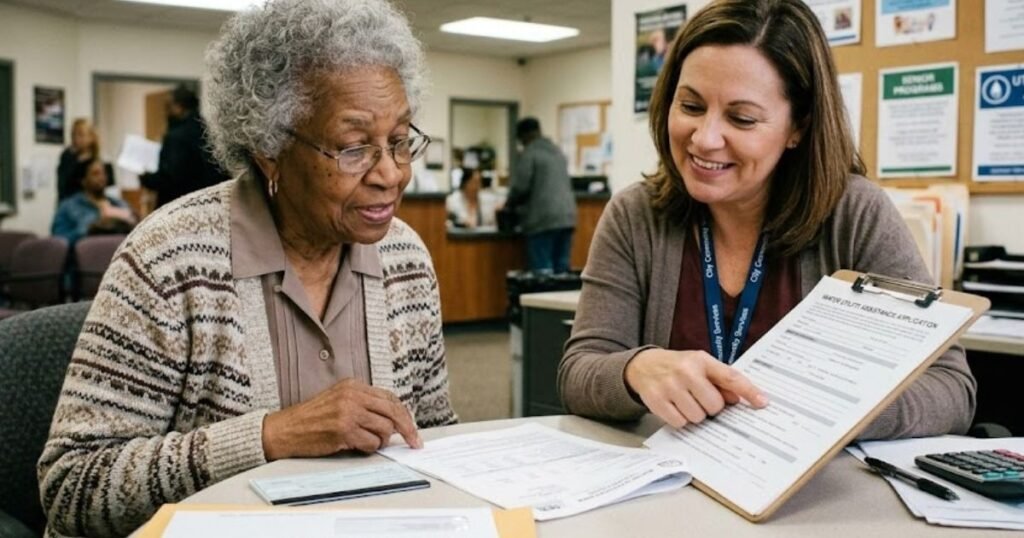
This guide walks you through who qualifies, where to find real assistance, what documents to gather, and what to do if you’ve already received a shutoff notice. Lets deep dive into “Water Bill Assistance for Seniors | USA Guide”
READ MORE: Senior Utility Assistance Grants: Help With Bills for Older Adults
Can Seniors Get Help Paying Water Bills?
Yes, but the path looks different depending on where you live. Water service in the United States is run locally, usually by a city, county, or regional water authority, so assistance is handled locally too.
It’s also worth clearing up some confusion: the federal government did run a temporary water assistance program called LIHWAP (the Low Income Household Water Assistance Program) during and after the pandemic. That program’s funding ran out in 2024, and it is no longer accepting new applications anywhere in the country. If you see an old webpage mentioning LIHWAP, treat it as outdated. Today, help comes from a mix of these sources instead:
- Water utility hardship programs run directly by your local water company
- Municipal or county grants funded through city budgets or water board fees
- Payment arrangements that spread overdue balances into smaller monthly amounts
- Senior discounts offered by some (not all) water utilities
- Charitable organizations such as The Salvation Army, Catholic Charities, and St. Vincent de Paul
- Area Agencies on Aging, which can point seniors toward local relief funds
The bottom line: help is out there, but you usually have to ask for it directly instead of waiting for it to find you.
Who Qualifies for Water Bill Assistance?
Eligibility rules vary by program, but most look at a combination of the following:
- Age — many discount programs start at 60, 62, or 65
- Household income — often capped at 150% to 200% of the federal poverty level
- Participation in other benefit programs — being enrolled in SSI, SNAP, Medicaid, or LIHEAP can automatically qualify you or speed up approval
- Disability status — SSDI recipients and disabled adults often qualify under the same guidelines as seniors
- Veteran status — some local programs give priority to veterans
- Household size — larger households may have higher income limits
- Referral source — some programs require a referral from an Area Agency on Aging or a caseworker
You don’t need to guess whether you qualify. Most utilities will run a quick pre-screening over the phone before asking for paperwork.
READ MORE: Financial Help for Seniors With No Income: Grants & Assistance
Best Water Bill Assistance Programs for Seniors
Here’s a snapshot of the main types of programs seniors can turn to, who they tend to serve, and how to get started.
| Program Type | Who Typically Qualifies | Type of Help | How to Apply |
| Local Water Utility Assistance | Low-income customers, often 60+ | Bill credits, discounted rates, payment plans | Call or visit your utility’s customer service page |
| Utility Customer Assistance Program (CAP) | Income-qualified households | Reduced monthly bill based on income | Apply through the utility’s assistance portal |
| Community Action Agencies | Low-income households, seniors, disabled adults | Emergency grants, budgeting help, referrals | Contact your local Community Action Agency |
| Area Agencies on Aging | Adults 60+ | Referrals to local grants and benefit screening | Call your regional Agency on Aging office |
| The Salvation Army | Households facing hardship | One-time emergency utility grants | Contact your local Salvation Army corps |
| Catholic Charities | Households facing hardship, regardless of faith | Emergency financial assistance | Contact your local diocese office |
| St. Vincent de Paul | Low-income households | Emergency bill payment assistance | Contact your local parish conference |
| United Way / 211 | Anyone needing help finding resources | Referrals to local assistance programs | Dial 211 or visit 211.org |
| Municipal Senior Discount Programs | Homeowners 60+ or 65+ | Automatic bill credits or reduced rates | Check with your city’s water department |
Tip: Start with 211. A single call or visit to 211.org connects you with every local program in your area, so you’re not searching one by one.
Water Company Assistance Programs
Many water utilities though not all offer some version of these programs directly:
- Senior discounts on the base monthly service charge
- Lifeline or reduced rates for qualifying low-income households
- Fixed-income discount tiers based on income brackets
- Payment plans that break a large balance into smaller monthly payments
- Late-fee waivers for customers experiencing hardship
- Debt forgiveness for customers who complete a payment or assistance program
- Emergency assistance funds for one-time crisis situations
- Leak adjustment programs that lower your bill if a leak — not overuse — caused a spike
Not every utility offers every option, so it’s worth asking specifically: “Do you have a hardship program, senior discount, or leak adjustment policy?” Front-line customer service reps don’t always volunteer this information unless you ask.
READ MORE: How to Apply for SNAP Benefits as a Low-Income Older Adult
Cities Offering Water Bill Assistance (Examples)
Assistance varies enormously by location. These examples show what’s possible; they are not signs that the same program exists where you live.
- New York City — Home Water Assistance Program: The city’s Department of Environmental Protection (DEP) automatically applies an annual credit to the water and sewer bills of eligible one- to four-family homeowners who already receive HEAP heating benefits, a Senior Citizen Homeowners Exemption, a Disabled Homeowners Exemption, or a veterans’ property tax exemption. No separate application is required if you already receive one of those benefits.
- Philadelphia — Water Customer Assistance Program: Philadelphia Water Department uses a single application to screen residents for its Senior Citizen Discount, its income-based Tiered Assistance Program (which caps bills at a percentage of household income), and payment agreements for customers experiencing hardship.
- Columbus and other mid-size cities: Many municipal utilities offer income-based discount programs administered through the city’s public utilities or social services department, often layered with help from local Community Action Agencies.
- California Water Service (Cal Water): Customer Assistance Program (CAP): Cal Water provides a Customer Assistance Program (CAP) across its California service areas. Eligible low-income residential customers and seniors receive a 50% monthly discount on their service charge. Seniors aged 62 and older only need to recertify their eligibility every four years, compared to every two years for younger participants.
If your city isn’t listed here, that doesn’t mean help isn’t available — it means you’ll need to check directly with your local water provider or dial 211.
How to Apply for Water Bill Assistance
- Contact your local water utility first. Ask specifically about hardship programs, senior discounts, and payment plans.
- Ask what you might already qualify for. Mention if you receive SSI, SSDI, SNAP, Medicaid, or LIHEAP — it can fast-track approval.
- Request a senior discount even if it isn’t advertised; some utilities only apply it if you ask.
- Gather proof of income before you apply, including Social Security or pension statements.
- Collect identification and account information, including your most recent water bill.
- Submit your application online, by mail, or in person — whichever your utility offers.
- Follow up within a week or two if you don’t hear back, since many programs process applications in the order received.
- Ask about backup options, like a Community Action Agency or your Area Agency on Aging, if the utility’s own program has a waitlist.
Documents You May Need
Having these ready before you apply can save you a second trip or phone call:
- Government-issued photo ID
- A recent water bill with your account number
- Proof of income (Social Security award letter, pension statement, or pay stubs)
- SSI or SSDI documentation
- SNAP approval letter, if applicable
- Medicaid documentation, if applicable
- Proof of address (lease, deed, or recent piece of mail)
- Lease or proof of homeownership
READ MORE: Monthly Assistance Programs for Seniors: USA Guide
What If You Already Received a Shutoff Notice?
A shutoff notice feels alarming, but there’s usually still time to act.
- Call the utility immediately — don’t wait for a second notice.
- Ask for a payment arrangement to stop the shutoff clock.
- Request a hardship review, especially if you’re a senior, disabled, or on a fixed income.
- Call 211 the same day to find local emergency funds.
- Contact your Area Agency on Aging for a referral to rapid-response assistance.
- Reach out to local charities — The Salvation Army, Catholic Charities, and St. Vincent de Paul often have same-week emergency grants.
- Ask specifically about emergency or crisis grants, since these are sometimes separate from the standard assistance program.
Callout: Most utilities are legally required to offer some kind of hardship option before disconnecting service to a senior or medically vulnerable household — but you usually have to ask, and ask before the shutoff date, not after.
Ways Seniors Can Lower Their Water Bills
Assistance programs help with what you owe, but a few small changes can lower what you’re billed in the first place:
- Fix leaky faucets and running toilets — a single running toilet can waste hundreds of gallons a day.
- Install low-flow showerheads and faucet aerators — inexpensive and easy to self-install.
- Upgrade to a high-efficiency toilet if your utility offers a rebate for it.
- Run the dishwasher and washing machine only with full loads.
- Water gardens and lawns early or late in the day to reduce evaporation loss.
- Check your water meter for hidden leaks by reading it before and after a two-hour period when no water is being used.
- Ask your utility about a free home water audit — some offer this at no cost to seniors.
Common Mistakes to Avoid
- Waiting until service is disconnected before asking for help
- Ignoring a past-due or shutoff notice, thinking it will resolve on its own
- Assuming you make “too much” to qualify without actually checking
- Missing renewal deadlines for programs that require yearly recertification
- Overlooking local nonprofit assistance because you didn’t know it existed
- Forgetting to specifically ask about senior discounts, since not all utilities advertise them
Water Bill Assistance Scam Warning
Unfortunately, scammers target seniors around utility bills more than almost any other topic. Watch for these red flags:
- Callers claiming to represent a “federal water grant program” and asking for personal information
- Social media posts promising free government money for utility bills
- Anyone asking you to pay an application fee upfront
- Requests for payment in gift cards
- Phone calls threatening immediate shutoff unless you pay right now over the phone
- Emails with links asking you to “verify” your account information
Stay safe: Only work directly with your water utility, a recognized nonprofit (like The Salvation Army or Catholic Charities), or an official government agency such as your Area Agency on Aging or county social services office. Legitimate programs never ask for gift cards, and they don’t pressure you to act within minutes.
READ MORE: Emergency Cash Assistance for Seniors: USA Guide
Frequently Asked Questions
Can seniors get free water bill assistance?
Some programs offer bill credits or grants that don’t need to be repaid, especially through Community Action Agencies and local charities. Others reduce your monthly rate rather than eliminating the bill entirely. Availability depends on your city and income.
Does Social Security qualify me for water bill assistance?
Receiving Social Security alone doesn’t automatically qualify you, but your income level might. Many programs also give faster approval to applicants already enrolled in SSI, SNAP, or LIHEAP.
How do I apply for water bill help near me?
Start by calling your local water utility and asking about hardship programs. If they can’t help, dial 211 or contact your Area Agency on Aging for a referral to local resources.
Can I get emergency water bill assistance today?
Same-day help is possible through 211, local charities, or your utility’s emergency crisis fund, especially if you’re facing a shutoff. Call as early in the day as you can, since funds and appointment slots are often limited.
Are there water bill discounts for senior citizens?
Some water utilities offer automatic or application-based senior discounts, but this varies widely by city and provider. It’s always worth calling to ask, since discounts aren’t always advertised publicly.
Final Thoughts
Seniors dealing with rising water bills have more options than it might seem at first local utility hardship programs, city and county grants, senior discounts, and community organizations can all play a part. The key is to act early, ask directly about every program available, and combine resources when needed rather than relying on just one.
If your water bill is becoming hard to manage, don’t wait for a shutoff notice. Call your local water provider today, ask about hardship and senior discount programs, and reach out to 211 or your Area Agency on Aging to make sure you’re not missing help that’s already available to you.