Rising grocery bills, a surprise medical copay, a rent increase, or a heating bill that arrives right after a fixed Social Security check runs out for millions of older Americans, it doesn’t take much to turn a tight month into a genuine financial emergency. If you’re searching for emergency cash assistance for seniors, you’re far from alone, and you’re not without options.
The good news is that emergency financial help for seniors exists at nearly every level of American life. Federal programs like SSI and SNAP, state and county emergency assistance offices, energy assistance through LIHEAP, and a wide network of nonprofits, veterans’ organizations, and local churches all offer some form of emergency money for elderly Americans facing a crisis.
This guide walks through where that help comes from, who typically qualifies, and how to apply so you can move quickly and avoid scams along the way. Lets deep dive into “Emergency Cash Assistance for Seniors: 2026 USA Guide”
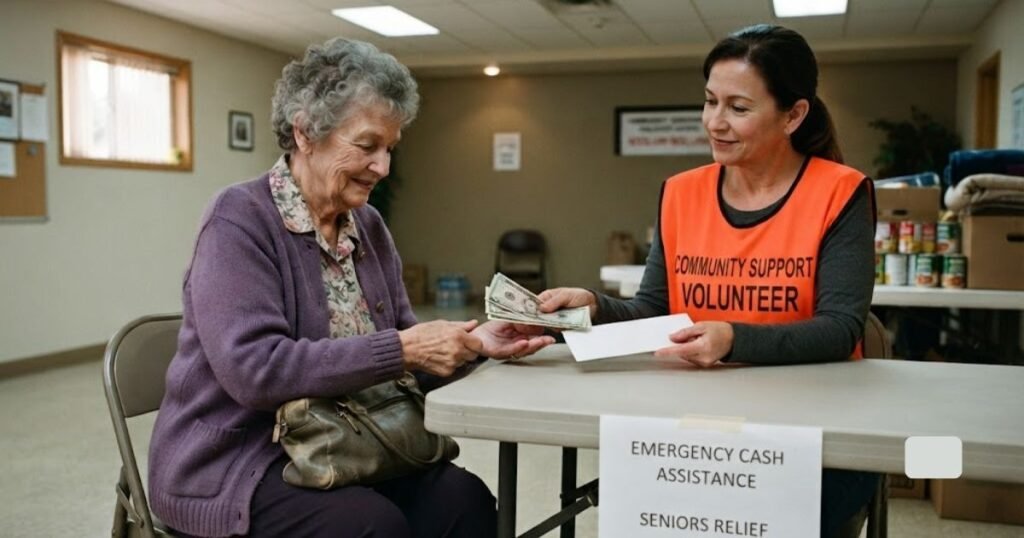
What Is Emergency Cash Assistance for Seniors?
Emergency cash assistance for seniors refers to short-term financial help designed to get older adults through a sudden crisis not a permanent income source. It’s different from the monthly benefits many seniors already receive, such as Social Security retirement payments or a regular SSI check.
Regular monthly benefits are ongoing and predictable. Emergency assistance, by contrast, is typically a one-time payment, a short-term grant, or a fast-tracked benefit meant to prevent something urgent like an eviction, a utility shutoff, or going without food from happening in the next few days or weeks.
This type of help can come as:
- Direct one-time cash grants from a state, county, or nonprofit
- Expedited or emergency processing of an existing benefit (like expedited SNAP)
- Vendor-paid assistance, where funds go straight to a landlord or utility company on the senior’s behalf
- Vouchers for essentials such as groceries, gas, or a hotel stay
Because eligibility rules, funding levels, and application processes are set independently by each state, county, and organization, the exact programs available to any individual senior will depend heavily on where they live.
READ MORE: $3000 Senior Assistance Program Application
Who Qualifies for Emergency Cash Assistance?
There isn’t one single eligibility standard, because “senior emergency assistance” is really a patchwork of separate programs. That said, most programs consider a similar set of factors.
Common age-based groups referenced across programs include:
- Adults 60 and older (many Older Americans Act and Area Agency on Aging services)
- Adults 62 and older (some housing and utility programs)
- Adults 65 and older (SSI’s age-based eligibility category and many senior-specific grants)
Programs may also prioritize:
- Low-income retirees living on a fixed income
- Disabled seniors and SSDI or SSI recipients
- Veterans and surviving spouses
- Widows and widowers
- Medicare and Medicaid recipients
- Grandparents raising grandchildren
Eligibility factors that most agencies evaluate:
- Income — gross and net monthly income compared to federal poverty guidelines
- Assets/resources — cash, bank balances, and countable property
- Residency — many programs require proof you live in the state or county
- Household size — larger households often have higher income thresholds
- State-specific rules — income limits, asset tests, and payment amounts vary widely by state
No program can guarantee approval before reviewing your specific documentation, so it’s worth applying to more than one option if you believe you may qualify.
READ MORE: Free Financial Assistance for the Seniors & Elderly
Federal Emergency Cash Assistance Programs
1. Supplemental Security Income (SSI)
For low-income elderly Americans, the Social Security Administration (SSA) manages the SSI program. In 2026, the maximum federal SSI payment sits at $994 per month for an individual and $1,491 per month for a couple. While regular applications can take months, the SSA provides two rapid-infusion options if you are facing a certified financial emergency (defined as an immediate threat to health or safety, such as lack of food, shelter, clothing, or medical care):
- Emergency Advance Payment (EAP): This is a one-time cash advance available exclusively to new enrollees who are initially applying for SSI. If the field office determines you are presumptively eligible and facing an active crisis, they can advance up to the full maximum monthly benefit ($994). This advance is later recovered out of your future monthly checks, typically divided across 6 months.
- Immediate Payment (IP): Available to both new applicants and seniors already actively enrolled in SSI. If your regular benefit check is delayed, stopped, or lost due to an administrative glitch, and you are facing a dire financial emergency, local managers can issue an immediate payment up to a maximum of $2,000. This is deducted entirely from your next regular payment.
2. Social Security Retirement, Survivor, and Disability Benefits
Social Security retirement, survivor, and disability benefits are not designed as emergency funds, but they are a critical income base for most seniors, and Social Security COLA increases (2.8% for 2026) are applied automatically each January. If a payment has been delayed, lost, or stolen, contact SSA directly replacement and payment-tracing requests are handled faster when reported promptly. SSA does not charge fees for these services, and it will never ask for gift cards, wire transfers, or cryptocurrency to “release” a payment.
3. Temporary Assistance for Needy Families (TANF)
TANF is primarily built for low-income families with minor children, so most childless seniors do not qualify for a standard TANF grant. However, TANF is often a meaningful resource for grandparents and other relative caregivers raising a grandchild or great-grandchild, offering either a “child-only” grant or, in some states, a one-time relative-caregiver payment. Rules, payment amounts, and whether a caregiver must meet an age threshold vary by state, so contact your state’s TANF or Department of Human Services office to ask specifically about kinship or child-only benefits.
READ MORE: Emergency Car Payment Assistance: How to Get Help Fast
State and Local Emergency Assistance Programs
State General Assistance (GA) and General Relief (GR)
Many states and counties fund a program known as General Assistance or General Relief. These frameworks act as a bottom-tier financial safety net for low-income individuals who do not qualify for, or are currently waiting on, larger federal programs like SSI. GA provides small, monthly cash grants or one-time crisis funds specifically designed to cover basic shelter and personal care items.
Emergency Rental Assistance
The large pandemic-era federal Emergency Rental Assistance programs (ERA1 and ERA2) have wound down; Treasury’s period of performance for those funds has ended. That doesn’t mean rental help has disappeared — many states, cities, counties, courts, and nonprofits continue to run their own rental assistance and eviction-prevention programs using other funding sources. If you’re behind on rent or facing eviction, call 211, your local housing authority, or a Community Action Agency to find whatever local rental assistance is currently funded in your area, and contact legal aid immediately if you’ve received an eviction notice.
Low-Income Home Energy Assistance Program (LIHEAP)
No senior should ever have to choose between buying life-saving medication and heating or cooling their home. LIHEAP provides critical utility assistance split into two main buckets:
- Regular Regular Benefits: A direct credit applied once a year to your utility account to lower your overall energy burden.
- LIHEAP Crisis Benefits: Fast-tracked emergency funds deployed within 24 to 48 hours if you have received an imminent utility shutoff notice, if your fuel tank is completely empty, or if your energy meter has already been disconnected.
SNAP Expedited Benefits
If you are an older adult facing immediate food insecurity, standard Supplemental Nutrition Assistance Program (SNAP) applications can be fast-tracked under the Expedited SNAP rule. If your household’s monthly gross income is less than $150 and your liquid resources are under $100, the local social services office is legally mandated to deliver your EBT food assistance card within 7 days of your application date.
Nonprofit and Faith-Based Organizations That Help Seniors
Nonprofits often move faster than government programs and can bridge the gap while a public benefits application is pending. Well-known national organizations that regularly assist seniors include:
- The Salvation Army — emergency financial assistance, utility help, and shelter referrals through local corps offices
- Catholic Charities — rent, utility, and emergency financial assistance regardless of religious affiliation
- St. Vincent de Paul Society — home visits and emergency aid for rent, utilities, and household needs
- Lutheran Services in America — emergency assistance and senior support programs
- Jewish Family Services — emergency financial aid, open to all backgrounds in most locations
- United Way — local grants and connections to a broad network of community resources
- Feeding America — a network of food banks providing emergency groceries at no cost
- Area Agencies on Aging (AAAs) — benefits counseling, home-delivered meals, and emergency referrals for 60+
- Community Action Agencies (CAAs) — administer LIHEAP, weatherization, and local emergency funds
Call 211
211 is a free, confidential helpline covering most of the U.S. that connects callers to local emergency cash assistance, utility help, hotel vouchers, rent help, food pantries, transportation assistance, and prescription assistance programs in their specific area. It’s often the fastest way to find out what’s currently funded and available near you, since national program lists can’t always reflect local funding changes in real time.
Specialized Emergency Grants for Seniors
Various private foundations and community trusts offer targeted, niche financial help for seniors with no income or specific crisis scenarios:
- Medical Grants: Foundations like the HealthWell Foundation or Patient Access Network (PAN) Foundation provide immediate financial aid to cover high insurance copays, deductibles, or expensive chronic medications.
- Housing and Disaster Relief Grants: Following a federally declared natural disaster, FEMA provides immediate cash grants for home repairs and temporary lodging. Locally, community foundations often step in with flexible grant funds for structural home modifications required for senior safety.
READ MORE: Government Grants for Seniors: The Complete, Up-to-Date U.S. Guide
Veterans Emergency Financial Assistance
Veterans and surviving spouses have additional resources beyond the general safety net:
- VA Aid & Attendance — an enhanced pension add-on for wartime veterans (or surviving spouses) who need help with daily activities or live in a care facility; 2026 maximum monthly rates run up to roughly $2,874 for a single veteran, with different amounts for married veterans and surviving spouses
- VA Pension (Improved Pension) — needs-based income for wartime veterans with limited income and net worth
- Supportive Services for Veteran Families (SSVF) — rapid, short-term help with rent and utilities for veterans at risk of homelessness
- Veterans Service Organizations (VSOs) — groups like the VFW and American Legion offer emergency grants, often within days, for veterans facing an urgent financial gap
Contact your local VA regional office or an accredited Veterans Service Officer for a no-cost review of what you or your spouse may be eligible for accredited VSOs cannot legally charge a fee to help you apply.
Churches That Help Seniors Financially
Local churches and other houses of worship frequently maintain small emergency funds for rent, utilities, and urgent bills, available to community members regardless of membership or faith. Because these funds are usually modest and locally administered, the best approach is to call churches directly in your area, ask your local Council of Churches or interfaith coalition, or ask 211 or your Area Agency on Aging which faith-based emergency funds are currently active nearby.
Emergency Cash Assistance by State
Because assistance is administered at the state and county level, availability differs significantly across the country:
- California — county General Relief, CalFresh (SNAP), and state-run LIHEAP
- Texas — Health and Human Services Commission programs plus local Community Action Agencies
- Florida — county emergency assistance and LIHEAP through the Department of Children and Families
- New York — Emergency Assistance for Adults through local Departments of Social Services
- Pennsylvania — LIHEAP regular and crisis grants through the Department of Human Services
- Illinois — emergency assistance and LIHEAP via the Department of Human Services and local CAAs
- Ohio — county Job and Family Services emergency assistance and energy programs
- Michigan — State Emergency Relief (SER) for housing and utility crises
Rules and funding change frequently, so confirm current details directly with your state or county agency.
How to Apply
Step 1: Gather your documents. Most programs ask for some combination of: proof of age, proof of income (Social Security award letter, pension statement, pay stubs), your Social Security number, bank account information, recent utility bills, your lease or mortgage statement, and any relevant medical bills.
Step 2: Apply. Depending on the program, you can typically apply online through a state benefits portal, Benefits.gov, or a nonprofit’s website; in person at a county social services office, Area Agency on Aging, or nonprofit location; or by phone, which is especially useful for 211 referrals and initial SSA questions.
Step 3: Follow up. Keep copies of everything you submit, note your case or confirmation number, and call back if you haven’t heard anything within the stated timeframe. Following up is often what separates a fast approval from a stalled application.
READ MORE: Free Food for Seniors: Where to Find Help and Assistance
Timelines, Denials, and Pitfalls
How Long Does Approval Take?
Processing windows vary dramatically based on the specific agency structure and the severity of your documented emergency:
| Program Type | Estimated Approval Timeline | Best For |
| Expedited SNAP / Food Aid | 1 to 7 Days | Immediate food shortages and grocery needs |
| SSI Emergency Advance Payment | Same Day to 24 Hours | Severe shelter or medical crises for new applicants |
| LIHEAP Crisis Utility Grants | 18 to 48 Hours | Impending winter heating or summer cooling shutoffs |
| Non-Profit/Charitable Cash Relief | 2 to 5 Days | Flexible bills, small rent arrears, prescriptions |
| Standard State General Assistance | 1 to 2 Weeks | Short-term cash bridge while awaiting federal aid |
| Standard Federal Benefit Applications | 30 to 90 Days | Long-term permanent income stabilization |
Common Reasons Applications Are Denied
Understanding why applications get denied can help you avoid the most common pitfalls:
- Missing documents — an incomplete file is the single most common cause of delay or denial
- Income too high — exceeding a program’s specific income threshold
- Assets over the limit — savings or property above a program’s resource cap
- Residency issues — not being able to document residency in the required state or county
- Incomplete applications — unanswered questions or unsigned forms
- Duplicate benefits — some programs won’t pay for an expense already covered by another source
If you’re denied, ask for the denial in writing, ask what specifically was missing, and ask about the appeal process; many denials are reversible with the right documentation.
Program Comparison: Finding the Best Option for You
To help you quickly determine where to invest your time and energy, look at how the primary emergency assistance frameworks compare side-by-side:
| Program Name | Cash/Aid Available | Core Eligibility Requirement | Processing Speed | Best Used For |
| SSI Emergency Advance | Up to $994 (One-Time) | New applicants facing health/safety threat | Same Day / 24 Hours | Severe threats to shelter or health |
| SSI Immediate Payment | Up to $2,000 | Active/New enrollees with delayed checks | 2 to 3 Business Days | Urgent bills due to government delay |
| TANF Diversion/Kinship | Varies widely by state | Grandparent caregiver or low-income crisis | 3 to 7 Days | Temporary home stabilization costs |
| State General Assistance | $200 – $500 monthly | Extremely low income, minimal liquid assets | 1 to 2 Weeks | Basic personal care items and food |
| The Salvation Army | $100 – $400 capsule | Under 150% Poverty Line; local emergency | 1 to 3 Days | Urgent utilities, medication, or food vouchers |
| Catholic Charities | Varies by location | Financial hardship; open to all backgrounds | 2 to 5 Days | Preventing eviction or making major repairs |
| LIHEAP Crisis Benefit | Varies (Paid to utility) | Verified utility shut-off notice or empty tank | 18 to 48 Hours | Restoring power or securing heating fuel |
| Veterans Unmet Needs | Up to $1,500 (Grant) | Honorably discharged vet or eligible survivor | 1 to 2 Weeks | Essential household, rent, or medical relief |
READ MORE: Salvation Army Free Car Program (Eligibility & How to Apply)
10 Expert Financial Survival Tips for Seniors
- Call 211 before anything else — it’s free, confidential, and locally current.
- Apply for multiple programs at once instead of waiting on one answer.
- Ask every agency directly whether they offer expedited or crisis processing.
- Keep a dedicated folder with ID, income proof, and bills ready to go.
- Contact your Area Agency on Aging for a free benefits check-up.
- If you’re a veteran, always ask about VA and VSO emergency options specifically.
- If you’re raising a grandchild, ask about TANF child-only or relative-caregiver grants.
- Never pay an upfront fee for a grant or benefit — that’s a scam, not a program.
- Apply for LIHEAP early in the season, since funds can run out before the deadline.
- If denied, ask for the reason in writing and ask about the appeal process before giving up.
Common Scams Seniors Should Avoid
Government imposter scams targeting seniors have risen sharply, and fraud losses among adults 60+ now total billions of dollars a year. Watch for:
- Fake “government grants” that ask for an upfront fee to “release” your money — real government assistance never charges a fee to apply
- Advance-fee scams asking you to pay taxes or processing costs before receiving funds
- Phone and email scams impersonating the SSA, IRS, or Medicare, often creating urgency or fear
- Requests to pay by gift card, wire transfer, or cryptocurrency — legitimate agencies never ask for these
- Fake charities, especially after a widely publicized disaster
A simple rule from federal fraud-prevention campaigns: no real government agency will ever tell you to move your money to “protect” it, threaten to cut off your benefits if you don’t pay immediately, or ask for payment through gift cards or crypto. If you’re unsure whether a call or email is legitimate, hang up and call the agency directly using a number you look up yourself.
Conclusion
Facing a financial emergency later in life can feel isolating, but emergency cash assistance for seniors is more available than most people realize — it’s simply spread across federal programs, state and county offices, nonprofits, faith communities, and veterans’ organizations rather than one single source.
Frequently Asked Questions
How can seniors get emergency cash assistance immediately?
The fastest starting point is usually calling 211, which connects callers to currently funded local programs for rent, utilities, food, and cash assistance. Nonprofits like the Salvation Army and Catholic Charities can also often provide same-day or next-day help for qualifying seniors.
Does Social Security offer emergency cash assistance?
Social Security retirement and SSI are not emergency programs, but SSA can sometimes expedite an initial SSI payment in documented emergencies, such as an imminent eviction or lack of food. Contact your local Social Security office directly to ask about expedited processing.
Can seniors receive one-time emergency financial assistance?
Yes. Many states, counties, and nonprofits offer one-time grants for a specific crisis, such as a security deposit, overdue utility bill, or urgent car repair, rather than ongoing monthly support. Amounts and eligibility vary by program and location.
What organizations give emergency money to seniors?
National organizations that commonly help include the Salvation Army, Catholic Charities, St. Vincent de Paul, Lutheran Services in America, Jewish Family Services, United Way, and local Area Agencies on Aging and Community Action Agencies. Veterans have additional options through the VA, SSVF, and Veterans Service Organizations.
Who qualifies for emergency cash assistance for seniors?
Qualification depends on the specific program but commonly considers age (often 60, 62, or 65+), income, assets, residency, and household size. Veterans, disabled seniors, SSI and Medicaid recipients, and grandparents raising grandchildren often have additional or specialized options available.