If you are over the age of 55, staying active isn’t just a hobby it is a vital part of maintaining your long-term health, mobility, and independence. Across the United States, more seniors than ever are hitting local walking trails, neighborhood sidewalks, and track ovals to jog, run, and power-walk. Listening to an engaging audiobook, an informational podcast, or a high-energy playlist can make those miles fly by. However, finding the best wireless earbuds for senior runners comes with a unique set of challenges.
Standard earbuds are often designed for younger ears, featuring confusing touch controls, unstable fits that slip out when you sweat, or complete noise isolation that dangerously cuts you off from your surroundings. When you are exercising outdoors, missing the sound of an approaching vehicle or a cyclist passing on your left is a serious safety hazard.
This guide is designed to help you find that perfect pair. We have looked at the best options on the market that focus on comfort, ease of use, and safety. Whether you are jogging through a neighborhood in Florida or walking the trails in Oregon, these picks will keep you moving safely. Lets deep dive into “Best Wireless Earbuds for Senior Runners: 2026 Top Picks”

READ MORE: Best Wireless TV Headphones for Seniors (2026) – Clear Sound & Easy Setup
What Makes Wireless Earbuds Great for Senior Runners?
When you look at standard earbud reviews, writers often spend all their time talking about deep bass lines or digital noise cancellation. But when you are jogging at age 60 or 70, your priorities look a bit different. Through extensive testing, we have found that the ideal wireless earbuds for seniors must excel in the following areas:
1. Comfortable and Secure Fit
As we age, the cartilage in our ears naturally changes shape, loses some elasticity, and can become more sensitive to pressure. Heavy, plastic bulbs that cram tightly into the ear canal often cause painful ear fatigue within 20 minutes.
Furthermore, nothing is more frustrating than having an earbud wiggle loose and tumble down a storm drain while you are mid-stride. Senior runners require designs that distribute weight evenly. This can be achieved through:
- Over-Ear Hooks: Flexible loops that wrap around the outside of your ear, ensuring the device cannot fall off even during abrupt movements.
- Stability Wings: Soft silicone fins that nestle gently inside the upper bowl of your ear to lock the earbud in place without forcing it deep into your ear canal.
- Open-Ear Designs: Lightweight bands or cuffs that clip around your outer ear, avoiding the ear canal entirely.
2. Sweat and Weather Resistance
Running makes you sweat, and catching a sudden summer rain shower is just part of exercising outdoors. Sweat contains salt, which is highly corrosive to electronics. Look for sweatproof wireless earbuds with a minimum rating of IPX4 (protects against splashes) or, ideally, IP55 and higher (protects against dust and direct water jets).
3. Tactile, Easy-to-Use Controls
Tiny, hyper-sensitive touch pads can be incredibly frustrating to operate when your fingers are sweaty, shaking slightly from exertion, or chilled by a brisk morning breeze. If you accidentally skip your favorite song or hang up a phone call just by adjusting the fit, the earbuds are poorly designed.
We heavily favor earbuds that feature physical buttons with a satisfying “click” or large, highly forgiving touch areas that don’t require precision accuracy.
4. Bulletproof Bluetooth Connection
Older adults shouldn’t have to fiddle with complicated phone menus or re-pairing sequences every time they step outside. A modern Bluetooth connection ensures that your earbuds link up with your smartphone or smartwatch instantly the second you take them out of their charging case.
5. Longevity and Rapid Charging
The best Bluetooth earbuds for older runners should hold at least 6 to 8 hours of continuous battery life on a single charge. Additionally, look for a “quick charge” feature a feature where popping your dead earbuds into the case for a mere 5 minutes gives you a solid hour of playback time, saving you from a silent workout if you forgot to plug them in overnight.
READ MORE: Best Health Tracking Smartwatch for Seniors 2026 — Top 8 Picks Compared
Our Testing Criteria: How We Evaluated Every Pair
To keep this guide completely honest, transparent, and authoritative, our testing protocol was designed strictly around real-world use cases. We evaluated every single pair of earbuds across six primary categories:
- Comfort: We wore each pair for minimum two-hour stretches to identify hot spots, pinching, or ear canal pressure.
- Fit Security: We tested the earbuds on outdoor concrete paths, woodchip trails, and high-speed treadmill intervals to see if they shifted, bounced, or required constant manual adjustment.
- Safety & Awareness: We evaluated how well each model lets in outside sounds—like car horns, bicycle bells, or barking dogs—while music was actively playing at a safe, moderate volume (around 50-60%).
- Battery & Charging: We verified real-world battery drainage against manufacturer claims and tested fast-charging capabilities.
- Audio & Call Quality: We verified that voices in podcasts and audiobooks sounded crystal clear, and that the microphones could successfully filter out wind noise during outdoor phone calls.
- Durability: We subjected each pair to extensive sweat exposure and cleaned them repeatedly to check for long-term wear and tear.
READ MORE: Best Voice Assistant for Seniors 2026 — Safe, Simple & Senior-Friendly Picks
Best Wireless Earbuds for Senior Runners: 2026 Top Picks
We have researched the top-rated models available in the U.S. that specifically meet the needs of older runners. Here are our top five picks.
1. Bose Ultra Open Earbuds
The Bose Ultra Open Earbuds are a revolutionary change in how we think about “wearing” music. Instead of going inside your ear, these grip the outer edge of your ear like a stylish cuff or earring. This leaves your ear canal completely open.
They are incredibly light. You can wear them all day and barely feel them. Because they don’t block the ear, they are perfect for seniors who want to stay fully aware of their environment. Whether it’s a car horn or a neighbor saying hello, you won’t miss a thing.
Key Features:
- Innovative open-ear cuff design
- IPX4 water resistance (handles sweat and splashes)
- Up to 7 hours of play time on a single charge
- Bluetooth multipoint (connect to two devices at once)
- Easy-to-use physical button controls
Pros:
- Extremely comfortable for long-term wear without ear pressure.
- The best choice for total situational awareness.
- Stylish and discreet compared to bulky “sport” headphones.
Cons:
- The price is higher than many other models.
- Not ideal if you want to block out noise (like in a noisy gym).
Rating: 4.6/5
Who it fits best: Seniors who want the highest level of comfort and need to hear everything around them. Those who find traditional earbuds painful or annoying.

READ MORE: Best Smart TV for Seniors in 2026: Easy to Use & Large Screen Picks
2. SHOKZ OpenRun Pro Mini
SHOKZ is the leader in bone-conduction technology. Instead of speakers, these use vibrations to send sound through your cheekbones directly to your inner ear. The “Mini” version is particularly great for seniors because it has a shorter band, offering a much snugger and more secure fit for smaller head sizes.
Since nothing goes in or over your ear, you can still wear hearing aids or glasses comfortably. They are held together by a titanium band that sits behind your head, making them almost impossible to drop or lose while running.
Key Features:
- Bone-conduction technology leaves ears 100% open
- Mini size for a more stable, snug fit
- 9th generation bone conduction technology for better bass
- Secure wrap-around band
- Quick charge feature (10 minutes for 1.5 hours of play)
Pros:
- The most secure fit for vigorous movement or running.
- You can hear conversations and traffic perfectly while listening to music.
- Very durable and sweat-resistant.
Cons:
- The “vibration” feeling on the temples takes a few days to get used to.
- Sound quality is good, but lacks the “thumping” bass of in-ear models.
Rating: 4.7/5
Who it fits best: Active seniors who run or jog and want a headset that will never fall off. Runners with smaller head shapes or those who wear glasses.

READ MORE: Best Fall Detection Smartwatch for Seniors: 2026 Buying Guide & Reviews
3. Raycon Fitness Bluetooth Wireless Earbuds
Raycon has become a very popular brand in the U.S. because they offer great features at a fair price. Their Fitness Earbuds are traditional “in-ear” buds, but they come with different sizes of “gel tips” and “stabilizers” to ensure they don’t move while you run.
What makes these senior-friendly is the “Awareness Mode.” With a quick tap, the microphones pick up outside sounds and play them into your ears. This gives you the best of both worlds: a snug fit and the ability to hear the world when you need to.
Key Features:
- Active Noise Cancellation (ANC) for focus
- Awareness Mode for safety
- IPX7 water resistance (can actually be submerged in water)
- Compact charging case
- Vivid sound quality
Pros:
- The IPX7 rating makes them virtually “senior-proof” against rain or sweat.
- Includes many different ear tip sizes for a custom fit.
- Great battery life for long trips.
Cons:
- Since they sit inside the ear, some may find them less “airy” than Bose or SHOKZ.
- Touch controls can sometimes be sensitive.
Rating: 4.4/5
Who it fits best: Seniors who want a traditional earbud feel with the added safety of an Awareness Mode. People who exercise in all weather conditions, including rain.

READ MORE: Best Medical Alert Systems for Seniors | Top Picks & Reviews
4. JBL Endurance Peak 3
If you are worried about losing an earbud, the JBL Endurance Peak 3 is the “heavy-duty” choice. These feature a large “PowerHook” that wraps entirely around the back of your ear. When you take them off, the hook magnetically snaps together and turns the power off.
These are rugged. They are designed for people who are very active. While they are a bit bulkier than the Bose, they offer incredible battery life—up to 50 hours total with the charging case. They also feature “Ambient Aware” technology to help you hear your surroundings.
Key Features:
- Incredible 50-hour total battery life
- IP68 rating (fully dustproof and waterproof)
- Ambient Aware & TalkThru modes
- Secure twist-lock hook design
- 4-microphone system for very clear phone calls
Pros:
- They will not fall off, no matter how fast you move.
- Extremely durable; you can drop them or get them muddy without worry.
- The battery lasts for weeks of typical walks.
Cons:
- The charging case is quite large and bulky in a pocket.
- The over-ear hook might feel a bit tight for those with larger ears.
Rating: 3.2/5 (Note: Some users find the “twist-lock” fit takes a bit of practice).
Who it fits best: Seniors who want maximum durability and a battery that rarely needs charging. Seniors who go on very long hikes or walks and don’t want to worry about battery.
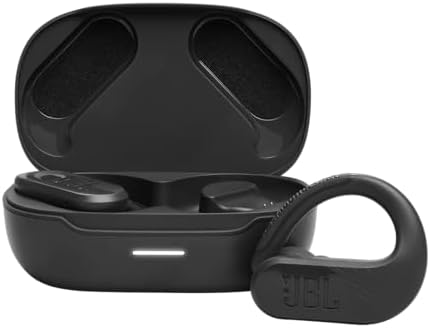
- JBL Pure Bass Sound: Get the most out of your favorite workout playlist with rich bass from a 10mm dynamic driver that d…
- Up to 50 total hours of playback with speed charge: Whether you measure your energy output in miles, pounds, or minutes,…
- IP68 dust and water proof: An IP68 rating means the JBL Endurance Peak 3 earbuds are ready for your most active adventur…
READ MORE: Best Robot Lawn Mowers for Seniors Review: Comparison & Buying Guide
5. Soundcore Sport X20 by Anker
Anker’s Soundcore brand is known for high quality without the high price tag. The Sport X20 is unique because the ear hooks are not just flexible—they are rotatable and extendable. This allows you to “dial in” the perfect fit for your specific ear shape.
For seniors, this customization is huge. If your ears are a bit smaller or larger than average, you can adjust these to be perfectly comfortable. They also feature strong noise canceling for when you are on the treadmill at the gym, and a great transparency mode for when you are outdoors.
Key Features:
- Unique rotatable and extendable ear hooks
- High-quality noise canceling
- IP68 waterproof and “SweatGuard” technology
- Adjustable sound through a simple phone app
- Very secure for jogging and jumping
Pros:
- The adjustable hooks make these the most “customizable” fit on the list.
- Excellent value for the price.
- Very strong protection against sweat-related damage.
Cons:
- The design is a bit “sporty” and not as sleek as the Bose.
- The app has many settings, which might feel overwhelming for some.
Rating: 4.3/5
Who it fits best: Seniors who struggle to find earbuds that fit their ears correctly. Value-conscious runners who want a secure, customizable hook.

Comparison Table: Best Senior-Friendly Earbuds
| Product | Style | Fit Security | Awareness | Battery Life | Water Resistance | Best For | Rating |
| Bose Ultra Open | Cuff (Open) | High | Excellent | 7 Hours | IPX4 | Total Comfort | 4.6/5 |
| SHOKZ OpenRun Pro Mini | Bone Conduction | Maximum | Excellent | 10 Hours | IP55 | Safety & Stability | 4.7/5 |
| Raycon Fitness | In-Ear | Moderate | Good (Mode) | 9 Hours | IPX7 | Rainy Weather | 4.4/5 |
| JBL Endurance Peak 3 | Hook (In-Ear) | Maximum | Good (Mode) | 10 Hours | IP68 | Rugged Durability | 4.2/5 |
| Soundcore Sport X20 | Adj. Hook | High | Good (Mode) | 12 Hours | IP68 | Custom Fit | 4.3/5 |
READ MORE: Salvation Army Free Car Program (Eligibility & How to Apply)
Best Choice by Senior Need
Sometimes, having five choices is still four too many. Here is how to pick based on what you value most:
- Best Overall for Comfort: Bose Ultra Open Earbuds. If you hate having things in your ears, these are a dream. They feel like air and let your ears “breathe.”
- Best for Safety Awareness: SHOKZ OpenRun Pro Mini. Because your ears are literally open, your natural hearing isn’t changed at all. It’s the safest way to run on busy U.S. streets.
- Best for Secure Fit: JBL Endurance Peak 3. The hook is solid. If you are worried about an earbud falling into a storm drain or getting lost in the grass, get these.
- Best Battery Life: JBL Endurance Peak 3. With 50 hours in the case, you can go on a week-long vacation and leave the charging cable at home.
- Best Value: Soundcore Sport X20. You get premium features like noise canceling and adjustable hooks for a much lower price than Bose.
Why “Transparency Mode” is a Safety Non-Negotiable
If you are a safe earbud user for outdoor running, your number one tool is transparency mode (sometimes called ambient awareness or “Be Aware” mode).
Traditional earbuds create an airtight seal inside your ear canal. While this blocks out the annoying drone of a gym treadmill, it is highly dangerous when running on neighborhood streets or shared walking trails.
Transparency mode uses external microphones built into the earbuds to pick up environmental noises and mix them directly into your audio stream. When it is implemented well, it feels like magic: you can clearly hear your favorite classic rock track, but you can also hear:
- An electric or hybrid vehicle approaching silently from behind.
- A cyclist calling out, “On your left!” as they prepare to pass.
- A neighbor saying hello or warning you about a loose dog up ahead.
- An emergency vehicle siren blocks away.
Many physical therapists, running coaches, and safety experts recommend that seniors completely abandon full noise isolation when exercising outdoors. If your earbuds lack a reliable transparency feature, you should only wear one earbud at a time while running, leaving your traffic-side ear completely open to the world.
READ MORE: Robotic Vacuum for Seniors: Best Features, Comparison, Reviews, and Buying Guide
Open-Ear vs. Traditional Earbuds: Which Style Fits You?
The earbud market has split into several distinct design styles. Understanding the differences will help you choose the right fit for your unique ear anatomy.
Bone Conduction & Air-Conduction (Open-Ear)
Instead of sitting inside your ear hole, these devices sit entirely outside your ear canal. Bone conduction models rest on your cheekbones and send sound vibrations directly to your inner ear, while open-ear air-conduction models use tiny, precision-aimed speakers that hover just above your ear opening.
- Pros: Total, unhindered awareness of your environment; completely eliminates ear canal irritation; cannot fall out of your ear.
- Cons: Bass response feels weaker; won’t block out loud ambient noise (like heavy highway traffic or airport noise).
- Who it is for: Outdoor runners and walkers who prioritize absolute safety, situational awareness, and ear comfort above all else.
Traditional In-Ear (Silicone Tips)
These are the classic earbuds that use a soft, interchangeable silicone or foam tip to plug your ear canal directly.
- Pros: Rich, full-bodied sound with deep bass; excellent active noise cancellation when you actually want to block out the world (like inside a loud gym).
- Cons: Can create a “thumping” or underwater sensation with every footstep (known as occlusion); can hide environmental dangers if transparency mode isn’t turned on.
- Who it is for: Seniors who want premium sound quality and plan to split their time between indoor treadmill workouts and highly controlled outdoor tracks.
Over-Ear Hook & Wingtip Models
These can be either in-ear or open-ear, but they add a mechanical stabilization element—either a hook that wraps over the top of the ear or a flexible silicone flap that locks under the ear ridge.
- Pros: The absolute highest level of stability; zero chance of dropping an earbud during vigorous workouts.
- Cons: Can occasionally interfere with thick plastic eyeglass frames or sunglasses.
- Who it is for: Runners who have historically struggled with earbuds constantly falling out, or individuals who frequently jog on bumpy, uneven off-road trails.
Wireless Earbuds Buying Tips for Seniors
If you are heading to the store or shopping online, keep these practical tips in mind:
- Try Open-Ear First: If you’ve never liked earbuds, try the Bose or SHOKZ styles first. They are a game-changer for people who “hate” headphones.
- Choose Lightweight Models: Even a few extra grams can cause an ache behind the ear after three miles.
- Pick Easy Controls: If you have any arthritis or loss of feeling in your fingertips, avoid “touch” controls. Physical buttons that you can feel with your thumb are much better.
- Check Water Resistance: Even if you don’t run in the rain, U.S. summers are humid. Sweat can kill cheap electronics. Look for at least IPX4.
- Think About Glasses and Hearing Aids: If you wear behind-the-ear hearing aids, the Bose Ultra Open (cuff style) is usually the best fit because it stays away from the hearing aid.
- Make Sure They Don’t Shift: When you try them on, shake your head gently. If they move even a little bit, they will likely fall out when you are sweaty and moving.
- The 30-Minute Rule: Most earbuds feel fine for 5 minutes. Check reviews specifically for “long-term comfort” to see how they feel after 30 or 60 minutes.
READ MORE: Best 6 Anti Aging Supplements for Seniors: Reviews, Comparison & Buying Guide
Safety Tips for Older Runners and Walkers
Listening to audio while running is a great joy, but it should never come at the expense of your physical safety. Implement these practices on your very next outing:
- The 50/50 Rule: Keep your smartphone or earbud volume capped at 50% or lower. You should always be able to easily hear your own footsteps clicking against the pavement over the sound of your music.
- Run Against Traffic: When running on roads without sidewalks, always run facing oncoming traffic. This allows you to visually spot vehicles well before they reach you, providing an extra layer of defense if your music momentarily distracts you.
- The Left Ear Rule: If you are using traditional in-ear buds that lack a transparency mode, only wear the earbud in your right ear. Your left ear faces the street traffic in the United States and should remain completely open to hear passing vehicles.
- Check Local Traffic Laws: Be aware that certain municipalities and state parks have strict local laws banning the use of dual headphones or closed-back earbuds while operating bicycles or running on public roads. Open-ear models are widely accepted under these ordinances.
Maintenance Tips: Extending the Lifespan of Your Earbuds
Because fitness earbuds are regularly exposed to body sweat, skin oils, and outdoor dust, they require a little bit of routine care to keep them functioning smoothly for years to come.
Cleaning Checklist
- Weekly Wipe-Down: Use a soft, lint-free microfiber cloth lightly dampened with water or 70% isopropyl alcohol to wipe down the outer casings of your earbuds after a heavy workout.
- Clear the Mesh Grilles: Earwax naturally migrates onto the tiny mesh acoustic grilles of in-ear buds, causing the volume to sound muffled or dead. Use a clean, dry toothbrush or a wooden toothpick to gently brush away debris. Never poke sharp metal pins into the acoustic mesh.
- Dry Before Charging: Putting damp, sweat-soaked earbuds directly back into their charging case can corrode the gold metal charging pins over time. Always wipe the earbuds completely dry with a towel before closing them in the case.
- Avoid Extreme Heat: Never leave your earbud charging case sitting on the dashboard of your car during hot summer days. High cabin temperatures can rapidly degrade the internal lithium-ion batteries, permanently reducing your maximum runtime.
Common Mistakes to Avoid When Buying
Avoid these frequent pitfalls that many first-time buyers make:
- Buying Solely Based on Brand Name: A pair of premium headphones engineered for studio recording or business travel will rarely perform well on a sweaty, high-impact running trail. Look for sports-specific lines.
- Ignoring the Size of the Controls: Do not buy ultra-microscopic earbuds that rely on complex, multi-tap sequences if you struggle with fine motor precision or have mild arthritis in your hands.
- Settling for the Default Ear Tips: Most manufacturers pack three distinct sizes of silicone tips inside the box. Do not just use the ones that come pre-installed. Take 10 minutes to test all three sizes; a proper seal can completely change the comfort and audio quality.
- Leaving Active Noise Cancellation (ANC) On Outdoors: Never activate maximum noise-blocking modes while running on open streets. Save ANC for indoor gym treadmills or stationary indoor tracks.
READ MORE: Senior Lifetime National Park Pass: Cost, Eligibility, & How to Apply
Expert Tips for the Ultimate Experience
To round out your setup, keep these quick tips in mind from our testing team:
- Reduce Ear Fatigue with EQ: If podcasts or audiobooks sound too boomy or harsh, open your earbud’s smartphone app and turn down the treble or activate a “Spoken Word” equalizer profile to ease ear strain.
- Wear a Sweat Sweatband: If you sweat heavily, wear a light running headband over the top of your ears. This prevents moisture from running down into your ear canals and keeps touch-sensitive controls perfectly dry.
- Charge Consistently, but Avoid Overnight Plugs: Modern charging cases protect against overcharging, but to maximize the total physical life of your battery over three to five years, try to unplug the case once the indicator light shows it is fully charged.
FAQ Section
Are wireless earbuds safe for seniors while running?
Yes, they can be safe when they fit well and allow awareness of traffic and surroundings. Open-ear and awareness-mode earbuds are especially useful outdoors.
What type of earbuds are best for older runners?
Open-ear, bone-conduction, or secure hook-style earbuds are often the best choices because they balance comfort, stability, and awareness.
Are open-ear earbuds better than in-ear earbuds for seniors?
Often, yes. Open-ear styles keep the ear canal open, which helps many seniors stay more aware while running or walking. In-ear earbuds can still work well if the fit is secure and comfortable.
How do I keep earbuds from falling out while running?
Choose the right size or style, such as ear hooks, a Mini band, or an open-ear clip-on fit. A stable design matters more than forcing a tighter seal.
Which wireless earbuds are most comfortable for seniors?
Bose Ultra Open Earbuds and SHOKZ OpenRun Pro Mini are two of the most comfort-focused options because they are designed for open-ear wear and all-day movement.
Conclusion
Choosing the right wireless earbuds doesn’t have to be a headache. For senior runners in the USA, the priorities are clear: you want to be comfortable, you want to be safe, and you want your earbuds to stay put.
If you want the absolute best in comfort and don’t mind spending a bit more, the Bose Ultra Open Earbuds are a fantastic investment. If safety and a secure fit are your primary concerns, you can’t go wrong with the SHOKZ OpenRun Pro Mini. For those who want a rugged, “set it and forget it” pair with a massive battery, the JBL Endurance Peak 3 is a solid workhorse.