If you’ve ever experienced a constant ringing, buzzing, or humming in your ears that no one else seems to hear, you know how frustrating it can be. This condition, known as tinnitus, affects millions of Americans. It can make it hard to focus, difficult to sleep, and sometimes even a challenge to enjoy a quiet conversation.
For a long time, the only way to get high-quality hearing support was through expensive prescription devices. However, the rise of Over-the-Counter (OTC) hearing aids has changed the landscape. These devices are now available without a prescription for adults with mild to moderate hearing loss and they are becoming a go-to solution for those seeking tinnitus relief.
In this guide, we will explore the best OTC hearing aids for tinnitus, explain how these devices work to quiet the “ringing,” and help you find an affordable, effective solution that fits your lifestyle. Lets deep dive into “Best OTC Hearing Aids for Tinnitus (2026) | Affordable & Effective Picks”
READ MORE: Best Smart TV for Seniors in 2026: Easy to Use & Large Screen Picks
What Is Tinnitus?
At its core, tinnitus is the perception of sound when no external sound is present. It isn’t a disease itself; rather, it is a symptom of an underlying condition, such as age-related hearing loss, an ear injury, or a circulatory system disorder.
Most people describe it as “ringing in the ears,” but it can also sound like:
- Buzzing or humming
- Hissing or whistling
- Roaring or clicking
Common Symptoms
People describe tinnitus in many ways. You might hear sounds in one or both ears, or inside your head. Common descriptions include:
- Ringing: The classic high-pitched sound, like a TV sitting on a blank channel.
- Buzzing: A steady, humming motor-like noise.
- Hissing: Similar to escaping steam or air coming out of a tire.
- Clicking: Popping or tapping noises, often related to muscle contractions near the ear.
- Roaring: A low-pitched sound like ocean waves or heavy wind.
- Pulsing (Pulsatile Tinnitus): A rhythmic thumping or swooshing sound that beats in time with your pulse.
What Causes Tinnitus?
Tinnitus usually happens when the delicate hair cells in your inner ear become damaged or worn down. Key causes include:
- Age-Related Hearing Loss (Presbycusis): Natural wear and tear on inner ear structures over time.
- Loud Noise Exposure: Working around heavy machinery, military service, concerts, or power tools.
- Earwax Blockages: Accumulated earwax touching the eardrum and changing sound transmission.
- Ear Infections or Sinus Pressure: Fluid buildup affecting middle ear pressure.
- Medications: Certain high-dose drugs (like aspirin, loop diuretics, and some antibiotics) can temporarily or permanently trigger ringing.
- Stress and Anxiety: While stress doesn’t cause tinnitus directly, high stress heightens your brain’s awareness of internal noise.
How OTC Hearing Aids Can Help with Tinnitus
Many people are surprised to learn that hearing aids are one of the most effective ways to manage tinnitus. While they don’t “cure” the condition, they change how your brain perceives it. Here is how they help:
1. Amplifying External Sounds
Most people with tinnitus also have some degree of hearing loss. When you can’t hear the world around you clearly, your brain “turns up the volume” on its own internal signals, making the ringing seem louder. By amplifying environmental sounds like the wind, a ticking clock, or conversation hearing aids provide more external stimulation, which naturally masks the tinnitus.
2. Sound Masking Features
Some of the best hearing aids for tinnitus relief include specific “masking” programs. These programs play soothing sounds (like white noise, ocean waves, or pink noise) directly into your ear to cover up the ringing.
3. Reducing Contrast
In a quiet room, the “gap” between silence and your tinnitus is huge. Hearing aids fill that gap with ambient sound, reducing the contrast and making the tinnitus much less intrusive.
4. Improving Speech Clarity
Tinnitus can make it hard to follow conversations. Features like AI noise reduction and directional microphones help you focus on voices, reducing the mental fatigue that often makes tinnitus symptoms feel worse.
READ MORE: Best Wireless TV Headphones for Seniors (2026) – Clear Sound & Easy Setup
Best OTC Hearing Aids for Tinnitus: Affordable Picks
Choosing a device can be overwhelming. We’ve reviewed six popular options to help you determine which features such as Bluetooth, app control, or dedicated masking modes are right for you.
1. Vivtone Lucid508
The Vivtone Lucid508 is a classic “Behind-the-Ear” (BTE) style hearing aid that focuses on simplicity and power. It is often recommended for those who want a traditional look with modern rechargeable convenience.
- Who it is best for: Seniors or adults who prefer a physical button over a smartphone app and need a reliable, budget-friendly device.
- Main strengths: It features 8-channel digital processing and an impressive backup power capacity in its charging case (up to 125 hours).
- Possible drawbacks: The BTE style is more visible than “In-the-Ear” models.
- Tinnitus-related features: It includes a dedicated “tinnitus mode” along with “normal” and “noisy” environment settings to help manage different sound levels.
- Overall Verdict: A solid, no-nonsense choice for under $300 that provides specific tinnitus masking.
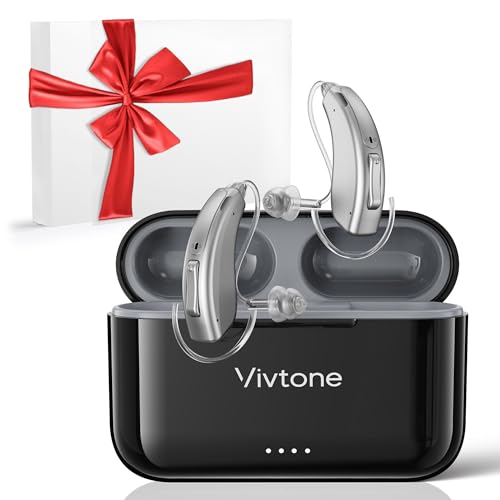
- Excellent Sound Quality – Enjoy natural and clear sound quality with no background noise or whistling. Peak sound gains …
- Easy & Professional Operation – Auto-On/Off feature when taken out or put into the charging case. Quiet mode for normal …
- Fast & Convenient Charging – Fully charged in just 2 hours, with 25 hours of use. The charging case can charge both unit…
2. Audien Atom X Hearing Aid
The Audien Atom X is a popular entry-level device known for its incredibly small size and touchscreen interface on the charging case.
- Who it is best for: Users who want a very discreet, “In-the-Canal” (ITC) fit without the high price tag of prescription models.
- Main strengths: Very simple to use; no smartphone app is required for setup. It’s a “plug-and-play” device.
- Possible drawbacks: While it helps with tinnitus by amplifying external sound, it lacks the specialized “masking libraries” found in more advanced models.
- Tinnitus-related features: Relies primarily on high-quality amplification to reduce the “ringing” through environmental sound.
- Overall Verdict: Great for those on a budget who want an almost invisible device to help with mild hearing loss and secondary tinnitus relief.
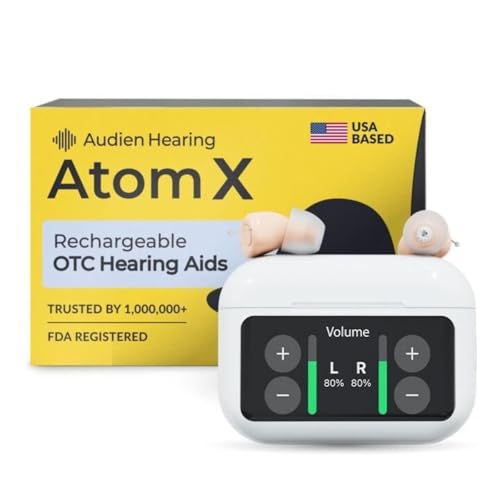
- WORLD’S FIRST TOUCHSCREEN CONTROL HEARING AIDS – The Atom X is more than just a hearing aid, it’s an advanced listening …
- EXPERT-GUIDED SETUP FOR HEARING HAPPINESS – TAILORED TO YOU: Every Atom X purchase comes with The Audien Sound Check – a…
- EASY TO HEAR SOUND QUALITY – Hearing smarter because it’s simpler. Atom X uses advanced A2 TM Max processing to deliver …
READ MORE: Robotic Vacuum for Seniors: Best Features, Comparison, Reviews, and Buying Guide
3. Sirnaigs Flow Pro OTC Hearing Aids
The Sirnaigs Flow Pro is a modern “Receiver-in-Canal” (RIC) device that mimics the look and feel of high-end audiologist-fitted aids.
- Who it is best for: Tech-savvy users who want full control over their sound profile via a smartphone app.
- Main strengths: Excellent Bluetooth connectivity for streaming music and taking phone calls directly through the hearing aids.
- Possible drawbacks: The app-heavy interface might be frustrating for those who aren’t comfortable with smartphones.
- Tinnitus-related features: Uses a “Smart App Control” system that allows for fine-tuning background noise cancellation, which helps reduce the stress of tinnitus.
- Overall Verdict: A versatile, tech-forward option for people who want their hearing aids to double as high-quality Bluetooth earbuds.
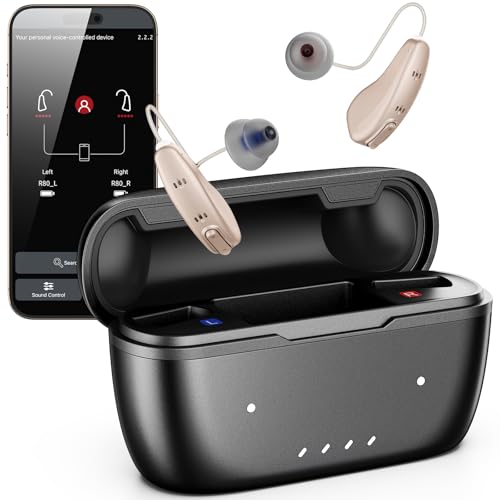
- AI Clear Sound with Noise Cancellation: OTC hearing aid with AI enhances speech and reduces background noise in restaura…
- Ultralight & All-Day Comfort: Ergonomic skin-safe silicone ensures a lightweight, irritation-free fit. The slim behind-t…
- Bluetooth Hearing Aids with APP: OTC hearing aids for seniors makes crystal clear calls and music playing. App controls …
4. ELEHEAR Beyond OTC Hearing Aids
The ELEHEAR Beyond stands out for its use of artificial intelligence to clarify speech and manage background noise.
- Who it is best for: People who struggle with “ringing in the ears” and need a personalized sound experience.
- Main strengths: Features VOCCLEAR® technology and AI noise reduction. It offers a very natural sound quality.
- Possible drawbacks: The RIC design means there is a small wire running into your ear, which some users find takes a few days to get used to.
- Tinnitus-related features: Includes a built-in library of over 20 soothing sounds (like rain or white noise) specifically for tinnitus masking, manageable via their app.
- Overall Verdict: One of the best OTC hearing aids for tinnitus due to its dedicated masking library and AI-driven clarity.

- Super Clear Sound – Powered by VocClear AI Technology with maximum gain of up to 50 dB and 24 dB noise attenuation, ELEH…
- Customizable Smart Features – These Bluetooth hearing aids come with the ELEHEAR smart app for both iOS and Android devi…
- Long-lasting Up to 100 Hours – The rechargeable hearing aids and charging case provide a total of 100 hours of battery l…
5. Ceretone Torch Hearing Aids
The Ceretone Torch is an In-The-Canal (ITC) device designed for all-day comfort and extreme battery life.
- Who it is best for: Active users who don’t want to worry about their hearing aids dying during a long day or trip.
- Main strengths: Up to 100 hours of use when including the charging case. It uses high-end Knowles® speakers for crisp sound.
- Possible drawbacks: It does not have a smartphone app, so all adjustments are made on the device itself.
- Tinnitus-related features: Features a built-in tinnitus masking function that can be toggled without needing a phone.
- Overall Verdict: An excellent, high-performance choice for people who want professional-grade sound and tinnitus masking without the complexity of an app.

- 🥇 【Real Hearing Aids, Not Amplifiers】The Ceretone invisible In-The-Canal (IIC) hearing aids use a U.S.-made INTRICON chi…
- ♻️【Environmental-Friendly Packaging Solution】The packaging is made of degradable and recyclable pulp material, reducing …
- 🚵【Advanced Wind Noise Management】Significantly reduces discomfort from wind noise. Improves speech clarity and comprehe…
READ MORE: Best Wireless Earbuds for Senior Runners: 2026 Top Picks
6. Aisenth Receiver-in-Canal (RIC) Hearing Aid
Aisenth offers a sleek RIC-style device that uses smart-chip technology to adapt to different environments.
- Who it is best for: Budget-conscious shoppers looking for the RIC (behind-the-ear with a hidden wire) style.
- Main strengths: Intelligent noise reduction and a dual-algorithm chip that helps balance sound in crowded rooms.
- Possible drawbacks: Often sold via third-party marketplaces; specs should be verified with the specific seller for the most current version.
- Tinnitus-related features: Focused on “intelligent noise reduction,” which helps lower the volume of annoying background sounds that can exacerbate tinnitus.
- Overall Verdict: A discreet and affordable entry-point for users looking to try the RIC style for the first time.
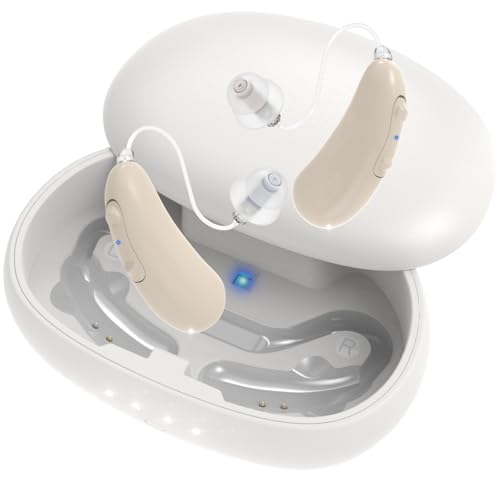
- Ultra-Clear Sound Amplification:Experience crystal-clear conversations with our best-selling hearing aids for seniors, f…
- Smart Bluetooth and upcoming app customization:Maximize functionality with Bluetooth hearing aids and the upcoming intui…
- Long-Lasting 40-Hour Battery Life:Enjoy uninterrupted use with audifonos recargables featuring rapid charging. A single …
2026 OTC Tinnitus Hearing Aid Comparison Table
| Product | Style / fit | Best for | Tinnitus feature | App or controls | Battery / charging | Main drawback | Best overall use case |
| Vivtone Lucid508 | BTE rechargeable | Budget-minded tinnitus shoppers | Dedicated tinnitus masking mode | Simple mode switching | Rechargeable; pair shown with backup charging power | Less app-centered than some rivals | Affordable tinnitus-focused pick |
| Audien Atom X | CIC / in-the-ear | First-time users who want simple setup | No dedicated tinnitus mode highlighted on the live page | Touchscreen; no app | 48+ hrs with case | Not tinnitus-first | Simple everyday hearing support |
| Sirnaigs Flow Pro | Verify live page first | Buyers who need current specs confirmed | Not verified | Not verified | Not verified | Limited reliable live details found | Only after fact-checking |
| ELEHEAR Beyond | Invisible OTC style | App users and tech-forward buyers | 20+ masking sounds; tinnitus relief | App control; Bluetooth 5.3 | Up to 20 hrs/charge; fast charging | More complex than simple models | Feature-rich tinnitus support |
| Ceretone Torch | In-ear | No-app simplicity seekers | Built-in tinnitus masking mode | No app; button controls | 25 hrs/charge; up to 100 hrs with case | Masking mode may be more targeted than all-day use | Simple tinnitus relief |
| Aisenth RIC | Receiver-in-canal | People who want discreet wear | Noise reduction only verified | Bluetooth / listing-based controls | Rechargeable per listing | Marketplace details need verification | Discreet general hearing support |
READ MORE: LiDAR ECOVACS Goat Lawn Mowers for Seniors: Review, Comparison & Top Picks
Best OTC Hearing Aids for Tinnitus: Premium Picks
1. Jabra Enhance Select 700
The Jabra Enhance Select 700 is a premium Receiver-in-Canal (RIC) device that bridges the gap between OTC convenience and professional audiology. It is widely considered the gold standard for users who want medical-grade features without the clinic price tag.
- Who it is best for: Tech-savvy users who want a “prescription-level” experience, including 3 years of remote professional support from licensed audiologists.
- Main strengths: Features advanced Binaural Beamforming (focusing on sounds in front of you) and seamless hands-free calling for both iOS and Android.
- Possible drawbacks: One of the most expensive OTC options on the market.
- Tinnitus-related features: Includes the Jabra Enhance Tinnitus Sound Generator, which offers customizable white noise and nature-inspired masking sounds directly through the app.
- Overall Verdict: The best choice for those who want a long-term medical partner and sophisticated built-in tinnitus masking tools.
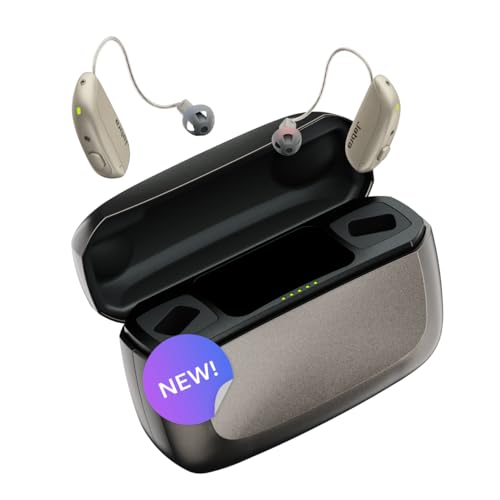
- The Benefits of a Clinic, Thousands Less: The technology you want and the audiology support you expect, at half the pric…
- The World’s Smallest Rechargeable RIE Hearing Aids: The Select 700 receiver-in-ear hearing aids offer all-day comfort in…
- Our Most Advanced Clinic-Quality Hearing Aids: The Select 700 provides effortless hearing, featuring SoundScape with Aut…
2. Lexie B2 Plus Powered by Bose
The Lexie B2 Plus combines Bose’s legendary sound processing with a self-fitting design. It is a RIC model that excels at providing a natural sound environment, which is crucial for reducing the “closed-in” feeling that can worsen tinnitus.
- Who it is best for: Users who prioritize sound quality and want a “DIY” setup that they can tune themselves in minutes using the Lexie app.
- Main strengths: “World Volume” technology allows for incredibly precise adjustments of environmental sounds; it also includes an in-app hearing test to auto-tune the devices.
- Possible drawbacks: While it has great amplification, it lacks a dedicated “white noise” generator mode compared to Jabra or ELEHEAR.
- Tinnitus-related features: High-frequency amplification helps “mask” the ringing by bringing back environmental clarity; the app allows for treble/bass adjustments to soothe tinnitus spikes.
- Overall Verdict: A top-tier choice for clarity and self-tuning, though it relies more on amplification than active masking for tinnitus.
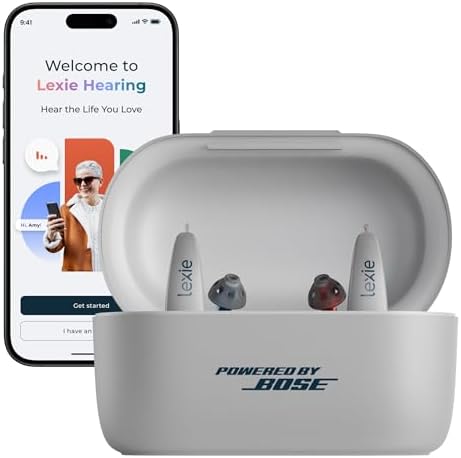
- POWERED BY BOSE SOUND TECHNOLOGY: Enjoy high-quality sound from audio leader Bose. The Lexie B2 Plus Hearing Aids use pr…
- EASY, SELF-FITTING CUSTOMIZATION: Fit, tune, and adjust your hearing aids through the free Lexie app, clinically proven …
- PERSONALIZED TO YOUR HEARING: Some non-self-fitting devices offer 3–5 programs that only fit the majority of hearing los…
READ MORE: Best Video Doorbell for Seniors: Wireless, Without Subscription, Easy & Safe
3. Audien Hearing Ion Pro 2
The Ion Pro 2 is a budget-friendly RIC device designed to provide essential hearing support without the complexity of high-end software. It focuses on the “basics done right.”
- Who it is best for: Budget-conscious shoppers who need a reliable, simple device for mild-to-moderate hearing loss.
- Main strengths: Extremely small and discreet RIC design with a powerful portable charging case that offers up to 4 days of backup power.
- Possible drawbacks: Does not feature a dedicated smartphone app for fine-tuning; relies on physical button toggles.
- Tinnitus-related features: Uses 4 distinct “environmental modes” (Normal, Noisy, Outdoor, Meeting) which can help reduce the prominence of tinnitus in different settings.
- Overall Verdict: An excellent, affordable entry point for those who need a boost in volume to help distract the brain from tinnitus.
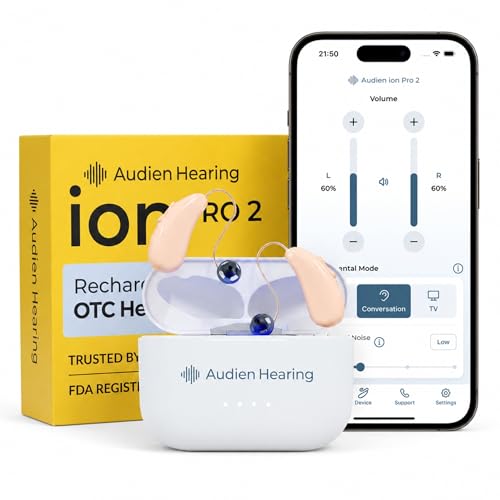
- NEXT-GEN HEARING EXPERIENCE – Hear life like never before with the Audien Ion Pro 2. Developed with Grammy-winning sound…
- ENHANCED STREAMING AUDIO – Enjoy a richer and louder streaming experience when listening to calls, music, or TV. The Ion…
- BUILT IN UV CLEANING – Keep your hearing aids fresh and hygienic with UV sanitizing technology that works while charging…
4. ELEHEAR-Beyond Pro
The ELEHEAR-Beyond Pro is a high-tech RIC hearing aid that utilizes proprietary AI to separate human speech from background noise, making it a “smart” solution for modern environments.
- Who it is best for: People who struggle with “cocktail party effect” (hearing in noise) and want a robust app with extensive masking options.
- Main strengths: Features “VocalClear” AI technology and Bluetooth 5.3 for high-fidelity streaming and low battery consumption.
- Possible drawbacks: The AI-processed sound may feel slightly “digital” to those used to traditional analog-style aids.
- Tinnitus-related features: A dedicated Tinnitus Relief section in the app provides 20+ customizable soundscapes (e.g., ocean waves, rain, white noise) that can be layered over the hearing aid’s natural sound.
- Overall Verdict: The most versatile pick for active tinnitus masking, offering a massive library of soothing sounds at a mid-range price.

- Ultra-clear, Natural Sound – Powered by VocClear 2.0 technology that delivers 30% clearer speech, ELEHEAR-Beyond Pro hea…
- Smarter UI, Redesigned for Simplicity – These Bluetooth hearing aids come with the ELEHEAR smart app for both iOS and An…
- 15-Minute Fast Charge – Just 15 minutes of fast charging gives the rechargeable hearing aids up to 6 hours of use. They …
2026 OTC Tinnitus Hearing Aid Comparison Table 2
| Product | Style / Fit | Best For | Tinnitus Feature | App or Controls | Battery / Charging | Main Drawback | Best Overall Use Case |
| Jabra Enhance Select 700 | RIC (Discreet) | Users wanting professional support | Built-in Tinnitus Sound Generator | Jabra Enhance App + Remote Audiologists | Rechargeable (30 hrs/charge) | Higher price point | Premium all-in-one care |
| Lexie B2 Plus (Bose) | RIC (Discreet) | Sound quality & DIY tuners | High-freq amplification masking | Lexie App (Self-fitting) | Rechargeable (18 hrs/charge) | No dedicated masking “modes” | Natural sound & clarity |
| Audien Ion Pro 2 | RIC (Small) | Budget-minded shoppers | 4 Environmental Mode toggles | Physical buttons (No App) | Rechargeable (24 hrs; 4 days with case) | No app-based customization | Simple, affordable relief |
| ELEHEAR Beyond Pro | RIC (Modern) | Tech-forward & deep masking | 20+ App-based masking soundscapes | ELEHEAR App + Bluetooth 5.3 | Rechargeable (20 hrs/charge) | AI sound can feel “digital” | Customized sound therapy |
READ MORE: Best Health Tracking Smartwatch for Seniors 2026 — Top 8 Picks Compared
What to Look for in OTC Hearing Aids for Tinnitus
When shopping for an OTC hearing aid specifically for mild-to-moderate hearing loss and tinnitus relief, evaluate these key features:
- Rechargeable Batteries: Look for long battery life (at least 16 to 30 hours) so sound enrichment lasts all day without swapping tiny disposable batteries.
- Bluetooth Streaming: Direct audio streaming lets you play custom masking sounds, calming music, or podcasts straight from your phone.
- Smartphone Apps: User-friendly apps let you customize equalizer settings, adjust background noise filters, and select environmental modes.
- AI Noise Reduction & Speech Enhancement: Advanced chips separate human speech from background clutter, keeping conversation clear without amplifying harsh noises.
- Directional Microphones: Help focus on people talking directly in front of you while filtering distracting side noise.
- Comfort and Fit: Receiver-In-Canal (RIC) or Completely-In-Canal (CIC) designs must fit comfortably for 12+ hours of daily wear.
- Trial Period & Support: Ensure the manufacturer offers a risk-free trial (at least 45 days) and reliable customer support or remote audiology consultation.
OTC vs. Prescription Hearing Aids for Tinnitus
| Feature | OTC Hearing Aids | Prescription Hearing Aids |
| Target Hearing Loss | Mild to Moderate | Mild to Profound |
| Prescription Needed? | No | Yes |
| Fitting Method | Self-fitting through a smartphone app or built-in hearing test | Professionally fitted by an audiologist or hearing care specialist |
| Average Price (Per Pair) | $300–$2,000 | $2,500–$7,000 |
| Tinnitus Sound Therapy | App-based sound therapy, white noise, nature sounds, and environmental masking features (varies by model) | Advanced built-in tinnitus programs, including notch therapy, customized masking sounds, and personalized tinnitus management |
| Professional Care | Limited support through remote assistance, online guides, or telehealth services | Comprehensive in-office hearing evaluation, real-ear measurements, ongoing programming, follow-up visits, and long-term hearing care |
| Customization Level | Basic user adjustments for volume and sound profiles | Highly personalized programming based on your hearing loss and tinnitus profile |
| Best For | Adults (18+) with perceived mild to moderate hearing loss who want an affordable, convenient solution | People with moderate to profound hearing loss, complex hearing needs, or persistent tinnitus requiring professional treatment |
Red Flag Symptoms: When to See an ENT Specialist Immediately
Do not purchase OTC hearing aids if you experience any of the following medical “red flags.” Instead, seek an immediate evaluation from an Ear, Nose, and Throat (ENT) specialist or licensed audiologist:
- Sudden or rapid hearing loss in one or both ears
- Tinnitus in only one ear (unilateral tinnitus)
- Pulsatile tinnitus (ringing or whooshing that beats in sync with your heartbeat)
- Frequent dizziness, vertigo, or balance problems
- Ear drainage, bleeding, or persistent ear pain
- Visible earwax blockage or a foreign object stuck in the ear canal
Important: These symptoms may indicate an underlying medical condition that requires prompt diagnosis and treatment. OTC hearing aids are not appropriate until a healthcare professional has evaluated the cause.
12 Expert Tips for Managing Tinnitus with Hearing Aids
- Wear Devices Consistently: Wear your hearing aids daily during waking hours so your nervous system habituates to environmental sound.
- Start at Comfortable Volume Levels: Avoid cranking the volume up too high; loud amplification can fatigue your ears and heighten tinnitus.
- Use Ambient Sound Apps: Download tinnitus sound therapy apps (like ReSound Relief, Calm, or Beltone Tinnitus) and stream soothing rain or pink noise.
- Experiment with Ear Domes: Try open vents/domes if you want natural air flow, or closed vents to boost bass and masking stream isolation.
- Keep Firmware Updated: Check your hearing aid app monthly for software updates that improve performance and battery optimization.
- Clean Devices Daily: Earwax blockages impair sound output, which decreases background masking and makes tinnitus stand out.
- Protect Your Hearing: Wear hearing protection near power tools, lawnmowers, or firearms to prevent further inner ear damage.
- Manage Stress Levels: Practice mindfulness, yoga, or deep breathing; lowering stress reduces nervous system arousal and tinnitus perception.
- Limit Caffeine and Sodium: High sodium and excessive caffeine can alter inner ear fluid pressure in sensitive individuals.
- Avoid Total Silence: Use a white noise machine or sound fan on your nightstand when taking off hearing aids to sleep.
- Use Equalizer Controls: Adjust treble settings in your app to make high-frequency speech consonants sharper.
- Get an Annual Evaluation: Schedule a checkup with an audiologist if you notice a sudden shift in hearing or tinnitus intensity.
Maintenance, Cleaning, and Battery Care
Proper care ensures your OTC hearing aids stay in peak operating condition:
Daily Cleaning Protocol
- Wipe Down: Use a clean, dry microfiber cloth to wipe away earwax and oils from the outer body and ear tip after removing them.
- Wax Removal: Use the provided cleaning brush/wire tool to gently remove wax buildup from receiver tips and wax guards.
- Avoid Water: Never submerge non-IPX7 rated hearing aids in water or use alcohol wipes on silicone ear domes.
Battery & Charging Management
- Dock Overnight: Place your rechargeable devices into their charging dock every night.
- Keep Charging Contacts Clean: Periodically wipe the gold charging contacts on the aids and inside the case with a dry cotton swab.
- Store at Room Temp: Avoid leaving charging cases in hot cars or damp bathrooms.
Common Mistakes to Avoid
- ❌ Expecting an Instant Cure: Tinnitus management takes time; give your brain several weeks to adapt to restored sounds.
- ❌ Buying Solely on Price: Extremely cheap $50 “amplifiers” simply make all noise painfully loud without speech filtering or noise reduction.
- ❌ Ignoring the Trial Window: Don’t let your trial period expire if the devices don’t fit your ears comfortably.
- ❌ Skipping the Companion App: Companion apps unlock essential noise-filtering features, equalizer adjustments, and program modes.
- ❌ Giving Up Too Soon: Wearing hearing aids feels unfamiliar at first. Gradual, persistent use yields the best long-term results.
Frequently Asked Questions (FAQs)
Do OTC hearing aids really help with tinnitus?
Yes. For many people, tinnitus is more noticeable because of mild hearing loss. By amplifying the sounds you are missing, OTC hearing aids “distract” the brain with external noise, making the internal ringing much less prominent.
Which hearing aid is best for ringing in the ears?
The “best” device depends on your needs. For dedicated relief, the ELEHEAR Beyond is excellent because it has a library of 20+ masking sounds. If you want something simple and powerful, the Ceretone Torch offers built-in masking without needing a smartphone.
Are OTC hearing aids worth it for mild hearing loss?
Absolutely. Even mild hearing loss can cause the brain to overcompensate, leading to tinnitus. OTC devices provide a much more affordable way (often $300–$600 per pair) to address this compared to prescription aids that can cost $3,000 or more.
Do I need an app to use hearing aids for tinnitus?
Not necessarily. While apps allow for more “fine-tuning,” many people prefer the simplicity of devices like the Vivtone Lucid508 or Ceretone Torch, which allow you to change modes with a simple button or dial.
What features should I look for in a tinnitus hearing aid?
Look for AI noise reduction, rechargeable batteries, and multiple listening modes. If your tinnitus is your primary concern, ensure the device specifically mentions a “tinnitus mode” or “masking function.”
READ MORE: Salvation Army Free Car Program (Eligibility & How to Apply)
Conclusion
Finding relief from tinnitus doesn’t have to mean spending thousands of dollars at a clinic. With the arrival of high-quality OTC hearing aids, you can now find devices that offer clear speech, Bluetooth connectivity, and dedicated tinnitus masking from the comfort of your home.
Whether you choose the tech-heavy ELEHEAR Beyond for its soothing sound library or the Ceretone Torch for its “set-it-and-forget-it” simplicity, the goal is the same: to bring the world back into focus and push that annoying ringing into the background.
Medical Disclaimer
This article is for informational purposes only and does not constitute medical advice. If you experience sudden hearing loss, tinnitus in only one ear, ear pain, dizziness, or drainage, please consult a medical professional or audiologist immediately. OTC hearing aids are intended for adults 18 and older with mild to moderate hearing loss.