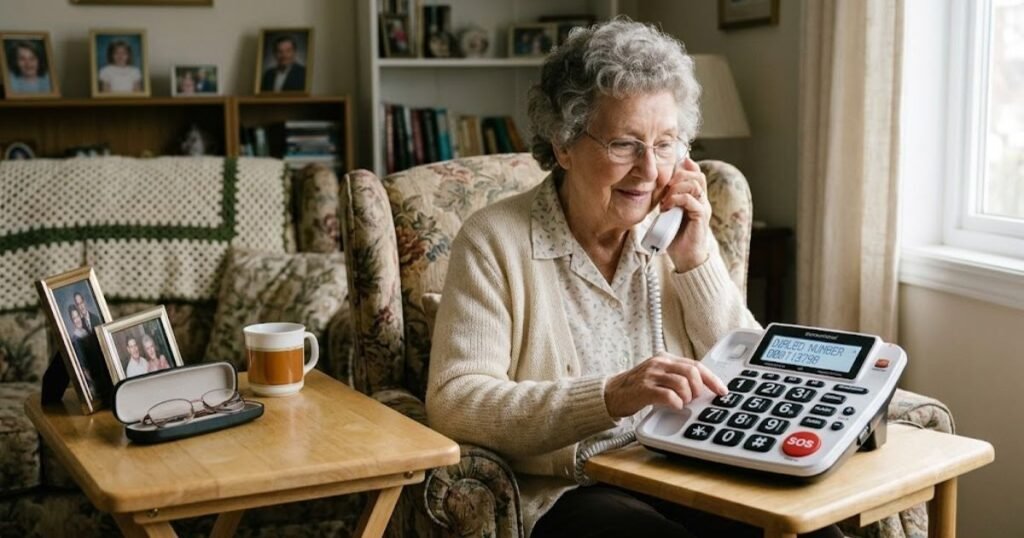
Despite the dominance of smartphones, millions of older Americans continue to rely on traditional home landlines. For seniors living independently or in assisted living facilities, a landline phone offers unbeatable peace of mind, crystal-clear voice clarity, and simple operation free of confusing touchscreens, swipe gestures, or software updates.
Modern senior-friendly landlines have evolved to meet specific age-related needs. Today’s top models feature extra-large backlit buttons, high-contrast displays, hearing aid compatibility, audio amplification, and aggressive call-blocking features that stop scam artists in their tracks.
Whether you are looking for an easy-to-use home phone for your elderly parents or a reliable setup for your own house, this comprehensive buyer’s guide breaks down the top six landline phones for seniors available in 2026. Lets deep dive into “Best Landline Phone for Seniors (2026): Top 6 Reviewed”
Why Many Seniors Still Prefer Landline Phones
Cell phones are convenient, but they’re not always the right fit for every stage of life. Here’s why a home phone still earns a spot on the kitchen counter for millions of older Americans.
- Reliability during emergencies. A corded landline plugged into a working phone jack typically keeps working even during a power outage, which matters enormously if a fall, medical event, or severe weather happens after dark.
- Better call quality. Landline connections are generally more stable than cellular signals, especially in homes with thick walls, rural coverage gaps, or a lot of interference.
- Easier than smartphones. There’s no app store, no software update, and no tiny touchscreen icons to misfire when hands aren’t as steady as they used to be.
- Familiar design. Many seniors have used a phone that plugs into the wall for 60, 70, even 80 years. That muscle memory reduces frustration and anxiety around using the device.
- Larger buttons. Senior-focused models use oversized, high-contrast keys that are far easier to see and press accurately than a glass touchscreen.
- Better volume controls. Home phones built for seniors typically include adjustable ringer volume, handset volume boost, and sometimes dedicated hearing-aid compatibility.
- Less complicated menus. Instead of nested settings menus, most senior landlines use a handful of physical buttons with clearly labeled functions.
- Excellent for caregivers. Features like call blocking, speed dial photo buttons, and loud visual ringers make it easier for family members to stay in contact and keep scammers out.
READ MORE: Best Flip Phone for Seniors: 7 Easy-to-Use Picks
How We Selected the Best Landline Phones
Not every home phone on the market is genuinely built with older adults in mind. To narrow the list down to models that actually make a difference day to day, we weighed the following criteria:
- Ease of use — Can someone unfamiliar with the phone figure it out within a few minutes?
- Button size — Are the keys large enough and spaced out enough to avoid misdials?
- Display readability — Is the screen high-contrast, backlit, and large enough to read from a few feet away?
- Speaker volume — Does the phone offer a genuinely loud ringer and adjustable call volume?
- Hearing aid compatibility — Is the handset rated to work cleanly with hearing aids, without whistling or static?
- Call blocking — Does the phone actively filter robocalls and scam numbers, not just log them?
- Answering machine — Is there a built-in digital answering system, and how much recording time does it offer?
- Battery backup — For cordless models, how long does the handset last on a charge, and how does it behave during an outage?
- Expandability — Can the system grow to cover a larger home with additional handsets?
- Customer satisfaction — What do real buyers and long-term users report about reliability?
- Value for money — Does the feature set match the price point?
READ MORE: Best iPhones for Seniors: 7 Easy-to-Use Phones
Best Landline Phones for Seniors (Top 6 Reviews)
1. Panasonic Cordless Phone (KX-TGD832M)
Best for: Households that want the most complete scam-blocking and answering-machine feature set.
The KX-TGD832M is Panasonic’s flagship senior-friendly cordless system, and it shows in how thorough the call-protection features are. It ships as a 2-handset system and is expandable up to six handsets total, which makes it a smart pick for a larger home or for a senior who wants a second handset by the bed and one in the kitchen.
Key features:
- DECT 6.0 digital technology for clear, interference-free calls
- Automated Call Block that intercepts robocalls before the phone even rings, plus the ability to permanently block up to 1,000 additional numbers
- One-Ring Scam Alert, which shows a confirmation screen before you call back a number that only rang once — a common scam tactic
- Bilingual (English/Spanish) Talking Caller ID that announces who’s calling
- Digital answering system with up to 17 minutes of recorded messages
- Large, illuminated high-contrast display and backlit keypad
- Up to roughly 10 hours of talk time and about 5 days of standby per charge
Pros:
- Extremely strong, multi-layered call-blocking system
- Large illuminated buttons are easy to see, even in dim rooms
- Expandable up to 6 handsets for full home coverage
- 2-Way Recording feature can help document suspicious calls
Cons:
- More menu options than a bare-bones phone, which may take a short learning curve
- Cordless handsets need regular charging
Why seniors will like it: The illuminated keypad and Talking Caller ID mean a user doesn’t have to squint at a screen to know who’s calling, and the layered scam protection gives adult children real peace of mind about robocalls reaching a parent.
Overall verdict: One of the most well-rounded senior cordless phones available, especially for anyone who wants strong call blocking built in rather than added on.

2. AT&T BL102-2 DECT 6.0 2-Handset Cordless Phone
Best for: Large homes, and anyone who wants the phone to announce the caller out loud.
AT&T’s BL102-2 leans hard into two things seniors consistently ask for: fewer robocalls and better range. The Smart Call Blocker screens robocalls automatically on the very first ring, not just after they’ve been reported by other users.
Key features:
- Smart Call Blocker that auto-blocks robocalls and allows one-touch blacklisting of up to 1,000 numbers
- Caller ID Announcer that speaks the caller’s name aloud
- Audio Assist, which boosts and clarifies speech frequencies for easier hearing
- Long-range DECT 6.0 antenna designed to reach large homes and outdoor spaces like a yard or garage
- Large, high-contrast 2-inch display with a lighted keypad
- Digital answering system that records up to 22 minutes of messages
- Intercom function between handsets and full-duplex speakerphone
Pros:
- Genuinely long range a strong option for bigger homes or properties
- Caller ID Announcer lets a senior decide whether to answer without walking to the phone
- Generous 22-minute answering machine capacity
- Visual ringer flash is a helpful extra for anyone with hearing loss
Cons:
- Expanding beyond 2 handsets requires separately purchased accessory units
- Some users find the multilingual setup menu takes an extra step to configure initially
Why seniors will like it: Being able to hear who’s calling before deciding to pick up removes a lot of the anxiety around unknown numbers, which is one of the biggest complaints seniors have about phones in general.
Overall verdict: A strong all-arounder, especially for larger homes where range and a loud, announced ringer matter most.

3. AT&T 2-Handset DECT 6.0 Cordless Home and Business Phone (CL82218 series)
Best for: Buyers who want a straightforward, no-fuss setup with dependable reception.
This AT&T model is built for simplicity. It skips some of the more elaborate extras found on higher-end systems in favor of a clean interface that’s fast to set up and easy to operate right out of the box.
Key features:
- DECT 6.0 technology for stable, interference-free reception
- Expandable cordless system for adding coverage to more rooms
- Large display and big buttons designed for easy reading and dialing
- Smart Call Blocker to cut down on robocalls
- Caller ID with call waiting
- Full-duplex speakerphone and handset intercom
Pros:
- Very easy initial setup — plug in and go
- Reliable reception throughout most homes
- Simple, uncluttered button layout
- Reasonably priced for what’s included
Cons:
- Display is functional but not as large as some higher-tier models
Why seniors will like it: There’s no learning curve here. The straightforward interface means less time spent explaining the phone and more time actually using it.
Overall verdict: A dependable, budget-friendly choice for someone who wants a cordless phone that simply works without extra bells and whistles.

4. Panasonic Cordless Phone (KX-TGD830M)
Best for: A single-handset setup with the same protective features as the KX-TGD832M.
Think of the KX-TGD830M as the KX-TGD832M’s sibling — nearly identical core technology, but sold as a single-handset system, which makes it a good fit for a smaller apartment or a senior who mainly uses one phone in one central room.
Key features:
- Automated Call Block plus the ability to block up to 1,000 additional numbers with one touch
- One-Ring Scam Alert confirmation screen
- Bilingual Talking Caller ID (English/Spanish)
- Illuminated keypad with large, easy-to-read characters
- Speed dial for one-touch access to frequently called numbers
- Digital answering system with up to 17 minutes of recording time
- Up to roughly 10 hours talk time and about 5 days standby
Pros:
- Same strong scam-blocking technology as the 2-handset version, at a lower cost
- Illuminated large-character keypad is easy to use in low light
- Expandable later if more handsets are needed down the road
Cons:
- Smaller households benefit most; larger homes may need to add handsets right away
Why seniors will like it: It offers nearly all the safety and readability features of the pricier 2-handset model, which makes it an easy entry point for someone who just needs one reliable, easy-to-read phone.
Overall verdict: A smart budget pick when full-home coverage isn’t a priority and strong call-blocking is.

5. AT&T CL2940 Corded Phone
Best for: Seniors who want a phone that never needs charging and works during a power outage.
Not every senior wants or needs a cordless system. The CL2940 is a corded phone built specifically with low-vision and hearing-impaired users in mind, and it remains one of the most popular senior-friendly corded phones for a simple reason: as long as it’s plugged into a phone jack, it works, even when the power is out.
Key features:
- Extra-large buttons and a tiltable, high-contrast LCD display
- Hands-free speakerphone
- Audio Assist, which temporarily boosts incoming volume and clarifies speech
- Extra-loud, adjustable ringer
- Caller ID and call waiting with a 50-name/number history
- Hearing-aid compatible
- Works without AC power for basic calling, since it draws power from the phone line itself
Pros:
- Never needs charging and keeps working in a power outage — a genuine safety advantage
- No handset to misplace or forget to recharge
- Extra-large buttons and tilt display reduce eye strain
- Officially rated hearing-aid compatible
Cons:
- Caller ID display requires 4 AA batteries, which need occasional replacement
- No answering machine built in on the base display model
Why seniors will like it: For anyone who lives alone, the ability to make a 911 call during a blackout without worrying about a dead battery is genuinely reassuring both for the senior and for the family checking in on them.
Overall verdict: The single best choice for anyone who prioritizes emergency reliability over cordless mobility.
Why corded phones remain an excellent option for many seniors: Corded phones don’t rely on a charged battery, aren’t vulnerable to a handset getting lost in the couch cushions, and typically keep working during outages. For a senior living alone, that reliability can matter more than the convenience of walking around the house while talking.

6. VTech Cordless Home Phone (CS6919 series)
Best for: Budget-conscious buyers who still want core senior-friendly features.
VTech’s CS6919 series proves that an affordable cordless phone doesn’t have to skimp on usability. It keeps things simple with a clean menu, a genuinely useful Quiet Mode, and dependable DECT 6.0 performance.
Key features:
- DECT 6.0 digital technology for private, interference-free calls
- Caller ID with call waiting displayed on a large, backlit screen
- Expandable up to 5 handsets using just one phone jack
- Full-duplex speakerphone for natural, hands-free conversations
- Call blocking
- Quiet Mode, which silences the ringer temporarily or for an extended period handy for nap time or quiet evenings
- ECO power-saving mode to extend battery life
Pros:
- Very affordable relative to its feature set
- Straightforward setup that most users describe as simple and quick
- Quiet Mode is a genuinely useful, senior-friendly touch
- Backlit display is easy to read in low light
Cons:
- No talking caller ID or advanced scam-alert screening like the Panasonic models
- Some users report battery longevity issues over time
Why seniors will like it: The Quiet Mode feature and clean, uncluttered menu make this a comfortable option for anyone who wants simplicity without paying for features they won’t use.
Overall verdict: The best value pick on this list for anyone who wants a reliable, easy cordless phone without paying for premium extras.

READ MORE: Best Landline Phone Service for Seniors | Plans, Costs & Reviews
Comparison Table: Top 6 Landline Phones for Seniors
| Phone | Type | Large Buttons | Hearing Aid Compatible | Call Blocking | Answering Machine | Speakerphone | Best For | Overall Rating |
| Panasonic KX-TGD832M | Cordless | Yes | Yes | Advanced (auto + 1,000 numbers) | Yes (17 min) | Yes | Most complete feature set | 4.8/5 |
| AT&T BL102-2 | Cordless | Yes | Yes | Advanced (auto + 1,000 numbers) | Yes (22 min) | Yes | Large homes, talking caller ID | 4.7/5 |
| AT&T CL82218 series | Cordless | Yes | Yes | Yes | Basic | Yes | Simple setup | 4.4/5 |
| Panasonic KX-TGD830M | Cordless | Yes | Yes | Advanced (auto + 1,000 numbers) | Yes (17 min) | Yes | Single-handset households | 4.7/5 |
| AT&T CL2940 | Corded | Yes (extra-large) | Yes | No (basic caller ID only) | No | Yes | Emergency reliability, no charging | 4.6/5 |
| VTech CS6919 series | Cordless | Moderate | Yes | Basic | No | Yes | Best value/budget pick | 4.3/5 |
Corded vs. Cordless Phones for Seniors
Choosing between a corded and cordless phone often comes down to one question: is mobility or dependability the bigger priority?
| Factor | Corded Phones | Cordless Phones |
| Reliability | Works as long as the phone line has power; very consistent | Depends on a charged battery and working base station |
| Battery dependency | None for the base unit itself (some display features need AA batteries) | Requires regular charging of each handset |
| Ease of carrying | Stays in one place | Can be carried room to room |
| Emergency use | Typically keeps working during power outages | May lose power if the handset battery dies during an outage |
| Installation | Simple — plug into a phone jack | Slightly more setup, including pairing handsets |
| Range | Limited to the length of the cord | Can cover an entire home, sometimes even outdoors |
| Maintenance | Minimal | Occasional battery replacement and charging habits |
| Best user type | Seniors living alone who prioritize safety and simplicity | Active households or seniors who move between rooms often |
READ MORE: AARP Landline Phone Service For Seniors
Features Seniors Should Look For
When comparing landline phones for seniors, a few features consistently make the biggest difference in day-to-day comfort and safety:
- Large buttons — Reduce misdials and make the keypad usable for anyone with arthritis or reduced fine motor control.
- High-contrast display — Easier to read at a glance, especially for anyone with low vision.
- Hearing aid compatibility — Prevents the whistling or static that some standard handsets cause.
- Loud ringer — Should be genuinely audible from another room, not just “loud” on paper.
- Adjustable volume — Both ringer and handset volume should have multiple levels.
- Speakerphone — Useful for hands-free conversations and for family members joining a call.
- One-touch dialing — Speed dial or photo dial buttons for frequently called family members or caregivers.
- Caller ID — Ideally displayed in large text, or announced out loud.
- Scam call blocking — One of the single most valuable features for protecting older adults from fraud.
- Answering machine — Especially useful for anyone who may not always hear the phone in time.
- Expandable handsets — Lets a system grow to cover more of the home over time.
- Battery backup — Matters most for cordless models during outages.
- Easy menu system — Fewer nested menus means less frustration.
- Ergonomic handset — A comfortable grip and shape reduces strain during longer calls.
Best Phone by Individual Need
- Best Overall: Panasonic KX-TGD832M — the strongest combination of scam protection, readability, and expandability.
- Best Budget: VTech CS6919 series — solid core features at the most accessible price point.
- Best Corded Phone: AT&T CL2940 — no charging required, works during outages.
- Best for Hearing Loss: AT&T BL102-2 — Caller ID Announcer plus Audio Assist give extra clarity.
- Best for Large Homes: AT&T BL102-2 — built for long-range coverage, including outdoor areas.
- Best Call Blocking: Panasonic KX-TGD832M — layered protection with One-Ring Scam Alert.
- Best Value: VTech CS6919 series — the most features per dollar spent.
- Best for Caregivers: Panasonic KX-TGD830M — easy to monitor thanks to Talking Caller ID and strong call blocking, even in a single-handset setup.
READ MORE: Best Voice Assistant for Seniors — Safe, Simple & Senior-Friendly Picks
Landline vs. Cell Phone for Seniors
| Factor | Landline Phone | Cell Phone |
| Reliability | Very high, especially corded models | Depends on signal strength and battery charge |
| Ease of use | Simple, physical buttons | Touchscreen can be harder to navigate |
| Emergency use | Corded models often work during power outages | Requires a charged battery and signal |
| Audio quality | Generally clear and stable | Can vary with signal and location |
| Monthly cost | Often bundled with internet or a modest standalone fee | Ongoing wireless plan cost |
| Battery dependence | None for corded phones | High — dead battery means no calls |
| Scam protection | Built-in call blocking on many senior models | Varies by carrier and phone settings |
| Indoor coverage | Consistent throughout the home | Can be spotty in basements or thick-walled homes |
Many families find that the best approach isn’t choosing one over the other it’s pairing a dependable landline at home with a simple cell phone for when a senior is out and about.
Senior Landline Buying Guide
Before choosing a landline phone, it helps to think through a few practical questions:
- Budget — Senior-friendly landlines typically range from budget-friendly basics to more feature-rich systems; decide what features are worth paying extra for.
- Number of handsets — Match the handset count to the size of the home and how many rooms need coverage.
- Home size — Larger homes benefit from long-range cordless systems or multiple handsets.
- Vision problems — Prioritize large buttons and high-contrast, backlit displays.
- Hearing problems — Look for hearing-aid compatibility, Audio Assist–style volume boosts, and an extra-loud ringer.
- Memory buttons — Photo or one-touch speed dial can make calling family members far easier.
- Emergency use — Consider a corded phone or one with reliable battery backup for peace of mind during outages.
- Warranty — Check how long the manufacturer’s warranty lasts and what it covers.
- Brand reputation — Panasonic, AT&T, and VTech all have long track records specifically in the senior phone category.
- Customer support — Look for manufacturers with accessible phone or chat support, since setup help matters.
READ MORE: Best OTC Hearing Aids for Tinnitus | Affordable & Effective Picks
Senior Landline Maintenance Tips
- Cleaning handsets — Wipe down regularly with a soft, dry cloth; avoid liquid cleaners near the buttons or speaker.
- Replacing batteries — Swap cordless handset batteries when talk time noticeably shortens, and replace AA batteries in corded models with Caller ID displays as needed.
- Updating call blocker lists — Periodically review and update blocked-number lists, since scam numbers change often.
- Positioning the base station — Place cordless bases in a central, elevated location away from other electronics to maximize range.
- Testing emergency dialing — Periodically confirm the phone can still reach 911 and that Caller ID displays correctly.
- Preventing interference — Keep the base unit away from microwaves, baby monitors, and Wi-Fi routers where possible.
Common Mistakes to Avoid
- Buying without checking hearing aid compatibility — Not all cordless handsets are rated for this, and the wrong pick can cause static or feedback.
- Ignoring handset range — A phone that doesn’t reach the bedroom or backyard defeats the purpose of going cordless.
- Choosing tiny displays — A small, low-contrast screen undermines the whole point of a senior-friendly phone.
- Forgetting answering machine needs — Not every model includes one; check before assuming.
- Buying too many unnecessary features — A feature-packed phone with a confusing menu can be harder to use than a simpler model.
- Not considering corded backup phones — Even households that prefer cordless phones may want one corded phone for emergencies and power outages.
Frequently Asked Questions
What is the best landline phone for seniors?
The overall best landline phone for seniors is the Panasonic KX-TGD832M. It provides high audio clarity, bilingual Talking Caller ID, an easy-to-read backlit display, and robust Automated Call Blocking to eliminate scam calls.
What features should seniors look for in a home phone?
Seniors should look for high-contrast extra-large buttons, an illuminated display, Hearing Aid Compatibility (HAC), volume boost controls (such as Audio Assist®), loud ringer alerts with flashing lights, speed-dial memory buttons, and built-in robocall blocking features.
Are cordless phones safe and reliable for older adults?
Yes, modern DECT 6.0 cordless phones are safe, secure, and clear. They allow seniors to keep handsets within reach around the house, reducing the need to rush to answer calls. However, because cordless bases require wall electricity, keeping a basic corded phone plugged in as an emergency backup during power outages is recommended.
What is the best landline phone for seniors with hearing loss?
The AT&T BL102-2 (cordless) and AT&T CL2940 (corded) are top choices for hearing-impaired seniors. Both models include AT&T’s Audio Assist® feature, which boosts voice volume and frequencies to make speech clearer for aging ears.
Is a corded or cordless phone better for elderly people?
It depends on individual needs. Corded phones offer maximum reliability during power outages, never lose battery charge, and feature oversized keypads. Cordless phones offer mobility throughout the home, intercom capabilities, and expandable handsets. Many caregivers install a main corded phone in the living area with cordless handsets in bedrooms.
Conclusion
A good landline phone shouldn’t be something a senior has to fight with it should simply work, every time, without a manual. The six phones covered here each solve for a slightly different priority, from Panasonic’s scam-blocking strength to AT&T’s rock-solid corded reliability to VTech’s budget-friendly simplicity. Whichever one fits your household best, the goal is the same: fewer unwanted calls, clearer conversations, and one less thing to worry about.