Navigating VA benefits can sometimes feel like trying to read a map in a windstorm confusing, a bit overwhelming, and prone to changing directions. If you’ve already used a Specially Adapted Housing (SAH) grant to modify your home, you might assume you’ve “cashed out” your one and only chip.
But here is some news that is actually worth the paperwork: you can use your SAH grant several times. Thanks to the Ryan Kules Act, the rules have evolved to recognize that your needs at age 70 might be very different from your needs at 35. Whether you are moving to a new state to be closer to the grandkids or simply need to update your current home for better mobility, those benefits are designed to move with you. Let’s break down “How Many Times Can I Use the SAH Grant?”
What Is the VA Specially Adapted Housing (SAH) Grant?
The Specially Adapted Housing (SAH) Grant (authorized under Title 38, United States Code, Chapter 21) is a specialized tax-free housing benefit administered by the U.S. Department of Veterans Affairs. Its core mission is simple: to help veterans with specific, severe service-connected disabilities build, buy, or modify a residence so they can live as independently as possible.
Unlike standard home improvement loans, the SAH benefit is a direct grant. You never have to pay it back, there is zero interest, and the VA does not place a lien or recapture requirement on your property when you eventually sell the home.
Key Purpose and How It Supports Independence
When a veteran uses an SAH grant, the goal is not merely cosmetic remodeling. The grant focuses on fundamental, structural adaptations that remove physical barriers. Typical projects include:
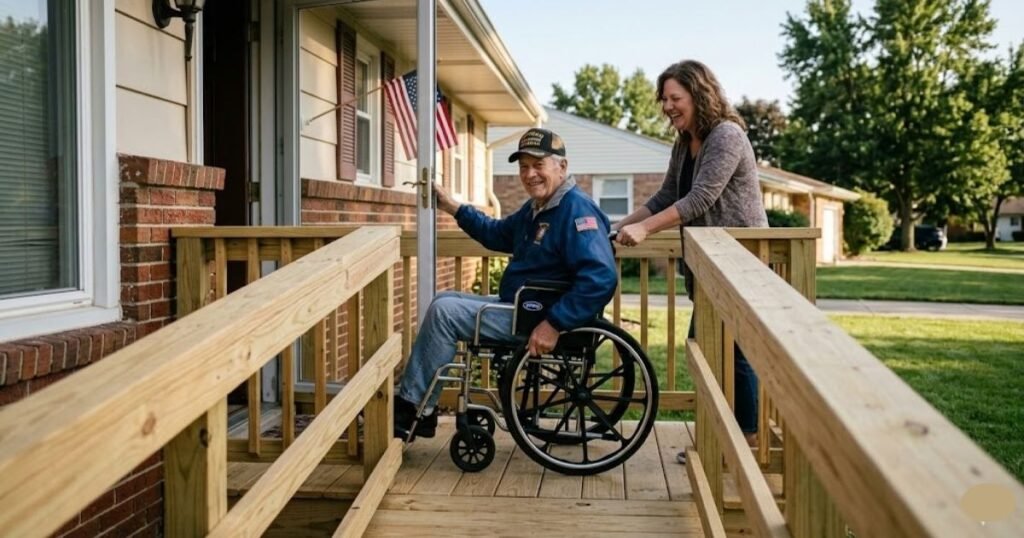
- Wheelchair Ramps: Installing custom-engineered concrete or metal ramp systems with safety handrails for safe entrance and exit.
- Roll-In Showers: Replacing standard bathtubs with curbless, zero-threshold roll-in showers featuring bench seating and hand-held showerheads.
- Wider Hallways & Doorways: Expanding interior and exterior door openings (typically to 36 inches or wider) to clear power wheelchairs and walker frames.
- Accessible Kitchens: Lowering countertops, sink plumbing, cooktops, and wall cabinets to allow wheel-in access.
- Home Elevators & Vertical Lift Systems: Adding residential elevators or porch lifts for multi-story homes.
- Automated Doors and Smart Controls: Adding voice-activated or electronic door openers, lighting, and climate controls.
Before diving into the frequency of use, it is important to distinguish between the different types of housing grants offered by the VA. While they all aim to increase accessibility, they serve different disability ratings and housing situations.
Specially Adapted Housing (SAH) Grant
The SAH grant (authorized under Title 38, U.S.C., section 2101(a)) is generally for Veterans with certain severe service-connected disabilities. These often include the loss or loss of use of more than one limb, blindness in both eyes, or certain severe burn injuries. The goal is to help you live independently in a barrier-free environment.
Special Housing Adaptation (SHA) Grant
The SHA grant (section 2101(b)) is typically for Veterans who have service-connected disabilities involving specific refined motor skills, certain respiratory issues, or permanent and total disability due to blindness in both eyes with a specific visual acuity. The dollar amounts for SHA are lower than SAH, but the grant follows similar multiple-use rules.
Temporary Residence Adaptation (TRA) Grant
The TRA grant is a unique “sub-grant.” If you are temporarily living in a home owned by a family member, you can use a portion of your SAH or SHA eligibility to adapt their home.
SHA vs SAH vsTRA Grant Differences
| Grant Type | Primary Purpose | Usage Limit |
| SAH | Major adaptations for severe mobility/vision loss | Up to 6 times |
| SHA | Adaptations for respiratory/vision/burn disabilities | Up to 6 times |
| TRA | Adapting a family member’s home temporarily | Counts toward usage/cap |
How Many Times Can You Use the SAH Grant?
According to official U.S. Department of Veterans Affairs (VA) regulations for Fiscal Year 2026, eligible veterans can use the SAH grant up to six (6) separate times over their lifetime.
You do not have to spend your entire benefit on a single home or project. As long as you have remaining funds in your lifetime balance and have not reached the 6-use limit, you can request additional grants for future home modifications or when moving to a new primary residence. The maximum total funding available is capped by the current fiscal year’s allowable limit ($126,526 for FY 2026), which adjusts periodically for inflation.
How the Lifetime Usage Rule Works
For many years, the VA limited veterans to using their SAH grant only three times. However, statutory legislative updates—most notably the Ryan Kules and Paul Benne Specially Adaptive Housing Improvement Act—expanded this flexibility. Today, eligible veterans can draw from their grant pool across up to six distinct uses.
Understanding the 6-Use Cap and Partial Grants
It is vital to understand that “6 uses” does not mean you receive the maximum grant amount six individual times. Instead, the VA tracks two distinct caps over your lifetime:
- The Financial Cap: The maximum dollar amount set by federal law for the active fiscal year ($126,526 in FY 2026).
- The Frequency Cap: A hard limit of six approved allocations/draws.
Every time the VA approves a construction project or home adaptation, it counts as one use.
How Unused Funds Carry Forward
If your first project only costs $40,000 out of your $126,526 cap, you do not forfeit the remaining $86,526. That money stays safely in your VA account balance. You can return to the VA two, five, or ten years down the road to request another draw (Use #2) for a new home or additional modifications, drawing down from your remaining balance.
Common Scenarios & Examples
To better understand how these six uses work in the real world, let’s look at three hypothetical examples.
Example 1: The Incremental Renovation
The Veteran: Joe, age 65, has a service-connected mobility disability.
Usage 1 (2024): Joe uses $30,000 of his SAH entitlement to remodel his master bathroom into a roll-in wet room.
Usage 2 (2027): Three years later, Joe finds it harder to navigate his kitchen. He uses another $25,000 of his remaining entitlement to lower the countertops and install a pull-down shelving system.
Result: Joe has used two of his six available uses. He still has a significant remaining dollar balance and four more potential uses for the future.
Example 2: The Relocation
The Veteran: Sarah is a retired Sergeant who built a custom-adapted home using her full SAH grant amount in 2021.
Usage 1 (2021): Sarah uses her grant to help build her “forever home” in Florida.
The Change: In 2026, Sarah decides she wants to move to be closer to her daughter in Oregon. Because the VA adjusts the maximum grant amount every year (COLA), Sarah’s total lifetime “cap” has actually increased since 2021.
Usage 2 (2026): Sarah sells her Florida home and applies for the difference between what she previously used and the new, higher 2026 cap to help adapt her new Oregon home.
Result: Sarah successfully uses the grant a second time.
Example 3: The TRA “Bridge”
The Veteran: Robert is waiting for his new accessible home to be built. In the meantime, he is living with his son for 12 months.
Usage 1 (TRA): Robert uses a Temporary Residence Adaptation (TRA) grant to install a ramp and grab bars at his son’s house.
Usage 2 (SAH): Once his own home is finished, Robert uses the remainder of his SAH funds to finalize his permanent residence.
Result: The TRA counts as one of the six uses and is deducted from the overall lifetime dollar maximum.
READ MORE: Government Grants for Seniors: The Complete, Up-to-Date U.S. Guide
Can You Move and Use the SAH Grant Again?
Yes, absolutely. One of the greatest advantages of the SAH lifetime structure is that it moves with you. The VA recognizes that veterans relocate for job opportunities, family support, warmer climates, or changing physical needs as they grow older.
If you previously used an SAH grant to modify a home and subsequently sell that property, you can apply your remaining SAH grant entitlement toward your new residence.
Key Rules When Relocating:
- Ownership Requirement: You must own (or plan to own) the new home as your primary residence.
- Remaining Balance: You can only spend up to your remaining lifetime balance.
- VA Re-Inspection: The VA must evaluate the new property to ensure the proposed adaptations meet official feasibility and accessibility guidelines before work begins.
- No Recapture: You keep 100% of the proceeds from selling your previous adapted home. The VA does not ask you to repay the original grant money used on the home you sold.
READ MORE: Salvation Army Free Car Program (Eligibility & How to Apply)
Who Qualifies for the VA SAH Grant?
To qualify for the SAH grant, you must meet strict service-connected disability criteria established by law. In addition, you must have an ownership interest in the home where the modifications will be made.
Service-Connected and Permanent Disability Criteria
You may qualify for an SAH grant if you have a service-connected disability that the VA rates as permanent and total (P&T), involving one or more of the following conditions:
- Loss or loss of use of both lower extremities (both legs), requiring the use of a braces, crutches, canes, or a wheelchair.
- Blindness in both eyes (5/200 visual acuity or less), plus the loss or loss of use of one lower extremity (one leg).
- Loss or loss of use of one lower extremity (one leg) combined with:
- Severe medical complications or anatomical effects that require a wheelchair, or
- Loss or loss of use of one upper extremity (one arm) affecting balance or propulsion.
- Loss or loss of use of both upper extremities (both arms), preventing use of the hands at or above the elbow.
- Severe burn injuries causing full-thickness tissue damage that limits movement of the hands, arms, legs, or torso.
- Certain severe respiratory injuries that severely restrict physical mobility.
Note on Eligibility: Because VA medical criteria can be complex, always review your official VA Rating Decision letter or request an evaluation from your local VA Regional Office or Veterans Service Officer (VSO).
Eligible Ways to Use the SAH Grant
The VA provides flexibility in how you apply your funds. Below is a summary table outlining the approved methods for applying SAH funding:
| Approved Usage Method | Eligible? | Key Notes & Guidelines |
| Construct a New Accessible Home | Yes | Build a custom, barrier-free home on land you already own or are purchasing. |
| Buy an Existing Adapted Home | Yes | Purchase a home that has already been modified to meet VA accessibility standards. |
| Remodel an Existing Home | Yes | Modify the primary residence you currently live in and own. |
| Buy a Home & Remodel It | Yes | Buy a non-adapted home and use the grant to add accessibility features during purchase. |
| Install Exterior Ramps & Elevators | Yes | Build ramps, vertical platform lifts, or stair glides to enter/exit safely. |
| Accessible Bathroom Redesign | Yes | Add roll-in showers, lowered sinks, grab bars, and widened doorways. |
| Widen Doorways & Hallways | Yes | Expand structural frames to accommodate wheelchairs and heavy mobility equipment. |
READ MORE: Weatherization Assistance Program Income Limits for Seniors 2026
How to Apply Again: Paperwork & Timing
Applying for your second or sixth use of the grant follows a similar path to the first time, but with a focus on your remaining entitlement.
- Confirm Disability Rating: Verify that your VA disability rating letter explicitly reflects a qualifying service-connected condition.
- Gather Required Documents: Collect your DD-214, VA disability rating decision, proof of homeownership (or property deed), and current home floor plans.
- Submit Application: File VA Form 26-4555 (Application in Acquiring Specially Adapted Housing or Special Home Adaptation Grant) online through VA.gov or the eBenefits portal.
- Meet Your SAH Agent: Once approved, the VA assigns a specialized SAH agent to work directly with you, your family, and your chosen contractor.
- Initial Home Evaluation: The SAH agent conducts a site visit to assess feasibility and determine specific accessibility needs.
- Select Contractor & Get Bids: Hire a licensed, insured contractor experienced with accessible construction and VA guidelines. The contractor prepares a detailed scope of work and bid.
- VA Plan Approval: The VA reviews and approves the project construction plans, scope of work, and contract terms.
- Construction Phase: Work begins. Funds are disbursed directly to the contractor in escrowed milestone payments as stages of construction are completed and inspected.
- Final Inspection & Sign-Off: The SAH agent conducts a final walk-through inspection to confirm all accessibility features function properly before releasing final payment.
READ MORE: Senior Services in Grants Pass — Complete Guide to Help, Benefits, and Local Resources (2026)
Common Home Modifications Covered by the SAH Grant
The SAH grant covers a broad range of architectural, structural, and mechanical adjustments. Below is a list of commonly approved projects:
- Wheelchair Ramps & Entry Pathways: Smooth, slip-resistant exterior ramps with proper slope ratios and handrails.
- Roll-In Showers & Accessible Tubs: Zero-threshold shower entries with integrated seating, grab bars, and accessible valve controls.
- Doorway & Hallway Expansion: Widening interior and exterior doors to 36+ inches for power wheelchair clearances.
- Residential Elevators & Chair Lifts: Mechanical lifts connecting multiple levels of a home.
- Lowered Kitchen Fixtures: Custom cabinetry, pull-down shelving, and cooktops accessible from a seated position.
- Automatic Door Openers: Push-button or sensor-activated keyless entry systems.
- HVAC & Environmental Controls: Relocating thermostats, circuit breakers, and light switches to accessible heights.
- Garage Modifications: Expanding garage bays, installing wheelchair carports, and leveling garage entry thresholds.
- Covered Carports & Concrete Work: Adding direct covered access from vehicles into the primary residence.
Expert Tips to Maximize Your Lifetime SAH Benefit
- Plan for Aging in Place: When planning your first grant usage, look ahead 10 to 15 years. Incorporate features like wider doorways, reinforced walls for future grab bars, and curbless entries now so you don’t exhaust unnecessary usage draws later.
- Reserve Draws for Relocation: If you plan to move within 5 years, consider using only what is necessary for safety today, preserving remaining draws and funding for your long-term home.
- Combine with Local Energy & Rehabilitation Grants: Many municipal governments offer low-income or senior accessibility grants. Blending local funds with HISA and SAH can stretches every dollar further.
- Keep an Organized Paperwork File: Maintain a dedicated folder containing all previous VA approval letters, contractor invoices, blueprint designs, and SAH agent contact information.
SAH Grant vs. HISA Grant
Another program frequently mentioned alongside SAH is the HISA Grant (Home Improvements and Structural Alterations). Unlike SAH and SHA, which are managed by the VA Loan Guaranty Service, HISA is managed through the VHA (Veterans Health Administration) Prosthetics Service.
Key Distinctions of HISA:
- Purpose: Covers medically necessary home improvements (e.g., entrance ramps, handrails, roll-in showers).
- Funding Caps: Up to $6,800 lifetime for service-connected conditions, or $2,000 lifetime for non-service-connected conditions.
- Service Connection: HISA does not require a severe permanent disability rating like SAH. Even veterans with non-service-connected conditions can qualify if a VA physician prescribes the alteration for medical access.
- Combining: You can receive a HISA grant in addition to an SAH or SHA grant to cover specific home access needs.
| Program | Administered By | FY 2026 Lifetime Limit | Main Requirement |
| SAH | VA Loan Guaranty Service | $126,526 | Permanent & total service-connected mobility disability |
| SHA | VA Loan Guaranty Service | $25,350 | Service-connected blindness, hand loss, or severe burns |
| HISA | VHA Prosthetics Department | $6,800 (SC) / $2,000 (NSC) | VA doctor’s prescription for home medical access |
Can You Combine the SAH Grant With Other Benefits?
Yes! The SAH grant is designed to work in tandem with other federal and state veteran programs. Combining benefits can dramatically reduce your out-of-pocket housing expenses.
1. Temporary Residence Adaptation (TRA) Grant
If you are temporarily living in a home owned by a family member (such as a parent or child) while arranging permanent housing, you don’t have to wait. You can apply for a TRA Grant:
- FY 2026 Maximum: Up to $50,961 (if SAH-eligible) or $9,100 (if SHA-eligible).
- Usage Impact: TRA funds do count toward your overall lifetime SAH dollar limit, but allow you to adapt a relative’s home temporarily without owning it.
2. VA Home Loans & VA Funding Fee Waivers
You can pair an SAH grant with a VA-backed Home Loan. For instance, if you buy a $350,000 house, you can finance the mortgage with a zero-down VA home loan while using $126,526 in SAH grant funds to construct a custom accessible addition or complete renovations. Furthermore, veterans receiving VA disability compensation are exempt from paying the VA Home Loan Funding Fee, saving thousands at closing.
3. Veterans’ Mortgage Life Insurance (VMLI)
Veterans who receive an SAH grant and hold a mortgage on their adapted home are eligible for Veterans’ Mortgage Life Insurance (VMLI). VMLI provides up to $200,000 in mortgage protection insurance. If the veteran passes away, the policy pays off the remaining mortgage directly to the lender.
4. State Veterans Housing Grants & Tax Exemptions
Many states offer supplemental grants or 100% property tax exemptions for disabled veterans who qualify for the SAH grant. Check with your State Department of Veterans Affairs to see what local property tax relief is available.
Common Mistakes Veterans Make
When navigating the SAH grant process, avoiding common pitfalls can save months of delays and protect your financial entitlement:
- Assuming the Grant Is a One-Time Benefit: Many veterans complete a minor renovation and never realize they have thousands of dollars remaining for future projects or relocation.
- Hiring Unapproved Contractors: All work must be completed by licensed contractors who comply with VA Minimum Property Requirements (MPRs) and pass VA approval. Contracting work before receiving VA approval can forfeit your grant eligibility.
- Starting Construction Early: Never allow a contractor to begin work before receiving formal written authorization from your assigned SAH agent. The VA cannot reimburse work completed prior to official project approval.
- Exhausting All 6 Uses on Small Projects: Since you only have six usage draws over your lifetime, using small $2,000 draws for minor fixes can exhaust your six uses prematurely. Use programs like HISA or state grants for small repairs so you save your SAH uses for major modifications.
- Not Consulting an SAH Agent Early: The VA assigns a dedicated SAH agent to guide you. Bypassing their advice often leads to rejected scope-of-work plans.
How many times can I use the SAH grant?
Eligible Veterans can use SAH grant funds multiple times—up to six lifetime uses according to current VA guidance; verify with VA for your situation.
Can I use the SAH grant more than once for the same home?
Yes—you may use portions of the grant across different years to complete work, and you may reuse grant funding multiple times over your lifetime (within legal limits); document each use properly.
What’s the difference between SAH, SHA, and TRA grants?
SAH is for severe service-connected disabilities requiring specially adapted housing; SHA covers adaptations for other qualifying disabilities; TRA is for temporary residence adaptations in a family member’s home. Eligibility depends on your specific VA disability rating.
Do dollar caps change if I use the SAH grant multiple times?
The total grant maximums are adjusted annually (cost-of-construction index); you may use grant funds over multiple years but you cannot exceed the total maximum allowed for the years you use the grant—confirm current caps with VA.
Who can help me reapply or check my remaining SAH eligibility?
A VA Specially Adapted Housing agent, a Veterans Service Officer (VSO), or your regional VA benefits office can review prior uses and advise on reapplying. Encourage readers to gather prior award dates and documentation.
Final Verdict
Navigating VA benefits can feel like a full-time job, but you don’t have to do it alone. If you are considering using your SAH grant for a second, third, or even sixth time, your first step should be to contact an expert.
- Contact your local VA Regional Office and ask to speak with a Specially Adapted Housing (SAH) agent.
- Reach out to a Veterans Service Officer (VSO) from organizations like the American Legion, VFW, or DAV. They provide free assistance with claims and paperwork.
- Review your “Certificate of Eligibility” on the eBenefits portal to see a snapshot of your current housing benefits.
Remember: Program rules and dollar amounts are subject to change by Congress and the VA. Always verify the current fiscal year limits before signing a contract with a builder.
Sources & Verification Notes
This guide was compiled using the following authoritative sources:
- U.S. Department of Veterans Affairs (VA.gov): Specifically the “Housing Grants for Disabled Veterans” program pages and VA Manual 26-12.
- The Federal Register: For updates regarding the Ryan Kules and Chris Paul Specially Adaptive Housing Improvement Act of 2019.
- VA News (formerly VAntage Point): For historical context on the expansion from three to six uses.
- Title 38 of the United States Code, Chapter 21: The legal foundation for specially adapted housing benefits.
Legal Disclaimer: This article summarizes VA guidance for informational purposes; for personal advice contact a VA benefits counselor or an accredited VSO. Program rules and dollar amounts change annually; verify current amounts with the VA.


Pingback: Disabled Veteran Housing Grants 2026: Programs & How to Apply - Free Senior Grants