Living with a service-connected disability can turn everyday tasks into daily struggles. Simple movements inside a residence climbing front steps, navigating narrow hallways, or using a standard bathtub can become physical barriers that jeopardize safety and independence. Making a home fully accessible through wheelchair ramps, widened doorways, roll-in showers, and modified kitchens is essential, but structural alterations can quickly become prohibitively expensive.
For eligible U.S. military veterans and service members, financial relief is available. The U.S. Department of Veterans Affairs (VA) and other federal, state, and non-profit organizations offer specialized housing grants and assistance programs designed to adapt, build, or purchase accessible homes.
This comprehensive guide breaks down the major housing grant programs available in 2026, clear eligibility requirements, exact funding amounts, and the step-by-step application process to help you or your loved one secure the housing assistance you have earned. Lets deep dive into “Disabled Veteran Housing Grants 2026: Programs & How to Apply”
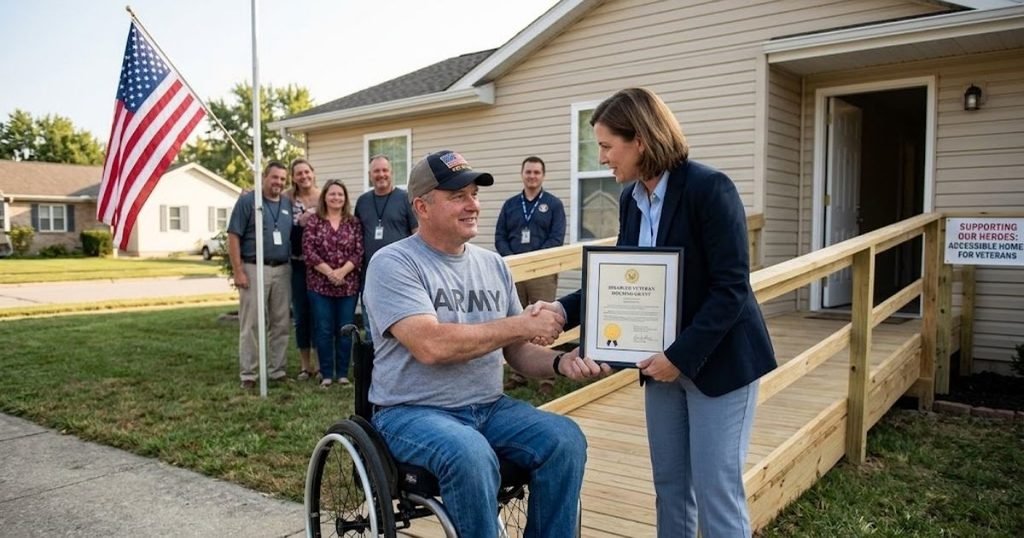
What Are Disabled Veteran Housing Grants?
A disabled veteran housing grant is a financial award provided by the federal government primarily through the VA to help veterans with specific service-connected disabilities live independently in a barrier-free environment.
What is a Housing Grant?
A housing grant is direct financial assistance that does not have to be repaid. Unlike a VA home loan or private mortgage, a grant carries no interest rates, monthly payments, or financial liens against your property.
The VA administers these programs to ensure that veterans who sustained severe injuries or illnesses during their service can modify an existing home, build an adapted home on suitable land, or purchase a home that already accommodates their physical needs.
Key Features of Disability Housing Grants
- Not automatic: Having a disability rating from the VA does not automatically qualify a veteran for housing grants. Eligibility is tied to specific physical conditions established by law.
- Project-based allocation: Funds are designated specifically for approved structural modifications or adapted housing purchases, not general non-accessibility home repairs or upgrades.
- Flexible lifetime usage: Many VA grants can be drawn down over time across multiple projects (up to six times over a lifetime) until the total dollar cap is reached.
READ MORE: HISA Grant for Veterans: How It Works & How to Apply
Main Housing Grants Available to Disabled Veterans
The VA offers three primary housing adaptation grants, alongside secondary medical modification programs:
- Specially Adapted Housing (SAH) Grant
- Special Home Adaptation (SHA) Grant
- Temporary Residence Adaptation (TRA) Grant
- Home Improvements and Structural Alterations (HISA) Grant
| Program | Primary Purpose | General Eligibility | FY 2026 Maximum Amount | Home Ownership Requirement |
| SAH Grant | Major home adaptation, construction, or purchase | Qualifying severe mobility impairment, loss of limbs, blindness | Up to $126,526 | Must own or intend to own the home |
| SHA Grant | Targeted accessibility adaptations for upper-body/sensory disabilities | Blindness, loss of hands, severe burn injuries, respiratory conditions | Up to $25,350 | Must own or intend to own the home (or family home) |
| TRA Grant | Adaptations to a temporary family residence | Must qualify for SAH or SHA and temporarily live with family | Up to $50,961 (SAH) Up to $9,100 (SHA) | Home must be owned by an eligible family member |
| HISA Grant | Medical-related structural alterations to primary home | Service-connected or non-service-connected conditions with VA medical prescription | Up to $6,800 (Service-Connected) Up to $2,000 (Non-Service) | Home owner, renter, or living with family |
1. Specially Adapted Housing (SAH) Grant
The Specially Adapted Housing (SAH) grant is the VA’s largest housing adaptation benefit. It is intended for veterans with severe service-connected disabilities that significantly impair mobility, allowing them to live independently in a barrier-free environment.
Who May Qualify for SAH?
To qualify for an SAH grant, you must have a qualifying service-connected disability. Statutory criteria include:
- The loss, or loss of use, of both lower extremities, preventing locomotion without the aid of braces, crutches, canes, or a wheelchair.
- Blindness in both eyes (having 20/200 visual acuity or less in better eye with glasses), plus the loss or loss of use of one lower extremity.
- The loss or loss of use of one lower extremity together with residual organic disease or injury affecting balance or propulsion.
- The loss or loss of use of one upper extremity together with the loss or loss of use of one lower extremity that affects balance or walking.
- Severe burn injuries (deep partial-thickness or full-thickness burns covering significant body surface).
- The loss, or loss of use, of one or more lower extremities due to service on or after September 11, 2001, which affects balance or walking.
Approved Uses for SAH Funds
If approved, SAH grant funds can be used to:
- Construct a custom adapted home on land to be purchased or land already owned.
- Remodel an existing home to make it suitable for adapted living.
- Purchase an existing home that is already adapted or can be remodeled to meet accessibility standards.
- Reduce mortgage principal on an already-adapted home purchased without prior VA grant assistance.
Lifetime Limits and Ownership Rules
For FY, the maximum SAH grant limit is $126,526. You do not have to spend the full amount in a single project; eligible veterans can use the SAH grant across up to six separate uses over their lifetime, up to the maximum dollar cap set by law. You must own or intend to own the home being modified.
2. Special Home Adaptation (SHA) Grant
The Special Home Adaptation (SHA) grant is designed for veterans whose service-connected disabilities require modifications to help them move around their home safely, but who do not require the extensive structural rebuilds typical of the SAH program.
Who May Qualify for SHA?
Eligibility for SHA is generally tied to severe anatomical losses, visual impairments, or respiratory conditions resulting from military service. Qualifying conditions include:
- Blindness in both eyes with 20/200 visual acuity or less in the better eye with corrective lenses.
- Anatomical loss or permanent loss of use of both hands.
- Severe burn injuries covering large portions of the body, hands, or head.
- Certain severe service-connected respiratory or anatomical injuries that impede basic home navigation.
Approved Uses for SHA Funds
SHA grant funds are typically used to adapt an existing home to accommodate upper-body mobility impairments, sensory loss, or breathing difficulties. Common improvements include:
- Installing handrails, grab bars, and non-slip surfaces.
- Widening interior and exterior doorways to allow wheelchair or walker access.
- Adapting bathroom facilities, such as installing roll-in showers and elevated toilets.
- Modifying kitchen layouts, including lowering countertops, sinks, and controls.
- Upgrading electrical systems or air filtration equipment needed to support specialized medical gear.
Lifetime Limits and Ownership Rules
For FY 2026, the maximum SHA grant amount is $25,350. Similar to SAH, veterans can use their SHA benefit in up to six separate installments across their lifetime. You (or a qualifying family member) must own or intend to own the residence.
3. Temporary Residence Adaptation (TRA) Grant
Many disabled veterans temporarily reside with a family member such as a parent, adult child, or sibling while undergoing treatment, transitioning to civilian life, or rebuilding a home. The Temporary Residence Adaptation (TRA) grant provides funding to modify that family member’s home.
Who May Qualify for TRA?
To qualify for a TRA grant, you must:
- Meet all basic statutory disability requirements for either an SAH or SHA grant.
- Temporarily reside in a home owned by an eligible family member (e.g., parents, children, siblings, grandparents).
TRA Funding Limits
TRA grant amounts are set annually as a sub-cap drawn from your main SAH or SHA lifetime entitlement:
- TRA for SAH-Eligible Veterans (FY 2026): Up to $50,961.
- TRA for SHA-Eligible Veterans (FY 2026): Up to $9,100.
Important Entitlement Note: Money used through a TRA grant reduces your total available lifetime limit for a permanent SAH or SHA grant dollar-for-dollar.
READ MORE: Salvation Army Free Car Program (Eligibility & How to Apply)
What Disabilities Qualify for VA Housing Grants?
Qualifying for a VA housing grant depends on specific functional limitations and service-connected medical conditions, not merely your overall percentage rating.
Having a 100% disability rating from the VA does not automatically mean you qualify for an SAH or SHA grant. For example, a veteran with a 100% rating due to severe Post-Traumatic Stress Disorder (PTSD) or internal organ illness might not qualify for SAH/SHA unless they also have a qualifying physical loss or mobility impairment defined by federal law.
Qualifying Disability Categories Overview
SAH Qualifying Conditions:
- Loss of or loss of use of both lower extremities.
- Blindness in both eyes combined with lower extremity loss.
- Loss or loss of use of one lower extremity alongside balance/propulsion disorders.
- Severe deep partial-thickness or full-thickness burns.
- Loss of one upper and one lower extremity affecting locomotion.
SHA Qualifying Conditions:
- Blindness in both eyes with 20/200 visual acuity or less.
- Anatomical loss or loss of use of both hands.
- Severe burn injuries impacting body/hand movement.
- Significant respiratory injuries necessitating medical modifications.
How Much Do Disabled Veteran Housing Grants Pay?
Grant maximums are adjusted annually by the VA based on national residential construction cost index changes. The official statutory limits for Fiscal Year 2026 are listed below:
| Grant Type | 2026 Maximum Funding Limit | Lifetime Use Rule |
| Specially Adapted Housing (SAH) | $126,526 | Up to 6 uses, capped at total limit |
| Special Home Adaptation (SHA) | $25,350 | Up to 6 uses, capped at total limit |
| TRA (SAH-Eligible) | $50,961 | Counts against SAH maximum balance |
| TRA (SHA-Eligible) | $9,100 | Counts against SHA maximum balance |
| HISA (Service-Connected) | $6,800 | Lifetime maximum benefit |
| HISA (Non-Service-Connected, 50%+ rated) | $2,000 | Lifetime maximum benefit |
Note: You are not required to use your entire maximum grant allocation on your first project. Remaining balances carry forward for future adaptation needs.
READ MORE: Average Assisted Living Costs by State in the USA
What Can a Disabled Veteran Use a Housing Grant For?
VA housing grant funds cannot be spent on cosmetic upgrades, luxury items, general home maintenance, or non-accessibility repairs. Every expenditure must be directly tied to approved accessibility and safety features.
- Modular & Concrete Wheelchair Ramps
- Doorway Expansion (Main Entrances & Interior Hallways)
- Roll-In Showers, Walk-In Tubs, Grab Bars & Raised Toilets
- Lowered Kitchen Countertops, Pull-Out Shelving & Sinks
- Automated Door Openers, Voice Controls & Accessible Switches
- Driveway & Pathway Grading for Smooth Transition
Can Disabled Veterans Get Grants to Buy a Home?
Yes, but with important caveats. An SAH or SHA grant can be applied toward the purchase of a home, provided that the home is already adapted or will be adapted using the grant funds to accommodate your disability.
How SAH/SHA Grants Differ From Home Loans
- SAH/SHA Grants: Provide up to $126,526 (SAH) or $25,350 (SHA) specifically toward necessary accessibility modifications or adapted home construction/purchase costs. They do not serve as general-purpose down-payment cash gifts.
- VA Home Loan Guaranty: A separate loan benefit offered by private lenders and guaranteed by the VA, allowing eligible veterans to buy a home with $0 down payment and competitive interest rates.
Combining Benefits: Eligible veterans frequently combine an SAH grant with a VA-backed home loan. For example, a veteran can purchase a $350,000 home using a $0-down VA loan while applying a $126,526 SAH grant directly to construct custom ramps, widen interior pathways, and install an accessible bathroom suite.
Can a Disabled Veteran Modify a Family Member’s Home?
Yes. If a disabled veteran lives in a home owned by a family member, accessibility alterations can still be funded through the Temporary Residence Adaptation (TRA) grant.
To qualify for modifications to a family member’s home:
- The property owner must be a verified family member (such as a parent, child, or sibling).
- The veteran must meet full service-connected medical eligibility for either SAH or SHA.
- The veteran must physically reside in the family member’s home.
TRA grant limits for 2026 provide up to $50,961 (for SAH-eligible veterans) or $9,100 (for SHA-eligible veterans).
READ MORE: Low-Income Senior Housing With No Waiting List | Immediate Move-In
Other Housing Assistance Programs Disabled Veterans Should Know About
If you do not meet the strict service-connected disability requirements for SAH or SHA grants, several alternative federal, state, and non-profit housing assistance programs are available.
1. USDA Section 504 Single Family Housing Repair Grants
- Program Type: Federal home repair grant / low-interest loan.
- Who it Helps: Low-income elderly homeowners (age 62 and older) in qualifying rural areas.
- Details: Offers grants of up to $10,000 to elderly low-income homeowners to remove health and safety hazards or make home accessibility repairs. Low-interest loans (up to $40,000 at a 1% interest rate) are also available.
- Note: This is a general low-income rural assistance program, not a veteran-exclusive grant.
2. HUD Housing Choice Voucher Program (Section 8)
- Program Type: Rental housing assistance.
- Who it Helps: Very low-income families, seniors, and individuals with disabilities.
- Details: Pays a portion of monthly rent directly to participating landlords.
3. HUD-VASH (VA Supportive Housing) Program
- Program Type: Joint HUD-VA program combining rental assistance with clinical services.
- Who it Helps: Homeless veterans or veterans at imminent risk of homelessness.
- Details: Pairs HUD rental assistance vouchers with VA case management and healthcare services.
4. State & Local Veteran Housing Assistance
Many state Departments of Veterans Affairs offer state-funded property tax exemptions, home modification grants, or emergency housing funds for disabled veterans. Contact your local County Veterans Service Officer (CVSO) or state veteran agency to review local programs.
Disabled Veteran Home Modification Options
When adapting a home, choosing modifications that match specific physical needs ensures safety and long-term comfort.
| Home Modification | Primary Safety/Accessibility Benefit | Typical Program Coverage |
| Wheelchair Ramps & Lifts | Replaces exterior stairs with stable, low-incline entry paths. | SAH, SHA, TRA, HISA |
| Roll-In Showers & Tubs | Eliminates step-over thresholds to prevent fall risks. | SAH, SHA, TRA, HISA |
| Doorway Widening | Expands frame width to 32–36 inches for clear wheelchair clearance. | SAH, SHA, TRA, HISA |
| Grab Bars & Handrails | Provides firm support near toilets, showers, and stairwells. | SAH, SHA, TRA, HISA |
| Lowered Countertops & Sinks | Allows roll-under access for seated meal prep and hygiene. | SAH, SHA, TRA, HISA |
| Non-Slip Flooring | Replaces thick carpet or slick tile to improve walker/wheelchair traction. | SAH, SHA, TRA |
READ MORE: Does Medicare & Medicaid Cover Long-Term Care? What Seniors Need to Know
Who Is Most Likely to Qualify?
Determining whether you will qualify for a VA housing grant involves several key evaluation steps:
[Service-Connected Disability Verified by VA]
│
▼
[Specific Physical/Sensory Impairment Present]
(Loss of limbs, blindness, severe burns)
│
▼
[Ownership or Living Arrangement Condition Met]
(Owns home, buying home, or resides with family)
│
▼
[Property Passes Feasibility Inspection by VA]
Key Factors Determining Eligibility:
- Service Connection: Your disability must be officially rated as service-connected by the VA.
- Specific Condition: The condition must fall within statutory SAH or SHA medical categories (e.g., lower limb loss, blindness, severe burns).
- Housing Feasibility: The property must be structurally suitable for adaptation as determined by a VA staff appraisal.
How to Apply for a Disabled Veteran Housing Grant
Applying for an SAH, SHA, or TRA grant follows a straightforward step-by-step procedure:
- Review Disability Requirements: Verify your current VA disability rating decision. Confirm that your service-connected conditions meet statutory criteria.
- Determine Program Fit: Check whether your adaptation needs align with SAH (major structural modifications/building) or SHA (smaller accessibility updates).
- Gather Required Documents: Collect your Social Security number, VA file or claim number, property ownership deeds (or family member ownership proof), and medical notes.
- Submit VA Form 26-4555: Submit the official application (Application in Acquiring Specially Adapted Housing or Special Home Adaptation Grant):
- Online: Log into your account on VA.gov.
- By Mail: Download, print, complete VA Form 26-4555, and mail it to your regional VA intake center.
- In Person: Deliver the form to your local VA Regional Office or work with a Veterans Service Officer (VSO).
- Await VA Decision Letter: The VA will review your medical records and housing records, issuing a formal decision letter regarding entitlement.
- Coordinate Project Scope: Once approved, a VA SAH Agent will work with you, your contractor, and architects to approve bids, architectural blueprints, and construction contracts before any work begins.
Documents You May Need When Applying
Having documentation organized before starting your application speeds up processing:
- Identity & Veteran Status:
- Social Security Number
- VA File or Claim Number
- Copy of DD-214 (Discharge Papers)
- Medical & Rating Records:
- VA Disability Rating Decision Letter
- Supporting medical evaluation notes regarding mobility limitations
- Property Information:
- Property deed or tax assessment proving ownership
- Written lease agreement or permission letter (if using TRA for a family member’s home)
- Project Documentation (Post-Approval):
- Detailed contractor bids and estimates from licensed, insured builders
- Architectural drawings and renovation plans matching VA accessibility standards
How to Avoid Veteran Grant Scams
Disabled veterans and senior citizens are frequent targets of financial fraud and deceptive marketing tactics. Protect yourself by recognizing common warning signs:
Fraud Warning Signs:
- Demands for upfront application fees: Official VA housing grant applications are 100% free. The VA will never charge money to submit an application or process a grant.
- Promises of “Guaranteed Approval”: No private company can guarantee VA grant approval. Eligibility is determined strictly by federal law and official VA adjudication.
- Deceptive Websites: Be cautious of non-government websites using official-looking military emblems or domain names designed to mimic official portals. Always verify that you are using an official .gov portal (like VA.gov or HUD.gov).
- Unsolicited Social Media Offers: The VA will never send unsolicited messages on social media claiming you have won a housing grant.
Rule of Thumb: Never share your banking information, VA login credentials, or Social Security number with anyone offering quick grant approvals over the phone or internet.
Common Mistakes Veterans Make When Applying
- Assuming a 100% VA Rating Automatically Qualifies: A 100% rating alone does not guarantee SAH/SHA grant approval if your specific condition is not listed in the grant statutes.
- Starting Construction Before VA Approval: The VA will not reimburse home modifications completed prior to official grant approval and scope verification. Always await formal authorization before signing contractor contracts.
- Confusing Housing Grants with VA Loans: Housing grants provide funding for accessibility modifications; VA loans are mortgages used to buy property.
- Ignoring Local & State Assistance: Many veterans miss out on local property tax discounts or municipal home-repair programs by only checking federal programs.
SAH vs. SHA vs. TRA: What’s the Difference?
| Feature | Specially Adapted Housing (SAH) | Special Home Adaptation (SHA) | Temporary Residence Adaptation (TRA) |
| Primary Goal | Major construction, building, or extensive adaptations | Targeted modifications for upper-body/sensory conditions | Adaptations to a temporary family residence |
| FY 2026 Maximum | $126,526 | $25,350 | $50,961 (SAH) / $9,100 (SHA) |
| Property Required | Primary home owned by veteran | Primary home owned by veteran or family | Owned by eligible family member |
| Lifetime Uses | Up to 6 uses | Up to 6 uses | Sub-cap drawn from main entitlement |
| Repayment Needed? | No (It is a grant) | No (It is a grant) | No (It is a grant) |
Frequently Asked Questions
What housing grants are available for disabled veterans?
The primary housing grants offered by the VA are the Specially Adapted Housing (SAH) grant, the Special Home Adaptation (SHA) grant, the Temporary Residence Adaptation (TRA) grant, and the Home Improvements and Structural Alterations (HISA) grant.
How much is the VA housing grant for disabled veterans?
For Fiscal Year, the maximum grant amounts are $126,526 for the SAH grant and $25,350 for the SHA grant. For veterans temporarily living in a family member’s home, the TRA grant provides up to $50,961 (for SAH-eligible veterans) or $9,100 (for SHA-eligible veterans). These maximum amounts adjust annually based on construction cost indices.
Can a disabled veteran get a grant to modify their home?
Yes. If you have a qualifying service-connected disability, you can apply for an SAH or SHA grant to cover modifications such as installing ramps, expanding doorways, building roll-in showers, and lowering kitchen counters. Additionally, the HISA grant offers up to $6,800 for medically prescribed home alterations for service-connected conditions.
Does the VA pay for home modifications for disabled veterans?
The VA pays for approved home modifications through disability housing grants (SAH, SHA, TRA) and medical grants (HISA) for qualifying veterans. Funding is paid directly toward approved project costs, blueprints, and contractor invoices. However, modifications must be pre-approved by the VA before construction begins; the VA will not pay for unapproved work.
Can a disabled veteran get housing assistance if they do not own a home?
Yes. Disabled veterans who do not own a home can utilize the Temporary Residence Adaptation (TRA) grant if they temporarily live in a home owned by a qualifying family member. For rental housing assistance, eligible veterans can explore the HUD-VASH program or the HUD Housing Choice Voucher program, which provide rental subsidies and supportive services.
Final Thoughts
Securing appropriate housing assistance can make a transformative difference in daily safety, comfort, and independence. If you or a family member sustained service-connected disabilities, VA housing grants like SAH, SHA, and TRA offer significant financial resources to make independent living possible.
Before starting home alterations or signing contractor estimates, always confirm your eligibility directly through VA.gov or consult an accredited Veterans Service Officer (VSO). Taking the time to verify program requirements ensures your home modification project runs smoothly and maximizes the benefits you earned through your service.