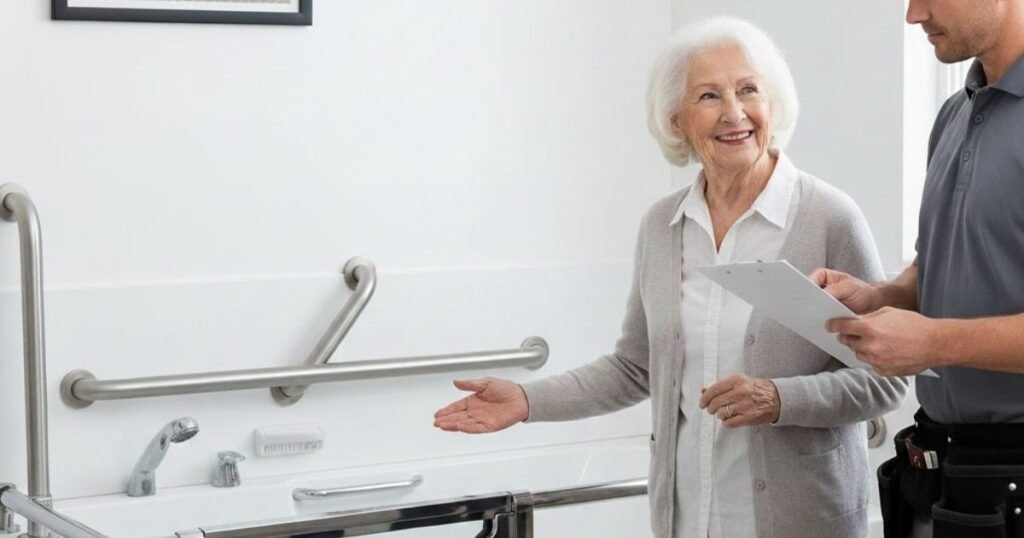
For many seniors, staying in their own homes as they age commonly called aging in place is the ultimate goal. But while the idea is appealing, the reality can be difficult, particularly when it comes to bathroom safety. Bathrooms are one of the most dangerous areas in the home for older adults, with slippery floors, high tubs, and low toilets often leading to falls and injuries.
Bathroom modification assistance may come in the form of a grant, a low-interest loan, or home modification services provided through an eligible organization. Whether the assistance must be repaid, which improvements qualify, and how funding is delivered depend on the specific program. Seniors should confirm the terms before starting work.
But the big question is: Does government offer bathroom grants to seniors? The answer is not simply yes or no. It depends on where you live, your income level and your health requirements. In this article, how can we apply to senior citizens for government support options, eligibility criteria and bathroom grants.
READ MORE: Best Smart TV for Seniors in 2026: Easy to Use & Large Screen Picks
Understanding the Difference: Grants vs. Loans
When evaluating home modification assistance, it is vital to read the fine print regarding how funds are delivered.
Grants
Grants represent direct financial awards that do not require repayment, provided you abide by the program rules. For instance, the USDA Section 504 grant requires you to remain living in the home for a minimum of 3 years. If you sell the home before that period ends, you must repay the grant out of your home sale proceeds.
Loans
Low-interest loans must be repaid over a set period. However, government senior repair loans feature terms that are far more favorable than commercial bank products. The USDA Section 504 loan program offers a fixed 1% interest rate amortized over up to 20 years.
For example, borrowing $15,000 at 1% interest over 20 years results in a monthly payment of roughly $69. This predictable, low-impact option allows low-income households to execute large safety renovations without relying on high-interest personal loans or credit cards.
What Are Bathroom Grants?
A bathroom grant is essentially financial aid that does not need to be repaid. Unlike loans, these grants are provided to seniors or their caregivers with the understanding that the funds will be used for necessary home modifications. The main purpose is to reduce fall risks, increase accessibility, and allow seniors to remain at home safely.
Depending on the program, bathroom grants may cover:
- Full bathroom renovations (e.g., converting a bathtub into a walk-in shower).
- Smaller modifications like installing grab bars or raising toilet seats.
- Accessibility upgrades such as widened doorways or roll-in showers for wheelchair users.
READ MORE: Best Wireless TV Headphones for Seniors (2026) – Clear Sound & Easy Setup
Government Programs That May Help Pay for Bathroom Modifications
Several key public programs provide financial pathways for bathroom safety upgrades. Below is an in-depth breakdown of how they operate in 2026.
1. USDA Section 504 Home Repair Program
Administered by the U.S. Department of Agriculture (USDA) Rural Development agency, the Section 504 program is one of the most reliable sources of direct federal home repair grants.
- Who Qualifies: Homeowners who own and occupy a home located in an eligible rural area. The applicant’s household income must fall below the “very-low-income” threshold established for their specific county (typically 50% or less of the area median income).
- Age Requirement: To receive a lifetime grant, the homeowner must be 62 years old or older and show that they cannot afford to repay a loan. Seniors who can afford minor monthly payments may qualify for a combination of a grant and a 1% interest loan.
- Funding Limits: Funding Limits: Under the standard USDA Section 504 Home Repair program, eligible homeowners may qualify for a grant of up to $10,000 or a loan of up to $40,000. Eligible applicants may combine the two for up to $50,000 in assistance. The grant is subject to a lifetime limit of $10,000. Separate USDA disaster-repair assistance may provide a grant of up to $15,000 and combined loan and grant assistance of up to $55,000, subject to the disaster program’s specific eligibility requirements. The disaster amount is not a standard increase available to every homeowner living in a disaster-declared area.
- Covered Improvements: Repairs must focus strictly on removing health and safety hazards. Approved bathroom modifications include walk-in shower conversions, grab bar installations, widening doorways for wheelchair entry, and fixing plumbing issues that pose health risks.
- Pros: Grants do not have to be repaid as long as the senior remains in the home for at least 3 years after the work is finished. The 1% loan interest rate is exceptionally low.
- Cons: The home must be located in a designated rural zone (generally areas with a population under 35,000). Funding is subject to local county budget allocations, leading to potential waiting periods.
2. HUD Older Adults Home Modification Program (OAHMP)
The U.S. Department of Housing and Urban Development (HUD) allocates specific grant funding directly to local non-profit organizations, public housing authorities, and municipal governments.
- Purpose: The OAHMP funds low-barrier, high-impact home modifications specifically designed to reduce fall risks and allow low-income elders to remain safely in their homes.
- How It Works: Individuals do not apply directly to HUD. Instead, seniors work with local grantees who send an Occupational Therapist (OT) or a Certified Aging-in-Place Specialist (CAPS) to perform an in-home evaluation.
- Typical Projects: Grantees deploy local contractors to perform targeted, zero-cost updates based on the clinical assessment. Common bathroom projects include temporary ramps, walk-thru tub cuts, hand-held showerheads, anti-slip strips, and high-output safety lighting.
3. Medicaid Home & Community-Based Services (HCBS) Waivers
While traditional Medicaid focuses strictly on direct clinical care, individual state Medicaid HCBS waiver programs recognize that home modifications can prevent costly institutionalization in nursing homes.
- State-by-State Variations: Because Medicaid is administered by individual states under federal guidelines, waiver names and rules differ vastly. Programs are frequently referred to as 1915(c) waivers or asset-managed long-term services and supports (LTSS).
- The Eligibility Threshold: Applicants must qualify financially for Medicaid and meet their state’s clinical criteria for an “institutional level of care,” meaning that without these modifications, the individual would likely require placement in a long-term care facility.
- Bathroom Coverage: When deemed a medical necessity by an attending physician, HCBS waivers regularly fund “Environmental Accessibility Adaptations.” This often includes heavy modifications like structural roll-in showers, specialized wheelchair-accessible sinks, and anti-slip safety flooring.
- The Waitlist Reality: Unlike standard Medicaid benefits, HCBS waivers are not an open entitlement. States cap the number of available slots each year, which means eligible seniors may face waitlists lasting months or even years.
4. VA Home Improvements and Structural Alterations (HISA) Grants
The Department of Veterans Affairs provides dedicated housing assistance tailored specifically for disabled veterans and service members.
- Funding Tiers: Veterans with a service-connected disability rating can receive a lifetime HISA benefit of up to $6,800. Veterans enrolled in the VA healthcare system with a non-service-connected condition can qualify for up to $2,000.
- Approved Bathroom Modifications: HISA explicitly focuses on home improvements that allow entry to and exit from essential facilities. This covers walk-in tubs or showers, roll-in configurations, heavy-duty safety railings, wall-hung toilets, and widened entryways.
- Documentation: Application requires a formal prescription from a VA physician detailing the specific medical necessity, alongside professional contractor bids.
5. Community Development Block Grants (CDBG)
The federal CDBG program distributes funds directly to cities, towns, and counties across the United States.
- Local Rule: Each local government designs its own home repair programs using these federal funds. Many allocate a specific portion to emergency home repairs or handicap bathroom grants for low-income seniors.
- Administration: Applications are managed through city halls, local housing departments, or county community development offices. Income verification is always mandatory.
6. Area Agencies on Aging (AAA)
The Area Agency on Aging is a nationwide network of state-designated non-profit organizations that coordinate support services for adults aged 60 and older.
- The Hub Concept: While some AAAs manage small localized emergency repair grants directly, their primary value lies in resource navigation. They act as a local clearinghouse, matching seniors with county funds, municipal block grants, and nearby charitable organizations.
READ MORE: Free Bathroom Remodel for Seniors
Nonprofit Programs Providing Bathroom Safety Assistance
When public federal funds are unavailable or exhausted, national and local non-profit organizations frequently step in to bridge the financial gap.
- Habitat for Humanity (Aging in Place Program): Many local Habitat affiliates offer targeted home preservation services. They utilize volunteer labor and subsidized materials to install grab bars, execute tub-to-shower conversions, and perform critical safety updates for low-income senior homeowners.
- Rebuilding Together: This national organization focuses entirely on safe, healthy housing. Through localized chapters, they provide zero-cost home modifications, including bathroom accessibility upgrades, for vulnerable seniors, veterans, and individuals living with disabilities.
- Volunteers of America (VOA): VOA coordinates affordable housing programs and senior services across multiple states, occasionally offering or connecting seniors with minor home modification repair services.
- Community Action Agencies (CAA): These local, federally funded non-profits fight poverty at the community level. Many run weatherization and home repair assistance programs that can be leveraged for essential plumbing and safety repairs.
- Local Faith-Based Organizations: Groups such as Catholic Charities, Jewish Family Services, or local nondenominational community action coalitions frequently coordinate volunteer handymen to handle minor modifications like grab bar and raised toilet seat installations.
READ MORE: Best Health Tracking Smartwatch for Seniors 2026 — Top 8 Picks Compared
Bathroom Improvements Most Commonly Covered by Assistance Programs
Government and nonprofit grant programs prioritize utility, safety, and medical necessity over luxury renovations. High-end finishes like marble tiling or smart mirrors are never approved. Instead, programs focus on items that directly reduce fall metrics.
- Grab Bars and Safety Rails: The most universally approved item. Must be anchored into wall studs to support structural weight.
- Walk-In Showers and Roll-In Showers: Eliminating the standard 14-inch to 18-inch tub wall removes a primary tripping hazard. Roll-in showers feature flat entries for wheelchairs.
- Walk-In Tubs: Approved less frequently than walk-in showers due to high water volume requirements and high initial purchase costs. They are typically authorized only if a physician prescribes hydrotherapy for chronic conditions like severe arthritis.
- Raised or Comfort-Height Toilets: Replacing a standard low toilet with an ADA-compliant model (17 to 19 inches from floor to seat) reduces strain on knee and hip joints during transfers.
- Anti-Slip Structural Flooring: Installing textured flooring surfaces or non-slip coatings prevents hydroplaning on wet bathroom tiles.
- Widened Doorways: Expanding the door frame to a minimum of 32 to 36 inches allows manual or motorized wheelchairs to clear the entry safely.
- Wheelchair-Accessible Sinks: Wall-hung or open-vanity sinks allow a seated individual to roll their knees completely under the basin.
- Lever Faucets and Hand-Held Showerheads: Replacing twisting knobs with single-lever handles allows seniors with severe arthritis to control water flow easily. Hand-held wands make seated bathing safer.
- High-Output Bathroom Lighting: Maximizing illumination along paths of travel and over bathing areas reduces missteps caused by poor visibility.
Eligibility Requirements Comparison Matrix
| Program | Minimum Age | Income Limits | Disability Required? | Homeowner Required? | Rural Location Required? | Assistance Type |
| USDA Section 504 | 62+ (for Grants) | Very Low (under 50% AMI) | No | Yes | Yes | Grant (up to $10k) or 1% Loan |
| HUD OAHMP | 62+ | Low-to-Moderate | No | Varies by Local Partner | No | Direct Services / Modifications |
| Medicaid HCBS | Varies (60-65+) | Strict State Caps | Yes (Nursing Home Level) | No (Renters Eligible) | No | Environmental Adaptation |
| VA HISA | None | None | Yes (Medical Need) | Varies | No | Lifetime Benefit Grant |
| CDBG Programs | Varies by City | Low-Income Limits | Varies | Usually Yes | No | Local Grant or Deferred Loan |
| Nonprofits | Varies (60+) | Low-to-Moderate | No | Usually Yes | No | Free Labor & Materials |
Note: AMI stands for Area Median Income, which varies significantly by county.
READ MORE: Does HUD Offer Grants For Senior Citizens?
Application Process for Bathroom Grants
Navigating the application process for bathroom grant may seem frightening, but breaking it down step by step makes it more manageable. Most programs follow a similar structure, although requirements depend on whether the funding comes from federal, state or local sources.
Step-by-Step Guide
- Research Available Programs
Seniors or their families should first identify which grants are available in their region. Government websites, housing authorities, and local senior centers are good starting points. - Check Eligibility Requirements
Before applying, review the specific conditions of the program—such as age, income, disability, or residency restrictions. This ensures time isn’t wasted on applications that don’t apply. - Prepare Documentation
Gather all necessary paperwork in advance (income proof, medical notes, home ownership documents). Having everything ready speeds up the process. - Submit Application
Applications can be made online, or made through a local agency. It is important to fill them completely and accurately to avoid delay. - Wait for Approval
Processing times vary widely. Some programs provide responses in weeks, while others may take several months. - Inspection and Approval of Work
Once approved, some programs send inspectors or occupational therapists to assess the bathroom and decide what modifications are most urgent. - Funding Release and Modifications
The grant either pays contractors directly or reimburses seniors after modifications are completed.
Documents Needed
Most bathroom grant programs require the following documents:
- Proof of identity (ID, driver’s license, or passport).
- Proof of age (birth certificate or government-issued ID).
- Proof of residence (utility bill, property deed, or lease agreement).
- Proof of income (tax returns, Social Security statements, or pension documents).
- Medical documentation (doctor’s note confirming mobility or disability needs).
READ MORE: Best Voice Assistant for Seniors 2026 — Safe, Simple & Senior-Friendly Picks
Common Reasons Applications Are Denied
Understanding common administrative pitfalls helps ensure your paperwork proceeds smoothly through underwriting.
- Household Income Exceeds Local Thresholds: Many seniors assume “low income” means having standard savings, but federal metrics are rigidly tied to local county Area Median Incomes (AMI). Even minor pensions can sometimes push households above very-low-income caps.
- Property Type Disqualifications: Standard single-family homes are universally accepted, but mobile homes, manufactured units on leased land, or condominiums frequently run into structural property-type restrictions.
- Work Started Prior to Official Agency Approval: This is the most common error. If a family hires a contractor and begins demolishing a bathroom before receiving an official agency award letter, the program will permanently deny the claim. Retroactive funding is strictly forbidden.
- Incomplete or Missing Documentation: Failing to provide complete tax records, bank statements, or copies of property deeds results in applications being quickly set aside.
- Ineligible Geographic Zones: Applying for rural programs while living in an area reclassified as suburban or urban will prompt an automatic administrative denial.
- Programmatic Funding Exhaustion: Many grants operate on a fiscal year calendar. If an agency runs through its annual budget allocation by spring, otherwise eligible applicants will be rejected or deferred until the next budget cycle.
Practical Tips to Improve Your Approval Chances
- Secure a Physician’s Letter of Medical Necessity: Do not just claim that a walk-in shower would be helpful. Have your primary care physician write an official letter stating that due to severe osteoarthritis, vertigo, or physical balance deficits, a standard step-over tub introduces an immediate safety hazard.
- Apply Early in the Fiscal Year: Federal and state fiscal cycles often restart on October 1st or July 1st. Submitting your completed application packet right as new annual funding allocations open reduces the risk of facing empty program coffers.
- Work with Licensed, Insured, and Bonded Contractors: Government entities will not release public funds to uncertified, independent handymen. Ensure your contractor can supply clean certificates of insurance and references.
READ MORE: Best Robot Lawn Mowers for Seniors Review: Comparison & Buying Guide
Average Bathroom Accessibility Costs in the U.S.
Modifying an existing bathroom for accessibility requires specialized labor and hardware. The table below outlines typical market costs versus potential grant coverage behavior.
| Modification Item | Average Market Cost Range | Grant Coverage Behavior |
| Grab Bars (Installed) | $150 – $400 per bar | Universally covered across all grant and volunteer programs. |
| Comfort-Height Toilet | $450 – $950 | Commonly covered if transferring safely is documented as difficult. |
| Wheelchair-Accessible Sink | $900 – $2,500 | Covered by VA, Medicaid, and standard home repair grants. |
| Walk-In Tub Installation | $6,000 – $15,000+ | Rarely fully covered; requires strict physician prescription. |
| Walk-In/Roll-In Shower | $5,500 – $12,000 | Frequently approved by USDA, VA, and Medicaid HCBS programs. |
| Full Accessible Remodel | $15,000 – $35,000+ | Exceeds limits of single grants; requires combining multiple sources. |
READ MORE: Best Medical Alert Systems for Seniors | Top Picks & Reviews
Alternatives to Government Bathroom Grants
Government funding is not the only way to finance senior bathroom modifications. Many other resource costs exist to help cover costs, especially for those who cannot qualify for government grants.
Non-Profit and Charitable Organizations
Many nonprofits focus on senior safety and independence. Examples include:
- Rebuilding Together: Give free home repair and modification for lower income seniors.
- Habitat for Humanity: Sometimes providing inexpensive renewal services, covering bathroom upgradation.
- Local charities or churches: Often provide small grants or volunteer labor for seniors in need.
Insurance and Medicare Options
While Medicare generally does not cover home modifications, some Medicare Advantage (Part C) plans now include home safety benefits. Medicaid programs in certain states may also fund bathroom modifications under Home and Community-Based Services (HCBS) waivers.
Private insurance policies may reimburse some costs if modifications are medically necessary. Seniors should always check their policy details before starting renovations.
Low-Interest Loans and Tax Credits
If the grant is not available, senior other financial assistance can be detected such as:
- Low-interest home improvement loans for necessary modifications.
- Tax credits and deductions for medical-related home improvements.
- State or municipal loan programs that assist seniors with affordable financing.
Although these options are not as attractive as grants, they still make bathroom safety upgradation more affordable.
READ MORE: Can I Get Free Air Conditioners for Senior Citizens?
Challenges in Accessing Bathroom Grants
While bathroom grants are incredibly helpful, they are not always easy to arrive. Many senior challenges face which can delay or even prevent them from getting help.
Limited Funding Availability
Government programs often work with a limited budget. Once the money is exhausted for the year, new applicants can be deployed in the waiting list until the next funding cycle. It has been waiting for some seniors for months or years.
Regional Differences in Support
All fields do not offer the same level of assistance. In a major city, a senior may have access to several funding programs, while in a rural area no one can find only one or any one. It produces geographical inequalities, outlining some seniors.
Long Waiting Lists and Bureaucracy
Even when programs exist, the application process can be slow. Seniors may wait weeks just for their applications to be reviewed, followed by inspections and approvals that drag out the timeline further. For seniors who need urgent modifications, these delays can be dangerous.
Practical Tips for Seniors Seeking Bathroom Grants
Applying for bathroom grants can be overwhelming, but with the right approach, seniors can maximize their chances of success.
How to Research Available Programs
Start by contacting:
- Local housing authorities.
- Area Agencies on Aging (AAA).
- Veterans Affairs offices (for eligible veterans).
- Senior advocacy organizations.
Additionally, online resources and government websites often list available grant programs by state or region.
Working with Social Workers and Advisors
Social workers, senior advocates or non -profit organizations can help seniors to navigate the application process. They often know about low-term local programs and can help complete paperwork correctly.
Preparing a Strong Application
To strengthen an application, seniors should:
- Gather all required documents in advance.
- Include medical notes explaining why modifications are necessary.
- Clearly state financial need.
- Provide details about current bathroom challenges and safety concerns.
READ MORE: Best Wireless Earbuds for Senior Runners: 2026 Top Picks
Conclusion
Government bathroom grants are an essential resource for seniors who want to be safe, free and comfortable in their homes. While the access location and eligibility differ from eligibility, these programs provide life-long modifications that reduce the decline, promote confidence, and increase the quality of life.
For families, they provide peace of mind, knowing that their loved ones are good at home. As the age of the population, the demand for such grants will only increase, pushing governments to expand their support for aging in place.
If you or a loved one is considering bathroom modifications, don’t wait start researching available programs today. With the right support, seniors can enjoy safety, independence, and dignity well into their golden years.
FAQs
Do seniors get free bathroom grants from the government?
Yes, but the availability depends on the program and location. Some grants cover the entire cost, while others provide partial funds.
What types of bathroom modifications are typically funded?
Common upgrade includes walk-in shower, grab bar, raised toilets, non-slip floors and better lighting.
Can low-income seniors apply for bathroom grants?
Absolutely. Most programs prioritize low -income seniors to ensure that there is the greatest need for money.
Is Medicare or Medicaid involved in covering bathroom safety upgrades?
Medicare usually does not cover modifications, but some Medicare Advantage and Medicaid programs may include them under specific waivers.
How long does it take to get approved for a bathroom grant?
Approval times vary by program some take weeks, others several months. Early applications improve chances of timely approval.
READ MORE: Salvation Army Free Car Program (Eligibility & How to Apply)