Navigating VA benefits can sometimes feel like trying to read a map in a windstorm confusing, a bit overwhelming, and prone to changing directions. If you’ve already used a Specially Adapted Housing (SAH) grant to modify your home, you might assume you’ve “cashed out” your one and only chip.
But here is some news that is actually worth the paperwork: you can use your SAH grant several times. Thanks to the Ryan Kules Act, the rules have evolved to recognize that your needs at age 70 might be very different from your needs at 35. Whether you are moving to a new state to be closer to the grandkids or simply need to update your current home for better mobility, those benefits are designed to move with you. Let’s break down “How Many Times Can I Use the SAH Grant?”
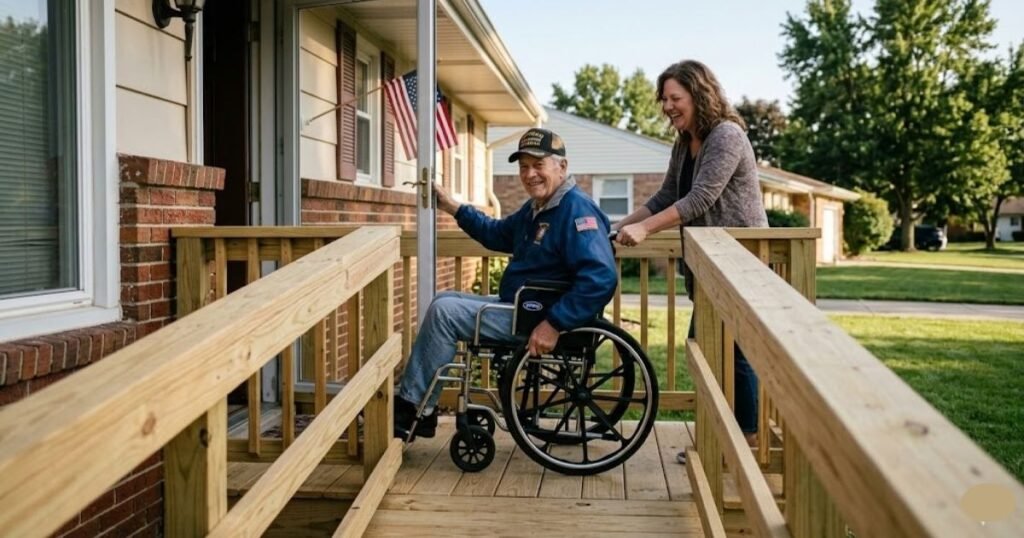
How Many Times Can I Use the SAH Grant: One-Minute Answer
If you’re wondering how many times can I use the SAH grant, the short answer is:
Eligible veterans can use the Specially Adapted Housing (SAH) grant up to six times during their lifetime, according to guidance from the U.S. Department of Veterans Affairs (VA).
This means the grant is not limited to a single use. Veterans may use portions of the benefit across different years or projects as long as they do not exceed the total lifetime limit and the maximum grant amount allowed by VA rules. Because regulations and funding caps change periodically, always verify your personal eligibility with the VA or a Veterans Service Officer.
READ MORE: Government Grants for Seniors: The Complete, Up-to-Date U.S. Guide
Why This Matters for Veterans and Families
For many veterans living with serious service-connected disabilities, housing needs change over time. A home that works well today may need additional modifications years later. Mobility conditions can worsen, new medical equipment may be required, or a veteran may need to relocate closer to family or healthcare services.
That’s why the flexibility of the SAH grant program is so important.
Instead of being restricted to a single use, the VA allows veterans to access their housing adaptation benefit multiple times. This design recognizes that disabilities evolve and housing situations change.
For example:
- A veteran might install ramps and widened doors today.
- Five years later, they may need a wheelchair-accessible bathroom.
- Later still, they may build or purchase a new accessible home.
The ability to reuse the SAH grant across multiple projects helps veterans maintain independence and remain safely in their homes for longer.
For older veterans especially those age 60 and above this flexibility can mean the difference between aging comfortably at home or needing institutional care.
What is the SAH Grant? A Quick Explainer
Before diving into the frequency of use, it is important to distinguish between the different types of housing grants offered by the VA. While they all aim to increase accessibility, they serve different disability ratings and housing situations.
Specially Adapted Housing (SAH) Grant
The SAH grant (authorized under Title 38, U.S.C., section 2101(a)) is generally for Veterans with certain severe service-connected disabilities. These often include the loss or loss of use of more than one limb, blindness in both eyes, or certain severe burn injuries. The goal is to help you live independently in a barrier-free environment.
Special Housing Adaptation (SHA) Grant
The SHA grant (section 2101(b)) is typically for Veterans who have service-connected disabilities involving specific refined motor skills, certain respiratory issues, or permanent and total disability due to blindness in both eyes with a specific visual acuity. The dollar amounts for SHA are lower than SAH, but the grant follows similar multiple-use rules.
Temporary Residence Adaptation (TRA) Grant
The TRA grant is a unique “sub-grant.” If you are temporarily living in a home owned by a family member, you can use a portion of your SAH or SHA eligibility to adapt their home.
READ MORE: Salvation Army Free Car Program (Eligibility & How to Apply)
SHA vs SAH vsTRA Grant Differences
| Grant Type | Primary Purpose | Usage Limit |
| SAH | Major adaptations for severe mobility/vision loss | Up to 6 times |
| SHA | Adaptations for respiratory/vision/burn disabilities | Up to 6 times |
| TRA | Adapting a family member’s home temporarily | Counts toward usage/cap |
Core: How Many Times Can I Use the SAH Grant?
The question of “how many times” has a historical answer that has changed significantly for the better.
The Exact Rule
Under current Department of Veterans Affairs regulations, an eligible individual may use Specially Adapted Housing grant funds up to six separate times.
It is important to understand the distinction between “uses” and “funding.” While you have six “slots” to use the grant, you are still subject to a lifetime maximum dollar amount. As of the current fiscal year, the VA adjusts these maximums annually based on a cost-of-construction index. If you use half of your total allowed dollar amount on your first project, you still have five more “uses” available to spend the remaining half of your money.
Historical Changes: From One to Six
The path to this flexibility was a gradual one:
- Original Rule: For decades, the SAH grant was a “one and done” benefit. Once you used any portion of the grant, your eligibility was exhausted.
- The Three-Use Rule: Recognizing that Veterans often move or need incremental upgrades, the law was changed to allow for three separate usages.
- The Six-Use Rule (The Ryan Kules Act): In 2019, the Ryan Kules and Chris Paul Specially Adaptive Housing Improvement Act was signed into law. This landmark legislation expanded the number of allowable uses from three to six. It also increased the overall funding caps and expanded eligibility for certain groups.
This shift to six uses was a direct response to the reality that a 30-year-old Veteran’s housing needs are vastly different from those of a 70-year-old Veteran.
Common Scenarios & Examples
To better understand how these six uses work in the real world, let’s look at three hypothetical examples.
Example 1: The Incremental Renovation
The Veteran: Joe, age 65, has a service-connected mobility disability.
Usage 1 (2024): Joe uses $30,000 of his SAH entitlement to remodel his master bathroom into a roll-in wet room.
Usage 2 (2027): Three years later, Joe finds it harder to navigate his kitchen. He uses another $25,000 of his remaining entitlement to lower the countertops and install a pull-down shelving system.
Result: Joe has used two of his six available uses. He still has a significant remaining dollar balance and four more potential uses for the future.
Example 2: The Relocation
The Veteran: Sarah is a retired Sergeant who built a custom-adapted home using her full SAH grant amount in 2021.
Usage 1 (2021): Sarah uses her grant to help build her “forever home” in Florida.
The Change: In 2026, Sarah decides she wants to move to be closer to her daughter in Oregon. Because the VA adjusts the maximum grant amount every year (COLA), Sarah’s total lifetime “cap” has actually increased since 2021.
Usage 2 (2026): Sarah sells her Florida home and applies for the difference between what she previously used and the new, higher 2026 cap to help adapt her new Oregon home.
Result: Sarah successfully uses the grant a second time.
Example 3: The TRA “Bridge”
The Veteran: Robert is waiting for his new accessible home to be built. In the meantime, he is living with his son for 12 months.
Usage 1 (TRA): Robert uses a Temporary Residence Adaptation (TRA) grant to install a ramp and grab bars at his son’s house.
Usage 2 (SAH): Once his own home is finished, Robert uses the remainder of his SAH funds to finalize his permanent residence.
Result: The TRA counts as one of the six uses and is deducted from the overall lifetime dollar maximum.
READ MORE: Weatherization Assistance Program Income Limits for Seniors 2026
Eligibility Checklist: What to Confirm Before Applying Again
If you have used the grant before and are considering a second or third application, check these requirements first:
Make sure you know:
- The dates of any previous SAH, SHA, or TRA grants
- Whether you have remaining uses available
- The current VA maximum grant amount
- Your service-connected disability rating
- Documentation showing the need for housing modifications
It is strongly recommended to review your file with:
- A VA Specially Adapted Housing agent
- A Veterans Service Officer (VSO)
- Your local VA regional office
These professionals can confirm how many uses remain in your specific case.
How to Apply Again: Paperwork & Timing
Applying for your second or sixth use of the grant follows a similar path to the first time, but with a focus on your remaining entitlement.
- Submit VA Form 26-4555: This is the “Application in Acquiring Specially Adapted Housing or Special Home Adaptation Grant.” You can file this via VA.gov.
- VA Counseling: Once you apply, a Specially Adapted Housing (SAH) agent will contact you. They will review your file to see how much money you have left and how many “uses” you have remaining.
- Project Approval: Before any hammers swing, the VA must approve the plans and the contractor. They want to ensure the money is being used effectively to meet your specific physical needs.
- Verification of Caps: Note that the maximum grant amount changes every October 1st (the start of the federal fiscal year). If you are close to your limit, it may be beneficial to wait until the new fiscal year to see if the cap increases.
Pro Tip: Keep all receipts and final settlement statements from your previous grant uses. While the VA keeps records, having your own documentation can speed up the “remaining eligibility” calculation.
READ MORE: Senior Services in Grants Pass — Complete Guide to Help, Benefits, and Local Resources (2026)
Pros & Cons of Re-using SAH Grant Funds
Pros
- Evolutionary Support: You can adapt your home as you age. What works for you at 60 may not be enough at 80.
- Relocation Flexibility: You aren’t “stuck” in one house just because you used your benefit there.
- Financial Assistance: In some specific cases, remaining grant funds can be used to pay down the principal mortgage balance of a home that was previously adapted.
- Inflation Protection: Because the VA total cap often increases annually, you may “gain” extra eligibility dollars even if you thought you had spent it all years ago.
Cons
- Lifetime Dollar Cap: You can use it six times, but the total money is not infinite. Once you hit the lifetime dollar maximum, the “uses” no longer matter.
- Complexity: Each application requires new appraisals, contractor bids, and VA inspections.
- The “120-Day” Rule: For some specific priority groups, there are annual limits on how many grants the VA can process (though this rarely impacts the individual’s right to eventually use the grant).
- Time-Consuming: This is not an “instant” check. The approval process for a second use can take several months.
How many times can I use the SAH grant?
Eligible Veterans can use SAH grant funds multiple times—up to six lifetime uses according to current VA guidance; verify with VA for your situation.
Can I use the SAH grant more than once for the same home?
Yes—you may use portions of the grant across different years to complete work, and you may reuse grant funding multiple times over your lifetime (within legal limits); document each use properly.
What’s the difference between SAH, SHA, and TRA grants?
SAH is for severe service-connected disabilities requiring specially adapted housing; SHA covers adaptations for other qualifying disabilities; TRA is for temporary residence adaptations in a family member’s home. Eligibility depends on your specific VA disability rating.
Do dollar caps change if I use the SAH grant multiple times?
The total grant maximums are adjusted annually (cost-of-construction index); you may use grant funds over multiple years but you cannot exceed the total maximum allowed for the years you use the grant—confirm current caps with VA.
Who can help me reapply or check my remaining SAH eligibility?
A VA Specially Adapted Housing agent, a Veterans Service Officer (VSO), or your regional VA benefits office can review prior uses and advise on reapplying. Encourage readers to gather prior award dates and documentation.
Final Verdict
Navigating VA benefits can feel like a full-time job, but you don’t have to do it alone. If you are considering using your SAH grant for a second, third, or even sixth time, your first step should be to contact an expert.
- Contact your local VA Regional Office and ask to speak with a Specially Adapted Housing (SAH) agent.
- Reach out to a Veterans Service Officer (VSO) from organizations like the American Legion, VFW, or DAV. They provide free assistance with claims and paperwork.
- Review your “Certificate of Eligibility” on the eBenefits portal to see a snapshot of your current housing benefits.
Remember: Program rules and dollar amounts are subject to change by Congress and the VA. Always verify the current fiscal year limits before signing a contract with a builder.
Sources & Verification Notes
This guide was compiled using the following authoritative sources:
- U.S. Department of Veterans Affairs (VA.gov): Specifically the “Housing Grants for Disabled Veterans” program pages and VA Manual 26-12.
- The Federal Register: For updates regarding the Ryan Kules and Chris Paul Specially Adaptive Housing Improvement Act of 2019.
- VA News (formerly VAntage Point): For historical context on the expansion from three to six uses.
- Title 38 of the United States Code, Chapter 21: The legal foundation for specially adapted housing benefits.
Legal Disclaimer: This article summarizes VA guidance for informational purposes; for personal advice contact a VA benefits counselor or an accredited VSO. Program rules and dollar amounts change annually; verify current amounts with the VA.