From 2007 to 2025, it is estimated that about half-a-million people in the United States experienced homelessness, including many seniors and veterans. Unfortunately, older adults living on the street usually have very restricted access to resources that aid their physical and mental well-being. Many live alone and do not have social support to deal with their situation.
Homelessness for seniors brings along much greater risks than those of a stable shelter or long-term care facility. The National Coalition for the Homeless states that the average age to die for a person without a home is only 50 years, giving homeless seniors little hope.
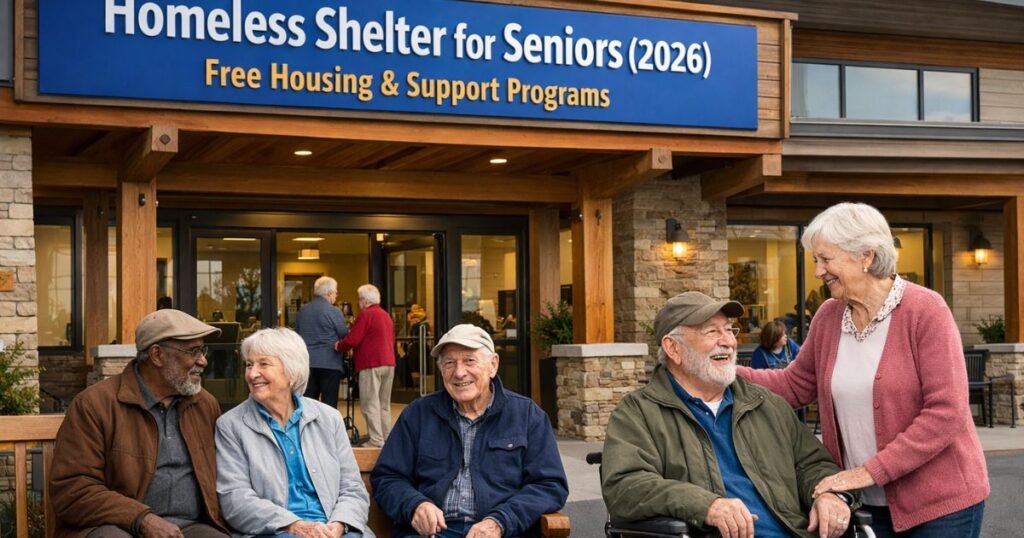
Still, programs across the country assist homeless seniors in securing stable housing and satisfying their basic needs. Below, we will highlight the available resources and how to access assistance. Lets deep dive into “Homeless Shelter for Seniors (2026) | Free Housing & Support Programs”
READ MORE: Best Voice Assistant for Seniors 2026 — Safe, Simple & Senior-Friendly Picks
What Is a Homeless Shelter for Seniors?
A homeless shelter for seniors is a safe, short-term residential facility or program designed to provide temporary lodging, warm meals, and vital social services specifically tailored to older adults (typically age 55 or 62 and above).
While traditional adult shelters serve broad populations, senior-oriented emergency shelters focus on the physical, medical, and emotional needs of aging individuals.
Who Qualifies?
Eligibility varies by facility and state, but generally:
- Age Requirements: Most senior emergency housing programs serve adults aged 55+, 60+, or 65+.
- Housing Status: Individuals who are currently unhoused, sleeping in a vehicle, staying in a place not meant for human habitation, or facing court-ordered eviction within 14 days.
- Income Level: Programs prioritize low-income seniors, particularly those reliant on Supplemental Security Income (SSI), Social Security Disability Insurance (SSDI), or low fixed retirement benefits.
Emergency Housing vs. Long-Term Senior Housing
It is essential to understand the difference between temporary emergency shelters and long-term senior housing:
- Emergency Shelter: Offers immediate overnight or short-term shelter (ranging from a few nights to 90 days) to keep you safe while a long-term plan is developed.
- Transitional Housing: Provides semi-permanent lodging (6 months to 2 years) alongside case management to help you stabilize income and find a permanent apartment.
- Permanent Supportive Housing: Long-term, subsidized senior apartments combined with on-site healthcare and social work services.
Who Operates These Programs?
Senior shelters and emergency housing programs are operated by a network of public and private entities, including:
- Nonprofit community organizations.
- Faith-based ministries (such as The Salvation Army and Catholic Charities).
- Local municipal government housing agencies.
- The U.S. Department of Veterans Affairs (VA).
- Area Agencies on Aging (AAA).
READ MORE: Can Seniors on Social Security Benefits Get Free Affordable Housing?
Types of Emergency Housing Available for Seniors
Not all emergency housing options are the same. Depending on your health, military history, and immediate safety needs, several types of safe shelter for seniors are available:
1. Emergency Shelters
These are immediate-entry facilities that provide overnight beds, hot meals, and basic hygiene facilities. Many communities offer senior-specific wings or low-barrier emergency beds that prioritize older adults for bottom bunks and quiet sleeping spaces.
2. Seasonal and Weather-Relief Shelters
During extreme cold snaps in winter or extreme heat waves in summer, local governments open temporary warming and cooling shelters. These centers offer emergency shelter for elderly adults without strict intake requirements.
3. Transitional Housing
Transitional housing programs offer temporary apartments or private rooms for 6 to 24 months. These programs combine housing with dedicated case management to help seniors apply for permanent housing vouchers, organize disability benefits, and secure permanent senior apartments.
4. Medical Respite Housing
For older adults being discharged from a hospital who do not have a home to recover in, medical respite housing offers short-term shelter accompanied by daily nursing care, wound dressing, medication oversight, and physical therapy coordination.
5. Domestic Violence and Elder Abuse Shelters
Confidential emergency shelters designed for individuals escaping spousal abuse, physical violence, or severe family exploitation. These shelters offer secure, secret locations with trauma-informed counseling and legal assistance.
6. Veteran Emergency Housing
Specialized shelters funded through the U.S. Department of Veterans Affairs (VA), such as the Grant and Per Diem (GPD) program, offer transitional housing tailored to elderly military veterans.
7. Faith-Based Shelters
Community shelters operated by religious charities like The Salvation Army, Catholic Charities, and Volunteers of America. They offer free emergency housing for elderly individuals regardless of their personal religious beliefs.
8. Adult Protective Services (APS) Emergency Housing
When older adults are rescued from abusive, neglectful, or dangerous living conditions by Adult Protective Services, social workers place them in temporary APS-funded emergency housing while permanent care is arranged.
9. Hotel and Motel Voucher Programs
When traditional shelter beds are full or unable to accommodate severe mobility or health issues, city agencies and non-profit organizations distribute hotel vouchers to house seniors safely in local motels.
10. Permanent Supportive Housing (PSH)
A long-term model that pairs deeply affordable rental subsidies with on-site support services like home health aides, case management, and meal delivery.
READ MORE: $3000 Senior Assistance Program Application
Federal Emergency Housing Shelter Programs for Seniors
1. Housing Choice Voucher Program (Section 8)
This program, the Housing Choice Voucher Program (Section 8), is federally funded and provides rental assistance to low-income individuals, including seniors, to help them afford safe and stable housing. Local Public Housing Authorities (PHAs) administer the program, which allows an eligible senior to choose housing for himself or herself in the private market rather than being confined to government-owned properties.
How It Works
- For qualified seniors, part or all of the rent is paid by a voucher. The remaining amount is normally paid by the tenant as a percentage (approximately 30%) of the tenant’s income and adjusted gross income.
- Moreover, housing units must comply with the requirements regarding health and safety set by the United States Department of Housing and Urban Development (HUD).
- The landlord has to agree to accept such Section 8 vouchers as a consideration of payment.
Eligibility Criteria
- Every PHA sets the criteria for HVC eligibility in its respective state.
- Federal law mandates that 75% of HVCs shall be made available to households with incomes at or below 30% of area medians.
- Priority may be given to seniors, disabled persons, and families with children.
How to Apply
- Applications are submitted to the local PHA.
- Some areas may have waiting lists since demand is high.
- Some PHAs give preferences to seniors to expedite their placement on the list.
READ MORE: Low-Income Senior Housing With No Waiting List (2026) | Immediate Move-In
2. Section 202 Supportive Housing for the Seniors
The Section 202 Supportive Housing for the Elderly Program is a federal initiative set up under the auspices of the U.S. Department of Housing and Urban Development (HUD) to provide affordable housing for low-income elderly tenants with supportive services. The program facilitates independent living for seniors, in addition to access to supportive services such as transportation, meals, and housekeeping.
How It Works
- HUD provides its capital advance programs to nonprofit organizations for developing, rehabilitating, or buying housing specifically for older citizens.
- Rental subsidy assistance is available to the residents in that they are required only to pay 30% of their adjusted gross income toward rent.
- The residents are also eligible for supportive services like meal, transport, and health assistance necessary to help older people live independently.
Eligibility Criteria
- Applying must be between or at the age of 62 years at the time of application.
- Income must be below the limits of HUD’s low-income limits that differ from place to place.
- Must be a citizen or qualified immigration status.
How to Apply
- If you want to apply for Section 202 housing, you will submit here directly to the property management companies or the nonprofit organizations.
- Certain properties could, however, have waiting lists since they are highly in demand.
- Toll free to your local HUD office for guidance in searching for available housing options.
READ MORE: Best Health Tracking Smartwatch for Seniors 2026 — Top 8 Picks Compared
3. “2-1-1”
Oldies may get urgent resources through United Way by dialing this number. The offerings could assist homeless seniors with senior homeless shelters, transitional housing, food, health care, and mental-health support programs. Please note that some of these senior homeless shelters may have application and eligibility criteria.
How It Works
- Emergency Shelters – Ensure provision and maintenance of immediate closeness and worthy shelter assistance.
- Transitional Housing – Connects seniors for temporary housing programs for support while looking for permanent solutions.
- Rental Assistance Programs – Helps with advice about rental assistance, Section 8 vouchers, or other HUD programs like Section 202.
- Utility and Financial Assistance – Assists seniors in connecting to the programs helping with rent, utilities, and other housing costs.
Eligibility — who can use 2-1-1
- Open to anyone in need of community services (all ages).
- Free, confidential, and available in many languages.
- Helps people with needs like housing, food, utilities, health care, crisis support, disaster recovery, and more.
How to get help (call / apply for services)
- Dial 2-1-1 from any phone; if your phone/system blocks it, many centers offer a toll-free number (check your local 211 site).
- Some areas let you text your ZIP code (example: text ZIP to 898-211) or search online for local resources at your regional 211 website.
- When connected, a trained specialist will ask brief questions about your situation and location, then refer you to programs or make warm handoffs as availabl
READ MORE: Free Pet Care for Seniors | Vet, Food & Support Programs
4. Continuum of Care (CoC) Program
In the United States, the Continuum of Care (CoC) Program is a federal initiative run by the Department of Housing and Urban Development (HUD), focused on homeless persons and families, including the elderly, within a given jurisdiction. It provides funds to local organizations or agencies that deliver such services as housing assistance, supportive services, and case management to assist the formerly homeless person in entering and sustaining permanent, stable housing.
How It Works
- These funds run local housing programs: HUD provides grants to non-profit organizations, state and local governments, and public housing authorities for implementing housing programs.
- Different types of housing provide – CoC provides emergency shelters, transitional housing, rapid rehousing, and permanent supportive housing.
- Service Coordination-this ensures that a homeless individual receives case management, mental health services, career training, and additional supports for reestablishing stability.
Eligibility Criteria
People categorized as either homeless or at risk of becoming homeless in the future. Among priority groups are the most vulnerable sectors, which include seniors, persons with disabilities, and those diagnosed with chronic illnesses. Housing and income are judged by HUD standards.
How to Apply
- Get in touch with a CoC organization Close by-CoC services can found in local homeless service providers, shelters, and housing agencies.
- Access the CES when in need-Many communities have a Coordinated Entry System to access specific needs as well as housing resource options for individuals.
READ MORE: Salvation Army Free Car Program (Eligibility & How to Apply)
5. Emergency Solutions Grants (ESG) Program
This is a federally funded program known as the Emergency Solutions Grants (ESG). It is administered by the U.S. Department of Housing and Urban Development to assist individuals or families experiencing or at risk of homelessness, including senior citizens. The assistance provided by ESG is for states and local government entities as well as non-profit organizations and shelters to help them through emergency housing, homelessness prevention, and rapid rehousing services.
How It Works
- The local homeless assistance programs are funded-ESG funds shelters, street outreach programs, and housing assistance services.
- Assistance to individuals facing eviction-The program helps with rental and utility payments to prevent homelessness.
- Support rapid rehousing-The ESG enables people to move out of homelessness quickly into housing.
- Essential Services-Case management, mental health support, employment assistance, and legal services are all provided by programs funded through ESG.
Eligibility Criteria
People who are homeless or those who are about to be homeless must be severely affected by the income level suspected of getting the assistance in question.
The priority would be given to seniors, persons living with a disability, families, and those fleeing domestic violence.
How to Apply
- Reach out to the local agencies or shelters that receive ESG funding. Several homeless shelters and other social services have been funded by ESG, so finding one or many of these locations can help you get some assistance.
- Community call 211 or visit the HUD website for more information. Seniors in need of housing assistance can call 211 for local needs or check HUD’s website for any ESG program providers.
- Application for rent-assistance: ESG program money benefits eligible persons by covering security deposits and rental and utility payments
6. The U.S. Department of Veterans Affairs (VA) Homeless Programs
In the United States, the Department of Veterans Affairs (VA) has several programs especially targeted to aid homeless veterans, including an elderly population, in the areas of housing, health care, and supportive services. These programs provide an opportunity for veterans to move from a state of homelessness into permanent housing, and to get support to live independently.
How VA Homeless Programs Work
- Emergencies and Services – The VA provides some immediate and some more extended solutions for homelessness, including emergency shelters, transitional housing, and permanent-supportive housing.
- Residential Case Management – VA social workers and case managers work with homeless veterans as they assess their needs and provide appropriate services, including medical care, substance-abuse treatment, and job training.
- Housing and Services Collaboration – The VA partners with community organizations and local governments to facilitate access to housing and services for homeless veterans.
Key VA Homeless Programs
- HUD-VASH Program (Housing and Urban Development-Veterans Affairs Supportive Housing)
- Grant and Per Diem (GPD) Program
- Health Care for Homeless Veterans (HCHV)
- Veterans Affairs Supportive Housing (VASH) Program
Eligibility Criteria
U.S. Armed Forces veterans, older individuals in particular, are accepted. Must meet VA guidelines regarding low income and homelessness. Priority might be given to veterans suffering from chronic health conditions, disabilities, or mental afflictions.
How to Apply
- Veterans may get help by reaching out to the local VA facility or outreach program nearest to them.
- 1-877-4AID-VET (1-877-424-3838)- A nationwide helpline for veterans seeking assistance with finding housing.
- The VA website- Veterans may go to the VA homeless programs page for other information about local programs and services.
READ MORE: Free Financial Assistance for the Seniors & Elderly
Government Programs That Help Homeless Seniors
The U.S. federal government operates several key safety-net programs designed to prevent homelessness and rehouse low-income seniors.
| Program Name | Who Qualifies? | What It Provides |
| HUD Continuum of Care (CoC) | Unhoused individuals, including seniors aged 55+ | Emergency shelter placement, transitional housing, and permanent supportive housing. |
| Emergency Solutions Grants (ESG) | Individuals facing imminent eviction or unsheltered homelessness | Short-term rental assistance, security deposit help, and shelter funding. |
| Section 8 (Housing Choice Vouchers) | Very low-income seniors (50% below area median income) | Subsidizes private market rent; tenants pay roughly 30% of their adjusted income. |
| Section 202 Supportive Housing for Elderly | Low-income households with at least one person aged 62+ | Subsidized senior-only apartments with integrated supportive services. |
| Public Housing | Low-income seniors, families, and individuals | Affordable rental units owned and managed by local Public Housing Authorities (PHAs). |
| Area Agencies on Aging (AAA) | Adults aged 60 and older and their caregivers | Case management, home care referrals, emergency housing navigation, and meal programs. |
| Supplemental Security Income (SSI) | Seniors aged 65+ or disabled adults with limited income | Monthly cash payments to cover basic food and shelter needs. |
| VA HUD-VASH Program | Homeless military veterans with chronic care needs | Combines HUD rental vouchers with VA clinical healthcare services. |
| Low-Income Home Energy Assistance (LIHEAP) | Low-income households with high energy burdens | Emergency grants to cover home heating and cooling bills, preventing utility shut-offs. |
How to Apply for Emergency Shelter
Navigating shelter application processes can feel stressful, but following these steps makes the process clear:
- Complete Initial Intake Assessment: Visit an intake center or call 211 to complete the Coordinated Entry assessment. This assessment records your age, health status, and urgent housing needs.
- Review Accommodation Needs: Inform the shelter staff immediately if you need ground-floor sleeping quarters, wheelchair access, or medication assistance.
- Secure Daily Bed Placement: Once assigned a bed, verify the shelter rules regarding intake times, curfews, and meal schedules.
READ MORE: Can a Senior Participate in Mortgage Assistance Grants Programs?
How Shelters Help Seniors Find Permanent Housing
The primary goal of any homeless shelter for seniors is to transition residents into safe, long-term homes as quickly as possible.
Permanent Housing Options
- Housing Choice Vouchers (Section 8): Federal rental assistance that allows seniors to select private market apartments while paying only 30% of their income toward rent.
- Section 202 Senior Apartments: Communities designed specifically for low-income adults aged 62 and older, offering accessible floor plans and resident service coordinators.
- Rapid Re-Housing: Short-to-medium-term rental assistance and housing relocation services designed to move individuals quickly out of shelters.
- Assisted Living Referrals: For seniors requiring daily personal care (such as help with bathing or dressing), case managers coordinate Medicaid-funded assisted living placements.
Common Mistakes Seniors Should Avoid
Avoid these frequent mistakes when seeking emergency shelter or housing assistance:
- Waiting Too Long to Ask for Help: Trying to manage escalating rent or eviction threats alone until the day of lockout reduces your emergency housing options. Reach out to 211 at the first sign of financial distress.
- Ignoring Official Eviction Notices: Ignoring court summonses or landlord notices can lead to sudden removal by law enforcement. Contact legal aid immediately upon receiving any written notice.
- Losing Track of Essential Identification Documents: Misplacing your Social Security card, Medicare card, or state ID slows down shelter intake and public housing applications. Keep copies backed up safely.
- Declining Case Management Support: Case managers are your strongest advocates for securing permanent vouchers. Skipping meetings with your social worker can delay housing placement.
Myth vs. Fact: Senior Emergency Housing
- Myth: Emergency homeless shelters charge fees to stay overnight.
Fact: Public emergency homeless shelters and non-profit shelters (like The Salvation Army and Catholic Charities) are 100% free of charge. - Myth: If I receive Social Security, I am not allowed to stay in a homeless shelter.
Fact: Having Social Security or SSI income does not disqualify you from emergency shelter. Case managers will help you save that income to secure permanent housing. - Myth: I will lose my shelter bed if I have mobility limitations or use a wheelchair.
Fact: Under federal Americans with Disabilities Act (ADA) guidelines, emergency shelters must provide accessible accommodations for individuals with physical disabilities.
Housing Options Comparison Table
| Housing Type | Target Audience | Length of Stay | Primary Goal |
| Emergency Shelter | Immediate unhoused individuals/seniors | 1 to 90 days | Immediate safety, warm bed, food, and basic crisis stabilization. |
| Transitional Housing | Seniors needing temporary stability | 6 to 24 months | Income stabilization, medical care linkage, and long-term housing search. |
| Permanent Supportive Housing | Low-income seniors with chronic health/disability needs | Permanent / Long-term | Affordable long-term housing paired with on-site healthcare and social work support. |
READ MORE: Best Flip Phone for Seniors: 7 Easy-to-Use Picks
Resources Every Homeless Senior Should Know
Keep these contact details saved for immediate assistance across the United States:
| Organization | Contact Information | Key Services Provided |
| 211 Helpline | Call 211 or visit 211.org | Free 24/7 national referral line for emergency housing, food, and utilities. |
| Eldercare Locator (AAA) | Call 1-800-677-1116 or visit eldercare.acl.gov | Connects older adults directly to local Area Agencies on Aging. |
| VA Homeless Veterans Hotline | Call 1-877-424-3838 | 24/7 support line connecting veterans to emergency shelter and HUD-VASH vouchers. |
| HUD Local Office Directory | Visit hud.gov | Locates local Public Housing Authorities (PHAs) and CoC entry points. |
| The Salvation Army | Visit salvationarmyusa.org | Nationwide network offering emergency shelters, soup kitchens, and rent assistance. |
| Catholic Charities USA | Visit catholiccharitiesusa.org | Provides low-income housing, emergency shelter, and social services. |
| Volunteers of America (VOA) | Visit voa.org | Operates affordable senior housing facilities and supportive shelter programs. |
| National Domestic Violence Hotline | Call 1-800-799-SAFE (7233) | 24/7 confidential shelter and safety planning for victims of abuse. |
Conclusion
Priorities for programs to reduce senior homelessness include making safe and affordable housing options available to the elderly and providing ancillary services that would allow these individuals to regain stability and independence. Some of these services include case management, financial assistance, and health services so that seniors are not just housed but also cared for and assisted in their journey to long-term stability.
One of the vital aspects of addressing this growing concern is ensuring that homeless senior citizens have safe and stable housing. With the right resources from a supportive community, we can ensure that even under unfortunate circumstances, seniors are able to live with dignity, security, and the care they rightfully deserve.
FAQs
Who qualifies for homeless shelters for seniors in the USA?
Most homeless shelters for seniors serve adults age 55 or 60 and older who lack stable housing. Eligibility usually depends on income level, residency status, disability, or health needs. Some shelters prioritize veterans, seniors with medical conditions, or those receiving Social Security or SSI.
Are there free homeless shelters specifically for senior citizens?
Yes. Many nonprofit organizations, faith-based shelters, and government-funded programs offer free homeless shelters for seniors. These shelters typically provide a bed, meals, case management, and access to healthcare or long-term housing assistance at no cost.
How can seniors find emergency homeless shelters near them?
Seniors can find emergency homeless shelters by calling 2-1-1, visiting local housing authority offices, contacting senior centers, or searching online for “homeless shelter for seniors near me.” Local nonprofits and Area Agencies on Aging often maintain updated shelter lists.
What housing programs help homeless seniors move into permanent housing?
Several programs help homeless seniors transition into permanent housing, including Section 8 Housing Choice Vouchers, Supportive Housing for the Elderly (Section 202), Continuum of Care (CoC) programs, and local senior supportive housing initiatives run by nonprofits.
Do homeless shelters for seniors provide medical or mental health support?
Many senior homeless shelters offer on-site medical care, mental health counseling, substance abuse support, and case management. These services help seniors manage chronic conditions, access benefits, and qualify for stable housing and long-term support programs.