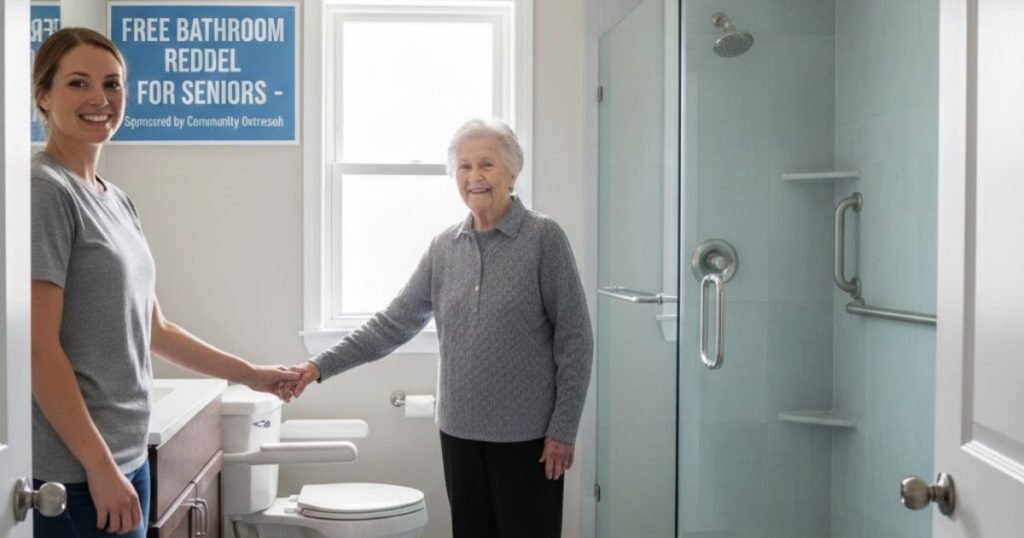
A bathroom may look like the safest place in the house, but for seniors, it can be the most risky. Wet floors, low toilet seats, narrow places and slippery tubs make everyday tasks difficult and dangerous. According to the CDC, thousands of senior people are injured every year in bathroom accidents, making it a major concern for aging adults who want to live independently.
Bathroom remodeling for seniors isn’t just about aesthetics, it’s about safety, accessibility, and comfort. A remodel can mean the difference between struggling with basic hygiene and confidently handling daily routines. The best part is, many programs exist to help seniors get free or heavily subsidized bathroom remodels. From walk-in tubs to grab bars, these modifications can prevent injuries and give peace of mind to both seniors and their families.
In this article, we will find out how senior free bathroom remodels, government and non -profit programs can make them possible, and practical steps to apply for assistance. Whether you’re looking for a senior age or a career who search for a solution, this guide will help you find the right resources to convert the bathroom into a secure, senior-friendly location. Lets deep dive into “How to Get a Free Bathroom Remodel for Seniors| Grants, Programs & Help”
READ MORE: Best Voice Assistant for Seniors 2026 — Safe, Simple & Senior-Friendly Picks
What is a Free Bathroom Remodel for Seniors?
When people hear “free bathroom remodel,” they often imagine a full renovation at no cost. While that does happen in some cases, most programs focus on essential safety upgrades rather than luxury makeovers. A free bathroom remodel for seniors typically includes modifications like installing grab bars, replacing bathtubs with walk-in showers, upgrading lighting, or adding non-slip flooring.
It’s important to understand the distinction between a free remodel, a grant, and a discount.
- Free remodels usually come from nonprofit organizations or special government programs that fully cover the costs.
- Grants provide funds directly to homeowners, which can be used for bathroom safety modifications.
- Discounts or low-cost remodels involve reduced rates from contractors who work with seniors or local agencies.
Not every senior qualifies for a free remodel. Eligibility often depends on income, disability status, or veteran status. Some programs prioritize low-income seniors, while others focus on helping veterans or those with severe mobility limitations.
READ MORE: Free Financial Assistance for the Seniors & Elderly
Government Assistance Programs for Bathroom Remodeling
Government programs are one of the best resources for seniors seeking free or affordable bathroom remodels. These programs are made to assist older adults remain in their homes safely, reducing the need for costly nursing care or assisted living facilities.
At the federal level, the U.S. Department of Housing and Urban Development (HUD) gives various programs like the Home Repair Loan and Grant Program, which provides financial aid for safety-related home modifications. Seniors living in rural areas may also qualify for USDA Rural Development grants, which cover essential home repairs and modifications.
For veterans, the Department of Veteran Affairs (VA) provides liberal home modification benefits. Particularly optimized housing (SAH) allows programs such as grant and improvement in home and structural change (HISA) grants, including roll-in shower, grab bar and other senior-friendly features, to re-prepare the bathroom for access.
At the state level, many local governments run Aging in Place programs or offer Medicaid waiver programs that cover home modifications for seniors. These vary from state to state, so seniors should check with their local Area Agency on Aging (AAA) to learn about specific resources available in their community.
READ MORE: Best Smart TV for Seniors in 2026: Easy to Use & Large Screen Picks
Non-Profit and Community Organizations Offering Free Remodels
Non-profit organizations play a huge role in helping seniors access safe and functional bathrooms. Unlike government programs, nonprofits often focus directly on community needs and provide hands-on assistance.
One of the most well-known programs is Habitat for Humanity’s Aging in Place initiative, which helps seniors stay in their houses by making necessary modifications, including bathroom remodels. They work with local volunteers and donors to provide these services free of charge or at a very low cost.
Another major nonprofit is Rebuilding Together, which offers critical home repairs and safety modifications for seniors in need. Their work often includes bathroom upgrades like installing grab bars, walk-in showers, and slip-resistant flooring.
Local churches, senior centers, and community outreach programs also frequently organize volunteer efforts to help seniors remodel their bathrooms. Many of these groups raise funds through donations and community events, then use those resources to support seniors in their area.
These organizations provide more than just remodels they bring a sense of community and care. Seniors who receive assistance often feel more connected and supported, knowing their neighbors and volunteers are helping them live safely at home.
READ MORE: Can Seniors Get Free Window Replacement Grants
Medicare and Medicaid Coverage for Bathroom Remodeling
When it comes to senior bathroom remodels, one of the most common questions is: Does Medicare cover this? Unfortunately, the answer is not straightforward. Traditional Medicare generally does not cover home modifications such as walk-in tubs, grab bars, or widened doors. Medicare considers these upgrades as “home improvements” rather than “medical necessities,” which means seniors are left to explore other funding sources.
However, Medicare Advantage Plans (Part C) sometimes offer additional benefits beyond traditional Medicare. Depending on the insurance provider and the plan, certain bathroom safety features may be partially covered if they are deemed medically necessary. This means that if a doctor prescribes a modification—like a grab bar or raised toilet seat seniors may be able to get some financial help.
Medicaid, on the other hand, offers more flexibility. Medicaid’s home and community-based services (HCBS) waves often provide funds for home modifications, including bathroom remodeling for seniors with mobility challenges. Each state has its own set of rules, but these discounts are designed to help seniors to live in their homes, especially in nursing facilities.
For seniors with low income, Medicaid is often the most reliable route for securing funding for bathroom safety upgrades. Seniors or their caregivers should contact their state’s Medicaid office to learn about available waiver programs and eligibility requirements.
To summarize:
- Medicare – Limited coverage, mostly through Medicare Advantage plans.
- Medicaid – Greater coverage through waiver programs, especially for low-income seniors.
- Tip: Always ask your healthcare provider for written proof that a bathroom modification is a medical necessity. This increases your chances of approval for financial assistance.
READ MORE: Best Health Tracking Smartwatch for Seniors 2026 — Top 8 Picks Compared
Home Modification Grants for Seniors
Grants are one of the best ways for seniors to access free or affordable bathroom remodels. Unlike loans, grants don’t have to be paid back, making them a valuable resource for seniors on fixed incomes.
The HUD Home Improvement Grant is one of the most recognized programs. Through the Section 504 Home Repair Program, HUD provides financial assistance to very low-income seniors to remove health and safety dangers in the home. Bathroom modifications such as walk-in showers, slip-resistant flooring, and improved lighting often qualify under this program.
For seniors in rural areas, USDA Rural Development Grants are another excellent choice. These grants help the owners of the elderly households with necessary repairs and modifications, ensuring that their houses remain safe and accessible.
Additionally, some states and local governments offer state-specific grants. These programs vary widely but often prioritize seniors, veterans, and disabled individuals. Local Area Agencies on Aging (AAA) are usually the best place to find out about state-level grant opportunities.
READ MORE: Home Loans for Seniors on Social Security
Low-Cost Alternatives to Free Remodels
Not every senior will qualify for a free bathroom remodel or grant program, but that doesn’t mean affordability is out of reach. There are several low-cost alternatives that can help seniors achieve a safer bathroom environment without breaking the bank.
First, many contractors offer senior discounts for bathroom remodeling projects. Seniors can often save 10–20% simply by asking about age-related discounts before hiring a professional.
Second, homeowners may benefit from tax credits and deductions. In some cases, expenses related to medically necessary home modifications can be deducted as medical expenses on federal tax returns. This reduces the finanFinally, senior DIY can consider security upgradation. Simple, low-cost reforms such as adding non-slip strips that adhesive non-slip strips in the shower, installing battery-powered motion sensor lights or keeping toilet seat raised can greatly improve bathroom safety.cial burden of safety-related remodels.
Another option is low-onion financing programs. Some banks and credit unions have provided special home reform loans for seniors. Additionally, some non-profit organizations are partners with financial institutions to provide low-b-onion loans for especially safety upgrades.
Lastly, seniors can consider DIY safety upgrades. Simple, low-cost improvements like adding adhesive non-slip strips to the shower, installing battery-operated motion sensor lights, or placing a raised toilet seat can significantly improve bathroom safety.
Key Bathroom Remodeling Features for Seniors
When planning a bathroom remodel for seniors, it’s important to focus on features that improve accessibility, safety, and independence. Here are some of the most essential upgrades every senior-friendly bathroom should include:
- Walk-In Tubs and Showers – Traditional tubs require seniors to step over high edges, which increases the risk of falls. Walk-in tubs and curbless showers eliminate that barrier, allowing easy entry and exit. Many come with built-in seating and hand-held showerheads for added convenience.
- Grab Bars and Safety Rails – Setting up grab bars near the toilet, shower, and bathtub is one of the most effective ways to prevent falls. These sturdy supports give seniors confidence while moving around the bathroom.
- Non-Slip Flooring – Wet tiles are dangerous for anyone, but especially for seniors. Non-slip flooring materials or slip-resistant coatings can drastically reduce accidents.
- Raised Toilet Seats – Bending down to use a standard toilet can be difficult for elderly with arthritis or mobility challenges. Raised toilet seats reduce strain and make sitting and standing easier.
- Wider Doorways and Open Space – Many seniors use wheelchairs or walkers, so having wide doorways and clutter-free bathrooms ensures smooth mobility.
- Improved Lighting – Dim lighting can lead to accidents. Installing bright, glare-free LED lights and nightlights improves visibility and makes bathrooms safer.
READ MORE: Free Home Repair for Seniors | Grants, Programs & Help Near You
How to Apply for Free Bathroom Remodel Assistance
Getting help with a bathroom remodel might sound complicated, but the process is usually straightforward if you know where to start. Whether you are applying for government grants, non -profit assistance, or medicine assistance, steps are often the same.
Step 1: Research Available Programs
Start by reviewing with your local Area Agency on Aging (AAA). They keep updated lists of resources, grants, and nonprofit organizations that help seniors with home modifications. From there, watch HUD, USDA, and VA programs, as well as non -profit groups such as Habitat for Humanity or Together Reconstruction.
Step 2: Gather Required Documents
Most programs require proof of:
- Age and identity (driver’s license, passport, or birth certificate)
- Homeownership or lease agreement (to verify eligibility for modifications)
- Income level (bank statements, tax returns, Social Security letters)
- Medical necessity (doctor’s letter or disability certificate, if applicable)
Step 3: Complete the Application
Applications can be submitted online, by online, mail, or individual. Make sure you provide all requested details, as the missing information can delay or reject your application.
Step 4: Wait for Approval and Inspection
In many cases, a representative of the program will determine a house inspection to assess the bathroom and confirm the need for modifications. This step helps determine what specific upgrades will be funded.
Step 5: Receive Assistance
Once approved, the organization will either directly hire contractors, send volunteers, or provide grant money to cover the remodel.
Tips for Success:
- Always apply to multiple programs at once to increase your chances.
- Keep copies of all documents you submit.
- Be honest about your needs—overstating or understating can delay approval.
Senior-Friendly Bathroom Remodeling Ideas
Not every remodel has to be expensive or complicated. Even small, thoughtful changes can make a huge difference in a senior’s bathroom safety and comfort. Here are some practical remodeling ideas tailored for aging adults:
- DIY Safety Improvements – Adding adhesive non-slip strips to the tub, installing suction-cup grab bars, or using shower chairs can provide immediate safety at minimal cost.
- Cost-Effective Upgrades – Instead of fully replacing a bathtub, consider adding a tub cut-out conversion kit that lowers the entry threshold. Similarly, installing a handheld showerhead is an affordable way to improve accessibility.
- Long-Term Planning – Seniors who want to age in place should think ahead. Installing a walk-in shower now, widening doors, or reinforcing walls for future grab bar installations can prevent costly remodels down the line.
- Smart Technology Integration – Motion-activated lighting, voice-controlled faucets, and fall detection devices can add an extra layer of safety and independence.
- Accessible Storage – Lowering cabinets or adding pull-out drawers ensures that seniors don’t have to bend, stretch, or risk falling just to reach bathroom essentials.
READ MORE: Free Government Phone for Seniors | Eligibility & How to Apply
Success Stories of Seniors Who Got Free Remodels
Real-life stories highlight just how life-changing these programs can be. For example, a 78-year-old veteran in Texas received a VA grant that paid for a full bathroom remodel, including a walk-in shower and safety rails. He went from fearing daily showers to enjoying his independence again.
In another case, an elderly widow in Ohio applied through Habitat for Humanity’s Aging in Place program. Volunteers remodeled her bathroom, adding slip-resistant flooring and better lighting. She described it as “the gift of freedom” since she no longer worried about falling at night.
A couple in rural Kentucky qualified for a USDA grant, which replaced their old, hazardous bathtub with a roll-in shower. This upgrade allowed the husband, who uses a wheelchair, to bathe without help for the first time in years.
Common Mistakes Seniors Make When Seeking Remodel Help
While many programs exist, not all seniors successfully secure remodel assistance. Often, mistakes during the application process reduce their chances. Here are the most common errors to avoid:
- Falling for Scams – Unfortunately, scammers target seniors by promising “free bathroom remodels” and demanding upfront payments. Always verify organizations and contractors before signing anything.
- Not Exploring Local Resources – Many seniors only look for federal aid but ignore state programs, nonprofits, and local churches that might offer faster help.
- Incomplete Applications – Missing documents, incorrect forms, or vague explanations of need can lead to delays or denials. Seniors should take time to carefully prepare their applications.
- Assuming They Don’t Qualify – Some seniors don’t apply because they think their income is too high or their need isn’t severe enough. In reality, many programs have flexible criteria.
- Overlooking Small Modifications – Some seniors wait for a full remodel instead of pursuing smaller, affordable upgrades that can improve safety immediately.
READ MORE: Salvation Army Free Car Program (Eligibility & How to Apply)
Conclusion
Bathroom safety is not a luxury, it is a requirement for those seniors who want to age in place with dignity and freedom. A free bathroom remodel can change daily life, transform a dangerous location into a safe and welcome environment. From government grants to nonprofit organizations, there are countless resources available for seniors seeking help.
The key is persistence research programs, gather documents, and apply to multiple sources. Whether it is a walk-in shower, grab bars, or slip-resistant floor, reduces each modification risk and increases confidence.
If you’re a senior or caregiver, don’t wait for an accident to happen. Explore your options today, and take the first step toward a safer, more comfortable home.
FAQs
What is the easiest way for seniors to get a free bathroom remodel?
The quickest path is applying through local Area Agencies on Aging, which connect seniors to federal, state, and nonprofit programs.
Can Medicare help pay for senior bathroom modifications?
Traditional Medicare does not cover home modifications, but some Medicare Advantage plans may cover specific safety upgrades if medically necessary.
Are walk-in tubs covered under senior assistance programs?
Yes, but only if the modification is deemed essential for safety and independence. VA and Medicaid programs are most likely to approve walk-in tubs.
How long does it take to get bathroom remodeling assistance approved?
Approval times vary—some nonprofit programs act within weeks, while government grants may take several months due to high demand.
What is the average cost of a senior bathroom remodel if not free?
Depending on features, costs range from $3,000 for basic safety upgrades to over $20,000 for full remodels. Grants and discounts can significantly reduce this expense.