It happens fast. An older parent slips getting out of the shower, or loses their balance in the living room, and suddenly they’re on the floor and can’t get back up. Pulling or hoisting someone off the ground by hand is hard on both people; it strains the caregiver’s back and can bruise or twist the person who fell. This is exactly what an electric lift chair for elderly users is built to solve: a motorized seat that lowers close to the floor, lets the person get seated, then raises them slowly to a safer transfer height.
It’s worth knowing that “lift chair” gets used loosely online. Some products are floor-recovery lifts, built to descend to near-floor height after a fall. Others are power lift recliners everyday armchairs that tilt forward to help someone stand. They aren’t interchangeable, and buying the wrong one can leave you without the feature you actually need. This guide covers how these devices work, what to check before buying, and how five specific lift chairs and transfer aids compare. Lets deep dive into “Best 5 Electric Lift Chair for Elderly: Reviews & Comparison”
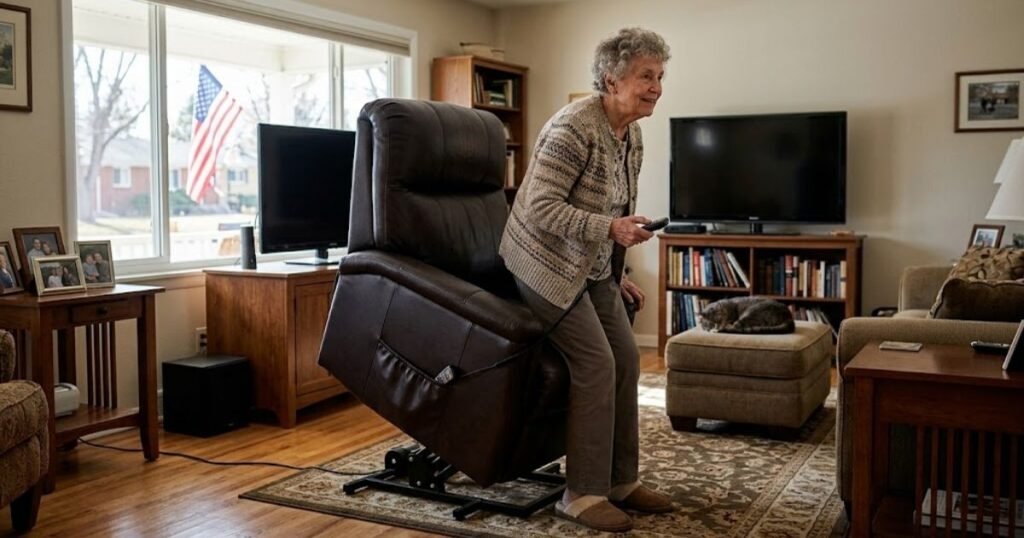
What Is an Electric Lift Chair for Elderly?
At its core, this is a motorized seat with a rechargeable battery, a lifting mechanism, adjustable seat height, armrests, and a hand controller. Better-designed models add:
- A safety belt or harness to keep the user positioned during lifting
- Wheels, usually with a locking brake, for room-to-room transport
- A low minimum seat height — what makes true floor recovery possible
- A stable base so the chair doesn’t tip during lifting
- Padded seating, since some lifts stay in place for a few minutes
Not every “electric lift chair” reaches the floor; some are purely sit-to-stand or transport aids starting from normal chair or bed height. Read the specs carefully rather than assuming.
READ MORE: Best Lightweight Transport Wheelchair for Seniors: Reviews & Comparison
How Does an Electric Floor Lift Work?
- Position the lift beside the person on a stable, flat surface.
- Help the person move onto the seat, following the manufacturer’s instructions for that specific model.
- Secure the user with the safety belt or harness, where the product includes one.
- Check the wheels and brakes (if present) and clear the surrounding area of obstacles.
- Use the hand controller to raise the seat gradually and smoothly — never in a rush.
- Transfer the person to the bed, wheelchair, sofa, or another appropriate surface once they’ve reached the right height.
Slow, motor-controlled movement is the whole point; it avoids the jerking and awkward grip points involved in manually pulling someone off the floor, where caregiver back injuries and secondary falls tend to happen. Always follow the manufacturer’s instructions and never exceed the stated weight limit.
FDA guidance on patient lifts emphasizes training, adherence to manufacturer instructions, respecting weight limits, and maintaining stable, well-inspected equipment all relevant here even though many consumer floor lifts aren’t classified identically to hospital-grade lifts.
Key Features to Look for Before Buying
- Weight capacity: Never exceed the manufacturer’s maximum rating.
- Minimum seat height: The key number for true floor recovery — a unit that only descends to 8–10 inches may not reach someone lying flat.
- Maximum lift height: Confirm it reaches your bed, sofa, or wheelchair height.
- Wheels and brakes: Useful for transport, but only safe with a reliable locking brake.
- Safety belt: Keeps the user positioned through the lift; always use exactly as instructed.
- Battery life: Check lift cycles per charge, charging time, and low-battery behavior.
- Seat width and depth: Affects comfort and stability, especially for larger users.
- Foldability and storage: Make sure it realistically fits your bedroom, bathroom, or closet.
- Construction quality: Steel/aluminum frames and solid hardware outlast a lower upfront price.
- Ease of operation: A simple, large-button controller matters for elderly users and stressed caregivers alike.
- Warranty and support: Check warranty length, replacement parts, returns, and manual availability.
READ MORE: 7 Best Shower Chairs for Seniors: Review, Safety Guide & Comparison
5 Best Electric Lift Chairs for Elderly — Comprehensive Reviews
No product below was physically tested for this article. Each review is based on current manufacturer and major-retailer listings, cross-checked where possible. Specifications shift often between SKUs and sale variants, so confirm current numbers before buying.
1. VOCIC Electric Chair Lift Get Up from Floor, AX35
Detailed Overview & Design
The VOCIC AX35 is a versatile mobile transfer unit designed specifically to bridge the gap between low-profile floor recovery and indoor room-to-room patient transport. Built with a high-tensile alloy frame, the AX35 features an integrated four-wheel caster system, push handles for caregivers, and a motorized central lifting pillar that descends close to floor level.
Floor Recovery & Lifting Capabilities
The standout technical capability of the VOCIC AX35 is its low minimum seat height, which lowers to roughly 2.7 inches off the ground. This allows an individual sitting on the floor to slide directly onto the seat with minimal lifting effort from a caregiver. The linear actuator elevates the user smoothly up to 20 inches, matching standard wheelchair and bedding heights.
Key Specifications
- Weight Capacity: 350 lbs
- Adjustable Seat Height Range: ~2.7 inches to 20 inches
- Mobility System: 4 caster wheels with individual rear locking brakes
- Power Source: Rechargeable battery pack with handheld push-button pendant
- Frame/Design: Powder-coated structural alloy; includes folding mechanism and caregiver push bar
Performance & Caregiver Usability
From a practical caregiving perspective, the AX35 minimizes physical exertion. Once the user is seated and secured with the safety belt, the caregiver presses the remote button to raise the platform. The four caster wheels make it easy to move the senior directly to the bedside, dining table, or bathroom without performing manual transfers.
Pros & Cons
- Pros:
- Low seat descent (~2.7 in) makes floor recovery easy.
- Four wheels allow the unit to function as a transport chair.
- Clear 350-lb weight capacity supports a wide range of users.
- Foldable frame simplifies vehicle transport and closet storage.
- Cons:
- Requires a smooth, flat floor surface for easy wheeling.
- Wider wheel footprint requires checking narrow doorway clearances.
Buying Verdict
- Overall Rating: 4.8 / 5.0
- Best For: Seniors prone to floor falls who also need room-to-room transfer assistance.
- Value for Money: Excellent versatility for both fall recovery and daily transfers.

2. Pterying Electric Lift Chair for Elderly from Floor
Detailed Overview & Design
The Pterying Electric Lift Chair focuses on simple, reliable floor-level recovery. Designed as a dedicated home lifting assistant, it features a sturdy base frame, dual armrests, and an easy-to-clean seat platform engineered to get underneath a fallen user safely.
Floor Recovery & Technical Specifications
- Weight Capacity: 300 lbs
- Minimum Seat Height: ~3.0 inches from the floor
- Maximum Seat Height: ~19.5 inches
- Safety Features: Integrated lap belt, side support armrests, stable floor pads
- Controls: Two-button wired pendant controller
Performance & Ergonomics
In home scenarios, the Pterying chair functions reliably during floor recovery operations. The platform lowers within 3 inches of the floor, enabling a senior to scoot onto the padded surface. The side armrests provide sturdy support points for the user to hold onto during the vertical rise.
Pros & Cons
- Pros:
- Dedicated floor-recovery design with a low profile.
- Simple, intuitive two-button hand control.
- Solid lateral armrests build user confidence during elevation.
- Cons:
- Lower weight capacity (300 lbs) compared to heavy-duty models.
- Lacks full 4-wheel transport capabilities found on dedicated transfer chairs.
Buying Verdict
- Overall Rating: 4.5 / 5.0
- Best For: Independent seniors or family caregivers who need a dedicated fall-recovery lift at home.
- Value for Money: Solid choice for essential floor-to-chair recovery.

3. MediHoist Upgrade Steel Electric Lift Chair
Detailed Overview & Design
The MediHoist Upgrade Steel Electric Lift Chair features heavy-duty alloy steel construction tailored for rigorous daily use. It combines a waterproof PU leather cushion with high-grade caster wheels, making it suitable for both fall recovery and daily transfer needs near beds or commodes.
Specifications & Features
- Frame Material: Reinforced alloy steel frame with anti-corrosion coating
- Weight Capacity: 330 lbs
- Seat Cushion: High-density foam wrapped in waterproof, wipe-clean PU cushion material
- Wheel System: Advanced locking casters engineered for smooth indoor rolling
- Minimum to Maximum Height: ~3.0 inches to 20.0 inches
Real-World Practicality
The heavy-duty steel construction provides minimal frame flex during operation. The waterproof PU cushion makes cleanup simple, which is especially helpful during bathroom and commode transfers.
Pros & Cons
- Pros:
- Robust steel construction delivers excellent frame stability.
- Waterproof PU cushion is comfortable and easy to sanitize.
- Smooth-rolling caster wheels lock securely in place during transfers.
- Cons:
- Heavier overall product weight makes lifting the physical unit into a car trunk more difficult.
Buying Verdict
- Overall Rating: 4.6 / 5.0
- Best For: Caregivers who need a heavy-duty, easy-to-clean transfer lift for daily home use.
- Value for Money: High durability and construction quality for long-term home care.

4. VOCIC Sit to Stand Lift, Patient Lift Chair Transport Unit
Detailed Overview & Functional Distinction
Unlike dedicated floor-recovery chairs, the VOCIC Sit to Stand Lift Transport Unit is designed for seniors who struggle to stand up from traditional chairs, wheelchairs, or beds. It is engineered specifically for sit-to-stand assistance and room-to-room transport, rather than picking someone up off the floor after a fall.
Design & Specifications
- Primary Purpose: Sit-to-stand movement assist and mobile transfer
- Weight Capacity: 300 lbs
- Lifting System: Motorized chest/torso support lift with footrest assembly
- Mobility: 4-wheel caster base with rear foot brakes
- Safety Gear: Padded upper torso straps, knee supports, non-slip footplate
Practical Caregiving Application
This device excels when transferring a senior from a bed to a wheelchair or commode without requiring manual lifting by the caregiver. The user places their feet on the footplate, secures the torso strap, and the motorized mechanism smoothly lifts them into an upright or semi-standing position.
Pros & Cons
- Pros:
- Excellent for seniors who need help standing from a bed or chair.
- Reduces physical load on caregivers during daily transfers.
- Integrated footrest and knee pads provide safe standing posture support.
- Cons:
- Not designed for floor recovery (cannot pick a user off the ground).
- Requires the user to have enough leg weight-bearing ability to support a partial stand.
Buying Verdict
- Overall Rating: 4.7 / 5.0 (for Sit-to-Stand/Transfer use)
- Best For: Seniors with reduced leg strength who need help standing up from chairs or beds.
- Value for Money: Highly effective for daily transfers, provided floor recovery is not required.

5. MAIDeSITe Electric Chair Lift, Get Up from Floor
Detailed Overview & Design
The MAIDeSITe Electric Chair Lift is one of the most recognized dedicated floor-recovery devices on the market. Engineered specifically for fall recovery, it features foldable side wings on the seat platform that allow a user sitting on the floor to slide effortlessly onto the lift.
Floor Recovery Engineering & Specifications
- Weight Capacity: 300 lbs
- Minimum Seat Height: ~2.5 inches (ultra-low floor profile)
- Maximum Seat Height: ~20.0 inches
- Battery Performance: Rechargeable lithium battery providing up to 30+ lifts per charge
- Structure: Heavy-duty aluminum/steel composite with foldable side flaps for easy sliding transfers
Usability & Fall Management
The MAIDeSITe’s ultra-low seat height (~2.5 inches) makes it easy for a fallen senior to scoot onto the platform. The side flaps rest flat on the floor, forming a smooth ramp for sliding transfers. Once seated, pressing the hand pendant raises the unit to standard chair height, allowing the user to stand up easily or transfer to a nearby seat.
Pros & Cons
- Pros:
- Low minimum seat height (~2.5 in) simplifies floor recovery.
- Side flaps create a smooth sliding ramp from the floor.
- Stable, wide footprint prevents tipping during elevation.
- Lightweight design relative to heavy steel transfer chairs.
- Cons:
- Lacks large transport wheels for long-distance indoor rolling.
- 300-lb limit may not suit larger individuals.
Buying Verdict
- Overall Rating: 4.8 / 5.0
- Best For: Seniors who live independently or with a spouse and want a reliable, simple fall-recovery lift.
- Value for Money: Exceptional target functionality for floor recovery.

READ MORE: Best 5 Air Compression Leg Massager for Seniors: Reviews & Comparison
Section 7: Comparison Table — 5 Electric Lift Chairs
The following comparison table synthesizes key verified specifications across all five reviewed models:
| Specification / Feature | VOCIC AX35 | Pterying Floor Lift | MediHoist Upgrade Steel | VOCIC Sit-to-Stand | MAIDeSITe Floor Lift |
| Primary Purpose | Floor Recovery & Transport | Floor Recovery | Floor Recovery & Transport | Sit-to-Stand Transfer | Floor Recovery |
| Weight Capacity | 350 lbs | 300 lbs | 330 lbs | 300 lbs | 300 lbs |
| Min. Seat Height | ~2.7 inches | ~3.0 inches | ~3.0 inches | N/A (Sit-to-Stand) | ~2.5 inches |
| Max. Seat Height | ~20.0 inches | ~19.5 inches | ~20.0 inches | Variable Assist | ~20.0 inches |
| Wheels included | Yes (4 Casters) | No (Base Pads) | Yes (4 Casters) | Yes (4 Casters) | No (Base Pads) |
| Wheel Brakes | Yes (Rear Lock) | N/A | Yes (Total Lock) | Yes (Rear Lock) | N/A |
| Safety Belt | Included | Included | Included | Torso Strap | Included |
| Power Source | Rechargeable Bat. | Rechargeable Bat. | Rechargeable Bat. | Rechargeable Bat. | Rechargeable Bat. |
| Foldable Design | Yes | Partial | Partial | No | Yes (Side Flaps) |
| Seat Material | Contoured Alloy/Pad | Padded Synthetic | Waterproof PU | Padded Support | Composite Rigid/Pad |
| Best For | Floor + Transport | Home Floor Recovery | Heavy Use / Hygiene | Chair/Bed Standing | Dedicated Floor Lift |
| Overall Rating | 4.8 / 5.0 | 4.5 / 5.0 | 4.6 / 5.0 | 4.7 / 5.0 | 4.8 / 5.0 |
Which Electric Lift Chair Is Best for Different Seniors?
Best Overall: The VOCIC AX35 — highest verified capacity, genuine room-to-room mobility, brakes, and push handles.
Best for Floor Recovery: The MAIDeSITe JC35M3, for its very low minimum seat height and light, portable frame.
Best for Room-to-Room Transfers: The MediHoist Upgrade Steel, whose casters and sturdier frame suit repeated indoor moves.
Best for Caregivers: The VOCIC AX35 — push handles, one-touch controls, and locking brakes reduce physical strain.
Best for Smaller Homes: The Pterying, thanks to its compact, tool-free folding design and suction-cup base.
Best for Larger Users: The VOCIC AX35, with the highest confirmed capacity (350 lbs) among the floor-recovery models here.
Best Budget Option: The MAIDeSITe JC35M3, which has appeared at a notably lower sale price while still offering a genuinely low floor-recovery height.
READ MORE: Best 5 Smart Rings for Seniors | Cost & Comparison
How to Safely Use an Electric Floor Lift
- Read the complete manual before first use
- Confirm the user’s weight is within the rated capacity
- Inspect the chair for damage before each use
- Check the battery charge level before starting
- Use the lift on a stable, appropriate surface
- Use the safety belt exactly as instructed, when provided
- Keep wheels locked or suction cups properly seated before lifting
- Move the controller slowly and steadily
- Keep hands, hair, and loose clothing clear of moving parts
- Never exceed the stated weight rating or improvise with unapproved straps
- Never use visibly damaged equipment
- Keep children away from the lifting mechanism
- Perform regular maintenance and battery checks
Improper use of patient lifts can cause serious injuries. FDA guidance on patient lift devices calls for proper training, strict adherence to manufacturer instructions, respecting weight limits, and confirming stability before each use, all relevant to home floor lifts too.
Electric Floor Lift vs. Traditional Power Lift Recliner
| Feature | Electric Floor Lift | Power Lift Recliner |
| Designed for floor recovery | Yes, on applicable models | Usually no |
| Helps from low floor position | Yes | Usually no |
| Reclining | Usually limited or none | Yes |
| Room-to-room transport | Some models | Usually no |
| Wheels | Some models | Usually no |
| Primary purpose | Transfers and floor recovery | Everyday sitting, standing, reclining |
| Portability | Often foldable/lightweight | Usually bulky |
| Best for | Fall recovery and transfers | Daily chair use, TV/reading, resting |
“Lift chair” is shorthand for two very different product categories, so read the actual product description rather than the headline. If you already own a comfortable recliner, a floor lift is a separate purchase for fall recovery — not a replacement.
READ MORE: Bed Assist Rail for Seniors: Best Picks, Safety Tips & Buying Guide
What to Do If an Elderly Person Falls
Don’t rush straight into pulling someone off the floor. Instead:
- Stay calm — a rushed, panicked lift is more likely to cause injury.
- Check for obvious injury before moving them at all.
- Ask whether they’re in pain, and where.
- Don’t move them unnecessarily if a serious injury (like a suspected fracture or head injury) is possible.
- Call emergency services when the situation warrants it — don’t hesitate out of a desire to “handle it at home.”
- If they’ve been medically cleared and a lift is appropriate, follow the manufacturer’s specific recovery procedure for that device.
- Never improvise a lifting technique that isn’t in the manual.
An electric floor lift is a mobility aid, not a substitute for emergency care. When in doubt about a fall’s severity, call for help first.
Electric Lift Chair Safety Checklist
- [ ] User is within the weight limit
- [ ] Chair is fully assembled
- [ ] Battery is adequately charged
- [ ] Wheels/brakes or suction cups are properly engaged
- [ ] Safety belt is correctly positioned, if the model has one
- [ ] Floor surface is stable
- [ ] User is properly seated
- [ ] No loose clothing is caught in moving parts
- [ ] Caregiver understands the controls
- [ ] Transfer destination (bed, chair, wheelchair) is ready and positioned
- [ ] Manufacturer instructions are available for reference
How Much Does an Electric Lift Chair for Elderly Cost?
Retail pricing across North America for electric floor lifts and motorized transfer chairs varies depending on frame construction, battery capacity, weight limits, and mobility features:
- Entry-Level Floor Recovery Lifts ($400 – $700): Basic motorized floor lifts featuring static bases, simple hand controls, and weight capacities around 300 lbs.
- Mid-Range Mobile Transfer Chairs ($700 – $1,300): Versatile lifts featuring 4-wheel caster bases, dual push handles, foldable frames, waterproof cushions, and 300–350 lb capacities (e.g., VOCIC AX35, MAIDeSITe).
- Heavy-Duty / Bariatric Transfer Lifts ($1,300 – $2,500+): Commercial-grade steel lifts featuring higher weight capacities (350–450+ lbs), advanced power systems, and specialized transfer attachments.
When evaluating costs, balance price against long-term durability, warranty coverage, and customer support responsiveness.
READ MORE: Best Voice Assistant for Seniors — Safe, Simple & Senior-Friendly Picks
Is an Electric Lift Chair Covered by Medicare?
This is where a lot of confusion happens, so it’s worth being precise. Medicare Part B may cover the motorized seat-lift mechanism inside certain lift chairs as durable medical equipment but only when a doctor certifies medical necessity (for conditions like severe arthritis or a qualifying neuromuscular disease) and submits a Certificate of Medical Necessity. Even then, Medicare pays only for the lifting mechanism, not the frame, upholstery, or reclining features, and the beneficiary owes the Part B deductible plus 20% coinsurance on the covered portion.
This benefit is generally structured around traditional seat-lift recliners a person sits in daily, not necessarily the floor-recovery or transfer-focused devices reviewed in this guide. Coverage also differs across:
- Original Medicare (Part B): Lift mechanism only, under strict medical-necessity criteria
- Medicare Advantage: Covers at least what Original Medicare covers, but rules vary by plan
- Medicaid: Rules vary significantly by state
- VA benefits: May cover mobility equipment for eligible veterans
- Private insurance: Depends entirely on the specific plan
- Out-of-pocket: The most common path for the floor-recovery products reviewed here
Before assuming coverage, check with the individual’s specific plan and a Medicare-enrolled equipment supplier.
Electric Floor Lift vs. Manual Transfer Devices
| Device | Best suited for |
| Electric floor lift | Floor recovery and controlled, motorized transfers |
| Manual transfer belt | Short, supported walking transfers with some user mobility |
| Transfer board | Lateral seated transfers (e.g., wheelchair to bed) |
| Stand-assist device (manual) | Users who retain partial leg strength and balance |
| Hoyer-style patient lift | Users with little to no weight-bearing ability |
| Inflatable lifting cushion | Emergency floor recovery in tight spaces |
| Traditional power lift recliner | Everyday sitting/standing, not floor recovery |
Common Buying Mistakes
- Buying on price alone, ignoring weight capacity or floor-recovery height
- Assuming all “lift chairs” work from the floor when many don’t
- Forgetting to measure doorways for wheeled models
- Ignoring seat width relative to the user’s body
- Not checking battery cycles per charge
- Skipping warranty details until after purchase
- Assuming wheels alone make a chair safe to transport while occupied
- Buying without confirming the user can sit upright unassisted
- Using a device without reading the full manual first
Frequently Asked Questions
What is the best electric lift chair for an elderly person who has fallen?
For dedicated floor recovery after a non-injurious fall, a specialized floor lift with a low seat descent (such as the MAIDeSITe or VOCIC AX35) is ideal. These units lower within 2.5 to 2.7 inches of the carpet, allowing a fallen individual to slide onto the platform so the motor can safely elevate them to standard seating height.
How do you get an elderly person off the floor without lifting them manually?
An electric floor lift or inflatable lifting cushion provides a motorized way to raise someone off the carpet. By helping the senior slide onto a low-profile seat platform, the caregiver can use a remote control to elevate them without physical strain. If the senior is injured or in severe pain, do not attempt to lift them call 911 immediately.
Are electric floor lifts safe for seniors to use at home?
Yes, electric floor lifts are safe when operated according to the manufacturer’s instructions. Look for models equipped with safety lap belts, total-locking rear caster brakes, and wide anti-tip base frames. Always ensure the user sits centered on the platform and within the specified weight limit.
Will Medicare pay for an electric lift chair for elderly people?
Medicare Part B may cover a portion of a seat-lift mechanism if prescribed by a physician as durable medical equipment (DME) for severe arthritis or neuromuscular conditions. However, traditional Medicare generally does not cover the furniture/fabric portion of lift recliners or non-prescribed retail transfer devices. Check with your Medicare supplier or Advantage plan to confirm specific benefit coverage.
What is the main difference between an electric floor lift and a Hoyer lift?
An electric floor lift features a rigid seated platform requiring the user to have sufficient core strength to sit upright independently. A Hoyer lift uses a flexible canvas sling that cradles the user’s entire body weight, making it better suited for individuals who are bed-bound or unable to maintain trunk stability.
Final Verdict
An electric lift chair for elderly users can genuinely reduce the risk and strain of getting someone up off the floor after a fall, but it isn’t a one-size-fits-all purchase. What matters most is the minimum seat height for real floor recovery, verified weight capacity, wheel and brake quality if you need transport, and whether an appropriate safety belt is included.
Of the five products reviewed, the VOCIC AX35 stands out as the strongest all-around pick, combining high capacity, four-wheel mobility with brakes, and caregiver-friendly push handles. The MAIDeSITe JC35M3 is the standout for lightweight, budget-friendly floor recovery, and the Pterying suits bathroom-specific fall scenarios. The VOCIC Sit-to-Stand AY03 is useful, but only once you understand it’s a manual standing aid, not a powered floor lift.