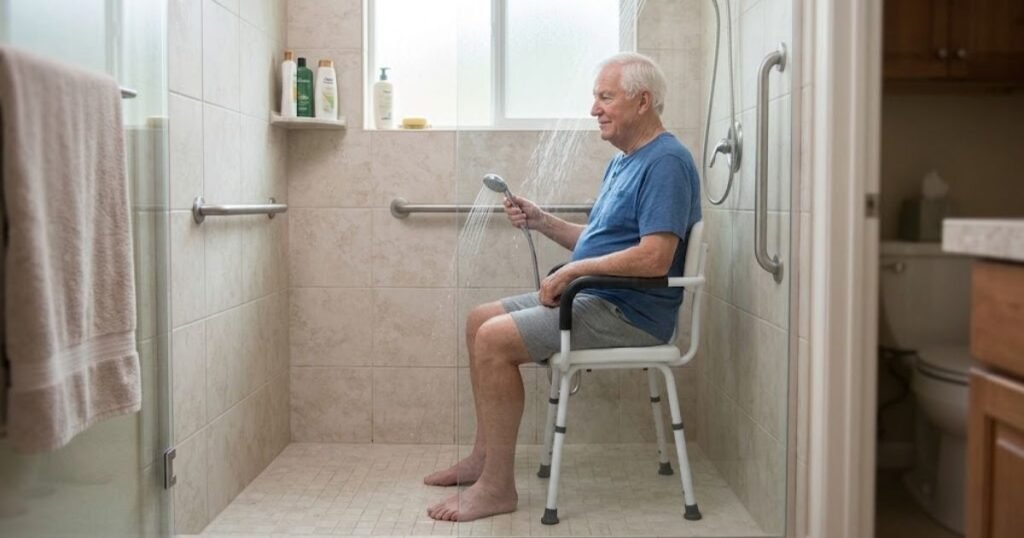
As time goes on, simple physiological changes such as joint stiffness, muscle fatigue, diminished balance, or reduced stamina can affect how steady someone feels on their feet. A dedicated seat inside the shower provides a secure, stable place to sit, allowing seniors to wash thoroughly without rushing or risking a loss of balance. Modern seating aids cater to a wide variety of individual mobility profiles, ranging from simple, lightweight stools for those who simply tire easily, to advanced sliding transfer benches and rolling mobility chairs for individuals requiring step-free tub entry or full caregiver assistance.
Choosing the correct seating option involves balancing personal mobility, physical support needs, and specific bathroom dimensions. This guide covers the essential types of shower seating, explores seven distinct designs, provides a practical buyer’s guide, and outlines key safety guidelines to support aging in place with dignity and confidence. Lets deep dive into “7 Best Shower Chairs for Seniors: Review, Safety Guide & Comparison”
READ MORE: Best 5 Air Compression Leg Massager for Seniors: Reviews & Comparison
Types of Shower Chairs for Seniors
Matching the right chair design to a senior’s specific physical needs and bathroom layout is essential. Bathing equipment ranges from basic stationary seats to dynamic transfer systems.
Standard Shower Chairs
Standard models consist of four corrosion-resistant aluminum legs, a contoured plastic seat, and rubber suction feet. Many feature integrated backrests and fixed or removable armrests. These compact units fit neatly inside enclosed walk-in stalls or standard bathtubs, making them ideal for seniors who can walk independently but need a place to sit and rest during their routine.
Heavy-Duty or Bariatric Shower Chairs
Bariatric models feature reinforced cross-bracing, wider seating surfaces, and heavy-gauge aluminum or steel frames. They are engineered to accommodate higher weight loads often rated between 400 lbs and 600 lbs while preventing frame flex or leg bowing. These sturdy designs offer enhanced stability for larger individuals or those requiring extra seating space.
Shower Transfer Benches
A transfer bench spans the wall of a standard bathtub, leaving two legs inside the tub and two legs outside on the bathroom floor. This design allows the user to sit down safely on the dry outside section, shift their weight, and swing their legs over the tub edge without ever standing on one foot inside a wet tub.
Sliding Shower Chairs
Sliding chairs elevate the traditional transfer bench concept by mounting the seat on a rail system. Instead of scooting across a static plastic bench, the user sits on the outside seat, releases a safety lock, and glides smoothly across the rails into the enclosure. This reduces friction on delicate skin, eliminates painful shifting, and minimizes physical strain for assisting family members.
Swivel Shower Chairs
Swivel models feature a seat base that rotates 360 degrees (or locks at 90-degree increments). This mechanism allows users to sit down facing away from the water stream, pull the lock lever, and rotate smoothly toward the faucet. It eliminates the need to twist the torso or shuffle the feet while standing on a slick floor.
Shower Wheelchairs
Designed for individuals with significant mobility limitations, shower wheelchairs feature water-resistant frames, waterproof seat cushions, and caster wheels. They allow a caregiver to transport a user directly from the bedroom into a roll-in shower stall, eliminating intermediate transfers.
Reclining Shower Wheelchairs
Reclining models offer adjustable backrest angles and foot supports for individuals who lack full upper-body control, experience postural hypotension, or require elevated positioning during washing. These advanced care units are primarily managed by trained family caregivers or home health aides.
READ MORE: Best 5 Smart Rings for Seniors | Cost & Comparison
7 Best Shower Chairs for Seniors
The following seven models highlight different physical needs, room constraints, and support levels. When evaluating these options, match the structural design to the user’s specific mobility profile and bathroom dimensions.
1. Platinum Health Carousel Sliding Shower Chair
The Platinum Health Carousel is designed for individuals who struggle to step over bathtub walls or move between a wheelchair and the bathing enclosure. It combines a sliding rail assembly with a rotating seat platform, minimizing the need for physical effort during transfers.
Design & Functionality
Constructed with high-grade aluminum rails, the Carousel allows users to sit on the seat outside the tub area, rotate into alignment, release the sliding lock, and glide into the bathing zone. The seat, backrest, and padded armrests are finished with medical-grade, closed-cell foam padding that does not absorb water or cold air.
Physical Support & Caregiver Role
The padded armrests fold down out of the way during lateral transfers from a wheelchair, then lock securely into position once upright. This provides sturdy leverage for users pushing themselves into a standing position. For caregivers, the smooth rail motion reduces the manual lifting and torso twisting required to position a family member.
Safety & Room Considerations
The unit features dual safety locks that anchor the seat at both ends of the slide rail, preventing unwanted movement during entry and exit. Because it bridges the tub edge, users must measure their bathroom floor space to ensure the outer legs do not block access to nearby fixtures like toilets or vanities.
- Pros:
- Smooth gliding rail system minimizes skin friction during tub entry.
- Warm, high-density closed-cell padding prevents cold seat discomfort.
- Swivel mechanism allows effortless turning without foot shuffling.
- Padded drop-down armrests support safe sitting and standing pushes.
- Cons:
- Larger structural footprint requires ample bathroom floor space.
- Higher initial investment compared to non-sliding plastic benches.
- Requires clear clearance around the outer tub ledge.
Best for: Seniors who need extra physical assistance entering a bathtub, as well as caregivers seeking to reduce manual lifting strain.

2. FITGOT Heavy Duty Shower Chair for Inside Shower
Built for straightforward utility inside walk-in enclosures or larger tubs, the FITGOT Heavy Duty model emphasizes frame rigidity, wide seat spacing, and robust weight distribution.
Design & Functionality
This chair features an oversized, high-density polyethylene seat equipped with integrated drainage channels and built-in side handles. Supported by heavy-gauge, cross-braced aluminum legs, it provides a stable foundation that resists frame flexing or wobble when weight is applied.
Ergonomics & Maintenance
The wide-stance leg assembly terminates in large, non-marking rubber suction tips that grip wet tile floors securely. Height-adjustable legs allow users to customize seat elevation in 1-inch increments, ensuring feet rest flat on the floor to reduce knee joint pressure. The non-porous plastic surfaces are easy to wipe down with standard household disinfectants.
Safety & Room Considerations
Because of its wider leg base, buyers should measure the flat bottom area of their shower pan or tub. Sloped shower edges can prevent the outer suction feet from sealing flat, making floor verification essential prior to assembly.
- Pros:
- Reinforced aluminum cross-bracing provides exceptional frame stability.
- Wide, textured seat offers comfortable clearance for larger users.
- Simple, tool-free leg height adjustments cater to varying leg lengths.
- Deep drainage slots prevent surface water accumulation.
- Cons:
- Lacks padded seating for individuals with sensitive pressure points.
- Wider leg footprint may not fit small, rounded tub bottoms.
Best for: Seniors looking for a sturdy, stable seat with a wide frame for use inside a standard walk-in shower or tub.

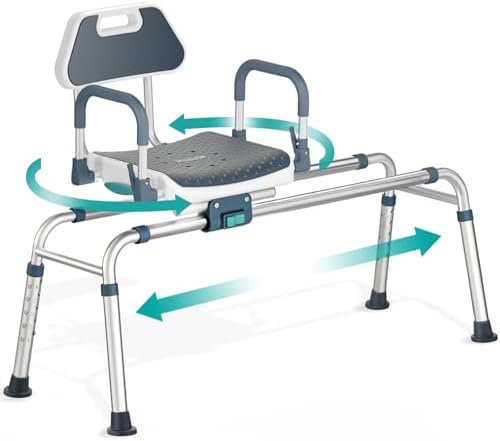
3. Pelegon Sliding Shower Chair Tub Transfer Bench with Swivel Seat
The Pelegon Transfer Bench is designed to help users navigate high bathtub walls safely. By combining a wide-span transfer bench frame with a swiveling seat, it simplifies tub entry and exit.
Design & Functionality
The user sits down on the outside portion of the seat while facing out toward the bathroom. After securing themselves using the armrests, they pull the control lever to swivel 90 degrees toward the tub, slide along the frame, and position themselves under the shower stream.
Ease of Operation
The dual-action swivel and slide motion eliminates the need for users to perform awkward scooting motions across dry plastic, which can pinch delicate skin. The frame’s rust-resistant aluminum tubing handles high humidity without structural degradation.
Safety & Room Considerations
The bench legs feature micro-adjustable leg extenders to compensate for height differences between the interior tub floor and the exterior bathroom floor. This ensures the frame sits completely level across the tub wall.
- Pros:
- Combines sliding and swivel capabilities for smooth tub transfers.
- Helps users enter the tub without lifting their weight over the ledge.
- Height-adjustable legs adapt to uneven floor and tub elevations.
- Textured seat base reduces sliding slips when wet.
- Cons:
- Extends out into the main bathroom area, occupying extra floor space.
- Requires routine cleaning around the sliding tracks to keep movement smooth.
Best for: Seniors with reduced leg clearance who need an accessible way to cross standard bathtub walls safely.
4. BLUEWEST 23.4-Inch Shower Chair with Backrest (Acacia Wood)
For individuals who want to maintain a residential, non-medical look in their bathroom, the BLUEWEST Acacia Wood Shower Chair blends aesthetic appeal with functional strength.
Design & Functionality
Constructed from dense, water-resistant Acacia hardwood, this 23.4-inch wide bench offers a sturdy seating platform. Acacia wood naturally resists moisture, while the slatted seat layout lets water drain quickly to prevent pooling.
Stability & Aesthetics
Unlike industrial plastic seating, the solid wood construction adds natural weight to the unit, giving it an anchored feel inside the stall. Heavy-duty rubber tips on the base legs grip slippery tile surfaces securely without scratching the finish.
Care & Maintenance
While treated for wet environments, natural wood requires routine maintenance. To prevent soap scum build-up and preserve the finish, users should rinse off residual soap and wipe the surfaces down periodically.
- Pros:
- Elegant wood design avoids a clinical, institutional appearance.
- Wide 23.4-inch seating platform provides generous seating area.
- Heavy solid-wood construction offers excellent physical stability.
- Slatted surface allows rapid water drainage.
- Cons:
- Heavier than hollow aluminum models, making it harder to move out of the shower.
- Wood requires periodic drying and light maintenance over time.
- Fixed height design offers no leg elevation adjustments.
Best for: Seniors seeking a sturdy, furniture-style shower seat with a generous seating platform and natural look.

5. PELEGON Shower Chair for Elderly and Disabled (450 lb Capacity)
Designed for users who need maximum upper-body support when moving between sitting and standing positions, this PELEGON model emphasizes secure grip points and heavy-duty frame strength.
Design & Functionality
Featuring a rated structural weight capacity of 450 lbs, this chair uses thickened aluminum leg walls and reinforced cross-bracing. It includes high-density padded armrests and an ergonomic backrest that supports an upright, neutral sitting posture.
Standing Support Benefits
The padded armrests extend forward, giving users a firm handhold to push off from when standing up. This reduces pressure on the knees and lower back, an essential benefit for individuals with severe leg weakness or arthritis.
Safety & Room Considerations
The leg assembly uses oversized non-skid suction feet that grip the floor when downward force is applied. Tool-free push-button height adjustments let caregivers set the seat height quickly.
- Pros:
- High weight capacity frame provides peace of mind for heavy-duty use.
- Padded armrests offer strong leverage points for sitting down and standing up.
- Contoured backrest helps maintain an upright sitting posture.
- Tool-free push-button assembly simplifies setup.
- Cons:
- Armrests reduce lateral space for users with wide hips.
- May feel bulky in smaller standard bath enclosures.
Best for: Seniors with hip or knee weakness who need sturdy armrests for leverage when standing up.
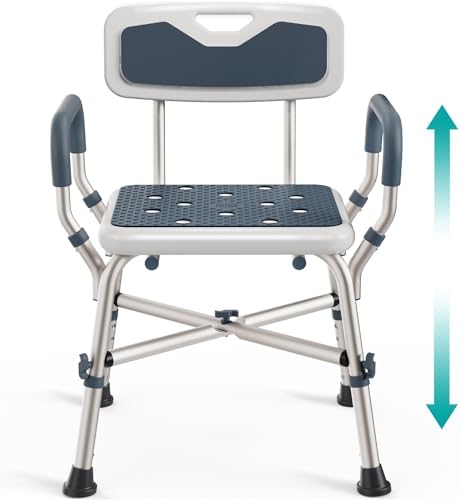
6. Swivel Shower Chair with Removable Back and Arms (400 lbs Capacity)
Adaptability is the focus of this 400-lb capacity swivel chair. Built with modular components, it can be adjusted as an individual’s physical needs change over time.
Design & Functionality
The core feature of this seat is its 360-degree rotating base, which locks at 90-degree stops. Users can sit down comfortably, lift the locking tab, turn toward the water stream, and lock the chair into place.
Modular Configuration
Both the padded armrests and the backrest can be attached or removed without tools. This allows the chair to convert from a fully supportive armchair to an open-sided stool or backless seat, depending on the user’s mobility requirements or shower space constraints.
Safety & Room Considerations
The swivel base allows users to enter and exit the shower without shuffling their feet on wet tile, significantly lowering fall risks. Caregivers should ensure the swivel tab is fully engaged before the user applies weight during transfers.
- Pros:
- Modular components allow customized setups (armrests and backrest are removable).
- Swivel seating eliminates foot shuffling on slippery surfaces.
- Supports up to 400 lbs with reinforced center-column hardware.
- Compact footprint fits well inside small walk-in stalls.
- Cons:
- Swivel assembly requires routine rinsing to keep hair and soap debris out.
- Seat height feels slightly taller than standard static chairs at its lowest setting.
Best for: Seniors who want a versatile, rotating chair that can be customized to changing physical needs.

7. Medorol Reclining Shower Wheelchair with Commode Bucket
Designed for individuals with significant mobility limitations or severe postural deficits, the Medorol Reclining Shower Wheelchair combines rolling mobility, reclined positioning, and personal hygiene features into a single unit.
Design & Functionality
This rolling chair features a water-resistant coated frame, a soft polyurethane seating surface, a removable commode bucket, and a smooth tilt-in-space reclining backrest. It allows a caregiver to wheel a senior directly from the bed into a roll-in shower without intermediate transfers.
Caregiver Assistance & Comfort
The adjustable reclining angle helps manage users who struggle to sit fully upright, preventing forward sliding and accommodating conditions like spinal rigidity or low blood pressure. Integrated footrests support the lower legs when reclined, while four heavy-duty caster wheels feature step-on foot brakes to lock the chair securely in place during bathing.
Room Compatibility Requirements
This chair requires a barrier-free, roll-in shower entry with no threshold steps or tub walls. It also needs wide doorways and ample turning space within the bathroom.
- Pros:
- Reclining function offers comfortable support for users with limited trunk control.
- Allows direct wheel-in transfers, eliminating manual lifting between rooms.
- Integrated commode bucket simplifies daily hygiene routines.
- Locking wheel casters keep the chair securely anchored on wet surfaces.
- Cons:
- Requires a true roll-in shower stall; incompatible with standard bathtubs.
- Large frame requires wider doorways and generous floor space.
- Requires full caregiver operation to manage safely.
Best for: Individuals with limited mobility who need full caregiver assistance, reclining trunk support, and direct roll-in shower access.

READ MORE: Power Lift Recliner Chair for Elderly: Top Picks, Review & Comparison
Comparison Table — 7 Shower Chairs for Seniors
| Product | Type | Stated Weight Capacity | Backrest | Armrests | Transfer/Swivel Feature | Best For | Overall Category |
| Platinum Health Carousel | Sliding Transfer Chair | Check manufacturer specs | Yes (Padded) | Yes (Padded drop-down) | Sliding Rails & 360° Swivel | Effortless tub entry and reduced caregiver lifting | Advanced Transfer System |
| FITGOT Heavy Duty | Standard Heavy-Duty Chair | Check manufacturer specs | Yes | Integrated Handles | Static Base | Simple, heavy-duty seating in walk-in stalls | Heavy-Duty Stationary Chair |
| Pelegon Sliding Bench | Tub Transfer Bench | Check manufacturer specs | Yes | Yes | Sliding Rails & 360° Swivel | Crossing high bathtub walls safely | Sliding Tub Transfer Bench |
| BLUEWEST 23.4-Inch | Wooden Shower Bench | 450 lbs (Stated) | Yes | No | Static Base | Premium furniture look with wide seating space | Decorative Wood Seating |
| PELEGON Heavy-Duty | Armchair Style Chair | 450 lbs (Stated) | Yes | Yes (Padded) | Static Base | Leverage support when sitting down or standing | Heavy-Duty Support Chair |
| Swivel Chair (400 lbs) | Modular Swivel Chair | 400 lbs (Stated) | Removable | Removable | 360° Swivel with lock stops | Customizable seating for changing mobility needs | Adaptable Swivel Chair |
| Medorol Reclining Wheelchair | Rolling Shower Wheelchair | Check manufacturer specs | Yes (Reclining) | Yes | Rolling Base with Brakes | Direct roll-in shower access with tilt positioning | Reclining Caregiver Wheelchair |
How to Interpret This Comparison
When evaluating this table, start by looking at your physical space constraints rather than focusing solely on weight capacity or extra features. A sliding transfer bench offers excellent entry support, but it will not work if your bathroom floor space is too tight to accommodate its outer legs.
Similarly, rolling shower wheelchairs require a step-free, roll-in shower layout and clear floor space to navigate. Stationary seats with integrated arms work well in walk-in shower pans, provided the suction feet sit flat on the floor without resting on raised drain covers or sloped basin edges. Always prioritize structural stability and a secure fit within your specific bathroom layout over general feature lists.
READ MORE: Best Voice Assistant for Seniors — Safe, Simple & Senior-Friendly Picks
How to Choose the Best Shower Chair for a Senior
Selecting the right seating option involves evaluating the senior’s physical capabilities, the bathroom layout, and the caregiver’s needs.
1. Weight Capacity
Always choose a model with a working weight capacity that comfortably exceeds the user’s actual body weight. Over-specifying this limit provides an extra margin of safety against structural stress when a senior sits down heavily.
2. Seat Width and Depth
Ensure the seat offers enough room for comfortable sitting without squeezing hip tissues against the armrests. At the same time, confirm that the overall seat dimensions leave enough clearance inside the shower for water to flow and doors to close.
3. Height Adjustment
Look for models with independent, push-button height adjustments on all four legs. When seated, the user’s feet should rest flat on the shower floor with their knees bent at a comfortable 90-degree angle. This keeps their center of gravity stable and prevents them from sliding forward.
4. Backrest
A backrest provides essential trunk stability for individuals with poor core strength, spinal fatigue, or balance difficulties. Seniors who have strong core balance and prefer an open range of motion when washing their back may prefer a backless stool.
5. Armrests
Armrests offer key leverage points that help seniors push themselves up into a standing position, taking strain off weak knees and hips. Padded, textured handgrips also prevent hands from slipping when wet.
6. Non-Slip Feet
High-grade, wide-profile rubber feet (or suction-style feet) prevent the chair from shifting on soapy surfaces. Inspect these rubber tips regularly to ensure they remain soft, pliable, and free of soap scum buildup.
7. Drainage
Check that plastic seat molds include built-in drainage holes or slatted grooves. Adequate drainage prevents water from pooling under the user, reducing slipping hazards and making the seat more comfortable.
8. Transfer Features
If stepping over a 15-inch tub wall causes balance hesitation or physical pain, select a sliding transfer bench or a swivel chair. These options eliminate the need to balance on one leg while crossing the tub edge.
9. Bathroom Size
Before purchasing equipment, measure your space carefully:
- Clear interior floor width and depth of the shower pan or tub bottom.
- Height of the outer bathtub wall from the bathroom floor.
- Clearance width through the shower door frame or curtain opening.
- Proximity of the toilet, sink vanity, or swing doors that might block access.
10. Ease of Cleaning
Equipment used in warm, wet environments can trap moisture and soap residues. Smooth plastic molds, removable seat pads, and corrosion-resistant aluminum frames streamline routine maintenance and prevent mold accumulation.
11. Caregiver Access
If a caregiver assists with washing, ensure the chair layout leaves enough working room for them to stand nearby without twisting or straining their back.
12. Comfort
High-density, closed-cell foam padding adds warmth and cushioning for thin or frail seniors, protecting sensitive pressure points along the tailbone and hips during longer bathing routines.
READ MORE: Best Fall Detection Smartwatch for Seniors: Buying Guide & Reviews
Shower Chair vs. Transfer Bench: Which One Does a Senior Need?
| Feature | Standard Shower Chair | Shower Transfer Bench |
| Primary Installation Environment | Fits fully inside walk-in showers or large tubs | Straddles over the outer wall of a bathtub |
| Best Entry Method | User walks into shower and sits down directly | User sits outside tub, then slides/swings legs across |
| Tub Wall Obstacle | Requires stepping over the tub wall while standing | Eliminates the need to step over the tub wall while standing |
| Bathroom Space Needed | Compact footprint inside the shower enclosure | Requires clear exterior floor space next to the tub |
| Caregiver Assistance Level | Ideal for independent sitting and light guidance | Excellent for moderate to heavy transfer assistance |
| User Mobility Needs | User can step into the shower enclosure safely | User experiences balance loss or pain when stepping over edges |
Shower Chair Safety Tips for Seniors
Using adaptive equipment safely requires correct setup and ongoing maintenance.
- Confirm Surface Stability: Always position all four chair legs on a flat, level surface. Never allow one foot to rest on a raised drain cover or sloped edge, as this causes dangerous frame wobbling.
- Check Leg Locks Daily: Prior to each shower, double-check that all push-button height-adjustment pins are fully engaged and locked in their detents.
- Inspect Rubber Footing: Routinely clean soap scum, hair, and mineral scale off the bottom of the rubber feet. Replace cracked or hardened rubber tips immediately.
- Avoid Overreaching: Keep shampoos, soaps, handheld spray wands, and washcloths stored on accessible wall caddies between chest and waist height to prevent overreaching.
- Do Not Stand on Seats: Never allow anyone to stand on the seat to reach high items. Shower chairs are engineered solely for static, sitting weight distribution.
- Lock Rolling Wheels: For mobile shower wheelchairs, always lock all wheel brakes firmly before starting transfers or beginning the wash routine.
- Pair with Support Grab Bars: A shower chair should be part of a broader bathroom safety strategy. Install ADA-compliant, wall-anchored grab bars near entry points to give users secure handholds when standing up.
Can Medicare or Insurance Pay for a Shower Chair?
When purchasing home bathroom safety products, family members often ask about medical insurance coverage. In the United States, coverage guidelines vary depending on the specific insurance plan and equipment classification:
- Original Medicare (Part B): Standard shower chairs, transfer benches, and fixed bath seats are generally categorized as personal hygiene or convenience items rather than primary Durable Medical Equipment (DME). As a result, Original Medicare Part B rarely pays for standard shower seating.
- Medicare Advantage (Part C): Many Medicare Advantage plans offer expanded wellness benefits and home safety allowances. Depending on your specific policy, these plans may cover basic bathroom aids or offer annual OTC (Over-the-Counter) allowances to help pay for approved shower chairs.
- Medicaid Programs: State-administered Medicaid or Home and Community-Based Services (HCBS) waiver programs may pay for bathroom safety equipment if a doctor or occupational therapist documents that it is medically necessary for safely managing daily care at home.
- Private Health Insurance: Private policies vary widely. Review your specific policy guidelines or consult your insurance benefits representative to learn about coverage terms.
Always consult your primary care doctor, an occupational therapist, or a licensed DME supplier to explore available financial coverage and safety recommendations for your situation.
READ MORE: Best Flip Phone for Seniors: 7 Easy-to-Use Picks
Shower Chair Features That Matter Most for Seniors
When comparing options, prioritize these primary practical considerations:
- Proven Structural Stability: Frame design prevents twisting or wobbling when the user shifts their weight.
- Appropriate Weight Capacity: Structural ratings comfortably exceed the user’s actual body weight.
- Secure Height Adjustments: Simple push-button legs let you set the chair height so the user’s feet rest flat on the floor.
- High-Traction Feet: Flexible rubber feet grip wet tile floors firmly.
- Supportive Sitting Features: Ergonomic backrests and solid armrests offer leverage when lowering down or standing up.
- Effective Drainage: Built-in seat slots prevent soapy water from pooling under the user.
- Appropriate Transfer Features: Sliding or swivel mechanisms reduce physical strain when entering or exiting the tub.
- Bathroom Compatibility: Footprint dimensions fit the interior space of your shower pan or tub bottom without crowding nearby fixtures.
Which Shower Chair Is Best for Different Seniors?
| Senior’s Situation | Recommended Chair Design | Primary Benefit |
| Can walk independently, but experiences fatigue while standing | Standard four-legged shower chair | Simple resting seat inside walk-in enclosures |
| Has knee or hip weakness and struggles to stand up | Heavy-duty chair with supportive armrests | Firm leverage points for pushing up into a stand |
| Needs extra seat space and a heavy-duty frame | Bariatric or heavy-duty chair | Reinforced frame strength and extra seat width |
| Struggles to step over a high bathtub wall | Shower transfer bench | Allows safe sitting outside the tub before swinging legs in |
| Experiences balance loss or pain when turning in place | Swivel-seat shower chair | Rotating base eliminates foot shuffling on wet floors |
| Requires smooth entry without painful scooting | Sliding shower transfer chair | Glides along aluminum rails to eliminate skin friction |
| Requires full caregiver assistance and tilt positioning | Reclining rolling shower wheelchair | Direct roll-in shower entry with tilt support for caregivers |
Frequently Asked Questions
What is the best shower chair for seniors?
The best model depends on the individual’s physical mobility, body measurements, and bathroom layout. Seniors who walk well but tire quickly benefit from compact four-legged chairs. Those who struggle to step over bathtub edges need a sliding or swivel transfer bench.
Are shower chairs safe for elderly people?
Yes, shower chairs are effective tools for lowering fall risks during bathing. They provide a stable seat on slippery surfaces, helping reduce standing fatigue and unsteadiness. To ensure safety, confirm that all four rubber feet sit flat on a level surface, verify that height pins are fully locked in place, and pair the chair with professionally anchored grab bars near entry points.
What is the best shower chair for an elderly person with limited mobility?
For individuals with significantly reduced leg strength, a sliding transfer bench or swivel shower chair is usually best. These designs allow users to sit down while completely dry outside the tub, then slide or rotate inside without balancing on one foot.
Does Medicare pay for a shower chair for seniors?
Original Medicare (Part B) rarely covers standard shower chairs or transfer benches because they are classified as personal hygiene items rather than primary Durable Medical Equipment (DME). However, many Medicare Advantage (Part C) plans, state Medicaid waivers, or specialized long-term care policies do offer allowances for home safety modifications.
What weight capacity should a shower chair have?
A shower chair’s structural weight rating should comfortably exceed the user’s actual weight. If an individual weighs 220 lbs, selecting a model rated for 350 lbs or 450 lbs provides an added safety cushion against dynamic frame stress when sitting down quickly. Never exceed the manufacturer’s official weight rating.
Final Verdict
Selecting the right shower chair involves matching an individual’s physical needs with their home’s specific bathroom layout. There is no single “best” chair for every situation; the right choice depends on balancing personal physical support needs, room dimensions, entry obstacles, and caregiver involvement.
Begin by assessing core mobility: Can the senior step over a bathtub wall safely, or do they need the bridging support of a transfer bench? Next, take precise measurements of the shower enclosure, paying close attention to flat floor space, door clearances, and tub heights. Factor in physical support features like padded armrests for standing leverage, ergonomic backrests for trunk balance, or rotating bases to prevent foot shuffling on wet tile.