For millions of older Americans, there is no place like home. The familiar neighborhood, decades of memories, and a sense of independence make staying in one’s own residence far more attractive than moving into a facility. However, as the body ages, a home that was once perfectly functional can suddenly present daily hazards.
At the same time, the cost of long-term care in the United States continues to skyrocket. According to national care surveys, the average monthly cost of an assisted living facility now exceeds $4,800, while a private room in a nursing home regularly costs upwards of $9,000 per month. For seniors living on fixed incomes, such as Social Security or modest pensions, these institutional costs are simply out of reach.
Fortunately, aging in place does not have to be a financial impossibility. A vast network of federal, state, local, and nonprofit grant programs exists across the United States specifically to help older adults repair, modify, and preserve their homes. Unlike loans, grants do not have to be repaid as long as program conditions are met.
This comprehensive guide will walk you or your family members and caregivers through every major financial grant, home repair assistance program, and safety modification initiative available. Lets deep dive into “Grants for Seniors to Stay in Their Homes: USA Guide”
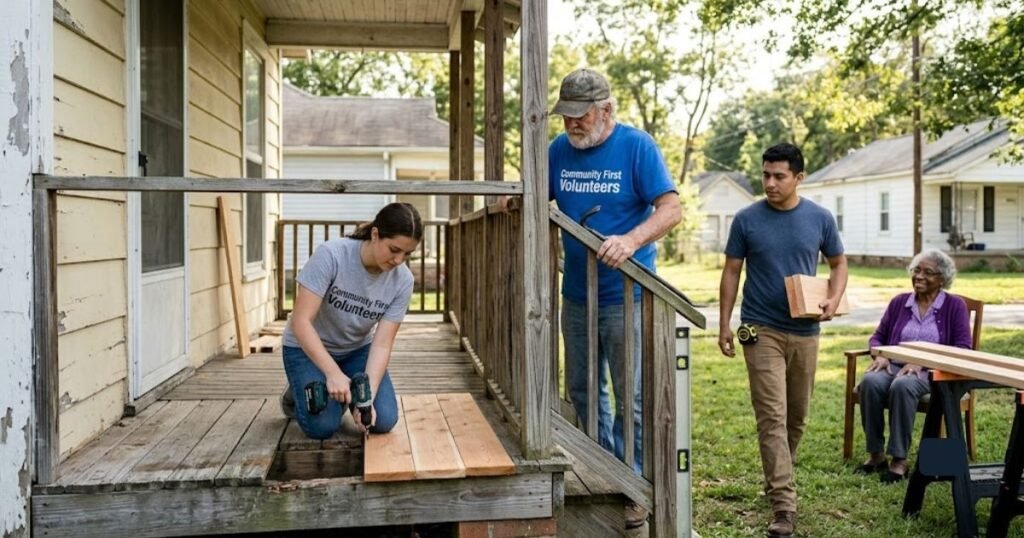
What Does “Aging in Place” Mean?
Aging in place simply means living safely, independently, and comfortably in your own home for as long as possible, rather than moving to a nursing home or assisted living facility. It doesn’t mean going without help, it means getting the right help, in your own space, on your own terms.
The benefits go well beyond cost savings:
- Financial: Home repairs and modifications, even significant ones, are almost always cheaper than a single year of assisted living.
- Emotional: Staying near familiar routines, neighbors, and community reduces the isolation and disorientation that often accompany a move.
- Health: Research consistently links aging in place with better mental health outcomes and fewer hospital readmissions when the home is properly modified.
- Independence: Grab bars, ramps, and walk-in showers don’t just prevent falls — they preserve a senior’s ability to manage daily life without constant assistance.
READ MORE: Free Home Renovation Programs for Seniors in the USA
Who Qualifies for Grants to Stay in Their Homes?
Eligibility varies by program, but most grants and assistance programs consider a combination of these factors:
- Age — Many programs set the bar at 62, though some AAA and nonprofit programs help at 60 or even younger if disabled.
- Income — Most federal programs use “very low income” (below 50% of area median income) or “low income” (below 80%) thresholds.
- Homeownership — Nearly all repair grants require you to own and live in the home as your primary residence.
- Disability — Programs like VA grants and Medicaid HCBS waivers hinge on a documented disability or medical need.
- Veteran status — Opens access to VA-specific housing grants, often with higher dollar caps.
- Rural location — USDA programs require the home to sit in a USDA-eligible rural area.
- Medicaid eligibility — Unlocks Home and Community-Based Services (HCBS) waivers in many states.
- State-specific rules — Every state layers its own income limits and priorities on top of federal minimums.
Quick Eligibility Checklist
- [ ] I am 60+ (or my state’s minimum age for senior programs)
- [ ] I own my home and live in it full-time
- [ ] My household income falls at or below my state’s low-income threshold
- [ ] I have a safety, accessibility, or health-related need
- [ ] I am a veteran, disabled, or Medicaid-eligible (if applying to those specific programs)
- [ ] My home is in a rural area (if applying to USDA programs)
Best Federal Grants for Seniors to Stay in Their Homes
1. USDA Section 504 Home Repair Program
Also called the Single Family Housing Repair Loans and Grants program, this USDA Rural Development program is one of the most generous federal tools available.
- What it covers: Health and safety repairs — roofs, furnaces, wiring, plumbing, and accessibility features like ramps.
- Eligibility: Very low-income homeowners (below 50% of area median income) in USDA-eligible rural areas; grants are reserved for homeowners 62 and older.
- Maximum assistance: Loans up to $40,000 at a fixed 1% interest rate over 20 years; grants up to $10,000 (lifetime cap) for seniors who can’t repay a loan; loans and grants can be combined for up to $50,000 in total help.
- How to apply: Contact your local USDA Rural Development office or apply through Grants.gov.
- Pros: Very low interest rate, grant portion never has to be repaid if you stay in the home three years.
- Limitations: Rural-only; grant funds are restricted to removing health and safety hazards, not cosmetic upgrades.
2. HUD Older Adults Home Modification Program (OAHMP)
HUD doesn’t hand this money directly to homeowners. Instead, it funds experienced nonprofits, public housing authorities, and local governments, which then deliver low-cost, high-impact home modifications directly to eligible low-income seniors.
- What it covers: Grab bars, stair railings, lever door handles, handheld showerheads, transfer benches, temporary ramps, and other fall-prevention upgrades.
- Eligibility: Low-income adults typically 62+, served through a local grantee organization.
- Maximum assistance: Varies by local grantee; HUD awards multimillion-dollar cooperative agreements to organizations, which then serve many households at low or no cost.
- How to apply: You don’t apply to HUD directly — contact a HUD-approved housing counseling agency, your Area Agency on Aging, or a local nonprofit like Rebuilding Together to find the grantee serving your area.
- Pros: No cost-sharing required from the homeowner in most cases.
- Limitations: Availability depends entirely on whether a funded grantee is active in your community.
3. Weatherization Assistance Program (WAP)
WAP is a federally funded, state-administered program that makes homes more energy efficient at no cost to income-eligible households.
- What it covers: Insulation, air sealing, HVAC repair or replacement, and health-and-safety-related electrical work.
- Eligibility: Similar income limits to LIHEAP; seniors, people with disabilities, and families with children often get priority.
- Maximum assistance: Typically several thousand dollars in materials and labor per home, at no cost to the homeowner.
- How to apply: Through your state’s weatherization office or local Community Action Agency.
- Pros: Lowers utility bills permanently, not just for one season.
- Limitations: Waitlists can be long in high-demand areas; not a general home-repair program.
4. LIHEAP (Low Income Home Energy Assistance Program)
- What it covers: Help paying heating and cooling bills, plus emergency assistance to prevent utility shutoffs.
- Eligibility: Most states cap income at 150% of the federal poverty level or 60% of state median income, whichever is higher; households on SNAP, SSI, or TANF often qualify automatically.
- Maximum assistance: Typically $200–$1,500 per year depending on the state, income tier, and season, paid directly to your utility provider.
- How to apply: Through your state or county LIHEAP office; funding is often first-come, first-served.
- Pros: Fast relief for households facing shutoff notices.
- Limitations: Doesn’t cover home repairs — only energy bills.
5. Area Agencies on Aging (AAAs)
Every region of the country has an AAA, and they’re often the single best starting point for seniors.
- What it covers: Local minor home repair grants, referrals to state and nonprofit programs, caregiver support, and small modification projects.
- Eligibility: Varies locally; generally 60+.
- How to apply: Call the Eldercare Locator at 1-800-677-1116 to find your local AAA.
- Pros: Free, personalized guidance to every program you might qualify for — federal, state, and local.
- Limitations: Direct funding is often modest; AAAs work best as a referral hub.
6. Medicaid Home and Community-Based Services (HCBS) Waivers
- What it covers: In-home personal care, plus, in many states, home accessibility modifications like ramps and bathroom retrofits.
- Eligibility: Must meet your state’s Medicaid financial and functional (medical need) criteria.
- How to apply: Through your state Medicaid office or a Medicaid waiver case manager.
- Pros: Can fund both care and physical modifications together.
- Limitations: Rules, covered services, and waitlists vary enormously by state.
READ MORE: Reverse Mortgage Line of Credit Explained: Unlock Your Home Equity
State and Local Home Repair Grants
Beyond federal programs, most states run their own housing rehabilitation funds, often through a state housing finance agency. Counties frequently receive Community Development Block Grant (CDBG) funds from HUD, which they can direct toward owner-occupied home repair for low-income residents, including seniors. Many cities also offer:
- County-run minor home repair or “handyman” grant programs
- Local senior property tax relief or deferral programs that free up cash for repairs
- City housing rehabilitation loans with senior-specific forgiveness terms
- Local nonprofit repair grants funded through United Way or community foundations
Because these programs are hyper-local, your state housing finance agency’s website and a call to your county community development office are the two best places to start.
Nonprofit Organizations That Help Seniors Stay at Home
Several national nonprofits run or fund local affiliates that run free or low-cost repair and modification programs:
- Habitat for Humanity — Many local affiliates run “A Brush with Kindness” and critical home repair programs for low-income senior homeowners.
- Rebuilding Together — Focuses specifically on free repairs and modifications that let seniors and people with disabilities remain safely at home.
- Catholic Charities — Offers home repair assistance and emergency aid through local diocesan chapters, regardless of religious affiliation.
- Volunteers of America — Provides housing and supportive services for older adults in many regions.
- The Salvation Army — Offers emergency assistance that can sometimes extend to urgent home safety needs.
- Local Community Action Agencies — Administer LIHEAP, WAP, and often their own minor repair funds at the county level.
Home Repairs Most Grants Will Cover
- Roof repair or replacement
- Plumbing repairs
- Electrical system updates
- HVAC repair or replacement
- Water heater replacement
- Wheelchair ramps
- Walk-in showers
- Grab bars and handrails
- Stair lifts (in some programs, when medically justified)
- Flooring repair for safety
- Door widening for wheelchair access
- Window repair or replacement
- Insulation and weatherization
- Mold removal
- Lead paint hazard reduction
- General accessibility improvements
READ MORE: Can Seniors on Social Security Benefits Get Free Affordable Housing?
Home Repairs Usually NOT Covered
Grant programs are built around health, safety, and accessibility not aesthetics. Most will not pay for:
- Cosmetic upgrades like new paint colors, countertops, or cabinetry for style alone
- Landscaping or fencing unrelated to safety
- Swimming pools, decks, or outdoor entertaining spaces
- Luxury finishes or high-end appliance upgrades
- Full home additions or square-footage expansions
- Repairs on second homes or investment properties
How to Apply for Grants
- Check your eligibility against age, income, and homeownership requirements for the programs that fit your situation.
- Gather your documents (see checklist below) before you start calling around.
- Verify income using tax returns, Social Security award letters, or pension statements.
- Confirm property ownership with your deed or mortgage statement.
- Contact your local Area Agency on Aging first — they can point you to every program you likely qualify for.
- Submit applications to each relevant program; most are free to apply to.
- Schedule a home inspection, which many grant programs require before approving repair funds.
- Track your approval timeline — federal programs can take weeks to months, while some local nonprofit repairs move faster.
Documents You’ll Need
- Proof of age (driver’s license, birth certificate, or state ID)
- Proof of income (tax returns, Social Security or pension statements)
- Proof of homeownership (deed or mortgage statement)
- Proof of residency (utility bill or mail addressed to the home)
- Documentation of disability, if applying to disability-specific programs
- DD-214 or discharge papers, if applying for VA housing grants
- Recent utility bills, if applying for LIHEAP or weatherization
Biggest Mistakes Seniors Make When Applying
- Missing deadlines — Many state and nonprofit programs run on annual funding cycles.
- Submitting incomplete paperwork — Missing income verification is the single most common cause of delay.
- Applying to scams instead of legitimate programs (see Section 11).
- Overlooking local programs in favor of only researching federal ones.
- Giving up after one denial — A denial from one program doesn’t disqualify you from others; appeal or reapply where allowed.
Warning Signs of Grant Scams
Seniors are frequently targeted by scammers posing as “grant officials.” Protect yourself by watching for these red flags:
- Anyone who asks for an upfront “processing fee” to release a grant legitimate government grants never charge application fees.
- Unsolicited phone calls or texts claiming you’ve been “selected” for a government grant.
- Pressure to act immediately or provide bank account numbers over the phone.
- Requests for payment via gift cards, wire transfer, or cryptocurrency.
- Websites that mimic official “.gov” branding but use a different domain.
When in doubt, hang up and call your local Area Agency on Aging or the agency’s official phone number directly to verify.
Can Seniors Combine Multiple Assistance Programs?
Yes and doing so is one of the smartest strategies for stretching your budget. It’s common and legal to combine:
- A USDA Section 504 loan and grant for major repairs
- LIHEAP for heating and cooling bills
- Weatherization Assistance for insulation and HVAC efficiency
- A local nonprofit like Rebuilding Together for accessibility modifications
- Medicaid HCBS for in-home care alongside physical modifications
- VA housing grants layered with HISA for veterans
Each program has its own application, so plan to apply separately, but there’s no rule against qualifying for several simultaneously — just be transparent with each agency about other assistance you’re receiving.
READ MORE: Free Roof Repair Grants for Seniors: USA Guide
Grants for Low-Income Seniors
Seniors relying on Supplemental Security Income (SSI), Social Security Disability Insurance (SSDI), or Medicaid face tight financial constraints. Dedicated resources are available for these fixed-income households:
- Priority Processing for SSI/SSDI Recipients: Many local Community Action Agencies automatically clear low-income eligibility requirements for applicants receiving SSI or SNAP benefits, expediting intake.
- Community Development Block Grants (CDBG): Targeted specifically at very-low-income neighborhoods, offering zero-interest deferred loans or forgivable grants for structural safety hazards.
- Emergency Repair Funds: City and county emergency funds provide rapid grants (typically $1,000–$3,000) for low-income seniors facing urgent crises like a burst water pipe or a failed furnace in winter.
Grants for Veterans
Veterans with service-connected disabilities have access to some of the largest home modification benefits available:
- Specially Adapted Housing (SAH) grant — Up to $126,526 (FY 2026) to build, buy, or modify a home for severe mobility, vision, or other qualifying disabilities.
- Special Housing Adaptation (SHA) grant — Up to $25,350 (FY 2026) for more targeted accessibility changes.
- Temporary Residence Adaptation (TRA) grant — Helps modify a family member’s home if you’re living there temporarily.
- Home Improvements and Structural Alterations (HISA) grant — Up to $6,800 lifetime for medically necessary modifications, available even without a severe disability rating.
Apply through VA Form 26-4555, and consider working with your VA-assigned Specially Adapted Housing Agent to guide the process.
Rural Homeowner Assistance
Seniors residing in rural communities face distinct housing preservation challenges. Isolated geographic locations can lead to higher contractor costs and fewer local resources.
- USDA Rural Development Office: The primary contact for rural homeowners. In addition to Section 504 grants, USDA staff can connect homeowners to regional water and waste disposal grant programs to fix rural septic systems and wells.
- RCAP (Rural Community Assistance Partnership): A nationwide network assisting rural households with drinking water, wastewater systems, and structural environmental improvements.
- County Extension Offices: State university extension offices in rural counties maintain lists of local charity groups, farm organizations, and youth programs (such as 4-H or FFA) that assist elderly rural neighbors with exterior maintenance and accessibility building projects.
Helpful Tips to Increase Approval Chances
- Apply as early in the funding cycle as possible — many programs run out of money before the year ends.
- Call your Area Agency on Aging before applying anywhere else.
- Keep a folder with all your documents ready to submit quickly.
- Apply to multiple programs at once rather than waiting on one answer.
- Be specific about safety hazards in your application programs prioritize health and safety over convenience.
- Get a written repair estimate if one is requested; it speeds up review.
- Ask each agency directly what disqualifies applicants, so you can address issues in advance.
- If denied, ask for the specific reason and whether you can reapply next cycle.
- Loop in a family member or caregiver to help track deadlines and paperwork.
- Don’t skip smaller local nonprofit programs they often move faster than federal ones.
- Keep copies of everything you submit.
- Follow up by phone if you haven’t heard back within the agency’s stated timeline.
READ MORE: How to Get a Free Bathroom Remodel for Seniors| Grants, Programs & Help
Case Examples
The Rural Homeowner: Walter, 68, lives alone on a small farm in Kentucky. His roof was failing, and rain damage had begun rotting the kitchen ceiling. He didn’t have savings for a full replacement. Through his local USDA Rural Development office, Walter combined a Section 504 loan with a $10,000 grant, covering the full roof replacement without a monthly payment he couldn’t afford.
The Disabled Senior: Maria, 71, has limited mobility after a stroke and lives on Social Security. Her Area Agency on Aging connected her with a local Rebuilding Together affiliate, which installed a wheelchair ramp, grab bars, and a walk-in shower at no cost, all funded through HUD’s Older Adults Home Modification Program.
The Widow Living Alone: Dorothy, 74, was struggling to keep up with rising heating bills after her husband passed. She applied for LIHEAP, which covered her winter heating costs, and then qualified for the Weatherization Assistance Program, which added insulation and sealed drafts — cutting her ongoing bills for years to come.
Comparison Table
| Program | Maximum Help | Eligibility | Covers Repairs | Home Modifications | Repayment Required | Best For |
| USDA Section 504 | Up to $50,000 (loan + grant) | Very low-income, rural, 62+ for grant | Yes | Yes | Loan portion only | Rural senior homeowners |
| HUD OAHMP | Varies by local grantee | Low-income, typically 62+ | Limited | Yes | No | Fall prevention & accessibility |
| Weatherization (WAP) | Several thousand dollars in upgrades | Low-income | Energy-related only | No | No | Lowering utility bills |
| LIHEAP | $200–$1,500/year | Up to 150% FPL (varies by state) | No | No | No | Heating/cooling bill relief |
| VA SAH/SHA/HISA | Up to $126,526 | Veterans with service-connected disability | Yes | Yes | No | Disabled veterans |
| Medicaid HCBS | Varies by state | Medicaid-eligible with medical need | Limited | Yes | No | Care + modifications together |
Frequently Overlooked Local Resources
- Senior centers — Often maintain lists of local repair and modification funds.
- Churches and faith-based groups — Frequently run volunteer repair days for elderly congregants and neighbors.
- United Way — Local chapters fund and refer to home repair and energy assistance programs.
- Community foundations — Many maintain small grant funds specifically for elderly homeowners.
- Local housing authorities — Can direct you to CDBG-funded repair programs.
- Community Action Agencies — Administer LIHEAP, weatherization, and often their own minor repair funds.
Conclusion
Staying in the home you love doesn’t have to mean going it alone financially. Between federal programs like USDA Section 504 and HUD’s Older Adults Home Modification Program, energy assistance through LIHEAP and weatherization, VA benefits for veterans, Medicaid HCBS waivers, and a wide network of state, local, and nonprofit resources, real help exists for seniors who know where to look. The best first step is almost always the same one: call your local Area Agency on Aging. From there, apply to more than one program, keep your documents organized, and don’t let a single denial stop you from pursuing every avenue available. With the right combination of assistance, aging safely and comfortably in your own home is possible for far more seniors than most people realize.
FAQs
What grants are available for seniors to stay in their homes?
Seniors can access USDA Section 504 loans and grants, HUD’s Older Adults Home Modification Program, Weatherization Assistance, LIHEAP energy help, VA housing grants for veterans, Medicaid HCBS waivers, and local nonprofit repair programs like Rebuilding Together.
How can low-income seniors get free home repairs?
Low-income seniors can start with their local Area Agency on Aging, which refers to federal programs like USDA Section 504 and HUD-funded nonprofits such as Rebuilding Together and Habitat for Humanity, many of which provide free repairs to eligible households.
Does Medicare pay for home modifications?
Traditional Medicare generally does not cover home modifications like ramps or grab bars. Some Medicare Advantage plans offer limited benefits for home safety devices, so it’s worth checking your specific plan, but Medicaid HCBS waivers are the more common source of modification funding.
Can seniors get government money to make their homes safer?
Yes. Programs like USDA Section 504, HUD’s Older Adults Home Modification Program, and VA housing grants specifically fund safety-related repairs and modifications such as ramps, grab bars, and structural repairs for eligible seniors.
How do I apply for home repair grants for elderly homeowners?
Start by contacting your local Area Agency on Aging or USDA Rural Development office, gather income and ownership documentation, and apply to each relevant program directly — most applications are free and can be submitted simultaneously across multiple programs.