Living in Hawaii is a dream for many, but as anyone who lives here knows, paradise comes with a steep price tag. From housing to utilities, the cost of living in the islands is consistently among the highest in the United States. Perhaps nowhere is this felt more acutely than at the grocery store checkout line. Bringing home nutritious, fresh food shouldn’t feel like a luxury, yet many families and older adults find themselves stretching every dollar just to get through the month.
Fortunately, the Supplemental Nutrition Assistance Program Hawaii is here to provide a vital safety net. Often referred to by its historical name, Hawaii food stamps, this program helps lower-income households, working families, and seniors afford the wholesome food they need to stay healthy. If you or someone you care about is struggling to keep up with grocery bills, this detailed guide will walk you through everything you need to know about Hawaii SNAP benefits including how to qualify, how much you could receive, and how the application process works. Lets deep dive into “Supplemental Nutrition Assistance Program Hawaii: Eligibility, Benefits, and How to Apply”
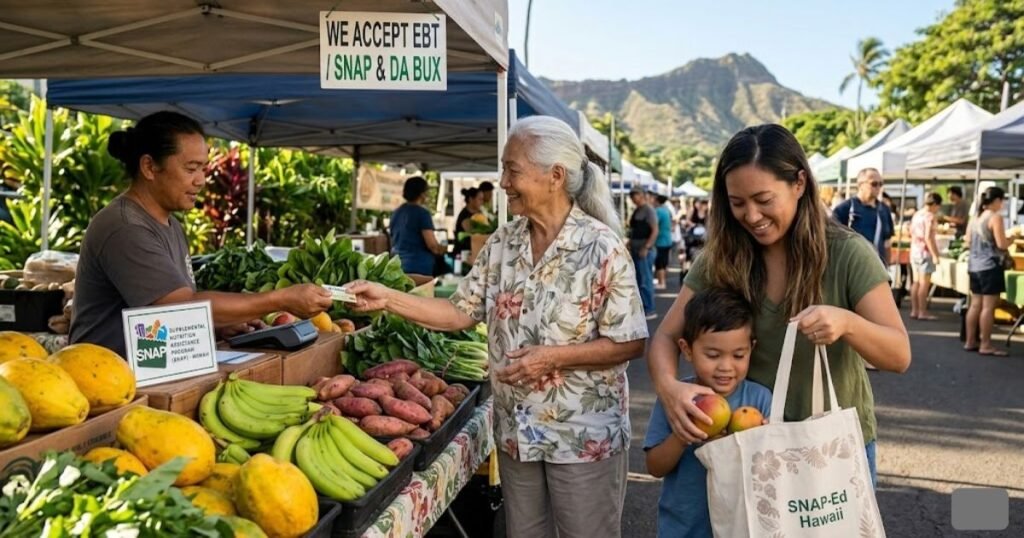
What Is SNAP in Hawaii?
The acronym SNAP stands for the Supplemental Nutrition Assistance Program. At its core, this is a federal food assistance program funded by the United States Department of Agriculture (USDA), but it is administered locally at the state level. In the Aloha State, the Hawaii Department of Human Services (DHS) oversees the program, ensuring that resources reach those who need them most.
The primary goal of SNAP Hawaii is to eliminate food insecurity and improve nutrition among low-income households. Decades ago, the program relied on paper coupons or stamps, which is why older generations still remember it as the food stamp program. Today, the system is entirely electronic, highly efficient, and designed to protect the privacy and dignity of its participants.
When you are approved for the program, your monthly allowance is deposited electronically onto a debit-like card known as the Hawaii EBT card (Electronic Benefit Transfer). You use this card just like a standard bank card at the grocery store register, making the checkout process smooth, discreet, and simple.
READ MORE: How to Apply for SNAP Benefits as a Low-Income Older Adult
Who Can Get SNAP Benefits in Hawaii?
A common misconception is that food assistance is only available to individuals who are completely out of work. In reality, Hawaii SNAP eligibility covers a broad spectrum of island residents. This includes individuals who work full-time but earn low wages, people living on fixed incomes (such as Social Security or disability), seasonal workers, and large families trying to balance multiple expenses.
To determine if you qualify, the state looks at several core factors:
- Residency: You must be a current resident of the state of Hawaii.
- Household Composition: SNAP defines a “household” as a group of people who live together and buy and prepare their meals together. A household can be a single person living alone, a traditional family, or even roommates who share food costs.
- Citizenship Status: U.S. citizens and certain qualified legal non-citizens (such as lawful permanent residents who have lived in the country for at least five years, or those receiving disability-related assistance) are eligible to apply.
- Income Limits: Your household’s total income must fall below specific thresholds, which are adjusted to reflect Hawaii’s unique economic climate.
Special Rules for Vulnerable Groups
The state recognizes that certain populations face unique hurdles when it comes to food security. Because of this, there are more flexible pathways to qualification for:
- Seniors (Individuals aged 60 or older): Asset rules are relaxed, and medical deductions can help higher-income seniors qualify.
- Individuals with Disabilities: Adults receiving total disability benefits face more lenient screening processes similar to those for seniors.
- Families with Children: Broad-based programs ensure that households with dependents can access benefits more readily to prevent childhood nutritional deficiencies.
READ MORE: Low Income Home Energy Assistance Program: LIHEAP Benefits and How to Apply
Hawaii SNAP Income Limits
Because the cost of groceries in Hawaii is significantly higher than in the continental United States, the federal government establishes separate, higher income limits specifically for the islands. Hawaii utilizes a policy called Broad-Based Categorical Eligibility (BBCE). Under these rules, most households can qualify if their gross monthly income is at or below 200% of the Federal Poverty Level (FPL).
When evaluating an application, DHS evaluates two types of income:
- Gross Income: This is your total household income before any taxes or deductions are taken out. This includes wages from work, Social Security checks, pensions, and child support.
- Net Income: This is your income after allowable deductions are subtracted. Deductions can include a standard deduction for household size, housing costs, utility allowances, and out-of-pocket medical expenses for seniors or disabled members.
The table below outlines the maximum monthly income limits based on household size for the current period.
Hawaii Monthly Gross Income Limits (2025–2026)
| Household Size | Maximum Monthly Gross Income (200% of Poverty Level) |
| 1 Person | $3,000 |
| 2 People | $4,054 |
| 3 People | $5,110 |
| 4 People | $6,164 |
| 5 People | $7,220 |
| 6 People | $8,274 |
| 7 People | $9,330 |
| 8 People | $10,384 |
| Each Additional Member | Add $1,056 |
Important Note on Assets: Under Hawaii’s BBCE guidelines, most households are not subject to an asset or savings limit when applying. However, if a household member has been disqualified from SNAP due to a program violation, or if the household contains a senior or disabled member with an income exceeding the 200% limit, a standard asset limit of $4,500 applies to cash, savings, and bank accounts.
What Can You Buy With SNAP in Hawaii?
Once you receive your food benefits, they are strictly reserved for purchasing food items meant for household consumption. The program cannot be used to buy non-food items or hot, ready-to-eat prepared meals from grocery hot bars.
Understanding what is permitted helps you plan your shopping trips effectively and prevents confusion at the register.
Allowed Food Items
You can use your Hawaii EBT card to buy a wide variety of nutritious items, including:
- Fruits and vegetables: Fresh, frozen, canned, or dried produce.
- Meat, poultry, and fish: Fresh cuts, ground meats, frozen seafood, or canned varieties.
- Dairy products: Milk, cheese, yogurt, butter, and plant-based alternatives like soy or almond milk.
- Breads and cereals: Whole grain breads, tortillas, rice, oats, and breakfast cereals.
- Other foods: Snack foods, non-alcoholic beverages, seeds, and plants that produce food for the household to eat.
Prohibited Items
The following items are strictly excluded from the program, and the register will automatically decline them if you try to pay with your EBT card:
- Hot, prepared foods: Rotisserie chickens, hot bentos, or food court items meant to be eaten immediately in the store.
- Alcohol and tobacco: Beer, wine, liquor, cigarettes, or electronic smoking devices.
- Vitamins and medicines: Any items that feature a “Supplement Facts” label rather than a “Nutrition Facts” label (such as protein powders, vitamins, or dietary supplements).
- Non-food items: Pet food, cleaning supplies, paper towels, soaps, cosmetics, and household items.
The “DA BUX” Program: Doubling Your Produce Value
One of the best perks of receiving Hawaii SNAP benefits is the ability to participate in the local DA BUX Double Up Food Bucks program. At participating local grocery stores and farmers markets across the islands, when you spend your SNAP benefits on qualifying, locally grown Hawaii fruits and vegetables, you receive a 50% discount (up to $20 per day). This effectively doubles your purchasing power, helping you support local farmers while keeping fresh, indigenous produce on your table.
READ MORE: Difference Between Medicare and Medicaid Coverage
How to Apply for SNAP in Hawaii
Taking the first step to apply for public assistance can feel overwhelming, but the state has provided several convenient ways to submit an application. You can choose the method that best aligns with your comfort level, technology access, and physical mobility.
Step 1: Gather Your Documentation
Before filling out the forms, gathering your paperwork will save you an immense amount of time. The state must verify your identity, income, and living situation. Try to have copies of the following documents ready:
- Proof of Identity: A valid driver’s license, state ID card, or passport.
- Social Security Numbers: Required for all household members applying for benefits.
- Proof of Income: Recent pay stubs (usually for the past 30 days), profit and loss statements if self-employed, or benefit award letters from Social Security, pensions, or unemployment.
- Shelter Expenses: Your current lease agreement, mortgage statement, property tax bills, and utility invoices (electricity, water, gas).
- Medical Expenses (For Seniors/Disabled): Out-of-pocket medical receipts, pharmacy printouts, or insurance premium statements.
Step 2: Choose Your Application Method
Online (Fastest Option)
The quickest way to apply is through the official State of Hawaii digital portal. You can visit the Hawaii Department of Human Services (DHS) electronic benefits website (benefits.ehawaii.gov). You will need to create a secure account, complete the guided digital questionnaire, and upload photos or scans of your verification documents directly from your computer or smartphone.
In-Person
If you prefer face-to-face assistance, you can visit a local DHS Benefit, Employment and Support Services Division (BESSD) processing center. Offices are located across all major islands, including Oahu, Maui, Kauai, Molokai, Lanai, and the Big Island. Staff members can provide you with a physical application, answer questions, and accept your completed paperwork on the spot.
By Mail or Fax
If you cannot travel to an office and do not have internet access, you can call your local processing center to request that a paper application form be mailed to your home. Alternatively, you can download and print the application form from the official DHS website, fill it out by hand, and mail or fax it to the nearest processing office.
How Long Does It Take to Get Approved?
Once your application is officially stamped as received by the Department of Human Services, the standard processing timeline is 30 calendar days. During this window, a eligibility worker will review your documents and contact you to schedule an interview. These interviews are typically conducted over the telephone, meaning you do not have to worry about arranging transportation to an office.
Emergency / Expedited SNAP Benefits
If your household is in an extremely dire financial situation, you might not have 30 days to wait for food assistance. Hawaii offers an accelerated process known as Expedited SNAP. If you qualify for this emergency track, the state must issue your benefits within 7 calendar days of receiving your application.
You may qualify for Expedited SNAP if your household meets any of the following criteria:
- Your monthly gross income is less than $150 and your liquid cash or bank account balances total $100 or less.
- Your combined monthly gross income and liquid resources are less than your total monthly housing rent/mortgage and utility bills.
- You are a member of a seasonal or migrant farmworker household with critically low funds.
When you submit an application, the state automatically screens it for these conditions. If your situation is urgent, make sure to state your income and housing costs clearly on the front page so the worker can flag your file immediately.
READ MORE: Reverse Mortgage Line of Credit Explained: Unlock Your Home Equity
How Hawaii SNAP Benefits Are Paid
If your application is approved, you will receive a formal notice in the mail detailing your monthly benefit allotment and the date your certification period begins. Your funds will be distributed monthly via the state’s Electronic Benefit Transfer system.
As shown above, the Hawaii EBT card is officially known as the Kōkua Card. This card operates securely using a Personal Identification Number (PIN) that you select when you first receive it.
Key Facts About Using Your Kōkua Card:
- Automatic Monthly Loads: Your benefits are automatically added to your card on the exact same calendar day every month. The specific deposit date is determined by the first letter of your last name.
- Balance Rollover: If you don’t spend all your benefits within a single month, don’t panic. Any remaining balance rolls over automatically into the next month. However, you must use your card at least once every few months to keep the account active and prevent benefits from expiring.
- Checking Your Balance: You can verify your real-time account balance before shopping by checking your last grocery receipt, logging into the cardholder website, or calling the toll-free customer service number printed on the back of the card.
- Where to Use It: The card is accepted at major supermarkets, convenience stores, wholesale clubs, and an increasing number of local open-air farmers markets throughout Hawaii.
SNAP for Seniors in Hawaii
The state places a high priority on ensuring that older adults have access to proper nutrition. Sadly, many kupuna (grandparents or elders) who qualify for the Hawaii food assistance program hesitate to apply. Some believe that the program is intended only for younger families with children, while others worry that they will only receive a negligible amount of money each month, making the paperwork feel not worth the effort.
In reality, the average monthly SNAP benefit in Hawaii for a household containing an older adult is approximately $373. This is significantly higher than the national average, thanks to Hawaii’s distinct cost-of-living adjustments. This extra financial support can dramatically shift a senior’s monthly budget, freeing up precious cash to cover rising prescription medication costs, copays, or utility bills.
Crucial Benefits and Adjustments Designed for Seniors
If you are 60 years of age or older, the program features several special considerations built just for you:
- The Out-of-Pocket Medical Deduction: This is perhaps the most significant rule change for older adults. If you have recurring medical expenses that exceed $35 a month and are not covered by Medicare or private health insurance, you can report them to your caseworker. This includes pharmacy prescriptions, dental treatments, hearing aid batteries, transportation costs to doctor appointments, and Medicare premiums. These expenses are deducted directly from your income calculation, which often yields a much higher monthly food allotment.
- Lenient Living Arrangements: If you are a senior who lives with your adult children or other relatives but you buy and prepare your meals separately from them, you can apply as an independent, single-person household. This ensures that their larger salaries won’t disqualify you from receiving your own food assistance.
- Simplified Reporting: Seniors on fixed incomes are often placed into a simplified reporting tier, meaning you only need to renew your eligibility occasionally rather than dealing with frequent paperwork check-ins.
READ MORE: Salvation Army Free Car Program (Eligibility & How to Apply)
Common Reasons Applications Get Delayed or Denied
No one wants to go through the effort of completing a long application form only to face a delay or a denial letter. Understanding the common administrative tripwires can help you keep your application on track.
- Missing Verification Documents: By far, the number one reason applications stall is that applicants forget to submit proof of income or identification. If the state has to send you a letter requesting missing forms, the clock stops until you provide them, pushing your approval date back by weeks.
- Unreported Household Members: If you live with roommates, relatives, or children, you must list everyone residing in your home on the application. Failing to list everyone—even if you don’t buy food with them—can look like an intentional omission and cause significant delays while the state clarifies your household size.
- Missing the Scheduled Phone Interview: After submitting your paperwork, the DHS office will mail you a date and time for your required phone interview. If you do not answer the phone when the eligibility worker calls, they will move on to the next file. It is your responsibility to call back and reschedule immediately to prevent your application from being denied for failure to complete the process.
- Math and Income Discrepancies: If you write down an income figure that doesn’t match the numbers displayed on your attached pay stubs or benefit letters, the automated system will flag your file for manual reconciliation, slowing the processing timeline down.
How to Keep Receiving Benefits
Once you are approved for SNAP Hawaii, your benefits are active for a specific period known as a “certification period.” For traditional households, this period usually lasts 6 months, while seniors or disabled individuals on fixed incomes may receive a certification period lasting up to 12 or 24 months.
To ensure your food funds continue arriving without interruption, you must adhere to two important upkeep steps:
Mid-Term Simplified Reporting
Halfway through your certification period, most households are required to submit a brief form called a Six-Month Report. This document asks you to confirm if your circumstances have changed significantly. You must report changes such as:
- Your household’s gross monthly income changes by more than a specified threshold.
- Someone moves into or out of your home.
- You change your residential address (this is critical so you don’t miss important mail notices).
Annual Recertification
At the end of your certification period, you will receive an official Renewal Notice. Think of this as a mini-reapplication. You will need to fill out a renewal form, provide updated proof of your current income, and participate in a brief follow-up phone interview. If you complete this step promptly before the deadline stated on the letter, your Kōkua Card will remain active and funded without a single day of interruption.
READ MORE: How to Claim Supplemental Nutrition Assistance Program Florida
Helpful Tips for Hawaii Residents
A few simple habits can make the process easier:
- Keep all SNAP paperwork in one folder.
- Answer phone calls and mail from DHS quickly.
- Save your confirmation number if you apply online.
- Ask for language help if you need it; Hawaii’s application materials say free interpreter services are available.
- Use only official Hawaii DHS resources for the latest rules and forms.
If you are helping an older parent, grandparent, or neighbor apply, it can help to sit with them while they gather papers and fill out the application. For many seniors, that small bit of support makes the whole process feel much less stressful.
Quick Reference Summary
To help you digest this information at a single glance, here is a breakdown of the vital takeaways regarding the Hawaii food assistance program.
- Who May Qualify: Hawaii residents, including low-income workers, families, seniors (60+), and disabled individuals whose household income falls below 200% of the Federal Poverty Level.
- What Documents Are Needed: Photo identification, Social Security numbers for all applicants, recent proof of gross income, housing/utility cost records, and medical bills (for seniors).
- What SNAP Can Buy: Bread, cereals, grains, dairy products, meats, fish, poultry, fresh fruits, vegetables, and seeds/plants that grow food.
- How to Apply: Apply quickly online via benefits.ehawaii.gov, visit a regional DHS processing office in person, or request a physical application form by mail.
- What Seniors Should Know: The average benefit for seniors in Hawaii is around $373 monthly. Out-of-pocket medical costs can be used as deductions to boost your monthly allotment, and assets are generally not counted under standard eligibility.
READ MORE: Best Smart TV for Seniors in 2026: Easy to Use & Large Screen Picks
Conclusion
Access to fresh, wholesome food is a fundamental human need, not an island luxury. The Supplemental Nutrition Assistance Program Hawaii exists to ensure that no individual or kupuna has to choose between paying for their prescription medications, keeping the lights on, or putting an authentic, healthy meal on their table.
If you are feeling the financial squeeze of Hawaii’s grocery prices, don’t let pride or confusion stand in your way. Take a look at the income charts, gather your basic paperwork, and submit your application today. It’s a completely confidential program designed to give you the leg up you deserve, helping you live comfortably and healthily in the beautiful place you call home.
Frequently Asked Questions (FAQs)
What is the Supplemental Nutrition Assistance Program in Hawaii?
It is the federal SNAP food assistance program, administered in Hawaii by the Department of Human Services, to help eligible residents buy groceries with EBT benefits.
Who qualifies for SNAP benefits in Hawaii?
Eligibility depends on household size, income, residency, and other rules. Seniors and disabled adults may be subject only to the net income test, and some households may qualify under Hawaii’s broad-based categorical eligibility rules.
How do I apply for Hawaii food stamps online?
Hawaii DHS says you can apply through the online application portal, or submit a paper form by mail or drop-off. After applying, you will usually need to complete an interview.
How much money can a senior get from SNAP in Hawaii?
There is no single amount for every senior. The benefit depends on income, deductions, and household size. For FY 2026, Hawaii’s maximum monthly allotment for a one-person household is $506, but many people receive less than the maximum.
What can you buy with a Hawaii EBT card?
You can buy most foods and seeds or plants that grow food. You cannot use SNAP for alcohol, tobacco, pet food, vitamins, soap, household supplies, or hot prepared foods.