Retirement has always been viewed as a “golden age”—a time to slow down, enjoy the fruits of your labor, and focus on what truly matters. But as we move further into 2026, the definition of a great retirement is evolving. Today’s seniors aren’t just looking for a comfortable chair and a golf course; they are looking for a lifestyle that aligns with their values.
In the USA, a significant shift is happening. Many older adults are choosing sustainable retirement communities as their preferred way to age. Why? Because these “green” communities offer a unique trifecta of benefits: superior comfort, lower long-term costs, and a healthier environment.
Whether you are a retiree looking for your next home or an adult child helping a parent navigate their options, understanding the rise of eco-friendly retirement communities is essential. It’s no longer just about “being green” for the sake of the planet, it’s about living better. This article will guide you through everything you need to know about this smarter, more conscious way to enjoy your senior years. Lets deep dive into ‘Sustainable Retirement Communities: Benefits, Features, and Senior Living Tips”
READ MORE: Best Health Tracking Smartwatch for Seniors 2026 — Top 8 Picks Compared
What Are Sustainable Retirement Communities?
If the term “sustainable” sounds a bit like technical jargon, don’t worry. At its heart, a sustainable retirement community is simply a neighborhood designed to work with nature rather than against it. These communities are built with the future in mind, using smart design and modern technology to reduce waste and maximize comfort.
In simple language, these communities focus on several core pillars:
- Energy-Efficient Buildings: Homes are built with high-quality insulation and high-performance windows. This keeps the heat in during the winter and the cool air in during the summer, without making the HVAC system work overtime.
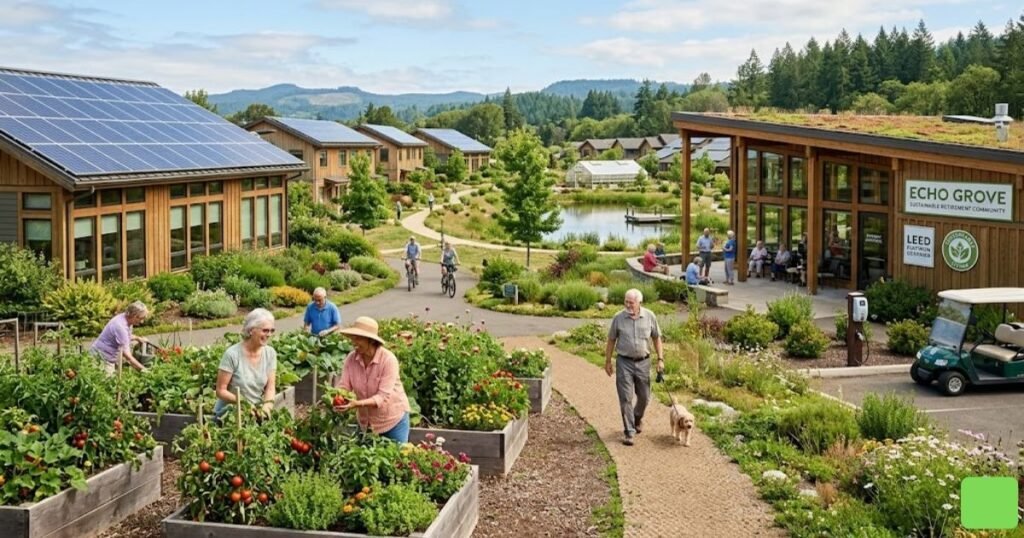
- Solar Power: Many retirement communities in the USA now feature rooftop solar panels or community solar farms, significantly reducing or even eliminating monthly electricity bills.
- Water-Saving Systems: From low-flow faucets to “graywater” systems that recycle water for landscaping, these communities are experts at conservation.
- Healthier Indoor Air: By using non-toxic building materials and advanced filtration systems, the air inside these homes is often much cleaner than in traditional houses.
- Green Spaces: Instead of endless concrete, you’ll find native plants, community gardens, and preserved natural habitats that encourage local wildlife.
By combining these elements, sustainable senior housing creates an environment that is gentle on the Earth and incredibly supportive of the people living within it.
READ MORE: Residential Senior Care Homes Near Me | Find, Compare, Cost & Save
Why Sustainable Retirement Communities Matter
You might be wondering, “Why should I choose a green community over a traditional one?” The answer lies in how these choices affect your daily life. Senior living sustainability isn’t just a trend; it’s a practical solution to many of the challenges retirees face today.
1. Lower Utility Costs
One of the biggest stresses in retirement is a fixed income meeting rising energy prices. Sustainable homes are often “sealed” better and use energy-efficient appliances, leading to dramatically lower utility bills.
2. More Comfortable Living
Have you ever sat in a room that felt “drafty” even with the heat on? Sustainable construction eliminates these “cold spots.” With better insulation and smart thermostats, your home maintains a consistent, comfortable temperature year-round.
3. Healthier Surroundings
Traditional building materials can sometimes “off-gas” chemicals (known as VOCs). Green communities prioritize natural materials and high-end air filtration, which can be a game-changer for seniors with respiratory issues or allergies.
4. Less Maintenance
Eco-friendly materials, like composite decking or drought-resistant landscaping, are often much more durable than traditional options. This means less time worrying about repairs and more time enjoying your hobbies.
5. Peace of Mind for Families
For adult children, knowing that a parent is in a community that is safe, healthy, and financially stable provides immense relief. These communities are often built to higher safety standards (like LEED v5 or Passive House), ensuring they stand the test of time.
READ MORE: Best Luxury Assisted Living Facilities Near Me — Costs, Amenities & Top Picks
Key Features of a Sustainable Retirement Community
What exactly does a “green” home look like? When you tour environmentally friendly retirement communities, keep an eye out for these specific features. They are the building blocks of a green retirement lifestyle.
- Solar Panels and Battery Storage: Modern communities use solar energy to power everything from streetlights to the clubhouse. Some even have backup battery systems (like the Tesla Powerwall) to keep the lights on during power outages.
- LED Lighting: It sounds small, but LED bulbs use 75% less energy and last 25 times longer than incandescent bulbs.
- Energy-Star Appliances: High-efficiency washers, dryers, and refrigerators save water and electricity with every use.
- Walkable Layouts: These communities are designed so that the mailroom, the gym, and the dining hall are all within a short, pleasant walk, reducing the need for a car.
- Community Gardens: Many residents love the “farm-to-table” lifestyle, growing their own organic vegetables in shared plots.
- Recycling and Composting Programs: Robust systems make it easy to reduce waste without the hassle.
- Low-Flow Water Fixtures: Toilets and showerheads that use less water without sacrificing water pressure.
- Eco-Friendly Transportation: On-site electric vehicle (EV) charging stations and electric shuttle services for trips to town.
- Accessible Design: Features like “no-step” entries and wide doorways are often standard, blending sustainability with “aging in place” logic.
Health and Wellness Benefits for Seniors
The connection between our environment and our health is undeniable. Green senior living isn’t just about saving electricity; it’s about creating a “wellness sanctuary.”
1. Improved Respiratory Health
Clean air is vital. Sustainable communities often use MERV 13 or HEPA filtration, which removes dust, pollen, and pollutants. For seniors with asthma or COPD, this can lead to a noticeable improvement in daily breathing.
2. The Power of Natural Light
Sustainable design prioritizes “daylighting”—using large, strategically placed windows to flood the home with natural light. This helps regulate your circadian rhythm, leading to better sleep and a more positive mood.
3. Active Lifestyles
When a community is built with walking trails and beautiful parks, you’re naturally more inclined to stay active. Whether it’s a morning stroll or a bird-watching group, the environment encourages movement.
4. Reduced Stress and “Biophilia”
Biophilia is the idea that humans have an innate connection to nature. Living in a place where you can see trees, water, and gardens from your window has been scientifically proven to lower cortisol (the stress hormone) and blood pressure.
READ MORE: Best Senior Assisted Living Communities Near Me — Costs, Comparison
How Sustainable Communities Save Money
Financial security is a top priority for any retiree. While some people assume that “eco-friendly” means “expensive,” the reality in 2026 is that affordable sustainable senior living is becoming the standard. The savings happen in several layers:
1. The “Efficiency Dividend”
In a traditional 2,000-square-foot home, heating and cooling can cost hundreds of dollars a month. In a home built to Passive House standards, the energy demand is so low that those costs can drop by 80% or more.
2. Reduced Water Bills
By using “smart” irrigation that only waters when the soil is dry and installing high-efficiency fixtures, residents can save thousands of gallons of water per year.
3. Longevity of Materials
Sustainable homes often use high-quality, sustainable materials like metal roofing or fiber-cement siding. These materials may cost more at the start, but they don’t rot or warp like wood, meaning you won’t be hit with a massive repair bill ten years down the road.
4. Shared Amenities
In these communities, you aren’t paying for a private pool or a private gym that you have to maintain yourself. You share high-end, eco-friendly amenities with your neighbors, spreading the cost and reducing the individual burden.
What to Look for Before Choosing a Retirement Community
Choosing where to spend your retirement is a big decision. If you’re looking specifically for sustainable retirement communities, here is a checklist of what to evaluate:
- Green Certifications: Look for labels like LEED (Leadership in Energy and Environmental Design), Energy Star, or Phius (Passive House). These prove the community has met strict third-party standards.
- Monthly Fees: Ask for a transparent breakdown. Do the fees cover utilities? If the community is solar-powered, how is that reflected in your bill?
- Location and Climate Resilience: Is the community built to handle local weather (e.g., wildfires in the West, hurricanes in the East)? Sustainable design should include resilience.
- Healthcare Access: Even the greenest community needs to be near quality doctors and hospitals. Many modern CCRCs (Continuing Care Retirement Communities) offer on-site care.
- Transportation Options: If you stop driving, how will you get around? Look for electric shuttles or proximity to public transit.
- Safety Features: Check for non-slip flooring, emergency call systems, and well-lit walkways.
- Social Activities: A sustainable life is a social life. Ensure there are clubs, classes, and events that interest you.
- Dining Options: Does the dining hall serve locally sourced or organic food?
READ MORE: Best Wireless Earbuds for Senior Runners: 2026 Top Picks
Sustainable Retirement Communities vs. Traditional Senior Living
To help you visualize the difference, let’s look at how these two options compare side-by-side:
| Feature | Traditional Senior Living | Sustainable Retirement Communities |
| Energy Source | Mostly fossil fuels (Grid) | Heavy use of Solar/Renewables |
| Air Quality | Standard ventilation | High-grade HEPA/Advanced filtration |
| Utility Costs | Subject to market fluctuations | Low, predictable, or “Net Zero” |
| Landscaping | High-water lawns/Chemicals | Native plants/Edible gardens |
| Construction | Standard code-minimum | High-performance (LEED/Passive House) |
| Long-term Value | Higher depreciation of materials | Higher resale/retention value |
| Lifestyle | Indoor-focused | Indoor-Outdoor integrated |
While traditional communities are often comfortable, they lack the future-proofing that comes with green senior living. Choosing a sustainable path is an investment in both your wallet and your well-being.
Examples of Eco-Friendly Amenities Seniors May Enjoy
What does a typical Tuesday look like in an environmentally friendly retirement community? It might involve:
- The Morning Walk: Waking up and hitting a mile-long walking trail that winds through a protected meadow.
- The Garden Club: Meeting neighbors at the community greenhouse to start seedlings for the spring vegetable garden.
- Electric Shuttles: Taking a quiet, emissions-free shuttle to the local theater or shopping center.
- The Fitness Suite: Exercising in a gym where some of the machines actually “give back” energy to the building’s grid.
- Al Fresco Dining: Enjoying a meal on a terrace designed with “passive cooling” (natural breezes and shade) so it’s comfortable even in the July heat.
- Wellness Programs: Participating in outdoor yoga or meditation sessions in “Zen gardens” designed for relaxation.
READ MORE: Best OTC Hearing Aids for Tinnitus (2026) | Affordable & Effective Picks
Are Sustainable Retirement Communities Affordable?
This is the question everyone asks: “Can I afford to go green?”
The honest answer is that it depends. Some sustainable senior housing projects have a slightly higher “buy-in” or entrance fee because the technology used to build them (solar, thick insulation, smart systems) costs more upfront.
However, the monthly operating costs are almost always lower. When you calculate your total cost of living over 10 or 20 years, the sustainable option often comes out as the more affordable choice.
Affordability is also shaped by:
- Location: A community in a rural area will generally be cheaper than one in a major coastal city.
- Level of Care: Independent living is the most affordable, while memory care or skilled nursing adds to the cost due to staffing.
- Housing Type: A studio apartment will be much more budget-friendly than a detached “green cottage.”
There are also more affordable sustainable senior living options emerging as government incentives for green building increase, allowing developers to pass those savings on to you.
Questions to Ask Before Signing a Lease or Buying In
Before you make your move, take this list of questions to your meeting with the community director:
- “What specific sustainability certifications does this building have?”
- “Can you show me a typical utility bill for a resident in this unit?”
- “How does the community handle waste and recycling?”
- “What happens if there is a power outage? Do you have solar backup?”
- “Are the cleaning products used in common areas non-toxic?”
- “Is the community age-restricted (e.g., 55+ or 62+)?”
- “What healthcare services are available if my needs change?”
- “Is there a waiting list for the most energy-efficient units?”
Don’t be afraid to dig deep. A truly sustainable community will be proud to share these details with you.
READ MORE: LiDAR ECOVACS Goat Lawn Mowers for Seniors: Review, Comparison & Top Picks
Final Thoughts:
Choosing a sustainable retirement community is about more than just “saving the planet.” It’s about choosing a life that is simpler, healthier, and more connected to the world around you.
In 2026, we have the technology to live in homes that are warm in the winter, cool in the summer, and cost very little to run. For seniors, this means more money for travel, family, and hobbies, and less time spent worrying about bills or maintenance. It means breathing cleaner air and enjoying the beauty of nature every single day.
FAQ:
What is a sustainable retirement community?
A sustainable retirement community is a senior living community designed to use less energy, save water, reduce waste, and support a healthier environment while still offering comfort and convenience.
Are sustainable retirement communities more expensive?
Some may cost more at first, but they can save money over time through lower utility bills, less maintenance, and efficient design. The total cost depends on location, services, and care level.
What features make a retirement community sustainable?
Common features include solar power, energy-efficient appliances, LED lighting, water-saving fixtures, recycling programs, walkable layouts, community gardens, and eco-friendly transportation.
Do sustainable retirement communities help lower monthly costs?
They can. Lower energy use, less water use, and reduced maintenance may help control monthly expenses over time, especially in communities where utilities are included.
How do I choose the best eco-friendly retirement community in the USA?
Look at monthly fees, location, healthcare access, transportation, safety, accessibility, sustainability features, amenities, social activities, and dining options before deciding.
READ MORE: Salvation Army Free Car Program (Eligibility & How to Apply)