Finding the right place to live after 55 is a big decision. For many years, retirement meant moving to a quiet place where everything was slow. People thought that once you reached a certain age, you only wanted to be around people your own age. They thought retirement was about “slowing down” and staying away from the noise of the younger world.
Times have changed. Today, many older adults are looking for something different. They want more than just a quiet porch and a golf course. They want to stay connected to the world. They want to feel useful and energized. This is why 55+ communities with intergenerational social programs are becoming so popular.
Living in an active adult community does not have to mean living in a bubble. In fact, some of the best senior living communities today are opening their doors to the younger generation. They are creating spaces where seniors and children, or seniors and young adults, can learn from each other.
In this article, we will explore why these programs are a smarter way to live. We will look at how they work, why they make life better, and how you can find the right community for yourself or a loved one.
READ MORE: Best Luxury Assisted Living Facilities Near Me — Costs, Amenities & Top Picks
What Are Intergenerational Social Programs?
At its heart, an intergenerational program is any activity that brings different age groups together. In the context of community living for older adults, these programs are intentional. They aren’t just random meetings at a park. They are planned events designed to help people connect across generations.
Imagine a senior living community that shares a campus with a preschool. Or a community that partners with a local university. These programs create a “bridge” between age groups. They allow older adults to share their wisdom and experience. At the same time, they give younger people a chance to learn from someone who has “been there and done that.”
These programs can take many forms. They might be:
- Mentorship programs where seniors help students with schoolwork.
- Art classes where grandmothers and teenagers paint side-by-side.
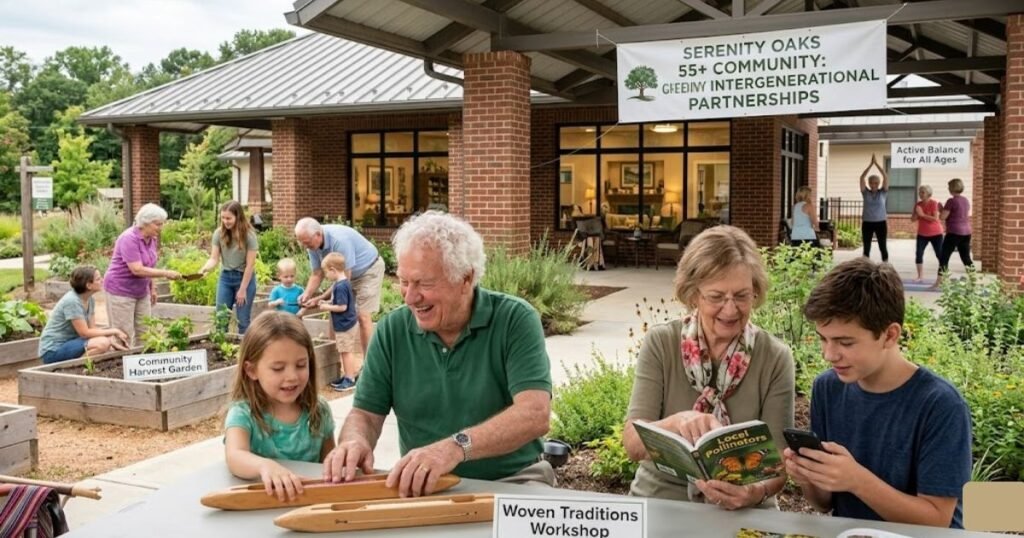
- Community gardens where children learn how to plant seeds from a master gardener.
The goal is simple: to break down the walls that often separate age groups in modern society. It is about creating a village feel within a modern housing development.
READ MORE: Residential Senior Care Homes Near Me | Find, Compare, Cost & Save
Why These Programs Matter in 55+ Communities
Why should someone look for 55+ communities with intergenerational social programs? It comes down to how we feel every day. Humans are social creatures. We aren’t meant to live in isolation with only people who look and act exactly like us.
1. Less Loneliness
Loneliness is a real health risk as we get older. Sometimes, moving into a senior-only space can feel a bit isolating. You might miss the energy of a neighborhood with kids playing or young families moving in. Intergenerational programs bring that energy back. They provide regular, meaningful social contact that keeps the “blues” away.
2. More Meaningful Friendships
Friendship doesn’t have an age limit. Many seniors find that they have a lot in common with younger people. A 70-year-old and a 20-year-old might both love jazz music or coding. When these two meet, they form a bond based on interests, not just age. This adds a rich layer to senior lifestyle and connection.
3. More Mental Stimulation
Talking to someone younger forces your brain to work differently. You might learn new slang, hear about new technology, or see the world through a fresh set of eyes. This kind of “brain exercise” is vital for cognitive health. It keeps you sharp and curious.
4. A Stronger Sense of Purpose
We all want to feel like we matter. When a senior helps a child learn to read, or gives career advice to a college student, they see their value. They aren’t just “retired.” They are mentors. They are teachers. They are essential parts of the community. This leads to aging with purpose, which is one of the biggest keys to a long, happy life.
READ MORE: Best Health Tracking Smartwatch for Seniors 2026 — Top 8 Picks Compared
Common Types of Intergenerational Programs
If you are touring active adult communities, you should ask what kind of events they host. Not every program looks the same. Here are some of the most common and successful examples of multigenerational activities:
- Shared Gardening Projects: Many communities have community gardens. Working the soil together is a great way to talk without pressure. Kids learn where food comes from, and seniors get to share their green-thumb secrets.
- Reading and Literacy: Some communities partner with local elementary schools. Seniors can volunteer as “Reading Buddies.” It’s a quiet, low-impact way to make a huge difference in a child’s life.
- Technology Help Sessions: This is a fan favorite. Local high school students often visit communities to help residents with their smartphones, tablets, or social media. In return, the seniors often share life stories or career advice. It is a perfect exchange of skills.
- Art and Music Workshops: Whether it’s a choir that includes both seniors and students or a pottery class, creative arts are a universal language. It’s hard to feel old when you are making something beautiful with a young person.
- Mentorship and Storytelling: Some communities host “storytelling nights.” Seniors share historical perspectives or personal life lessons. Younger people gain a sense of history that they can’t get from a textbook.
- Fitness and Wellness Classes: Think of a “walking club” that includes local moms with strollers and retirees. It keeps everyone moving and creates a natural way to chat while getting some sun.
READ MORE: Best Wireless Earbuds for Senior Runners: 2026 Top Picks
What Seniors Gain From These Communities
When you choose a community that prioritizes senior community events with a multigenerational twist, you are investing in your own health. The benefits aren’t just “nice to have”—they are life-changing.
1. Connection
People thrive when they feel part of something. A community that encourages interaction can help seniors feel less alone and more included. This is one of the biggest reasons many families look for senior living communities with stronger social support.
2. Confidence
Trying new activities can build confidence. A resident who joins a music class, helps at a school event, or leads a story session may feel proud of what they can offer. That feeling can carry into the rest of life.
3. Routine
A steady schedule helps many older adults feel grounded. Intergenerational programs add structure in a positive way. A weekly art class or monthly volunteer day gives the week shape.
4. Learning
Learning is not just for younger people. Seniors often enjoy learning from others, especially when the setting feels relaxed. A conversation with a teen about technology or a child about school can be surprisingly energizing.
5. Emotional health
Staying socially engaged can support emotional balance. It can also make hard days feel less heavy. Friendly faces, regular events, and shared activities all help create a more supportive environment.
6. A feeling of being needed
Many older adults do not want to be treated like they are finished contributing. They want to matter. Intergenerational programs remind them that their voice, experience, and presence still count.
READ MORE: Best Wireless TV Headphones for Seniors (2026) – Clear Sound & Easy Setup
What Families Should Look For
Adult children often help their parents look for senior living communities. If you are in this position, you want to make sure your parent will be happy, not just safe. You want them to have a life that is full and vibrant.
When you visit a community, look past the granite countertops and the fancy lobby. Look at the activity calendars. Is every event just “Bingo” and “Bridge”? Or do you see “Youth Partnership Program” or “University Lecture Series”?
Here are a few things to keep an eye on:
- Resident Engagement: Do the people living there look like they are enjoying themselves? Are they talking to each other in the halls?
- Staff Enthusiasm: Ask the activities director about their intergenerational plans. If they get excited and have lots of examples, that is a great sign.
- Accessibility: If a program involves kids or students coming to the property, is the space easy for everyone to use? Are there comfortable places to sit and talk?
- Transportation: Does the community provide buses for seniors to go to local schools or community centers for these programs?
Questions to Ask Before Choosing a Community
Before you sign a lease or buy a home, bring a list of questions. You want to know that the social programs for seniors are real and not just something they put in a brochure.
- What specific intergenerational programs do you offer right now?
- How often do these events happen (weekly, monthly, or once a year)?
- Are the programs held on-site, or do residents need to travel?
- Is there a cost to participate in these activities?
- Are these programs optional, or is there a “community feel” that encourages everyone to join?
- Can my own grandchildren participate in these programs when they visit?
- Which local schools or organizations do you partner with?
READ MORE: Best Smart TV for Seniors in 2026: Easy to Use & Large Screen Picks
Who Benefits Most From These Communities?
While almost everyone can enjoy a mixed-age environment, some people are a perfect fit for 55+ communities with intergenerational social programs.
You might love this lifestyle if:
- You were a teacher or a coach. If you spent your life working with people, you might miss that interaction after you retire.
- You live far from family. If your own grandkids live across the country, being around local kids can fill that “grandparent-shaped” hole in your heart.
- You are a lifelong learner. If you love staying up-to-date on new ideas and trends, being around younger people is the best way to do it.
- You want to stay active. Younger energy can be a great motivator to get out and do things.
If you are someone who craves a quiet, library-like atmosphere 24/7, a very active intergenerational community might be a bit much. But for those who want a “smarter way to enjoy active senior living,” it is often the perfect choice.
READ MORE: Best Medical Alert Systems for Seniors | Top Picks & Reviews
Why This Lifestyle Feels So Relevant Now
Today, many older adults want more than a place to live. They want a place that feels connected to real life. That is where 55+ communities with intergenerational social programs stand out.
They offer a way to enjoy independence without feeling cut off. They support aging with purpose, not just aging with convenience. They create a bridge between generations that can enrich daily life in simple but powerful ways.
For seniors, that means more than entertainment. It means belonging.
For families, it means peace of mind. A loved one who stays engaged often feels better and more supported.
For communities, it means a stronger culture. People tend to stay more involved when they feel seen and valued.
Conclusion
Retirement is not an ending; it is a new chapter. Choosing where to live is about more than just a floor plan or a zip code. It is about the quality of your days.
55+ communities with intergenerational social programs offer a unique way to stay young at heart. They provide the connection, purpose, and activity that we all need to thrive. By bringing the generations together, these communities create a richer, more colorful way to live.
If you are looking for a place that feels full of life, look for a community that values the bridge between the young and the old. It might just be the best decision you ever make for your “golden years.”
READ MORE: Salvation Army Free Car Program (Eligibility & How to Apply)
Frequently Asked Questions
What are intergenerational social programs in 55+ communities?
These are planned activities that bring residents of 55+ communities together with younger people, such as children, students, or young professionals. Examples include mentorship, shared hobby classes, or technology tutoring. The goal is to encourage social connection, reduce isolation, and allow for a mutual exchange of skills and stories.
Are 55+ communities with intergenerational programs better for seniors?
For many, yes. These programs help reduce feelings of loneliness and keep the mind sharp through diverse social interaction. They provide a sense of purpose and a more vibrant daily routine. However, it depends on the individual; some seniors may prefer a quieter, age-exclusive environment with fewer outside visitors.
What activities do intergenerational senior communities offer?
Common activities include community gardening, reading programs with local schools, and “tech labs” where students help seniors with devices. Other examples include intergenerational choirs, art workshops, storytelling events, and holiday celebrations. These activities are designed to be accessible and fun for all ages involved.
How do I find a 55+ community with social programs near me?
Start by searching for “active adult communities” or “senior living” in your area and check their activity calendars online. When touring, specifically ask the management about their partnerships with local schools or youth groups. Looking for communities near universities or urban centers often yields more intergenerational opportunities.
What should families ask before choosing an active adult community?
Families should ask how often intergenerational events occur and if they are a permanent part of the schedule. Inquire about the safety measures for outside visitors and whether the community provides transportation for off-site programs. It’s also helpful to ask if residents have a say in creating new social programs.