Growing old is often pictured as the golden years of life, a time to relax, travel, and enjoy the fruits of hard work. But for millions of seniors, reality looks different. Rising healthcare costs, inflation, and shrinking retirement savings make day-to-day living harder than ever.
Many elderly citizens live on certain income, only pension or small retirement accounts that barely stretch the essential things such as housing, medicine and grocery items. This is the place where government cheap packages play a lifetime role.
Government support programs aren’t just about “free money.” They are safety nets designed to ensure that older adults do not slip into poverty after life. From financial assistance to healthcare assistance, nutritional programs and housing assistance, these packages provide relief in important areas of life. Without them, many seniors will face difficult options, such as to pay for medicine or food. Let us break the most important programs that actually help seniors to live with dignity.
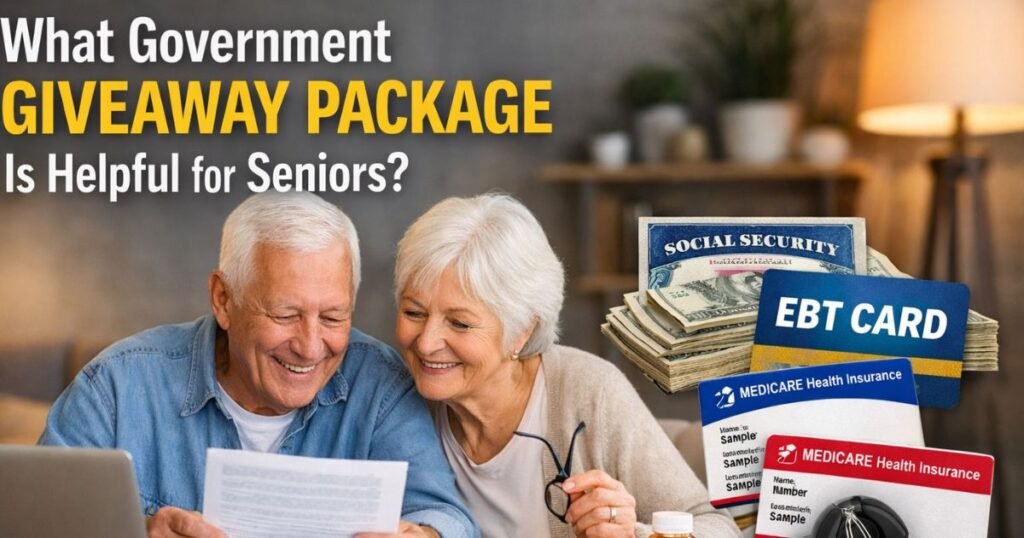
Understanding Government Giveaway Packages for Seniors
When people hear the term “government giveaway,” they might imagine bags of money being handed out. But in reality, these packages are structured assistance programs carefully designed to meet the needs of vulnerable groups like seniors. They come in the form of direct cash benefits, healthcare coverage, food assistance, housing subsidies, and even energy bill support.
There are two main types of government packages: federal programs and state programs. Federal programs like social security and medicare apply across the country and are universal eligibility criteria. State programs, however, differ from the location. For example, one state may provide additional discounts on the utility bill for superiors, while the other can provide property tax relief.
Eligibility is another important factor. Every senior is not automatically eligible for every program. Age, income, disability conditions and even years working over years can determine whether a person can get benefits. For example, anyone who has paid in social security during his work years will qualify for retirement benefits, while Medicade eligibility is largely based on income and assets.
READ MORE: How To Get Grants For Senior Assisted Living Facilities
Social Security Benefits – The Backbone of Senior Support
When it comes to financial assistance to the seniors, the social security list tops. Established in the 1930s during Great Depression, social security was designed as a security trap for old Americans. Today, it remains the single largest source of income for retirees, with over 65 million people collecting benefits.
The program works like this: during their working years, employees pay Social Security taxes through payroll deductions. Once they reach retirement age typically 62 to 67 depending on birth year they become eligible to collect monthly payments. The amount they receive depends on their earnings history, how many years they worked, and the age at which they start claiming benefits.
One of the best features of Social Security is that it adjusts for inflation through cost-of-living adjustments (COLAs). This ensures that even as prices rise, seniors’ checks increase slightly each year to maintain purchasing power. For many, this monthly check is the difference between living independently and struggling with poverty.
However, Social Security isn’t just for retirees. It also offers disability benefits and survivor benefits for spouses and children. This makes it a well -round security trap that not only supports the seniors, but also their families.
For seniors wondering how to apply, the process is relatively simple. Applications can be filed online through the Social Security Administration (SSA) website, by phone, or in person at a local SSA office. Having key documents like a birth certificate, Social Security card, and proof of income history makes the process smoother.
Without Social Security, nearly half of America’s elderly population would live in poverty. That fact alone shows why this program remains the backbone of senior government support.
Medicare and Medicaid – Healthcare Support for Seniors
Healthcare is one of the largest costs for seniors. As people age, medical conditions such as diabetes, heart disease, and arthritis become more common. Prescription medications, surgeries, and hospital visits can quickly drain savings. This is where Medicare and Medicaid step in as lifesavers.
Medicare offers federal health coverage, primarily benefiting seniors 65 and up. It comes in four parts:
- Part A covers hospital stays, hospice care, and some skilled nursing.
- Part B covers doctor visits, outpatient care, and preventive services.
- Part C (Medicare Advantage) offers private insurance alternatives with added benefits like vision and dental.
- Part D helps pay for prescription drugs.
Seniors can choose traditional Medicare or Medicare Advantage depending on their healthcare needs. Many opt for supplemental insurance (Medigap) to cover costs not included in Medicare.
Medicaid, by contrast, is a partnership between the federal and state governments that offers health coverage to low-income individuals. For seniors, Medicaid can cover expenses that Medicare doesn’t, such as long-term nursing home care or in-home health services. In fact, many seniors are “dual-eligible,” meaning they qualify for both Medicare and Medicaid.
Applying for these programs may feel overwhelming, but help is available through state health departments and online resources. The key takeaway? No senior should go without healthcare due to financial obstacles. Medicare and Medicaid ensure that aging does not mean selection between medical care and survival.
READ MORE: Does Government Offer Business Grants to Seniors?
Supplemental Nutrition Assistance Program (SNAP) for Seniors
Nutrition plays a critical role in senior health. Yet, food insecurity is a harsh reality for many older adults. Fixed incomes often make it difficult to afford fresh produce, proteins, and other healthy food options. That’s where the Supplemental Nutrition Assistance Program (SNAP) commonly known as food stamps comes in.
SNAP provides seniors with electronic benefit transfer (EBT) cards that function like debit cards. Every month, a fixed amount is loaded on the card, which can then be used to buy eligible foods on grocery stores, farmers’ markets and even some online retailers.
The eligibility for SNAP is based on income, domestic size and expenses. Many senior mistakes believe that they are not eligible, but the program allows to deduct the medical expenses, rent and utilities, which can reduce income and increase eligibility. Even receiving $ 50 or $ 100 per month can lead to a big difference in senior food budget.
Applying for SNAP is straightforward, though it varies slightly by state. Applications can usually be completed online or in local human service offices. Many states also offer early processing to seniors.
Beyond financial relief, SNAP has a direct impact on health. Studies show that seniors receiving food aid are less likely to leave food, suffer from malnutrition or face health complications due to poor diet. Simply put, SNAP helps the superiors to maintain freedom and dignity, while ensure to meet their nutritional needs.
Low-Income Home Energy Assistance Program (LIHEAP) – Keeping Seniors Warm and Safe
When we think of basic needs, food and healthcare often come first. But for seniors, the ability to heat or cool their homes is just as essential. Extreme weather, whether the biting cold of winter or the sweltering heat of summer, can be life-threatening for older adults. This is where the Low-Income Home Energy Assistance Program (LIHEAP) steps in to make a meaningful difference.
LIHEAP provides financial assistance to low-income households, helping them cover the cost of heating and cooling bills. For seniors living on fixed incomes, utility costs can be overwhelming. Imagine choosing between paying an electricity bill or buying necessary medication an impossible choice no one should face. LIHEAP ensures that seniors don’t have to make that decision by offering grants that go directly toward energy expenses.
The program doesn’t just stop at paying bills. LIHEAP also helps with:
- Emergency assistance when utilities are at risk of being shut off.
- Weatherization services, such as insulation and energy-efficient appliances, to reduce long-term costs.
- Crisis support during extreme weather conditions.
Eligibility for LIHEAP is based primarily on household income, but each state has slightly different rules and application processes. Seniors typically need to provide proof of income, utility bills, and identification documents. Once approved, payments are made directly to the utility company on the household’s behalf, giving peace of mind to elderly residents.
The importance of LIHEAP can’t be overstated. For seniors with medical conditions worsened by extreme temperatures, such as heart disease or respiratory issues, stable indoor climate control is more than comfort, it’s survival. By preventing dangerous living conditions, LIHEAP not only safeguards health but also helps seniors stretch their limited incomes further.
READ MORE: Can a Senior Participate in Mortgage Assistance Grants Programs?
Housing Assistance Programs – A Roof Over Seniors’ Heads
Safe, affordable housing is the cornerstone of goodness, yet many senior struggle to maintain it. Rising rent, property tax and home maintenance cost put tremendous pressure on older adults, especially on those who fully rely on social security. Thankfully, the government provides several housing aid programs for the superiors.
One of the most famous Section 8 is Housing Choice Voucher, which helps seniors with low -income to bear the rent in the private market. With these vouchers, senior people turn a part of their income to rent, while the government covers the rest. This ensures that the elderly people do not spend most of their income to keep the roof on their head only.
Additionally, the Public Housing Program provides affordable housing units specifically for seniors and low-income families. These units are owned and managed by local housing authorities, offering safe and reliable living spaces at reduced costs.
For homeowners, there are programs like Property Tax Relief and Reverse Mortgages backed by the Federal Housing Administration (FHA). Property tax relief helps seniors remain in their homes by lowering or freezing property tax rates, while reverse mortgages allow seniors to borrow against the equity in their homes without making monthly payments.
Housing stability is more than financial; it impacts physical and emotional health. Seniors who feel secure in their living arrangements experience less stress, improved mental health, and better overall quality of life. Housing aid programs provide that safety, ensuring that the elderly do not face the state of being homeless or being unsafe.
Supplemental Security Income (SSI) for Seniors with Limited Resources
While social security is based on the work history of a person, supplementary safety income (SSI) is designed for seniors who have very little or no income. SSI provides monthly cash payments to help elderly individuals to help the elderly, funded by general tax revenue instead of parole taxes.
Eligibility for SSI depends on age (65 or older), disability status, and financial resources. To qualify, seniors must have limited income and assets. The program is especially vital for those who may not have worked long enough to earn Social Security benefits or whose benefits are too small to live on.
The monthly payments may seem modest, but for many seniors, they are a lifeline. In addition, individuals who qualify for SSI often become automatically eligible for other assistance programs like Medicaid and SNAP, further extending their support.
Applying for SSI requires documentation of income, assets, and living arrangements, but applications can be filed online or through Social Security offices. Many seniors benefit from advocacy groups or social workers who guide them through the application process.
SSI is a reminder that the government recognizes and supports even the most vulnerable seniors. It ensures that no elderly citizen is left without a safety net, regardless of their work history or financial background.
Veterans Benefits for Senior Veterans
Military, who have served in military, Veterans Affairs (VA) benefits, provide a powerful set of support systems for benefits. These programs are designed for respect and care for giants in their later years, making sure they get the benefits earned through service. Some of the most influential VA for seniors are included in some of the benefits:
- VA Pensions: Monthly financial assistance for low -income war -term giants is 65 years and above.
- Aid and Attendance (A&A): Additional financial aid for veterans who need help with daily activities like bathing, dressing, or eating.
- Healthcare Services: Access to VA hospitals, clinics, and prescription drug programs.
- Housing Grants: Financial assistance for disabled senior veterans to adapt their homes for safe, independent living.
The VA also offers survivor benefits for spouses and dependents, ensuring that families of veterans are supported financially after the veteran’s passing.
Veterans often face unique health and financial challenges, from service-related injuries to higher rates of disability. These benefits not only provide economic relief, but also help individuals serving the country in regaining respect and dignity. Accessing VA benefits is sometimes time-consuming paperwork and verification of services, but free process can be provided by agencies such as Veterans Service Officers (VSO). For seniors who are veterans, these government sets are at once a token of gratitude and practical help.
READ MORE: Free government money for seniors over 60
Pharmaceutical Assistance Programs – Reducing Prescription Costs
Prescription medications can eat a large part of a senior budget. Chronic diseases often require ongoing treatment, and even with Medicare Part D, out-of-pocket cost can be cumbersome. This is where the drug aid program comes in the game.
Some states provide prescription aid programs for especially seniors, to reduce or eliminate coops for essential medicines. Additionally, pharmaceutical companies often run patient aid programs (PAPS), which provide free or concessional medicines to those who qualify on the basis of income and insurance status.
The federal government also provides support through the Extra Help program, which assists seniors with limited income in paying for Medicare Part D premiums, deductibles, and copayments. This program can save beneficiaries thousands of dollars per year on prescription costs.
To access these benefits, seniors typically need to provide proof of income, insurance details, and prescriptions. Pharmacies and healthcare providers can often assist in finding and applying for these programs.
Prescription affordability is about more than money; it directly affects health outcomes. Seniors who skip medications due to cost risk worsening health conditions and costly hospitalizations. By taking advantage of these assistance programs, seniors can stay healthier, avoid medical complications, and live with greater peace of mind.
Transportation Assistance for Seniors
Mobility is a major factor for seniors in maintaining freedom and quality of life. However, as people age, driving can no longer be safe or practical due to vision, slow response time, or fall in health conditions. Without reliable transport, senior citizens are isolated, recall medical appointments, or struggle with tasks such as grocery purchases. Thankfully, there are government programs that provide transport aid for seniors.
A major option is paratransit services, which work in most cities and rural areas. These are especially door-to-door or curb-to-bad services designed for individuals who cannot use regular public transport due to age or disability. Seniors often pay low fare or, in some cases, free rides.
In addition, many states and local governments offer senior transportation vouchers or subsidized taxi/rideshare programs. For example, a senior might receive vouchers that cover part of the fare for Uber, Lyft, or local taxi services, making rides more affordable.
Public transportation systems also commonly provide discounted fares for seniors. Reduced-cost bus passes, subway cards, and train tickets make commuting more affordable while encouraging independence.
Transportation assistance doesn’t just serve practical needs it improves social connections. Seniors can visit family, attend community events, and stay engaged in society. This reduces feelings of isolation and promotes mental health.
Applications for these programs are usually made through local senior centers, aging agencies, or public transportation departments. By exploiting these resources, senior dynamics and freedom can be achieved, ensuring that aging does not mean homebound.
Tax Relief Programs for Seniors
There may be heavy burden on the seniors on taxes, especially on certain income. Recognizing this, the government provides tax relief programs to reduce financial stress for older adults. These programs can reduce some taxes or even eliminate some taxes, free more money for essential things such as healthcare and housing.
A general form of relief is senior property tax exemption. Many states allow seniors to reduce or freeze their property taxes, ensuring that they can take the risk of staying in their homes growing in real estate values. Some states also provide homestand exemption, which reduces the taxable value of a senior’s primary residence.
At the federal level, the seniors may benefit from high standard deduction when filing income tax. It reduces taxable income, reduces the overall tax bill. Additionally, certain medical expenses can be cut, which can reduce the financial burden.
Programs like the Earned Income Tax Credit (EITC), though often associated with younger workers, can also apply to some seniors who still work part-time or have low incomes.
For seniors who struggle with filing taxes, the Volunteer Income Tax Assistance (VITA) program offers free help through IRS-certified volunteers. This ensures seniors don’t miss out on valuable credits or deductions simply because of paperwork challenges.
By taking advantage of these tax relief programs, seniors can keep more of their hard-earned money. That extra income can be the difference between financial strain and financial stability in retirement.
Community and State-Specific Senior Assistance Programs
While federal programs such as social security and medicare provide wide support, many state and community-based programs fill the gaps with additional assistance to suit local needs. These programs vary widely, but often include services such as free food, home repair, transport and care support.
For example, food on the wheels provides warm, nutritious food directly to the homes of the superiors, ensuring that they get nutrition without worrying about cooking or shopping. Local senior centers can provide free classes, exercise programs and social activities, designed to keep all older adults healthy and busy.
Many states also operate utility discount programs specifically for seniors, lowering the cost of electricity, water, and gas. Others offer senior employment programs, which help older adults find part-time jobs that supplement their retirement income while providing social interaction.
Caregiver support programs are another critical resource. Seniors who rely on family caregivers may qualify for respite care services, counseling, or financial assistance that helps ease the burden on loved ones.
READ MORE: Free Dental Implants for Seniors
How to Apply for Government Giveaway Packages
Knowing that these government giveaway packages exist is only half the battle; applying for them correctly is the real key. Unfortunately, many seniors miss out on valuable benefits simply because they don’t know how to apply or assume they won’t qualify.
The first step is researching eligibility requirements. Federal programs often have clear national standards, while state programs may vary. Seniors should check both federal and local government websites, or better yet, contact local senior assistance offices for guidance.
Next comes gathering documentation. Most programs require proof of age, income, residency, and sometimes medical records. Keeping important documents like Social Security cards, tax returns, and utility bills organized in one place makes the process smoother.
Applications can usually be filed online, by mail, or in person. For those who struggle with technology, community organizations, senior centers, and libraries often provide free application assistance. Some programs even offer home visits for seniors with mobility issues.
Another important tip is to apply early and reapply if necessary. Many programs have limited funding or annual renewal requirements. Missing deadlines can mean losing benefits for an entire year.
Finally, seniors should seek professional help if they feel overwhelmed. Social workers, non -profit agencies and even family members can step up to simplify the process. With correct guidance, applying for government cheap package is not intimidating; It can be strong.
Challenges Seniors Face in Accessing Government Benefits
While government giveaway packages are incredibly helpful, accessing them isn’t always easy. Seniors often encounter a range of challenges that can prevent them from receiving the support they need.
One of the biggest hurdles is lack of awareness. Many seniors simply don’t know these programs exist, or they assume they don’t qualify. For example, thousands of elderly citizens who could benefit from SNAP never apply because they think their income is too high, when in reality, medical expenses and housing costs can make them eligible.
Another barrier is complex paperwork and applications. Government forms can be long and confusing, especially for seniors with cognitive decline or limited literacy skills. Without help, many give up before completing the process.
Technology is another obstacle. As more programs move online, seniors who aren’t comfortable using computers or smartphones may struggle to apply. While younger generations take digital applications for granted, older adults often face a steep learning curve.
There are also transportation barriers, particularly for rural residents. Seniors may have to travel long distances to visit government offices or assistance centers, which is physically and economically draining.
Last but not least, there is stigma. Some elderly people are embarrassed to accept government aid, viewing it as charity rather than something they deserve for their contributions to society. Breaking this mentality is crucial because these programs exist only to help those citizens who contributed to society their entire life.
The Future of Government Giveaway Packages for Seniors
As the population ages, the importance of government support for seniors will only grow. By 2030, all baby boomers will be over the age of 65, meaning nearly one in five Americans will be considered a senior. This demographic shift puts pressure on government programs but also highlights their necessity.
The future of these programs may involve expanded funding and modernization. For example, Social Security’s long-term stability is a hot political topic, and adjustments to funding structures may be needed to keep it solvent. Medicare is also likely to expand coverage to include services like dental, vision, and hearing, which are essential for senior health but often overlooked.
Technology will play a major role as well. Expect to see more digital applications, telehealth services, and online portals for managing benefits. While this creates challenges for seniors who aren’t tech-savvy, it also opens the door for easier access if support systems are in place.
There’s also a growing recognition of holistic support, meaning programs that go beyond financial aid. Future packages can focus more on mental health, careful support and social engagement programs that prevent separation.
Advocating groups and policy makers proceed to reform, ensuring that senior citizens are not only alive, but retired. The future of government cheap packages will be shaped with possible debates, but one thing is certain: As long as the seniors face economic and health challenges, these programs will remain a lifeline.
FAQs
1. What is the most common government package seniors use?
The most common and widely used package is Social Security, which provides monthly financial benefits to retirees, disabled individuals, and survivors.
2. Do all seniors qualify for Medicare?
Yes, most seniors qualify for Medicare at age 65, regardless of income, as long as they or their spouse worked and paid Medicare taxes for at least 10 years.
3. Can seniors receive both Social Security and SSI?
Yes, some seniors can receive both. SSI is based on financial need, while Social Security is based on work history. Those with very low benefits may qualify for SSI to supplement their income.
4. How can seniors find out what benefits they’re eligible for?
Seniors can use the official Benefits.gov website, contact their local Department of Aging, or visit Social Security offices for personalized guidance.
5. Are government giveaway packages the same in every state?
No, while federal programs are the same nationwide, many state-level programs vary. Seniors should check with their local agencies for state-specific assistance like utility discounts or tax relief.
Bottom Line
Growing old should be a time of rest and fulfillment, not fear of financial instability. Government giveaway packages are not handouts; they are essential safety nets built on the understanding that seniors deserve dignity and security after a lifetime of contribution.
For seniors and their families, knowing these resources exist and taking the steps to apply can transform daily life. These programs are proof that society values its elders and is committed to supporting them in their later years.
If you or a loved one is approaching retirement or already living as a senior, don’t overlook these opportunities. They may be the very thing that makes aging not just manageable but meaningful.