Thinking about what happens to your home, savings, and family after you pass away isn’t easy. However, taking control of your legacy is one of the most selfless gifts you can give to your loved ones. Many people assume that estate planning is only for the ultra-wealthy. In reality, if you own a home, have a bank account, or have children, you need a plan.
For seniors, retirees, and families, estate planning is not a “set-it-and-forget-it” task. Financial and estate planning experts emphasize that your legal documents must remain aligned with your financial strategies. Reviewing your plans after major life developments prevents expensive legal battles for your family later on.
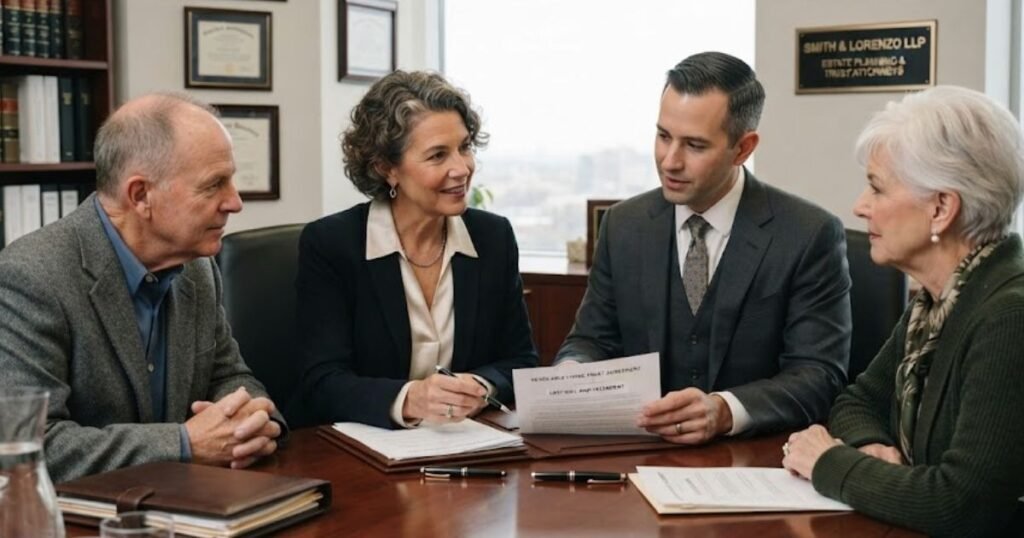
Hiring an experienced local attorney ensures your wishes are legally enforceable under your specific state laws. In this comprehensive guide, you will learn exactly how to find the best estate planning and trust attorneys near me. We will cover what these lawyers do, break down average costs, compare documents, and provide an actionable checklist to secure your future. Lets deep dive into “Best Estate Planning & Trust Attorneys Near Me (2026 Guide)”
Note: Estate planning laws vary significantly by state. This article offers general guidance only and isn’t a substitute for advice from a licensed attorney in your state.
READ MORE: Free iPhone for Seniors: Eligibility & How to Apply
What Does an Estate Planning Attorney Do?
An estate planning attorney helps individuals and families organize their assets and make legal decisions about what happens if they become incapacitated or pass away. Their work typically includes:
- Drafting wills – legal documents that state who inherits your property
- Living trusts – legal arrangements that can hold and manage assets during your lifetime and after death
- Revocable trusts – trusts you can change or cancel while you’re alive
- Irrevocable trusts – trusts that generally can’t be changed once created, often used for tax or asset-protection purposes
- Power of Attorney – naming someone to handle your finances if you can’t
- Healthcare directives – outlining your medical wishes and naming a healthcare decision-maker
- Probate avoidance strategies – structuring your estate so heirs skip lengthy court proceedings
- Asset protection planning – shielding property from creditors or lawsuits where legally possible
- Estate tax planning – reducing potential federal or state estate tax exposure
- Business succession planning – outlining how a family business transfers to the next owner
- Special needs planning – protecting a disabled family member’s inheritance without affecting their government benefits
A skilled attorney tailors these tools to your specific situation rather than using a one-size-fits-all template.
Why Hiring a Trust Attorney Is Better Than DIY Estate Planning
Online will-writing kits are tempting because they’re cheap and fast. But estate planning mistakes are often discovered only after it’s too late to fix them when a family is already grieving and dealing with probate court.
| Feature | DIY Estate Plan Kit | Professional Estate Planning Attorney |
| Upfront Cost | Very low ($20 – $150) | Moderate to high ($1,000 – $5,000+) |
| Document Accuracy | High risk of hidden errors or omissions | Highly accurate, backed by legal training |
| Family Litigation Risk | Extremely high if terms are contested | Very low; built to withstand legal challenges |
| Legal Protection | None; you assume all liability | Protected by attorney malpractice insurance |
| Customization | Rigid, basic templates | Completely tailored to your family dynamics |
| State Law Compliance | Frequently outdated or overly generic | Fully compliant with local state statutes |
| Probate Avoidance | Often fails due to incorrect asset transfers | Maximizes probate avoidance structures |
| Tax Planning | Rarely accounts for local or state estate taxes | Optimizes deductions and asset step-up basis |
READ MORE: Best 6 Anti Aging Supplements for Seniors: Reviews, Comparison & Buying Guide
Signs You Need an Estate Planning Attorney
You may especially benefit from professional help if you:
- Are age 55 or older
- Own a home or other real estate
- Are married or in a long-term partnership
- Have a blended family (stepchildren, multiple marriages)
- Own a business
- Have minor or adult children
- Have a special needs family member
- Have high-value assets or investments
- Hold retirement accounts (401(k), IRA, pension)
- Own property in more than one state
- Have significant digital assets (crypto, online accounts, intellectual property)
If two or more of these apply to you, it’s a strong signal that a simple online form won’t be enough.
How to Find the Best Estate Planning and Trust Attorneys Near You
Finding the right attorney takes a little research, but it’s worth the effort. Here’s what to check:
- Google Reviews – Look for consistent patterns in feedback, not just star ratings.
- State Bar verification – Confirm the attorney is licensed and in good standing in your state.
- Years of experience – Ask how long they’ve specifically practiced estate planning.
- Specialization – A lawyer who focuses primarily on estate planning is often preferable to a general practitioner, especially for complex estates, according to common advice shared in legal and financial planning communities.
- Client testimonials – Look beyond the website for third-party reviews.
- Local reputation – Ask friends, financial advisors, or your accountant for referrals.
- Transparent pricing – A trustworthy attorney explains costs clearly upfront.
- Certifications – Look for board certification in estate planning where available in your state.
- Communication style – Choose someone who explains things in plain English, not just legal jargon.
- Free consultation – Many attorneys offer an initial meeting at no cost, which is a good way to gauge fit.
READ MORE: Free Wills for Seniors Near Me | Legal Help & Estate Planning
Questions to Ask Before Hiring an Estate Planning Lawyer
Bring this list to your first consultation:
- How long have you practiced estate planning law?
- What percentage of your practice is dedicated to estate planning?
- Do you charge flat fees or hourly rates?
- What’s included in your estate planning package?
- Will you help fund my trust once it’s created?
- How often should I update my documents?
- Do you handle probate and trust administration too?
- Can you help minimize estate taxes for my situation?
- How do you handle blended family or stepchildren situations?
- What happens if I move to another state later?
- Do you offer ongoing document reviews?
- How do you store original documents?
- Who can I contact if I have questions after signing?
- Can you help with business succession planning?
- Do you have experience with special needs trusts?
- What’s your average turnaround time?
- Can I see a sample of the documents you’ll prepare?
- Are you familiar with digital asset planning?
- How do you coordinate with my financial advisor or accountant?
- What happens if my named executor or trustee can no longer serve?
Estate Planning Documents Every Senior Should Have
- Last Will and Testament – directs how remaining assets are distributed
- Revocable Living Trust – manages assets during life and after death, often avoiding probate
- Durable Power of Attorney – names someone to handle finances if you’re incapacitated
- Healthcare Power of Attorney – names someone to make medical decisions on your behalf
- Living Will – states your wishes about end-of-life medical care
- HIPAA Authorization – allows designated people to access your medical information
- Beneficiary Designations – updated forms on retirement accounts, life insurance, and bank accounts
- Letter of Intent – a personal, non-binding letter guiding your executor or family
Will vs. Trust: What’s the Difference?
Understanding the fundamental difference between a will and a trust is the cornerstone of protecting your family. While a will dictates who gets what after you die, a trust functions like a secure container that manages your assets both during your life and after you pass away.
| Feature Evaluation | Last Will and Testament | Revocable Living Trust |
| Upfront Cost | Generally affordable ($300 – $1,000) | Higher upfront cost ($1,000 – $3,000+) |
| Goes Through Probate? | Yes; must be verified by a judge | No; bypasses probate entirely |
| Privacy Level | Public record; anyone can read it | Completely private family document |
| Operational Timing | Takes effect only after death | Active immediately upon signing and funding |
| Incapacity Protection | None; does not manage illnesses | Yes; successor trustee manages it if you fall ill |
| Asset Distribution Speed | Slow; can take months or years | Rapid; often distributed within weeks |
| Best Suited For | Simple estates, naming guardians | Homeowners, complex families, avoiding court |
Trusts often help families avoid probate and keep financial matters private, but a will is still essential for most people even those with a trust because it covers anything left outside the trust and can name guardians for minor children. Many complete estate plans include both.
Estate Planning Attorney Costs in the U.S.
Costs vary widely by state, attorney experience, and how complex your estate is. As general, approximate ranges:
- Initial consultation: Free to $300
- Simple will: $150–$600
- Living trust: $1,000–$3,000
- Complete estate plan (will, trust, POA, healthcare directive): $1,500–$5,000+
- Hourly rates: $200–$500 per hour
- Flat-fee packages: Common for standard estate plans
- Elder law packages (Medicaid/long-term care planning): Often $2,500–$7,000+
These figures are estimates only. Always request a written fee agreement before hiring an attorney.
READ MORE: 8 Best Smartwatch for Hiking With GPS and Heart Rate
How Seniors Can Save Money on Estate Planning
- Ask about bundled services (will + trust + POA packages)
- Take advantage of free initial consultations
- Check if you have legal insurance through work or a membership
- Ask your employer about legal benefit plans
- Veterans may qualify for VA-related legal assistance programs
- Explore AARP resources, if applicable to your membership
- Update existing documents instead of starting from scratch when possible
- Prepare your financial records before your first meeting to reduce billable hours
Estate Planning Mistakes to Avoid
- Not having a will at all
- Creating a trust but never transferring assets into it (“not funding the trust”)
- Leaving outdated beneficiary designations after divorce or remarriage
- Choosing the wrong executor or trustee
- Forgetting digital assets like email, crypto, or online accounts
- Ignoring potential estate or inheritance taxes
- Not reviewing documents after a major life change
- Naming only one backup executor or agent
- Failing to plan for incapacity, not just death
- Not discussing the plan with family in advance
- Using a generic online template for a complex estate
- Forgetting to update documents after moving to a new state
- Leaving unequal inheritances without any explanation, which can cause disputes
- Not planning for a special needs beneficiary properly
- Waiting too long to start the process altogether
Experts frequently point out that failing to properly fund a trust—or failing to coordinate financial accounts with your legal documents—can quietly undermine an otherwise well-prepared estate plan.
READ MORE: Best Medicare Advantage Dental & Vision Plans
Estate Planning Checklist
Use this as a starting point before or after meeting with an attorney:
- [ ] List all assets (real estate, bank accounts, investments, retirement accounts)
- [ ] List all debts and liabilities
- [ ] Decide on an executor and backup executor
- [ ] Decide on a trustee, if using a trust
- [ ] Name a Power of Attorney agent
- [ ] Name a Healthcare Power of Attorney agent
- [ ] Draft or update your will
- [ ] Draft or update your living trust, if applicable
- [ ] Review and update beneficiary designations
- [ ] Create a Living Will / Advance Directive
- [ ] Sign a HIPAA Authorization
- [ ] Organize digital asset access (passwords, accounts)
- [ ] Store original documents somewhere safe and accessible
- [ ] Share document locations with your executor or family
- [ ] Schedule a review date (every 3–5 years or after major life events)
How Often Should You Update Your Estate Plan?
Review your documents after any of the following:
- Marriage
- Divorce
- Retirement
- Birth of a child or grandchild
- Death of a beneficiary, executor, or trustee
- Buying or selling property
- Moving to another state
- Major changes in tax law
Even without a major life event, it’s wise to review your estate plan every three to five years.
Tips for Choosing the Best Estate Planning Attorney
- Meet with more than one attorney before deciding
- Ask for a clear, written explanation of fees
- Choose someone who listens rather than rushes through your questions
- Confirm they specialize in estate planning, not just general practice
- Look for someone who explains legal terms in plain language
- Make sure they’re licensed and in good standing with your state bar
- Ask how they handle updates and future changes to your plan
Frequently Asked Questions
How do I find the best estate planning attorney near me?
Start by checking your state bar association’s directory to confirm licensing, then read online reviews and ask for referrals from friends, financial advisors, or accountants.
How much does an estate planning attorney cost?
Costs depend on your state, the attorney’s experience, and how complex your estate is. A simple will may cost $150–$600, while a full estate plan with a trust can range from $1,500 to $5,000 or more.
Do I need both a will and a trust?
Many people benefit from having both. A trust can help your estate avoid probate, stay private, and manage assets if you become incapacitated, but it must be properly funded to work. A will still matters even if you have a trust because it covers any assets left outside the trust and can name guardians for minor children.
What is the difference between an estate planning attorney and a probate attorney?
An estate planning attorney helps you prepare documents in advance, such as wills, trusts, and powers of attorney, so your wishes are clear before anything happens. A probate attorney typically steps in after someone has passed away to help guide the estate through the court process, especially if there’s no trust in place or disputes arise.
Is estate planning worth it for seniors?
Yes. Estate planning helps seniors protect their assets, clarify medical wishes, and reduce stress and conflict for their families during an already difficult time. Without a plan, state law decides who inherits your property and who makes decisions if you become incapacitated, which may not reflect your actual wishes.
Conclusion
Estate planning isn’t about paperwork for its own sake—it’s about protecting the people you love and making sure your wishes are respected. Whether you need a simple will, a full living trust, or an elder law package that accounts for long-term care, working with an experienced local attorney gives you clarity and peace of mind that a generic online template simply can’t match.
The right estate planning and trust attorney will take the time to understand your family, your assets, and your goals, then build a plan around them. If you haven’t reviewed your documents in the last few years or don’t have any in place yet now is a good time to schedule a consultation with a qualified estate planning attorney near you.
Authority References
- American Bar Association (ABA) — Section of Real Property, Trust and Estate Law
- National Academy of Elder Law Attorneys (NAELA)
- Internal Revenue Service (IRS) — Estate and Gift Taxes (2026 Update)