For many seniors, staying in their own homes as they age commonly called aging in place is the ultimate goal. But while the idea is appealing, the reality can be difficult, particularly when it comes to bathroom safety. Bathrooms are one of the most dangerous areas in the home for older adults, with slippery floors, high tubs, and low toilets often leading to falls and injuries. In fact, studies show that nearly 80% of falls among seniors happen in the bathroom.
This is where bathroom grants come into play. These financial aids, often provided by governments or community organizations, help seniors make essential bathroom modifications. From installing walk-in showers to adding grab bars, grants ensure that seniors can maintain independence without compromising safety.
But the big question is: Does the government actually offer bathroom grants to seniors? The answer is not simply yes or no. It depends on where you live, your income level and your health requirements. In this article, how can we apply to senior citizens for government support options, eligibility criteria and bathroom grants.
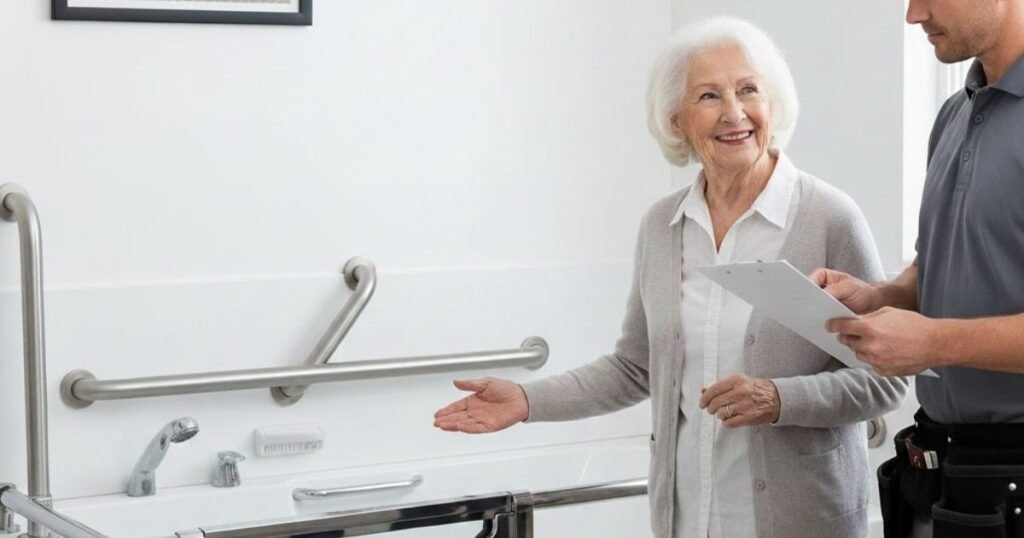
The Role of Grants in Supporting Aging in Place
Aging in place is not just a personal preference it’s also a practical solution for governments and families. Assisted living or nursing homes can cost thousands of dollars per month, while simple bathroom modifications may only require a few thousand dollars once. Grants help cover these costs, easing financial pressure on seniors and their families.
For example, installing a walk-in shower might cost $5,000 to $7,000. For low-income seniors, this expense is often out of reach. But with a government bathroom grant, such modifications become accessible. This support capable seniors to stay in familiar environments, which is proven to improve mental wellbeing and overall quality of life.
What Are Bathroom Grants?
A bathroom grant is essentially financial aid that does not need to be repaid. Unlike loans, these grants are provided to seniors or their caregivers with the understanding that the funds will be used for necessary home modifications. The main purpose is to reduce fall risks, increase accessibility, and allow seniors to remain at home safely.
Depending on the program, bathroom grants may cover:
- Full bathroom renovations (e.g., converting a bathtub into a walk-in shower).
- Smaller modifications like installing grab bars or raising toilet seats.
- Accessibility upgrades such as widened doorways or roll-in showers for wheelchair users.
Common Home Improvements Covered by Grants
Bathroom grants typically cover a range of improvements, including:
- Walk-In Showers and Tubs: Easier to access, reducing fall risks.
- Raised Toilets: Higher seats make it easier for seniors with mobility issues.
- Grab Bars and Handrails: Provide stability near toilets and showers.
- Non-Slip Flooring: Replaces slippery tiles with safer materials.
- Improved Lighting: Reduces the chance of accidents due to poor visibility.
- Doorway Widening: For wheelchair or walker accessibility.
READ MORE: Free Bathroom Remodel for Seniors
Government Assistance Programs for Bathroom Grants
Now to the central question: does the government actually provide bathroom grants for seniors? The answer is yes, but vacancy depends on your location and eligibility. Governments at different levels federal, state, and local offer programs that can be used for bathroom modifications.
Federal Government Programs in the U.S.
In the United States, many federal programs provide financial assistance for home amendments:
- HUD (Housing and Urban Development): Offers grants and loans for low-income seniors to improve home safety.
- USDA Rural Development Grants: Help low-income seniors living in rural areas with home repairs, including bathroom modifications.
- Veterans Affairs (VA) Grants: Veterans can access programs like the Specially Adapted Housing Grant (SAH) or Home Improvements and Structural Alterations (HISA) grants for bathroom modifications.
State-Level and Local Government Assistance
Beyond federal support, many states and local governments offer their own bathroom grant programs. For example:
- State housing agencies may provide home repair grants for seniors.
- Local councils sometimes offer small grants for bathroom safety upgrades.
- Area Agencies on Aging (AAA) often connect seniors with funding resources in their region.
International Examples of Government Support
Government bathroom grant programs are not limited to the U.S. In countries like Canada, the UK, and Australia, similar initiatives exist.
- Canada: Offers the Home Adaptations for Seniors’ Independence (HASI) program.
- UK: Provides Disabled Facilities Grants (DFG) for necessary bathroom modifications.
- Australia: State governments run Home Modification Programs for elderly residents.
Eligibility Criteria for Bathroom Grants
While bathroom grants exist, each senior is not automatically qualified. Eligibility requirements ensure that funding reaches those who require the most.
Age Requirements
Most programs require applicants to be 60 years of age or older, although some age limit for early retired people is lower up to 55. Veteran programs may have different age rules, which focus more on service history.
Income and Financial Need
The bathroom grant is often targeted to a minimum of medium -income seniors. Applicants may need to show proof of income, tax returns or social security details. The goal is to prioritize those seniors who cannot amend on their own.
Disability and Medical Condition Considerations
Seniors with documented disabilities or chronic health conditions may receive priority. For example:
- Seniors who use wheelchairs may qualify for roll-in shower funding.
- Seniors with arthritis or mobility issues may receive help for raised toilets and grab bars.
READ MORE: Does HUD Offer Grants For Senior Citizens?
Application Process for Bathroom Grants
Navigating the application process for bathroom grant may seem frightening, but breaking it down step by step makes it more manageable. Most programs follow a similar structure, although requirements depend on whether the funding comes from federal, state or local sources.
Step-by-Step Guide
- Research Available Programs
Seniors or their families should first identify which grants are available in their region. Government websites, housing authorities, and local senior centers are good starting points. - Check Eligibility Requirements
Before applying, review the specific conditions of the program—such as age, income, disability, or residency restrictions. This ensures time isn’t wasted on applications that don’t apply. - Prepare Documentation
Gather all necessary paperwork in advance (income proof, medical notes, home ownership documents). Having everything ready speeds up the process. - Submit Application
Applications can be made online, or made through a local agency. It is important to fill them completely and accurately to avoid delay. - Wait for Approval
Processing times vary widely. Some programs provide responses in weeks, while others may take several months. - Inspection and Approval of Work
Once approved, some programs send inspectors or occupational therapists to assess the bathroom and decide what modifications are most urgent. - Funding Release and Modifications
The grant either pays contractors directly or reimburses seniors after modifications are completed.
Documents Needed
Most bathroom grant programs require the following documents:
- Proof of identity (ID, driver’s license, or passport).
- Proof of age (birth certificate or government-issued ID).
- Proof of residence (utility bill, property deed, or lease agreement).
- Proof of income (tax returns, Social Security statements, or pension documents).
- Medical documentation (doctor’s note confirming mobility or disability needs).
Common Challenges in the Application Process
Applying for bathroom grant is not always straightforward. Senior often face obstacles such as:
- Long waiting lists: High demand can delay approvals.
- Complicated paperwork: Forms can be confusing without help.
- Limited funds: Some programs run out of money mid-year.
- Regional availability: Not all areas offer the same grants.
READ MORE: Where Can I Get a Donated Car for Free? (Programs & Eligibility)
Types of Bathroom Modifications Covered
Bathroom grants for seniors typically cover a wide range of modifications, all designed to improve safety and accessibility. These changes may be small but significant or involve full-scale renovations.
Walk-in Tubs and Showers
Traditional bathtubs require seniors to lift their legs over high edges a risky move for anyone with balance or joint issues. Walk-in tubs and showers eliminate this problem with low or no thresholds, allowing safe entry and exit.
Some walk-in tubs also feature:
- Built-in seating for comfortable bathing.
- Non-slip surfaces to prevent falls.
- Easy-to-reach faucets and controls.
Grab Bars and Handrails
Grab bars are one of the most affordable and effective bathroom modifications. Installed near toilets, showers, and bathtubs, they provide stability and support when seniors are sitting, standing, or moving.
Handrails along bathroom walls further improve safety, especially for seniors with mobility aids like walkers or canes.
Raised Toilets and Non-Slip Flooring
Low toilets are difficult for seniors with arthritis, weak muscles, or balance issues. It becomes easier to sit and stand without stress from the raised toilets or seat raisers.
Non-slip flooring is another essential upgrade. Tiles and polished floors can be dangerous when wet, but textured surfaces or rubber mats provide grip and reduce the risk of falls.
Alternatives to Government Bathroom Grants
Government funding is not the only way to finance senior bathroom modifications. Many other resource costs exist to help cover costs, especially for those who cannot qualify for government grants.
Non-Profit and Charitable Organizations
Many nonprofits focus on senior safety and independence. Examples include:
- Rebuilding Together: Give free home repair and modification for lower income seniors.
- Habitat for Humanity: Sometimes providing inexpensive renewal services, covering bathroom upgradation.
- Local charities or churches: Often provide small grants or volunteer labor for seniors in need.
Insurance and Medicare Options
While Medicare generally does not cover home modifications, some Medicare Advantage (Part C) plans now include home safety benefits. Medicaid programs in certain states may also fund bathroom modifications under Home and Community-Based Services (HCBS) waivers.
Private insurance policies may reimburse some costs if modifications are medically necessary. Seniors should always check their policy details before starting renovations.
Low-Interest Loans and Tax Credits
If the grant is not available, senior other financial assistance can be detected such as:
- Low-interest home improvement loans for necessary modifications.
- Tax credits and deductions for medical-related home improvements.
- State or municipal loan programs that assist seniors with affordable financing.
Although these options are not as attractive as grants, they still make bathroom safety upgradation more affordable.
READ MORE: Can I Get Free Air Conditioners for Senior Citizens?
Challenges in Accessing Bathroom Grants
While bathroom grants are incredibly helpful, they are not always easy to arrive. Many senior challenges face which can delay or even prevent them from getting help.
Limited Funding Availability
Government programs often work with a limited budget. Once the money is exhausted for the year, new applicants can be deployed in the waiting list until the next funding cycle. It has been waiting for some seniors for months or years.
Regional Differences in Support
All fields do not offer the same level of assistance. In a major city, a senior may have access to several funding programs, while in a rural area no one can find only one or any one. It produces geographical inequalities, outlining some seniors.
Long Waiting Lists and Bureaucracy
Even when programs exist, the application process can be slow. Seniors may wait weeks just for their applications to be reviewed, followed by inspections and approvals that drag out the timeline further. For seniors who need urgent modifications, these delays can be dangerous.
Practical Tips for Seniors Seeking Bathroom Grants
Applying for bathroom grants can be overwhelming, but with the right approach, seniors can maximize their chances of success.
How to Research Available Programs
Start by contacting:
- Local housing authorities.
- Area Agencies on Aging (AAA).
- Veterans Affairs offices (for eligible veterans).
- Senior advocacy organizations.
Additionally, online resources and government websites often list available grant programs by state or region.
Working with Social Workers and Advisors
Social workers, senior advocates or non -profit organizations can help seniors to navigate the application process. They often know about low-term local programs and can help complete paperwork correctly.
Preparing a Strong Application
To strengthen an application, seniors should:
- Gather all required documents in advance.
- Include medical notes explaining why modifications are necessary.
- Clearly state financial need.
- Provide details about current bathroom challenges and safety concerns.
Conclusion
Government bathroom grants are an essential resource for seniors who want to be safe, free and comfortable in their homes. While the access location and eligibility differ from eligibility, these programs provide life-long modifications that reduce the decline, promote confidence, and increase the quality of life.
For families, they provide peace of mind, knowing that their loved ones are good at home. As the age of the population, the demand for such grants will only increase, pushing governments to expand their support for aging in place.
If you or a loved one is considering bathroom modifications, don’t wait start researching available programs today. With the right support, seniors can enjoy safety, independence, and dignity well into their golden years.
FAQs
1. Do seniors get free bathroom grants from the government?
Yes, but the availability depends on the program and location. Some grants cover the entire cost, while others provide partial funds.
2. What types of bathroom modifications are typically funded?
Common upgrade includes walk-in shower, grab bar, raised toilets, non-slip floors and better lighting.
3. Can low-income seniors apply for bathroom grants?
Absolutely. Most programs prioritize low -income seniors to ensure that there is the greatest need for money.
4. Is Medicare or Medicaid involved in covering bathroom safety upgrades?
Medicare usually does not cover modifications, but some Medicare Advantage and Medicaid programs may include them under specific waivers.
5. How long does it take to get approved for a bathroom grant?
Approval times vary by program some take weeks, others several months. Early applications improve chances of timely approval.