More families are dealing with the difficulties of making sure their loved ones can live safely and independently as our population ages. For seniors, mobility is frequently one of their main worries, particularly for those who depend on wheelchairs, scooters, or walkers for mobility. Even a little set of stairs outside the house might soon turn into a hazardous barrier. This is when ramps and other accessibility solutions come into their own.
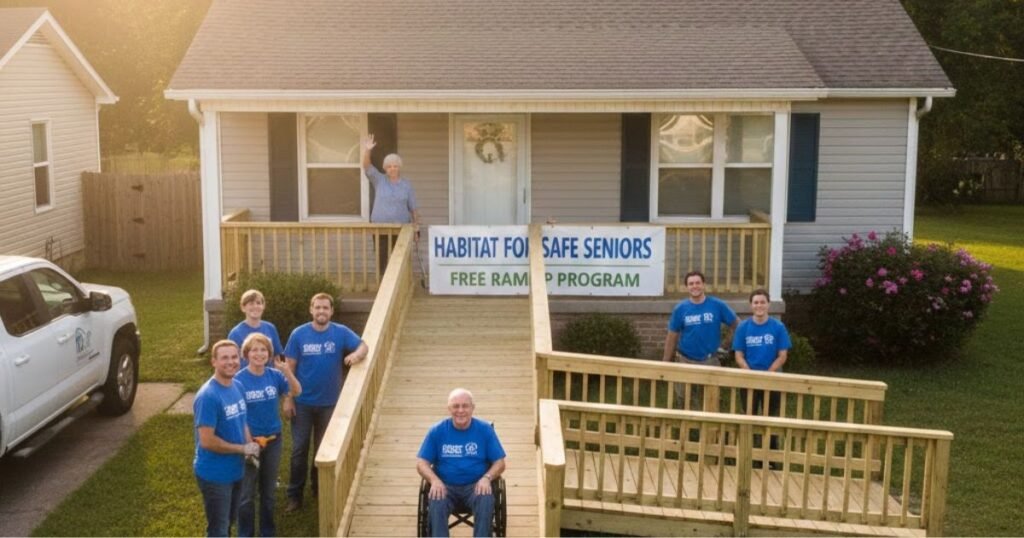
The Habitat For Safe Seniors Free Ramp Program was created with exactly this problem in mind. Its mission is simple yet powerful: to help seniors maintain their independence and safety by providing free ramps for those in need. By removing barriers, both physical and emotional, the program allows elderly individuals to live with dignity, security, and freedom.
What is the Habitat For Safe Seniors Free Ramp Program?
The Habitat For Safe Seniors Free Ramp Program is a community-driven initiative designed to improve the lives of elderly individuals by providing free wheelchair ramps and other accessibility modifications. In contrast to costly commercial contractors, this program uses partnerships, contributions, and volunteers to provide seniors with life-changing outcomes at no cost.
Overview of the Program
Fundamentally, the program finds seniors who require accessibility enhancements and connects them with resources and volunteers. The primary goal is to construct ramps that meet the American Disabilities Act’s (ADA) requirements for usability, durability, and safety. Every ramp is meticulously crafted to meet the unique housing and mobility requirements of the elderly.
This concept offers independence in addition to ramps. Elderly people who used to feel confined to their houses can now easily visit their walkways, yards, and public areas once more.
Key Mission and Vision
Giving older individuals the tools they need to live independently and safely in their own homes is the goal of Habitat For Safe Seniors. The program’s goal is for all seniors, regardless of their financial circumstances, to have access to safe mobility alternatives. It contributes to the development of age-friendly communities where seniors can flourish by lowering barriers and fostering accessibility.
Who Can Benefit From It?
The program primarily serves seniors who:
- Are 60 years or older
- Have mobility challenges due to disability, illness, or injury
- Cannot afford to pay for a ramp installation themselves
- Wish to remain in their own homes as they age
READ NORE: Does Government Offer Business Grants to Seniors?
Importance of Free Ramp Programs for Seniors
For older folks, free ramp initiatives like Habitat For Safe Seniors are more than just building projects—they are lifelines. A ramp’s installation can drastically change how an elderly person lives their everyday life.
Enhancing Independence
For a lot of elderly people, a ramp is the difference between being confined to their house and having the freedom to move around. Without one, even the most basic activities, like going to the mailbox or seeing a neighbor, might become difficult. A ramp gives elderly people the freedom to come and go as they choose without needing assistance from others.
Independence also contributes to emotional well-being. Seniors who can move about freely often feel more confident, less anxious, and more optimistic about their future.
Preventing Accidents and Injuries
Falls are a serious concern for seniors, often leading to broken bones, hospitalizations, and long-term disability. Stairs and uneven surfaces are among the most common causes of falls. Installing a ramp dramatically lowers these risks by providing a smooth, stable, and non-slip surface.
Beyond reducing physical risks, ramps also ease the stress on caregivers. Family members and healthcare workers no longer need to physically lift or assist seniors up and down stairs, reducing the chance of caregiver injuries as well.
Supporting Aging in Place
The majority of seniors choose to age in place. They wish to remain in their long-time residences, surrounded by memories and familiar communities. However, aging in place becomes risky and unfeasible without appropriate accessibility adaptations.
By improving accessibility and safety in homes, free ramp initiatives directly encourage aging in place. Seniors can stay comfortably in their homes instead of being compelled to move into expensive assisted living facilities if obstacles are removed.
Habitat For Safe Seniors Free Ramp Eligibility and Application Process
Getting access to the Habitat For Safe Seniors Free Ramp Program isn’t complicated, but there are certain requirements seniors must meet.
Who Qualifies for the Free Ramp Program?
The program typically prioritizes:
- Seniors aged 60 and older
- Individuals with mobility impairments (wheelchair users, walkers, scooters)
- Low-income households that cannot afford accessibility modifications
- Seniors who own their homes or have landlord approval for ramp installation
The main objective is to help individuals who are most in need, while specific needs may differ depending on the area.
How to Apply for Assistance
In general, applying is simple. Through the organization’s official website, local chapters, or referral networks like senior centers and healthcare providers, seniors or their family members can get in touch with the program. Typically, the application includes:
- Filling out a request form
- Providing details about mobility needs
- Describing the home layout (including photos if possible)
- Sharing financial information to verify eligibility
Documents and Requirements
Applicants may need to provide:
- Proof of age (driver’s license, ID card, or birth certificate)
- Proof of income (tax returns, Social Security statements, or pension details)
- Proof of residence (utility bills, mortgage, or lease agreement)
- Medical documentation of mobility challenges (optional but helpful)
READ MORE: Can a Senior Participate in Mortgage Assistance Grants Programs?
How the Program Works
Once a senior is accepted, the ramp installation process begins, typically involving volunteers, local contractors, and program coordinators.
Steps Involved in Ramp Installation
- Home Assessment – A team visits the property to evaluate entryways, measure slopes, and determine ramp length.
- Design Phase – An ADA-compliant design is created, considering safety and accessibility.
- Construction and Installation – Volunteers and builders assemble the ramp using durable materials.
- Final Safety Check – The completed ramp undergoes inspection to ensure stability and safety.
- Handover – Seniors receive instructions on proper ramp use and maintenance.
Types of Ramps Installed
- Wooden Ramps – Affordable and customizable, often built on-site.
- Aluminum Ramps – Durable, weather-resistant, and modular for quick installation.
- Concrete Ramps – Permanent and sturdy, though more expensive.
The choice depends on funding, home structure, and senior preference.
Safety Standards and Compliance
All ramps follow ADA guidelines, which include:
- Maximum slope ratio of 1:12 (for every inch of rise, 12 inches of ramp length)
- Handrails on both sides
- Non-slip surfaces for all weather conditions
- Adequate landings for resting points
The Role of Volunteers and Community Involvement
One of the most inspiring aspects of the Habitat For Safe Seniors Free Ramp Program is the way it brings communities together. These ramps aren’t just built with lumber and screws they’re built with compassion, teamwork, and a shared desire to make life better for seniors. Volunteers, local organizations, and donors all play vital roles in ensuring the program thrives and continues to serve those in need.
Volunteer Contributions
In fact, the foundation of this program is its volunteers. People from various walks of life come together to help, from high school kids completing service hours to knowledgeable carpenters sharing their knowledge. While some volunteers aid with administrative, outreach, or fundraising activities, others help with construction.
Building a ramp is not only about labor it’s about giving time and care. Many volunteers share that the joy on a senior’s face after seeing their new ramp is more rewarding than any paycheck. These moments create a sense of purpose and community pride that extends far beyond the construction site.
Partnerships with Local Organizations
Partnerships with neighborhood churches, civic organizations, nonprofits, and senior centers are essential to the program’s success. These groups frequently assist in identifying seniors who require extra support assistance. For instance, a community center may raise awareness of the program, while a nearby healthcare professional may suggest a patient who needs a ramp for medical appointments.
These collaborations also aid in cost reduction. To promote ramp projects, companies may provide construction materials, contractors may provide subsidized services, and community organizations may host fundraising events. More seniors will receive assistance and resources will be maximized thanks to this cooperative approach.
How Communities Benefit
The ability of elders to maintain their independence and safety benefits entire communities. Healthy, happy neighborhoods are a result of fewer hospital visits, less stress on caregivers, and closer ties between generations. Additionally, the program reminds individuals of the value of taking care of their elders and cultivates a culture of empathy and service.
READ MORE: World Heart Federation’s World Heart Grants For Seniors
Funding and Sustainability of the Program
Long-term planning and steady funding are essential for the operation of a program as large as Habitat For Safe Seniors. Even while volunteers provide labor, there are also expenses associated with supplies, planning, and administrative tasks. Finding innovative methods to finance and expand the program is essential to ensuring sustainability so that it can continue to assist elders for many years to come.
Sources of Funding
The following are some of the sources of funding for the program:
- Individual Donations – Everyday people contribute whatever they can to help.
- Corporate Sponsorships – Businesses provide financial backing or donate materials.
- Grant Funding – Government and private grants are often used to support accessibility projects.
- Fundraising Events – Charity walks, auctions, and community dinners help raise awareness and funds.
Non-Profit and Donor Support
As a nonprofit initiative, Habitat For Safe Seniors relies on the generosity of donors. Many people are moved by the idea of giving seniors the gift of mobility and independence. Some donors contribute financially, while others offer in-kind donations such as lumber, hardware, or construction tools.
Because they give the program the confidence to plan future projects, recurring gifts have a particularly significant influence. Relationships with long-term donors guarantee that the organization not only survives but flourishes.
Ensuring Long-Term Impact
Sustainability is about creating a model that endures, not just about making money. This is accomplished by the program by:
- Training volunteers so they can continue building ramps year after year
- Creating strong partnerships with local organizations for ongoing referrals
- Advocating for public awareness and policy support for senior accessibility
Real-Life Stories and Testimonials
Hearing from people who have benefited from the Habitat For Safe Seniors Free Ramp Program is one of the most effective methods to comprehend its effects. Every ramp constructed symbolizes a shift in someone’s life, not simply a physical one.
Case Studies of Seniors Helped
Consider Mary, an 82-year-old widow who was unable to use her walker to navigate her front steps and was therefore confined to her home for months. She was able to return to her granddaughter’s school functions in safety after being given a free ramp. For her, using the ramp meant more than just being able to move around; it meant getting back in touch with her family.
Next are a couple in their seventies named John and Linda. Without a ramp, Linda had to work hard every day to assist John, who uses a wheelchair, getting in and out of the house. Not only did the ramp installation make John’s life better, but it also eased Linda’s anxiety and lessened the physical burden of providing care.
Testimonials from Families
Families often express deep gratitude for the program. Children and grandchildren of seniors share how their loved ones feel “alive again” once they have the freedom to move independently. For many, it feels like a heavy burden has been lifted.
One family member put it best: “It’s not just a ramp. It’s freedom, safety, and dignity for my mom. I can’t thank them enough.”
READ MORE: Free Gardening Help For Seniors
Benefits Beyond Accessibility
Ramps undoubtedly increase mobility, but the advantages are far more extensive. Financial stability, health outcomes, and emotional well-being all increase for seniors.
Social and Emotional Well-being
One of the main issues that seniors deal with is isolation. Many elderly people withdraw into loneliness when they are unable to safely access the outside world. This is altered by installing a ramp, which opens doors both physically and conceptually. Seniors can once more visit friends, go to social gatherings, and get involved in their communities.
Seniors who have more social connection feel happier, less depressed, and more appreciated. A ramp’s sense of independence and freedom frequently results in a revitalized enthusiasm for life.
Health and Safety Improvements
Another major advantage is physical safety. Ramps lower the chance of falls, preventing injuries that may require long-term care or hospital stays. Better health management is also ensured because seniors who are able to leave their homes safely are more likely to attend their doctor’s appointments.
The well-being of caregivers is also boosted. Caregivers can concentrate more on spending quality time with their loved ones when they are not burdened with the ongoing anxiety and physical strain of helping them up stairs.
Financial Relief for Families
Many seniors live on fixed incomes, and accessibility adjustments can be costly. Depending on size and materials, a professionally fitted ramp might cost anywhere from $1,000 to $6,000. This is much too expensive for low-income families to pay.
Challenges Faced by the Program
Notwithstanding its achievements, a number of obstacles prevent the Habitat For Safe Seniors Free Ramp Program from providing assistance to all seniors in need.
Demand vs. Resources
Demand is the main obstacle. The organization sometimes has lengthy waiting lists because so many elders require ramps. Not every request can be completed right once due to a lack of funds and volunteer availability.
Geographic Limitations
Another challenge is location. The program operates in specific areas, and seniors living in rural or underserved regions may not have access to services. Expanding into new areas requires more funding, volunteers, and partnerships.
Volunteer Availability
While volunteers are at the heart of the program, recruiting and retaining them can be difficult. Construction requires physical labor, and not everyone has the skills or time to contribute. To address this, the program invests in volunteer training and outreach efforts to keep teams strong and motivated.
Alternatives to Habitat For Safe Seniors Ramp Program
While the Habitat For Safe Seniors program is one of the most impactful initiatives, it’s not the only option available. Seniors and families may also find support through government programs, other nonprofits, or even affordable DIY solutions.
Government Assistance Programs
Several government agencies provide financial aid or direct services for accessibility modifications:
- Medicaid Home and Community-Based Services (HCBS) – Some state Medicaid programs cover home modifications like ramps.
- Veterans Affairs (VA) – Disabled veterans may qualify for the Specially Adapted Housing (SAH) grant or Home Improvements and Structural Alterations (HISA) grant.
- Area Agencies on Aging (AAA) – Local offices often provide referrals and resources for accessibility support.
Checking with local government offices can uncover grants or subsidies that make ramp installation more affordable.
Other Non-Profit Initiatives
Beyond Habitat For Safe Seniors, other nonprofits also work to improve accessibility:
- Rebuilding Together – Offers free home repairs and accessibility modifications for low-income homeowners.
- Wheelchair Ramp Projects by Rotary Clubs or Churches – Many local groups fund and build ramps as community service projects.
- Easterseals – Provides disability support services, sometimes including home modifications.
These organizations may vary by location, but together they provide a broad safety net for seniors in need.
Conclusion
The Habitat For Safe Seniors Free Ramp Program is more than a construction project it’s a lifeline. By providing seniors with free, safe ramps, the program restores independence, prevents injuries, and fosters stronger communities. It’s proof that when people come together with compassion and purpose, they can make life-changing differences.
For seniors, a ramp isn’t just a structure it’s the freedom to leave their home without fear, the joy of reconnecting with loved ones, and the dignity of living independently. For families, it’s peace of mind and relief from financial and caregiving burdens.
FAQs
1. How much does it cost to get a ramp installed through the program?
The ramps provided by Habitat For Safe Seniors are completely free for eligible seniors. The costs are covered by donations, grants, and volunteer labor.
2. Can non-seniors with disabilities apply?
Yes, in some cases individuals with disabilities who are not yet seniors may qualify, depending on program funding and guidelines.
3. How long does it take to get a ramp installed?
The process varies, but after application and approval, most ramps are installed within a few weeks. High demand and volunteer availability may affect timelines.
4. Are ramps permanent or temporary?
Both options exist. Some ramps are permanent installations, while others use modular designs that can be adjusted or relocated as needed.
5. How can I support the program if I can’t volunteer?
You can donate money or materials, help raise awareness, or even advocate for accessibility in your community. Every contribution makes an impact.