Finding out that a loved one needs more help than you can give at home is a heavy moment. Whether it is a sudden recovery from a stroke or a slow decline in health, you want the best care possible without feeling overwhelmed by the technical jargon. This guide is here to walk you through what a skilled nursing care facility really is, what it costs, and how to find a safe, warm home for your family member. Lets deep dive into “Skilled Nursing Care Facility — Costs, Coverage & How to Choose”
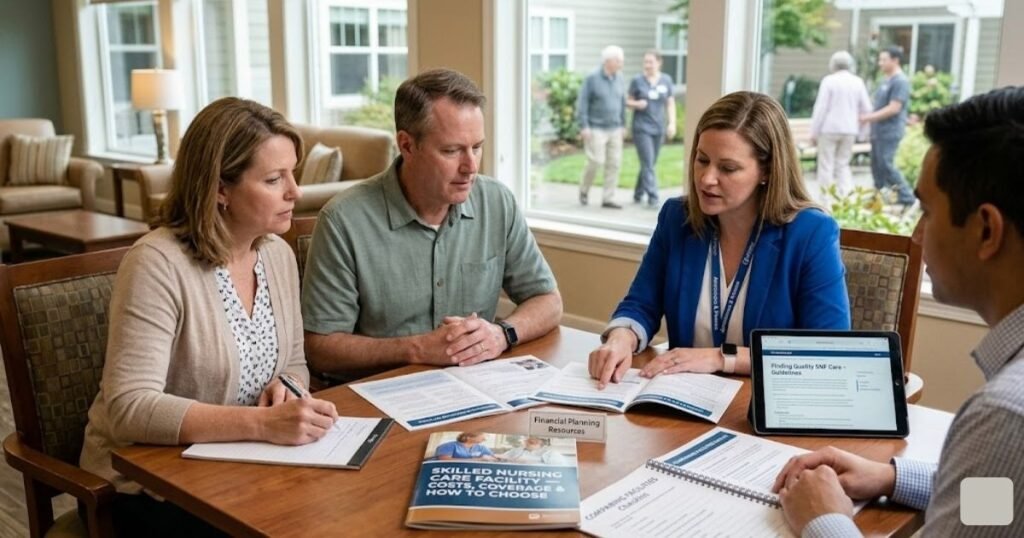
What is a Skilled Nursing Care Facility?
When you hear the term skilled nursing care facility (often called an SNF), think of it as a bridge between a hospital and home. It is a licensed healthcare residence that provides 24-hour medical care and oversight. Unlike a standard senior living community where the focus is on social activities, a skilled nursing facility is built around clinical needs.
In these facilities, trained medical professionals provide care that cannot be safely done by family members or non-medical aides. This includes things like managing complex intravenous (IV) medications, treating deep surgical wounds, or providing intensive physical therapy after a hip replacement.
Most people use these facilities for one of two reasons. The first is “short-term rehab.” This is where a senior stays for a few weeks to get stronger after a hospital stay. The second is “long-term care” for those with chronic medical conditions or disabilities that require a nurse to be nearby at all times.
Typical services you will find include:
- Around-the-clock nursing: Registered Nurses (RNs) or Licensed Practical Nurses (LPNs) are on-site every hour of the day.
- Rehabilitation services: This includes physical, occupational, and speech therapy to help patients regain their independence.
- Medical supplies and equipment: From oxygen tanks to specialized hospital beds, the facility provides the tools needed for recovery.
- Pharmaceutical management: Ensuring high-needs patients get the right doses of complex medications at the exact right time.
- Wound care: Specialized treatment for surgical incisions or pressure sores that require sterile handling.
READ MORE: Best Health Tracking Smartwatch for Seniors 2026 — Top 8 Picks Compared
Who Needs Skilled Nursing Care vs. Assisted Living or Home Care?
It can be confusing to distinguish between all the different types of senior care. You might be wondering, “Does Mom really need a nursing home, or could she stay in assisted living?” The main difference is the level of medical necessity.
When a Skilled Nursing Care Facility is the Right Choice
You should look into a skilled nursing facility if your loved one has these needs:
- Post-Hospital Recovery: They are stable enough to leave the hospital but too weak to go home. They might need daily physical therapy or wound monitoring.
- 24/7 Medical Supervision: They have a condition like advanced heart failure or respiratory issues that could turn into an emergency at any moment.
- Complex Clinical Needs: They require a feeding tube, a ventilator, or frequent injections that a family member cannot give.
- Severe Mobility Issues: If a person cannot move at all without the help of two or more people or mechanical lifts, an SNF has the staff and equipment to keep them safe.
READ MORE: Best Voice Assistant for Seniors 2026 — Safe, Simple & Senior-Friendly Picks
When Assisted Living or Home Care Might Work
On the other hand, assisted living or home care is usually better if:
- Independence is the Goal: They can mostly care for themselves but need help with “Activities of Daily Living” (ADLs) like bathing, dressing, or cooking.
- Intermittent Medical Needs: They only need a nurse to stop by once or twice a week to check vitals or fill a pillbox.
- Safety and Socialization: The primary concern is that they are lonely or at risk of falling when they are alone, rather than a specific medical disease.
In short, a nursing home vs skilled nursing facility debate usually comes down to whether they need a doctor-prescribed clinical plan or just a helping hand.
What Services Are Included in a Skilled Nursing Care Facility?
When you pay for a room in a skilled nursing facility, you aren’t just paying for a bed. You are paying for a comprehensive “care package.” Most facilities provide a bundled set of services designed to keep the resident healthy and engaged.
Medical and Clinical Services:
- Daily health monitoring by licensed nurses.
- Coordination with primary care physicians and specialists.
- In-house laboratory tests and X-ray services (often contracted).
- Emergency call systems in every room and bathroom.
Therapy and Rehabilitation:
- Physical Therapy: To build strength and balance.
- Occupational Therapy: To help with daily tasks like using a fork or buttoning a shirt.
- Speech Therapy: Essential for those recovering from strokes or who have swallowing difficulties.
Personal Care and Lifestyle:
- Assistance with ADLs: Help with showering, grooming, and using the restroom.
- Three Meals a Day: These are usually tailored to specific dietary needs (like low-sodium or diabetic-friendly menus).
- Laundry and Housekeeping: Keeping the living space clean and clothes fresh.
- Social Activities: Even in a medical setting, facilities offer bingo, movie nights, or religious services to keep spirits high.
READ MORE: In-Home Respite Care for Seniors — A Complete, Senior-Friendly Guide (2026)
How Care is Delivered & The Staff You’ll Meet
Walking into a facility can feel a bit like walking into a small hospital. You will see a lot of people in scrubs, and it helps to know who does what.
- Registered Nurses (RNs): These are the high-level medical leads. They assess the patients, talk to the doctors, and manage the overall care plan.
- Licensed Practical Nurses (LPNs): They handle much of the “hands-on” medical work, like giving medications and checking vital signs.
- Certified Nursing Assistants (CNAs): You will see them the most. They help residents with eating, bathing, and moving around. They are the “heart” of the daily experience.
- Therapists: These professionals come in to run the rehab gym. They work one-on-one with residents to meet specific physical goals.
- Social Workers: They are your advocates. They help with the paperwork, insurance issues, and the emotional stress of moving into a facility.
- Dietitians: They ensure the food is both nutritious and safe for people with specific medical restrictions.
How Much Does a Skilled Nursing Facility Cost?
Let’s talk about the part that keeps most families up at night: the skilled nursing facility cost. It is no secret that this level of care is expensive. Because you are paying for 24-hour medical staffing, the prices are significantly higher than assisted living.
A Real Price Snapshot
Prices change based on where you live and the type of room you choose. Here are the current national median numbers to help you budget:
- Semi-Private Room (Shared):
- Daily: $301 (Genworth 2023 Cost of Care Survey).
- Monthly: Approximately $9,150 (A Place For Mom).
- Yearly: $109,865 (Genworth 2023 Cost of Care Survey).
- Private Room (Single):
- Daily: $345 (Genworth 2023 Cost of Care Survey).
- Monthly: Approximately $10,490 (CareScout).
- Yearly: $125,925 (Genworth 2023 Cost of Care Survey).
Regional Variations
These are just medians. Location plays a massive role in what you will actually pay. For example, in parts of the Midwest or the South (like Missouri or Louisiana), you might find semi-private rooms for closer to $200 per day. However, in high-cost areas like New York City or Alaska, that daily rate can easily soar past $800 per day.
It is also important to note that many facilities have “add-on” fees. These might include specialized medical supplies, certain therapies, or even laundry services if they aren’t included in the base rate. Always ask for a full fee schedule before signing a contract.
READ MORE: Memory Care and Assisted Living: A Practical Guide for U.S. Families (2026)
How to Pay for Nursing Home Care
Most families use a combination of sources to cover these costs. It is rare for one single insurance policy to cover everything forever.
- Medicare: This is a common source of confusion. Does Medicare cover skilled nursing? Only for a short time. Medicare Part A covers up to 100 days of “skilled” care after a qualifying 3-day hospital stay. The first 20 days are 100% covered. Days 21 through 100 require a significant daily co-payment ($204 in 2024, per CMS). After day 100, Medicare pays nothing.
- Medicaid: This is the largest payer for long-term nursing home care in the U.S. (KFF). Medicaid is for those with limited income and assets. Every state has different rules for qualifying, so you may need to “spend down” assets to become eligible.
- Long-Term Care (LTC) Insurance: If your loved one bought a policy years ago, this can be a lifesaver. These policies usually pay a set daily amount toward nursing home care.
- Private Pay: Many families pay out-of-pocket using savings, pensions, or the proceeds from selling a home.
- Veterans Benefits: The VA provides nursing home care for veterans with service-connected disabilities or those who meet certain income requirements.
READ MORE: How to Get Paid as a Family Caregiver
Comparing Senior Care Options: Skilled Nursing (SNF) vs Home Health Care vs Assisted Living vs Short-Term Rehab
| Care Type | Typical Stay Length | 24/7 Medical/Nursing? | Rehab Services? | Avg Cost/Day (National Median) | Best For |
| Skilled Nursing (SNF) | Long-term | Yes | Yes | $300–$350 | Chronic illness or high medical needs |
| Short-Term Rehab | Weeks to Months | Yes | Intensive | $300–$350 | Recovery after surgery or stroke |
| Assisted Living | Years | No (Staff on-call) | Limited | $150–$200 | Help with daily chores and safety |
| Home Health Care | Intermittent | No (By visit) | Yes | $160–$180* | Staying home with medical help |
*Note: Home health costs vary wildly based on the number of hours per day.
READ MORE: Salvation Army Free Car Program (Eligibility & How to Apply)
Pros & Cons of Skilled Nursing Care
Making this choice involves weighing some tough trade-offs. Here is a balanced look at what to expect.
Pros
- Continuous Safety: There is always a medical professional nearby to help if something goes wrong.
- Expert Rehab: Having physical therapists on-site means a better chance of regaining strength quickly.
- Medication Management: You don’t have to worry about the “pill box” anymore; nurses handle every dose.
- Relief for Caregivers: It allows family members to go back to being a “daughter” or “son” instead of a 24/7 nurse.
- Social Connection: Residents are around peers and have access to organized social events.
Cons
- High Financial Cost: Without Medicaid or insurance, it can drain a family’s savings very quickly.
- Loss of Independence: Life is lived on a schedule (meal times, bed times), which can be hard for some to accept.
- Variable Quality: Some facilities are understaffed, leading to slower response times for residents.
- Institutional Feel: Despite best efforts, some facilities can feel more like a hospital than a home.
- Staff Turnover: Frequent changes in nursing aides can make it hard for residents to build consistent relationships.
How to Choose a Skilled Nursing Facility
Never choose a facility based on a website alone. You need to walk the halls, smell the air, and watch how the staff treats the people living there. When you go for a visit, bring a notebook and ask these 12 questions:
- What is your staff-to-resident ratio? (Especially on nights and weekends.)
- How long has the current Director of Nursing been here? (High turnover in leadership is a red flag.)
- Are nurses available on-site 24/7?
- How many hours of therapy will my loved one receive daily?
- What was your last state inspection (survey) result? (Ask to see the “survey book.”)
- What is your facility’s infection rate, and how do you handle outbreaks?
- What are the visiting hours for family? (Look for facilities that are very open to visitors.)
- Can I choose between a private and semi-private room?
- What is your rate of resident falls, and what is your prevention plan?
- How do you handle medication management and errors?
- Are there extra fees for things like laundry, cable, or specialty supplies?
- What is the process for discharge planning? (How do they help you get back home?)
Pro Tip: Try to visit once during a scheduled tour and once unannounced on a weekend. This gives you a true look at how the facility runs when they aren’t “putting on a show.”
Frequently Asked Questions
How much does a skilled nursing facility cost per month in the U.S.?
The national median cost is currently between $9,150 and $10,490 per month (Genworth/A Place For Mom). Semi-private rooms are on the lower end of that range, while private rooms are higher. Keep in mind that costs in states like Alaska or Connecticut can be double these figures.
Does Medicare cover skilled nursing facility care?
Yes, but only for short-term clinical needs. Medicare Part A covers 100% of the first 20 days after a 3-day hospital stay. From days 21 to 100, you must pay a daily co-pay ($204 in 2024). After 100 days, Medicare provides no coverage (CMS).
What’s the difference between a skilled nursing facility and assisted living?
A skilled nursing facility provides 24/7 medical care by licensed nurses for complex health needs. Assisted living provides a residential setting with help for tasks like bathing or dressing, but with much less medical oversight and lower costs.
How can families pay for skilled nursing care?
Families typically use Medicare (short-term), Medicaid (long-term for those who qualify), private long-term care insurance, or personal savings (Private Pay). Veterans may also qualify for VA assistance. It is often helpful to speak with a financial planner specializing in elder care.
What should I ask when touring a skilled nursing facility?
Focus on quality of life and safety. Ask about staffing ratios, recent state inspection reports, how they handle medical emergencies, and the frequency of physical therapy sessions. Most importantly, observe if the current residents look clean, happy, and engaged.
Skilled Nursing Care Near Me
Finding the right skilled nursing facility is about more than just a medical checklist; it’s about finding peace of mind. Whether you are recovering from a major surgery or navigating a long-term health transition, these facilities serve as a vital bridge between the hospital and returning home. The goal is to provide high-level clinical care in an environment that still feels like a community, ensuring you or your loved one are supported by professionals who see the person, not just the patient.
Key Features of Quality Skilled Nursing
- 24/7 Clinical Supervision: Licensed nurses and medical staff are on-site around the clock to manage complex health needs.
- On-Site Rehabilitation: Access to physical, occupational, and speech therapies designed to help seniors regain independence.
- Assistance with Daily Living: Dignified help with “the little things,” like bathing, dressing, and medication management.
- Specialized Medical Care: Expert handling of wound care, IV therapy, and post-stroke recovery.
- Social Engagement: Curated activities and communal dining to prevent isolation and keep spirits high.
Conclusion
Choosing a skilled nursing care facility is a big step, but you don’t have to take it alone. By understanding the costs and asking the right questions, you can find a place that offers both the medical care your loved one needs and the dignity they deserve.
Your next step: Make a list of three facilities near you and schedule a tour for this week. It’s the best way to see which one feels like the right fit for your family. Would you like me to help you find a list of state-specific resources to check for facility ratings?