If you’re 60+ and living in Grants Pass, or caring for someone who is, this guide collects the most useful local resources for keeping independent at home: in-home care, groceries and meals, social activities, rides to appointments, property tax relief, and where to go for one phone call that starts the process.
It’s written for senior and caregivers who want plain steps (not legalese), clear eligibility checkpoints, and the documents you’ll likely need. Wherever I mention a program (ADRC, Meals on Wheels, County Assessor), I point to the local office to call so you can get started quickly. Call the Rogue Valley ADRC to request a free screening and local referrals they’ll help you navigate waitlists, sliding fees, and county vs. state program choices.
Senior Services in Grants Pass: Quick facts
- Rogue Valley ADRC — phone: (541) 618-7572 or (855) 673-2372; advocates are available Mon–Fri. . Rogue Valley ADRC
- Food & Friends / Meals on Wheels (serves Josephine County) — phone: 541-955-8839 (office hours listed on their site). . Food & Friends
- Josephine County Assessor — phone: (541) 474-5221 (for property tax deferral questions). . Josephine County Assessor
- Club Sixty (senior center activities at the Senior Resource Center) — located at the Josephine County Senior Resource Center, phone: 541-660-2591. . Club Sixty
- Josephine County Transit (JCT) — fixed routes + ADA paratransit / dial-a-ride for eligible riders; call the county transit office for details. . Josephine County Transit (JCT)
READ MORE: Grants for Wheelchair Accessible Vehicles in the USA | Eligibility & How to Apply
What services are available in Grants Pass Senior Center
Grants Pass and Josephine County offer a mix of county, regional, and statewide programs plus private providers. Expect three kinds of help:
- Information & navigation: The Aging & Disability Resource Connection (ADRC) provides one phone number to screen needs, explain options, and make referrals to county and nonprofit programs. ADRC advocates can tell you about home-delivered meals, transportation, caregiver respite, and how to apply for state assistance.
- Nutrition & meal programs: Food & Friends (Meals on Wheels) delivers prepared meals and coordinates congregate meals at senior centers. Many programs use a donation or sliding-fee model; eligibility is usually based on age and homebound status.
- Transportation & mobility: Josephine County Transit runs fixed routes in Grants Pass and offers ADA paratransit / dial-a-ride for riders who cannot use the fixed routes. There are also local volunteer ride programs for medical appointments.
- In-home care & respite: Services range from light personal care (bathing, dressing) to skilled nursing. Some are private pay; others are subsidized by state Medicaid or county programs after an assessment.
- Social & community programs: The Josephine County Senior Resource Center (home to Club Sixty and other activities) provides congregate meals, classes, and volunteer opportunities.
- Property tax relief: Oregon offers a Senior & Disabled Property Tax Deferral program, a state-administered deferral (loan) that delays taxes for qualifying homeowners; applications go through your county assessor.
Choosing between programs: start with ADRC for an unbiased screening; they’ll explain whether you should apply to a county program (shorter waitlist for local funds), a state program (official eligibility rules), or contract with private providers (faster but costlier). When cost is a concern, ask about sliding-fee scales, volunteer options, and short-term respite while you plan longer-term care.
READ MORE: Free Bathroom Remodel for Seniors
How to find local help quickly
A short, effective path to services:
- Call the ADRC first. Give your zip code and ask for an intake screening. ADRC staff will list local options, check waitlists, and often set up referrals to Food & Friends, the Senior Resource Center, or an in-home assessment.
- Visit the Josephine County Senior Resource Center. Drop-in programs and congregate meals are often scheduled there; staff can tell you about Club Sixty and local volunteer services.
- Contact the County Assessor for tax questions. Property tax deferral requires an application filed with the county assessor — call the assessor’s office to request an application packet and ask about local filing deadlines and required income verification.
- Schedule a home assessment for in-home care. If you or your loved one need personal care or skilled services, ask ADRC or the county Senior & Disability Services to arrange an assessment. Providers are then matched to needs and funding sources.
Sample Questions for Resource Specialists
When calling the ADRC or visiting the Senior Resource Center, residents should be prepared to ask specific questions to clarify their options. Understanding waitlists and fee structures is vital for budget-conscious homeowners.
| Topic | Recommended Questions to Ask |
| Eligibility | “What is the maximum income allowed for OPI-M in 2026?” |
| Waitlists | “Are there currently waitlists for Meals on Wheels in the North Grants Pass area?” |
| Fees | “What is the sliding fee percentage for someone with a monthly income of $3,000?” |
| Documentation | “What medical forms does my doctor need to sign to qualify me for ADA paratransit?” |
READ MORE: Habitat For Safe Seniors Free Ramp Program (Eligibility & How to Apply)
Property Tax Relief & Deferral Basics for Seniors in Oregon
The Oregon Senior and Disabled Property Tax Deferral program is one of the most significant benefits available to Grants Pass homeowners. In an era of escalating real estate values, this program allows seniors to remain in their homes by deferring the payment of county property taxes. It is critical to note that this is a deferral, not an exemption; the state of Oregon pays the taxes to Josephine County on behalf of the homeowner, and in exchange, a lien is placed on the property which must be repaid with interest when the home is sold or the owner passes away.
2026 Eligibility Checkpoints
The Oregon Department of Revenue updates the eligibility criteria annually. For the 2026 tax year (based on 2025 income), the following requirements apply to all Josephine County applicants:
- Age and Disability: The applicant must be at least 62 years old by April 15, 2026. If applying under the disability criteria, the individual must be receiving Social Security Disability benefits.
- Household Income: The total 2025 household income, including both taxable and non-taxable sources (such as Social Security), must not exceed $70,000.
- Net Worth: The applicant’s net worth must be less than $500,000. This calculation excludes the value of the home itself, personal vehicles, and household furniture.
- Residency: The homeowner must have owned and lived in the property as their primary residence for at least the last five full years ending April 15, 2026.
- Real Market Value (RMV) Caps: For 2026, the RMV minimum cap has increased to $301,000. If the home’s value exceeds the county median but is under this cap, the owner may still qualify. Furthermore, House Bill 3712 now allows those who have lived in their homes for less than 17 years to qualify if their home’s RMV is less than 150% of the county’s median residential value.
The Mechanics of the Deferral Loan
The state charges 6% simple interest annually on the deferred tax amount. This interest does not compound, which is a significant advantage for long-term homeowners. However, homeowners with reverse mortgages must be cautious; they only qualify if the reverse mortgage was recorded between July 1, 2011, and December 31, 2016, and they maintain at least 40% equity in the property.
How to Apply in Josephine County
The application process is handled through the Josephine County Assessor’s office located at the County Courthouse.
- Obtain Form OR-PTDA: This application is usually available starting in January.
- Submit by the Deadline: The timely filing window is January 1 to April 15, 2026. Applications submitted after April 15 but before December 1 are considered late and require a late fee.
- Include Required Attachments: A copy of the 2025-2026 property tax statement and, if applicable, a Social Security Disability award letter are mandatory.
- Recertification: Once approved, the homeowner does not need to apply every year but must recertify their eligibility every two years. The state will mail a notice in February of the recertification year.
READ MORE: Dental Implant Grants for Seniors — How to Find Help, Step-by-Step
Meal Programs, Home-Delivered Meals, and Community Lunches
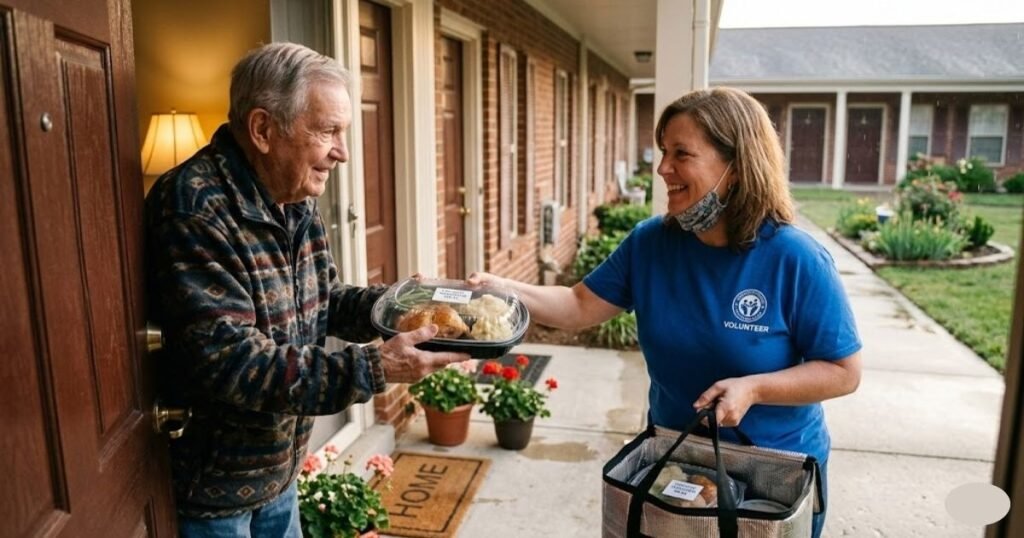
Nutritional support in Grants Pass is an organized effort to combat both hunger and social isolation. The primary provider is Food & Friends, the designated Meals on Wheels program for Josephine County.
Meals on Wheels: Home Delivery for the Homebound
For seniors who are physically or mentally unable to shop for or prepare their own meals, home delivery provides a vital lifeline. These meals are designed to meet one-third of the Recommended Daily Allowance (RDA) for seniors and are delivered by volunteers who also provide a “safety check”.
- Eligibility: Residents must be 60 or older (or the spouse of an eligible senior) and homebound due to illness, injury, or disability. The program is not means-tested; income is not a factor for eligibility.
- The Enrollment Process: Interested parties should call the Josephine County meal coordinator at 541-955-8839. An outreach coordinator will typically conduct a home visit, and service can often begin within two business days after this visit.
- Menu Options: TRIO Community Meals, a specialist in senior nutrition, provides the food. Options are available for those with diabetic or low-salt requirements.
- Cost and Donations: While the program is partially funded by the federal Older Americans Act, it relies heavily on donations. The suggested donation for 2026 is $3.00 per meal. However, no eligible senior is ever refused a meal because they cannot afford to donate.
Congregate Dining: Community and Connection
For mobile seniors, congregate dining sites offer a hot meal in a welcoming, social atmosphere. In Grants Pass, these lunches serve as a major social hub.
| Location | Site Name & Address | Contact Number | Serving Days/Times |
| Grants Pass | Senior Resource Center, 1150 NE 9th St | 541-423-1388 | Mon–Fri, 11:30 a.m.–12:30 p.m. |
| Merlin | Merlin Community Center, 109 Acorn St | 541-951-5984 | Tue & Thu, 11:30 a.m.–12:30 p.m. |
| Cave Junction | Illinois Valley Senior Center, 520 E. River Rd | 541-973-7067 | Mon, Wed, Fri, 11:30 a.m.–12:30 p.m. |
| Wolf Creek | Alliance Community Church | 541-955-8839 | Home Delivery Only (Call for Info) |
Transportation Grants Pass, Mobility, and ADA Issues
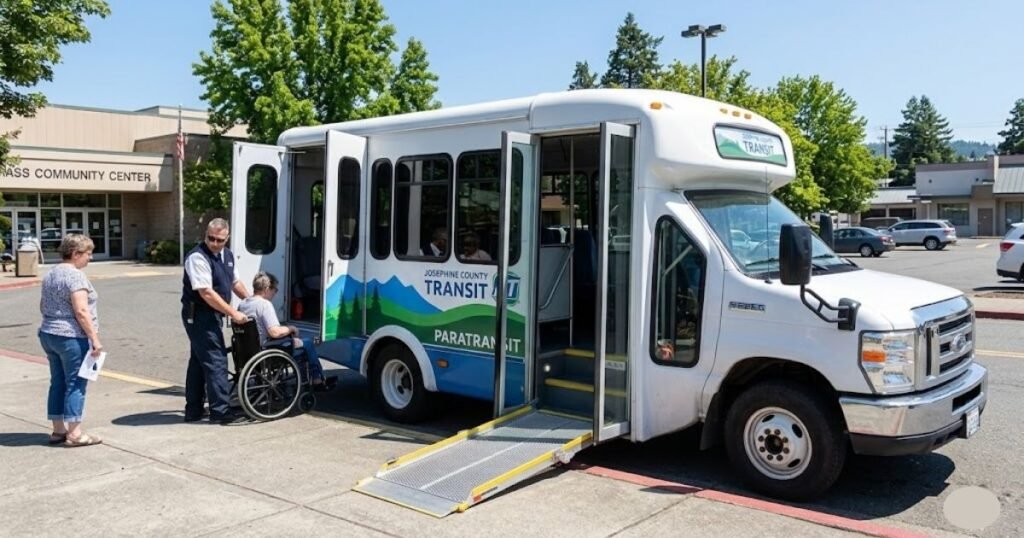
Accessibility is a fundamental requirement for seniors to maintain their health and household. Josephine Community Transit (JCT) provides the primary public transportation services within the Grants Pass Urban Growth Boundary.
Josephine Community Transit (JCT) Services
JCT offers a multi-tiered approach to senior mobility, ensuring that those who can no longer drive have reliable options for local and regional travel.
- Fixed-Route Bus Service: Standard buses run through the main corridors of Grants Pass, with connections to Medford and Cave Junction. All JCT buses are ADA-accessible, featuring ramps and reserved seating for seniors and people with disabilities.
- Dial-a-Ride (Senior Shuttle): For residents aged 62 or older, JCT provides a specialized curb-to-curb shuttle. Unlike paratransit, this does not require a disability certification—only proof of age. Rides typically cost $2.00 per one-way trip and must be scheduled at least one business day in advance by calling 541-474-5452.
- ADA Paratransit: This is a mandated service for individuals whose disability prevents them from using the regular bus. It operates within 3/4 of a mile of any fixed route and offers “comparable” hours of operation (6:30 a.m. to 6:30 p.m.). An in-person assessment is required to qualify for this program.
Volunteer and Medical Ride Programs
When public transit schedules do not align with specialized medical appointments, volunteer networks often fill the gap.
- AmeriCorps Seniors RSVP: Through the Community Volunteer Network (CVN), volunteers aged 55+ use their personal vehicles to provide door-through-door transport for seniors 60+ to medical appointments. These rides are free of charge but are subject to volunteer availability.
- Hearts for Seniors: This volunteer-driven program through Hearts with a Mission can assist with transportation for errands and appointments, specifically for those 65 and older who are living independently.
READ MORE: Best Dental Insurance Plans for Seniors in 2026 | Affordable Coverage Options
In-Home Care, Respite, and Long-Term Care Options
The most common concern for Grants Pass homeowners is how to afford help with daily tasks as their physical needs increase. In 2026, the local market for private home care reflects broader national trends, with an average starting cost in Grants Pass of approximately $23.57 per hour. For those requiring 40 hours of care per week, this equates to roughly $3,064 per month a cost that can quickly deplete retirement savings.
State-Funded Alternatives to Private Care
Oregon offers two primary programs for seniors who cannot afford the full cost of private agencies but do not yet qualify for full Medicaid:
1. Oregon Project Independence (OPI)
OPI is a state-funded program designed to support seniors 60+ who are at risk of institutionalization. It provides up to 20 hours per month of in-home assistance, including housekeeping, personal care, and meal preparation.
- The Sliding Fee Scale: OPI costs are based on the individual’s monthly income after deducting medical expenses. For those at or below the Federal Poverty Level (FPL), there is a one-time $25 fee. For others, a monthly copay is determined using a formula where the participant pays between 5% and 90% of the service cost.
2. OPI-Medicaid (OPI-M)
OPI-M is a significant expansion that utilizes federal funds. It is intended for those with slightly higher care needs who still reside in their own homes.
- Benefits: OPI-M can provide up to 40 hours of care every two weeks.
- Financial Limits: In 2026, a single person can have an income up to $5,320 per month (400% of FPL) and assets up to $99,656 and still qualify for this program at no cost.
Choosing a Private Agency in Grants Pass
For homeowners who choose to pay for care privately, several reputable agencies serve the Josephine County area. Residents should look for agencies that are licensed by the state and offer specialized training for their staff.
- Visiting Angels (Medford/Grants Pass): Known for their “character-first” hiring process, they offer a secure family portal for caregivers and families to coordinate care.
- Family Resource Home Care: Focuses on non-medical ADLs and frequently collaborates with local hospice and home health agencies.
- Interim HealthCare: Provides both standard home care (companionship) and skilled home health (nursing and physical therapy) which requires a doctor’s order.
Local Senior Centers, Social Programs & Volunteer Opportunities
The psychological impact of aging is often mitigated by community engagement. Grants Pass has a vibrant network of social hubs that provide more than just recreation—they provide a sense of purpose.
The Josephine County Senior Resource Center and Club Sixty
Located at 1150 NE 9th Street, this facility is the epicenter of senior life in Grants Pass. It is a unique partnership between government agencies and non-profit social clubs.
- Club Sixty: This is a social and wellness club founded to enrich the lives of older adults. For an annual membership fee of approximately $35, members gain access to free coffee, workshops, and wellness classes.
- Activity Schedule: Tai Chi and line dancing are popular Tuesday afternoon staples, while Thursdays are dedicated to knit-and-crochet groups and chair yoga.
- Volunteer Opportunities: The Senior Resource Center relies on “branded” volunteers (often wearing signature orange t-shirts) to help with event setup and information sharing.
Hearts for Seniors
A newer program in Grants Pass, Hearts for Seniors, acts as a bridge to independent living. It is a free, volunteer-driven initiative that provides companionship for socially isolated seniors.
- Process: Seniors 65+ living independently must complete an inquiry form and schedule an assessment. Once matched with a volunteer, they can receive help with laundry, light housekeeping, and escorting to medical appointments.
READ MORE: How To Get Government Grants for Stroke Victims
Common application checklists & documents to have ready
Before you call or apply, gather these commonly requested items:
- Photo ID (driver’s license, state ID)
- Proof of age (birth certificate, passport)
Proof of ownership (deed) or lease (for tax deferral/benefits) - Proof of address (utility bill)
- Recent income verification (SSA statements, tax return, pension statements)
- Medicare/insurance cards and medical authorization forms (for home health)
- Any legal documents (power of attorney, advance directive)
Having these documents ready speeds up applications for Meals on Wheels, in-home care assessments, paratransit, and tax deferral.
FAQs
FAQ 1: What senior services are available in Grants Pass, Oregon?
Grants Pass offers a range of services: ADRC-guided navigation, Meals on Wheels (Food & Friends), congregate meals at local senior centers, in-home personal care and skilled home health, ADA paratransit and fixed-route transit, caregiver respite, and tax deferral for qualifying seniors. Contact ADRC to be screened and referred to local partners.
FAQ 2: How do I apply for the senior property tax deferral in Josephine County?
Obtain the Oregon Property Tax Deferral application from the Oregon Department of Revenue or your Josephine County Assessor’s office, complete it with income verification, and file with the county assessor after January 1 and by April 15 (late filing may be accepted with a fee). The assessor will forward qualified applications to the state. Call the county assessor for local filing steps.
FAQ 3: Are there free or low-cost meal programs for seniors in Grants Pass?
Yes. Food & Friends (Meals on Wheels) provides home-delivered meals in Josephine County; congregate meals at the Senior Resource Center and Club Sixty offer low-cost lunches. Many programs accept donations or have sliding-fee arrangements for low-income seniors. Call Food & Friends or ADRC to enroll.
FAQ 4: What transportation options exist for seniors in Grants Pass?
Josephine County Transit runs fixed bus routes and ADA paratransit (dial-a-ride) for eligible riders; local volunteer ride programs also serve medical appointments. Contact the county transit office or ADRC to apply for paratransit and learn scheduling rules.
FAQ 5: How can I find reliable in-home care near Grants Pass, Oregon?
Begin with ADRC or Senior & Disability Services for an assessment and vetted referrals. For private agencies, request licensure, background checks, references, insurance info, and an itemized cost estimate. Ask about respite options and sliding fees if cost is a concern.
Final Verdict
Maintaining your independence and protecting your home equity in Grants Pass starts with a single point of contact. If you or a loved one are facing challenges with household tasks, transportation, or rising property taxes, the most effective next step is to call the Rogue Valley ADRC at 541-618-7572. A resource specialist can conduct a preliminary intake assessment over the phone and connect you with the specific agencies discussed in this guide. For those who prefer an in-person consultation, you are encouraged to visit the Josephine County Senior Resource Center at 1150 NE 9th Street during their public hours (Tuesday and Thursday are particularly active days). Please remember to verify current operating hours and have your basic income and property documentation ready to ensure a smooth application process. Starting this conversation early is the best way to ensure that the necessary support systems are in place before a crisis occurs.