Having a car might mean the difference between hardship and independence. Transportation can make or break a person’s ability to find employment or provide for their family, especially for low-income families, single parents, and those recuperating from challenging life circumstances. The Salvation Army Free Car Program can help with that.
The Salvation Army has long been known for helping people in need with food, shelter, clothing, and emergency relief. What many don’t realize is that, in some areas, the Salvation Army also provides donated vehicles or helps people access affordable transportation. This guide explains everything you need to know: how the program works, who qualifies, how to apply, and what to expect. Lets deep dive into “Salvation Army Free Car Program (Eligibility & How to Apply)”
Key Takeaways
- No Nationwide Guarantees: The Salvation Army handles all vehicle and transit programs locally based on available resources.
- Seniors Receive Focus: Older adults, veterans, and individuals with medical or employment crises are often given priority by local caseworkers.
- Diverse Aid Options: If a physical vehicle is not available, you can often secure gas vouchers, bus passes, or minor repair funds.
- Documentation is Critical: You will need explicit proof of income, identity, residency, and a demonstrated transport emergency to qualify.
- Vast Alternatives Exist: There are several other dedicated national charity car programs and local community action networks designed to assist low-income Americans with mobility.
READ MORE: Best Smart TV for Seniors in 2026: Easy to Use & Large Screen Picks
What Is the Salvation Army Free Car Program?
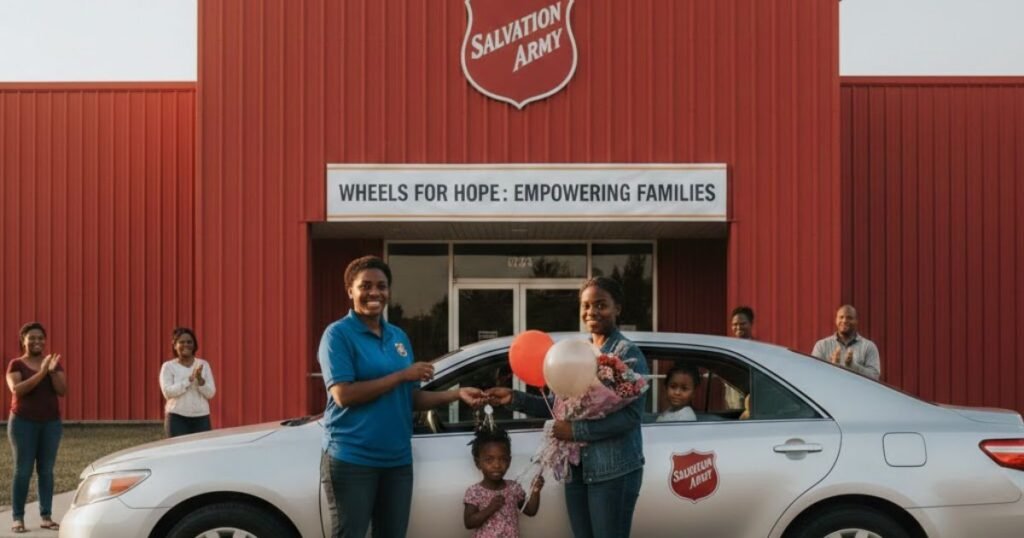
The Salvation Army Free Car Program isn’t a single nationwide initiative but rather a collection of local programs under the Salvation Army’s broader social services umbrella. In some cities and states, the Salvation Army accepts donated vehicles and passes them on to qualifying individuals or families.
These cars are frequently donated by private citizens, auto dealerships, or neighborhood drives. Following inspection and approval, the cars are either:
- Given directly to people in need, or
- Sold at discounted rates, with the proceeds funding local social services.
The objective is to assist low-income families in becoming self-sufficient. Reliable transportation can provide access to healthcare, education, and work all of which are essential for life reconstruction.
It’s crucial to remember that availability differs by place. Not all Salvation Army locations provide a program for automobile distribution or donation. Some concentrate on various types of transportation aid, such gas coupons, bus passes, or support with auto repairs.
READ MORE: Best Wireless TV Headphones for Seniors (2026) – Clear Sound & Easy Setup
Does the Salvation Army Really Give Away Free Cars?
To put it plainly: sometimes yes, but more often, no. Because the charity must prioritize its limited funding, direct car giveaways are the exception rather than the rule. Whether or not you can get a physical vehicle depends entirely on a combination of factors that are completely out of your control.
First, your local office must actually have a vehicle on hand that hasn’t been earmarked for auction. Second, that vehicle must pass rigorous safety inspections; charities cannot risk their liability or your safety by giving you a car with failing brakes or a broken transmission. Third, the local chapter must have the administrative funding required to handle title transfers and processing fees. Finally, you must usually be actively enrolled in a long-term social work program with the charity, demonstrating that a vehicle is the final piece of the puzzle to help you achieve self-sufficiency or manage a severe medical hardship.
To help separate online rumors from real-world facts, review this myth vs. fact comparison:
Salvation Army Car Program: Myths vs. Facts
| Myth | Fact |
| Myth: There is a standard online application where anyone can apply for a guaranteed free car. | Fact: There is no national application. All vehicle aid is handled case-by-case by local caseworkers based on local inventory. |
| Myth: The Salvation Army will pay for your car insurance, annual registration, and fuel forever. | Fact: You are entirely responsible for ongoing costs. You must prove you can afford insurance and fuel before a vehicle is given. |
| Myth: Every car donated to the charity is given away to a low-income family. | Fact: Most donated cars are auctioned off to fund broader social services like housing, food programs, and rehab facilities. |
| Myth: You can get a free car simply by showing that you have a low household income. | Fact: Income is only part of the puzzle. You must also prove an extreme hardship, like a medical crisis or an urgent employment need. |
| Myth: If you are denied a car, the Salvation Army cannot help you with your transportation needs at all. | Fact: Local offices frequently provide alternative support, including gas vouchers, bus passes, and emergency ride-sharing help. |
READ MORE: Free Car for Seniors in the USA (2026) | Government & Charity Programs
Who Can Qualify for a Salvation Army Donated Car?
Common Eligibility Requirements for a Salvation Army Donated Car
While every Salvation Army post has its own set of standards, most adhere to the same ones. In general, candidates need to:
- Be low-income or currently receiving public assistance.
- Demonstrate a legitimate need for transportation (for work, school, or family responsibilities).
- Show proof of employment or an active job search.
- Have a valid driver’s license and the ability to obtain insurance.
- Be actively involved in a Salvation Army or community support program (rehabilitation, housing, or employment assistance).
Some programs prioritize:
- Single parents trying to become self-sufficient.
- Veterans reentering the workforce.
- People with medical or disability-related transportation needs.
- Domestic violence survivors seeking safety and independence.
Required Documents and Verification Process for a Salvation Army Donated Car
To ensure your intake appointment runs smoothly, you should assemble a dedicated folder containing all your financial and legal records. Missing a single document can delay your application by weeks. Use the detailed table below to prepare your paperwork.
Required Documents Table
| Document Type | Accepted Examples | Why It Is Required |
| Proof of Identity | Government-issued photo ID, U.S. Passport, Green Card, or Birth Certificate. | Confirms your legal name, age, and identity for legal vehicle title transfers. |
| Proof of Income | Recent Social Security award letters, pay stubs, pension statements, or tax returns. | Verifies that your household falls within the charity’s required low-income bracket. |
| Proof of Residency | A recent utility bill (gas, water, electric), a formal lease agreement, or official mail. | Proves you reside within the specific geographic boundaries served by that local chapter. |
| Legal Driving Authorization | A current, clean, unexpired driver’s license from your home state. | Ensures that you are legally permitted to operate a motor vehicle on public roads. |
| Proof of Hardship | Doctor’s letters detailing medical conditions, a formal job offer letter, or a termination notice. | Demonstrates the urgent, specific reason why your lack of a vehicle is a true emergency. |
| Vehicle Ownership Proof | An affordable auto insurance quote or an existing insurance policy page. | Proves to the caseworker that you have the financial means to legally drive the car if given. |
READ MORE: Best Wireless Earbuds for Senior Runners: 2026 Top Picks
How the Salvation Army Free Car Program Works
Step-by-Step Application Process
The Salvation Army Free Car Program normally operates as follows:
- Locate the Salvation Army office in your area. Use the location finder on the Salvation Army’s official website to get started.
- Ask about support with vehicles. Find out if they now accept or distribute cars that have been given.
- Send in your application. Complete an application, which can ask for details about your family size, financial situation, and transportation requirements.
- Attach documentation. Include ID, proof of income, employment verification, and any referral letters.
- interview or house call. Some branches interview you to make sure you need and are prepared to maintain a car.
- Approval and matching. Once approved, you may be placed on a waiting list until a donated car becomes available.
READ MORE: Emergency Car Payment Assistance
What Happens After Approval
If you are selected, the Salvation Army coordinates vehicle transfer. You’ll be required to:
- Sign a release form acknowledging you’ll maintain the car responsibly.
- Handle registration and insurance (the organization can sometimes assist with this).
- Attend a brief orientation or maintenance session if required.
You’ll receive full ownership of the car typically free or at a token price and it becomes your responsibility to maintain it.
How to Apply for a Salvation Army Donated Car
Finding Your Local Salvation Army Branch
Since the Salvation Army’s car assistance programs are localized, the first step is identifying your nearest branch. You can do this by:
- Visiting salvationarmyusa.org
- Calling their national helpline at 1-800-SAL-ARMY
- Searching “Salvation Army car donation program near me”
Each branch has different resources. Some may partner with car dealerships, while others run seasonal donation drives.
Filling Out and Submitting Your Application
In your application, be truthful and explicit. Explain your financial circumstances and the ways in which an automobile will enhance your quality of life.
Example: “Public transportation doesn’t reach my neighborhood, yet I recently found a job 15 miles from my home.” I could sustain my two kids and keep up a stable job with a dependable car.
If at all feasible, submit a referral from your employer or caseworker along with the necessary paperwork. Apply in person or by mail (online applications are accepted at some locations).
READ MORE: Best Voice Assistant for Seniors 2026 — Safe, Simple & Senior-Friendly Picks
What to Expect After Applying for a Salvation Army Donated Car
Waiting Lists and Follow-Ups
Patience is key. Donated cars depend on availability, so there may be waiting lists. During this time:
- Stay in contact with your caseworker.
- Check in periodically to confirm your status.
- Update your application if your circumstances change (e.g., new job).
READ MORE: Free Car Repair for Seniors | Grants, Programs & Assistance
What to Do If You’re Not Selected
If you’re not chosen, don’t get discouraged. Ask the Salvation Army for referrals they often collaborate with other nonprofits that provide transportation help. You can also request assistance with bus vouchers, fuel gift cards, or minor vehicle repairs if you already own a car.
Other Salvation Army Vehicle Assistance Options
Not all Salvation Army branches can provide full vehicles, but many offer related help.
Repair Help and Transportation Vouchers
If you already own a car that’s broken down, some locations may offer repair assistance grants or connect you with partner mechanics. Others provide gas or bus vouchers for work-related transportation.
Low-Cost Car Purchase Programs
In some areas, the Salvation Army sells donated cars at reduced rates to qualified buyers. These vehicles are typically older models but safe and inspected. The prices are minimal, covering only basic administrative costs.
What If There Are No Free Cars Available?
Because physical cars are so difficult to come by, you should always be open to alternative forms of aid. The Salvation Army spends a significant portion of its local budget on low income transportation help that does not involve handing over a set of keys.
If your local branch confirms they do not have any vehicles available, ask your caseworker if they can assist you with these common alternatives:
Workforce Transportation Help: Some regional branches manage special vanpools or shuttle services designed to pick up workers from central community hubs and drop them off at major local employment centers during off-hours.
Emergency Gas Vouchers: If you already own a car but are forced to choose between buying groceries or filling your gas tank to get to chemotherapy, the charity can provide paper vouchers or prepaid gift cards for local gas stations.
Public Transit Bus Passes: For seniors and families living in metropolitan areas, the charity frequently purchases bulk monthly or annual bus and subway passes, distributing them free of charge to qualified clients.
Non-Emergency Medical Ride Assistance: Many local chapters partner with local senior centers or volunteer driver networks to provide free, pre-scheduled rides to and from medical facilities.
Car Repair Financial Assistance: If you already own a vehicle but it is currently sitting dead in your driveway due to a broken alternator, bad brakes, or a dead battery, the Salvation Army may pay a local mechanic directly to perform minor, essential safety repairs.
READ MORE: Best Health Tracking Smartwatch for Seniors 2026 — Top 8 Picks Compared
Alternatives If You Don’t Qualify for the Salvation Army Free Car Program
1-800-Charity-Cars (FreeCharityCars.org)
This is one of the largest and most well-known free car charities USA options available. Operating as a nationwide online platform, they take vehicle donations and match them directly with applicants. They focus heavily on providing free cars to struggling groups, including victims of domestic violence, families living in transitional housing, military veterans, and families impacted by natural disasters.
Vehicles for Change
Vehicles for Change is an exceptional program operating primarily in the Mid-Atlantic region (including Maryland, Virginia, and parts of Michigan). They take donated vehicles, have their auto-mechanic trainees completely rebuild and service them, and then sell them to low-income families for an incredibly low cost—often between $1,000 and $1,500. They also provide low-interest, accessible car loans to help families build up their credit scores.
Goodwill Industries
While most people recognize Goodwill for their clothing thrift stores, certain regional Goodwill chapters operate specialized vehicle programs. In select states, Goodwill runs wheels-to-work initiatives that provide low-cost or donated cars to individuals who require a vehicle to maintain stable employment or complete job training programs.
Working Cars for Working Families
Run by the National Consumer Law Center, this network acts as a major advocacy group and national clearinghouse. While they do not give away cars directly from a central lot, their website features an invaluable database of local, state-by-step program listings across the United States that help low-income workers find matching car programs, down-payment assistance, or low-interest auto loans.
Community Action Agencies
Every county in the United States is served by a local Community Action Agency. These are federally funded, locally run non-profits dedicated to fighting poverty. Many of these agencies run specific transportation assistance programs. They can combine federal grants to help low-income residents purchase a car, pay for community college transit, or fix an existing vehicle through specialized local mechanic partnerships.
Church Networks and Faith-Based Charities
Beyond the Salvation Army, major faith-based networks like Catholic Charities, Lutheran Services, and St. Vincent de Paul operate extensive local emergency assistance networks. Local church congregations frequently have members looking to donate a reliable used vehicle directly to a neighbor in need, making them an excellent place to ask for help locally.
Common Reasons Applications Are Denied
Because these charity programs are so strictly regulated, many applications are unfortunately turned down. Understanding why rejections happen can help you avoid making the same mistakes when you submit your paperwork.
Common Application Mistakes to Avoid
- Incomplete Documentation: Submitting an application without a valid driver’s license, omitting your utility bill, or failing to include your official income statements will cause your file to be automatically rejected or filed away.
- Earning Too Much Income: Even if you feel financially stressed, if your official monthly income numbers sit even slightly above the program’s local poverty line cutoff, the system will disqualify you to save resources for those in absolute poverty.
- Failing to Show a Real Transport Hardship: If you live in a dense downtown city center directly next to an active, reliable subway line or bus route, your application will likely be denied because alternative transit is readily available to you.
- Inability to Afford Ownership Costs: If your budget shows that after paying rent you have zero dollars left over, a caseworker may deny your request for a car. They do this because they know you will not be able to afford the legally required auto insurance, registration fees, and gasoline, meaning the car would quickly become a financial burden.
- A History of Major Driving Violations: If your driving record shows recent driving under the influence (DUI) charges, reckless driving arrests, or an active license suspension, charities will deny your request due to safety concerns and liability risks.
Tips to Improve Your Chances of Getting Help
Building a Strong Application
- Be detailed about your need: explain why you require a vehicle and how it will change your circumstances.
- Provide documentation upfront — income, employment, and references.
- Stay polite and patient; many programs rely on volunteers.
Maintaining Contact with Caseworkers
Follow up consistently, but courteously. Staying in touch shows responsibility and dedication qualities that can move your name up the list when a car becomes available.
READ MORE: Can I Get Free Air Conditioners for Senior Citizens?
Legal and Practical Considerations When Receiving a Donated Car
Insurance, Registration, and Maintenance
Once you’re approved and receive a vehicle, you’ll need to:
- Transfer the title legally into your name.
- Obtain car insurance before driving.
- Budget for maintenance and repairs (ask if the Salvation Army offers referrals to low-cost mechanics).
- Keep the vehicle in safe condition — this ensures continued eligibility for other support services.
Being proactive about paperwork and upkeep shows gratitude and responsibility, ensuring you keep your blessing long-term.
READ MORE: Best Medical Alert Systems for Seniors | Top Picks & Reviews
Frequently Asked Questions
Does every Salvation Army branch have a car donation program?
No. Only some branches offer this service, depending on local donations and resources.
Do I have to pay anything for a Salvation Army car?
Usually no, but in some cases, you might pay a small administrative or registration fee.
Can I apply online for a free car from the Salvation Army?
Most applications must be submitted in person at your local branch.
What if I don’t have insurance yet?
You’ll need to show proof of insurance before driving the vehicle. Some branches can guide you toward affordable plans.
How long does it take to get a car?
It depends on vehicle availability. Some applicants wait weeks or months.
Conclusion
TheSalvation Army Free Car Program is more than just a way to get a vehicle it’s a bridge toward independence. Whether you’re trying to keep a job, care for family, or recover from hardship, the program provides real hope. While not every branch can provide cars directly, the Salvation Army’s deep network of partnerships means they can almost always help in some way through referrals, vouchers, or repair assistance.
If you’re struggling without reliable transportation, contact your local Salvation Army today. Be honest, prepared, and persistent your opportunity for a fresh start could be waiting right there in your community.